
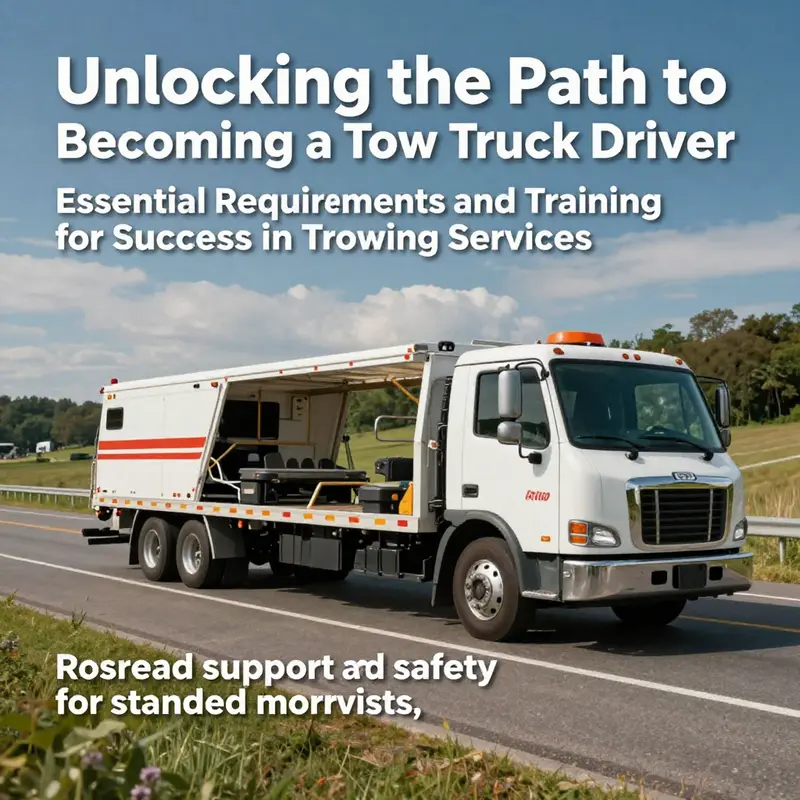
Becoming a tow truck driver is not just about having a vehicle to haul others out of trouble; it involves adhering to specific qualifications and gaining the necessary certifications that ensure safety and efficiency on the road. For business owners in the towing industry, understanding these requirements is pivotal, as they directly impact hiring practices and operational standards. The following chapters will delve into the essential qualifications needed to become a tow truck driver and the vital training and certification processes that enhance both individual competency and business reputation.
On the Road to Tow: The Real-World Qualifications You Need to Launch a Tow Truck Career
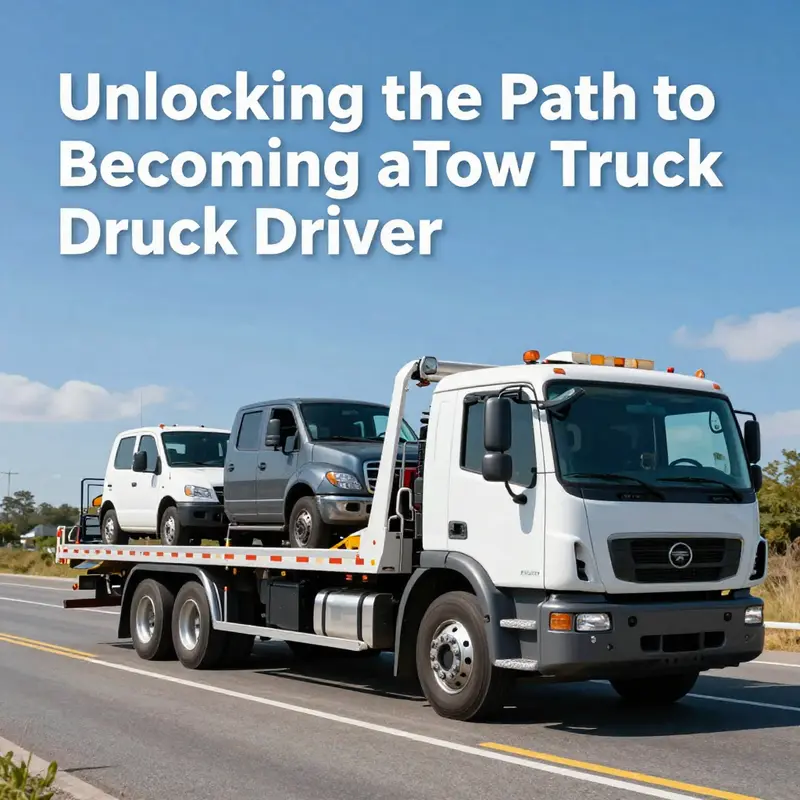
The work of a tow truck driver sits at the exact intersection where practical mechanics, street-smart judgment, and strict safety discipline meet. It isn’t enough to know how to operate a winch or how to lift a stalled car; you have to operate within a framework of licenses, endorsements, certifications, and ongoing training that varies from place to place and from one job to the next. Yet while the rules differ, the core idea remains consistent: becoming a professional tower of reliability and competence starts long before the first roadside call. It begins with the decision to meet a set of foundational requirements and then commits to building the experience, the certifications, and the day-to-day habits that let you perform under pressure while protecting yourself, your team, and the public.
The first bricks in that foundation are age and access. Most regions allow someone to begin the process of joining a tow operation once they are legally old enough to hold any driver’s license and operate a vehicle. In many cases, 18 is the baseline minimum to pursue even the simplest entry level roles that involve basic roadside assistance and non complex towing. Some employers and more demanding operations, however, prefer or require a driver to be 21 or older. This isn’t just about legal liability; road rescue work frequently involves night shifts, high-traffic environments, and opportunities to encounter elevated risk. The ability to respond with maturity and steadiness in those moments can be a deciding factor alongside raw technical skill.
From there, the road splits into the licensing landscape. A valid driver’s license is the entry ticket, but what matters more is the Commercial Driver’s License, or CDL, and the class that aligns with the vehicle you’ll operate. For most tow truck operators handling standard medium- and heavy-duty tow trucks, a CDL class B is the starting point. It covers the basic capability to drive larger trucks with certain kinds of trailers and attachments. Where your ambitions grow toward operating heavy wreckers or combination units that haul full-sized trailers, the licensing becomes more specialized. In many jurisdictions, an A2 endorsement is the gateway to those heavier machines. This A2 path is commonly associated with the ability to operate heavy and medium-duty trucks with trailers, including full and semi-trailers. The typical regulatory arc that accompanies this endorsement often imposes age requirements, sometimes in the mid-20s to around the 50s, along with practical prerequisites that ensure you’re physically capable of managing the weight and complexity of the equipment.
To adapt to the full spectrum of towing work, a lighter-truck track also exists. If your goal is to work with lighter tow trucks or to haul smaller trailers behind a pickup or a smaller chassis, the C6 license is the option that has gained traction in recent years. Introduced around 2022 in many markets, the C6 endorsement covers light trailers with a total mass under a defined threshold. This distinction matters because early-career opportunities often begin with lighter equipment, offering a practical training ground before stepping into heavier configurations. The choice between A2 and C6 isn’t just about the weight of the vehicle; it’s about the breadth of the assignments you want to pursue, the kind of incidents you expect to encounter, and the level of regulatory responsibility you’re prepared to shoulder.
Yet licenses alone do not equal readiness. The professional side of being a tow driver involves earning a dedicated credential that signals competence beyond the road test and the written exam. In many places, you’ll encounter a tow truck operator certification or what’s sometimes called a blue card or tow truck rescue certificate. This credential targets the more specialized dimension of the job: road rescue operations. It is not always federally mandated, but it is frequently required by employers or state agencies for assignments that involve high-risk recoveries, traffic control, and coordinated response at crash scenes. The certification exams typically blend theory and practicals, testing you on procedural safety, proper rigging and winching techniques, scene control, and your ability to think clearly under pressure. Achieving this credential communicates that you understand how to manage a roadside incident in a way that minimizes further risk to yourself, the vehicle occupants, other drivers, and bystanders.
The training landscape is layered. Some jurisdictions lean on a lighter touch, relying on the CDL and a company-provided or state-approved safety program. Others insist on more comprehensive training, sometimes delivered through recognized training organizations that cover a range of hands-on skills—from vehicle recovery strategies and safe lifting practices to hazard recognition and rigging basics. Even within the same region, the specifics can differ depending on the kind of towing you’ll be doing and whether you’ll be expected to handle hazardous materials or special recovery scenarios. In practice, a driver who combines a solid CDL with a reputable tow operator certification is markedly more competitive, especially for jobs where you’ll be called to complex recoveries or to operate in congested urban environments where precision and safety are nonnegotiable.
Beyond the licensing and the formal credentials, there is a more practical, less glamorous truth: a clean driving record and a robust reliability track record matter as much as any badge or endorsement. Employers will look for consistent on-road performance, a lack of disruptive driving history, and a demonstrable commitment to safety. Background checks are common, and drug screening is standard in many reputable outfits. A single DUI or a cluster of recent violations can stall a candidate’s progress, not per se forever, but long enough to miss a critical early opportunity. The nature of tow work—emergency response, incident command at the roadside, interaction with distressed motorists—means that an employer must trust the person behind the wheel as much as the person behind the controls of the winch. The job tests you for judgment under pressure, but it also tests your commitment to the rules designed to keep everyone safe on a busy highway or a dark suburban road.
All this is not to imply that the path is rigid or impossibly expensive. The reality is that the trajectory to becoming a tow driver is navigated with a combination of strategic licensing choices, focused training, and real-world practice. If your goal is to work in a large, dense market with frequent high-traffic incidents, you will likely plan for the heavier A2 path and invest in the corresponding safety and recovery coursework early in your career. If your aim is to gain experience and build a foundation in smaller-scale operations, the B-class route with a C6 or a lighter track could offer a softer entry, enabling you to accumulate drive time and hands-on experience on a range of towed configurations before stepping up to more complex equipment.
The practical steps to put this plan into motion are straightforward, but they require discipline and foresight. Start with a clean driving record and an intention to maintain it. Your first credential is the standard driver’s license, followed by the CDL class that corresponds to the vehicles you expect to operate. If you anticipate heavy tows or tractor-trailer configurations, steer toward the A2 pathway and secure the corresponding endorsements, while keeping in view any age or medical requirements that accompany those licenses. Vision and hearing tests are not mere formalities; they reflect the job’s on-road realities where a delayed sighting of a hazard or a muffled warning could have serious consequences. In many regions, these tests serve as baseline thresholds for safe operation, particularly when you will be managing heavy loads, unpredictable stops, and roadside illumination in poor weather.
As you pursue licensing, parallel your efforts with professional certification. The blue card or tow operator credential requires you to demonstrate competence in recovery techniques, safety procedures, and proper hazard management. It become your armor in a field where the margin for error is slim and the consequences of a misstep can involve serious risk to life and limb. Some drivers find additional value in pursuing materials safety training if there’s even a remote chance you will encounter hazardous materials at the scene. Even if a particular credential is not widely mandated in your locale, the added breadth of knowledge and the signal it sends to potential employers about your seriousness can be the deciding factor in a competitive hiring process.
The day-to-day reality of the job also means learning to manage the practical logistics. You must be prepared to work irregular hours, often in adverse weather, and navigate the rhythms of dispatch demand, which can spike during weekends and holidays. The car you tow may have been mangled in a crash, or it could be a stranded vehicle with a flat tire in the middle of a rainstorm. Your role is to stabilize the scene, secure the vehicle, and maintain traffic safety while coordinating with other responders and tow fleet staff. This is where communication skills matter as much as mechanical know-how. You must explain your plan to the vehicle owner in understandable terms, coordinate with the dispatcher to signal available equipment and personnel, and maintain clear lines of contact with the police, firefighters, or emergency medical services that may be on site. The ability to stay calm, to think through a recovery strategy, and to maintain a professional demeanor—these traits are often what separate good tow operators from great ones.
One practical question people often have concerns where to begin locally. The licensing and certification rules that apply to one city or province can be different from those in a neighboring jurisdiction. This is not merely bureaucratic trivia; it affects how you plan your training, how you structure your early career, and how you invest your time and money in licenses. If you are evaluating how this path translates to a specific place, observe how local operators talk about their work culture, their safety expectations, and the kinds of calls they routinely handle. Local service pages or operator networks can offer a window into day-to-day realities and help you calibrate your training choices and licensing strategy to align with the jobs you want. For those curious about local opportunities in the Nation’s capital area, exploring the practical side of the field through local service pages can illuminate the everyday demands of a city-based towing role. Tow Truck Service Washington DC provides a glimpse into the urban pace, the traffic dynamics, and the procedural expectations of a driver who must navigate busy arterials, incident scenes, and the complex choreography of pulling vehicles from constrained spaces. You can learn more about the local approach through this resource: Tow Truck Service Washington DC.
As you map your path, it helps to have a clear, realistic sequence in mind. Begin with a solid foundation: a clean license and a proven driving record. Then advance to CDL readiness, selecting the class level that matches the equipment you intend to operate now and the career path you want to pursue in the near future. If your market calls for heavy-tow capabilities, pursue the A2 endorsement or a similar heavy-truck pathway while you continue to build practical experience with lighter units to maintain a broad skill set. Concurrently, pursue professional certification that validates your knowledge of recovery operations, vehicle handling, and safety management. Seek out a reputable training program or instructional course that emphasizes hands-on practice with real equipment, as this is where your confidence and competence will grow most quickly. The more you train under supervised conditions, the better prepared you will be to manage complex recoveries, protect bystanders, and stay within the bounds of regulatory compliance.
Then comes the stage of ongoing maintenance of credentials. The field does not stand still; new techniques, updated safety standards, and evolving equipment require a commitment to ongoing education. Some jurisdictions require periodic recertification or refresher courses for specific recoveries or equipment configurations. Staying on top of these updates protects your license and keeps you aligned with employer expectations. Most employers also emphasize a habit of continual performance feedback—learning from each call, identifying areas for improvement, and consistently applying best practices on the road. The most successful tow drivers cultivate a blend of technical aptitude, situational awareness, and people skills, because every call is a small performance review of your ability to think clearly while under pressure.
Of course, the practical path you choose must reflect your own interests and the opportunities in your region. Urban fleets with high incident rates can provide rapid learning but also demand aggressive risk management and precise driving under congested conditions. Suburban and rural outfits may offer steadier hours, more predictable call patterns, and a broader mix of tow types—from wheel lifts to flatbed recoveries. Your preference for one environment over another should guide how you invest your licensing and training time, as well as the kinds of endorsements you pursue and the-type of operator certification you prioritize. In any case, the core architecture remains stable: license plus endorsement where required, plus a recognized professional credential, plus a plan to gain hands-on experience under supervision, followed by a disciplined commitment to maintaining your credentials and sharpening your craft over time.
If you are ready to begin or are already on the path and want a helpful benchmark, consider how a local program or a regional training organization could tailor a plan to you. Look for courses that emphasize safe hooks, proper rigging, winching ethics, and the practicalities of scene safety. Ask about the exact prerequisites for certification, the nature of the examinations (theory, practical, or both), and the expectations for recertification as you advance to different classes of towing equipment. Keep in mind that the job may also involve interaction with hazardous materials in some contexts, and your readiness to handle those responsibilities may depend on additional training and licensing. While not every region requires the same suite of credentials, the shared principle is universal: the more you invest in credible training and verifiable credentials, the better positioned you’ll be to secure the kind of assignments you want and to perform them with confidence and care.
The journey to becoming a tow truck driver is thus a blend of strategic planning, formal qualifications, and practical, on-the-ground readiness. It requires recognizing that licensing is not a one-time hurdle but a staircase—each step up opens access to more demanding work, broader responsibilities, and greater professional esteem. It also means embracing a mindset of continuous improvement, because the road never stops teaching you new risks, new techniques, and new ways to protect yourself and others while you do really important work—helping people when their vehicles break down and when they need a swift, safe road-side rescue. If you approach the process with patience, diligence, and a clear eye on safety, you will not only meet the regulatory requirements but also cultivate the judgment, skill, and dependability that distinguish a good tow truck driver from a truly trusted professional.
External resource for further guidance: https://www.indeed.com/career-advice/finding-a-job/become-tow-truck-driver
Anatomy of Readiness: Training, Certification, and the Path to Becoming a Tow Truck Driver
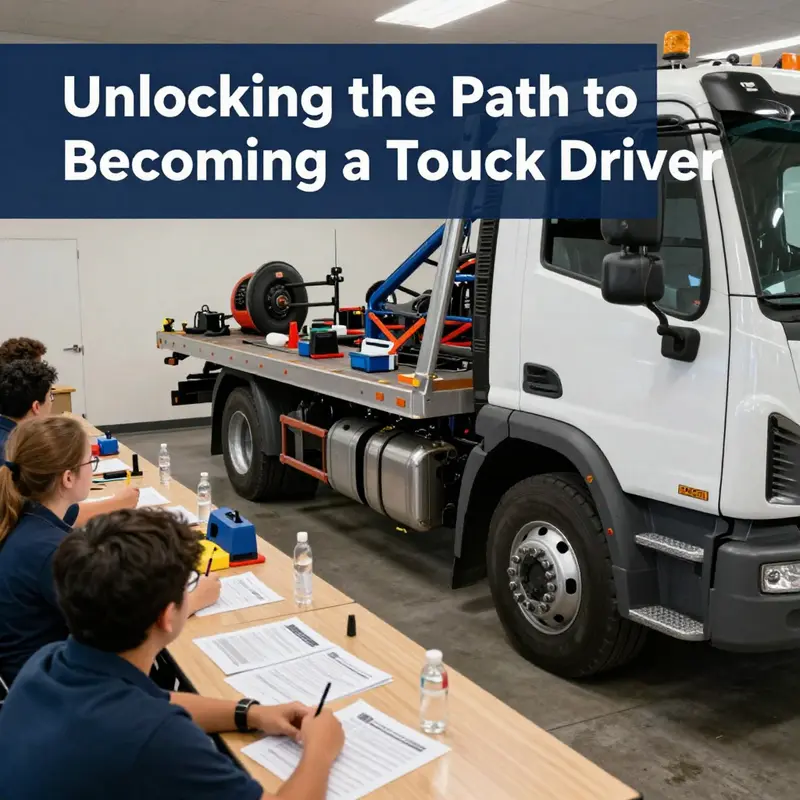
Becoming a tow truck driver is more than steering a big vehicle and offering a hand to stranded motorists. It is a structured journey through licensing lanes, endorsements, and a spectrum of training designed to keep both you and the people you help safe on the road. The road itself teaches you quickly that readiness is not a single checkbox but a layered set of requirements that vary with the vehicle you will operate and the jurisdiction that governs your work. In this chapter, we trace that journey from the first license you must hold to the professional certification that signals you can perform road rescues with competence, accountability, and a deep respect for safety.
At the outset, age and licensing establish the entry point. In most regions, you must be at least twenty-one to begin formal professional training for towing operations. This minimum age reflects the responsibility embedded in towing work, where a split-second decision can affect lives, traffic flow, and the integrity of the vehicle under tow. The next milestone is a valid commercial driver’s license, or CDL, which opens the door to operating heavier equipment. The class of CDL you need depends on the weight and configuration of the tow truck you intend to drive. If your duties involve heavy-duty wreckers or commercial vehicles, the path commonly requires a Class A or Class B CDL, with the right endorsements for towing. The specifics can differ from state to state, so you should verify the exact classes and endorsements with your local motor vehicle department.
A common feature in many training frameworks is the A2 license, a designation that specifically enables the operation of heavy and medium-duty trucks with trailers. In several jurisdictions, aspiring tow operators are expected to arrive with an A2 license after meeting certain prerequisites. A typical pathway is to hold a lower-class license, such as B2, for a prescribed period—often three years—before upgrading to A2. The upgrade is not automatic; it requires meeting age, vision, and hearing standards, and passing both written and practical evaluations. This layered pathway helps ensure that drivers have a proven baseline of experience and judgment before handling the most demanding towing equipment.
For lighter duties—such as using a tow behind a pickup or maneuvering a smaller trailer—the licensing path may differ. A C6 license, introduced in some jurisdictions in 2022, covers light trailers with a total mass under 4,500 kilograms. The C6 endorsement acknowledges that lighter gear presents different risks and requires a distinct skillset. These licensing distinctions matter because they align your credentials with the actual trucks you will drive and the scenarios you will face, from delicate wheel lift operations to heavy recovery work on crowded highways. You will often encounter professionals who hold both a CDL and specialized endorsements, because the line between routine roadside assistance and advanced recovery can blur in real-time, demanding precise knowledge of weight distribution, braking dynamics, and chain-of-command safety protocols.
Beyond the wheel and the license, the formal badge of readiness often comes in the form of a professional certification for towing operations. Many jurisdictions require what is commonly called a tow truck operator certification, or a “blue card,” a credential that verifies you have completed targeted training for road rescue and towing. The certification process typically combines theory and practice: you study the rules that govern towing operations, safety standards, load securing techniques, and communication protocols, then demonstrate these competencies in a controlled setting. The aim is not just to prove you can operate a truck, but that you can execute a tow with an emphasis on safety for yourself, your crew, the vehicle being towed, and other road users.
Training programs for tow truck operators are designed to be thorough and hands-on. A robust curriculum generally combines classroom instruction with substantial on-vehicle practice. In the classroom, you learn core concepts such as load dynamics, vehicle stability during towing, proper use of winching equipment, securing methods, fire safety, and basic troubleshooting. The practical side builds muscle memory for exact maneuvers you will perform under pressure. Expect a lot of time behind the wheel practicing maneuvers that are deceptively precise: straight-line backing to align with a disabled vehicle, and, perhaps more importantly, maneuvering in tight spaces where inches matter more than feet. These skills are essential in congested urban environments and in roadside conditions where space is constrained by parked cars, barriers, or other emergency responders.
Two specific techniques frequently emphasized in training are the S-pile and the shift-in-the-warehouse technique. The S-pile approach focuses on arranging chains, hooks, andTow equipment into a configuration that minimizes the risk of shifting loads during a tow. It requires careful planning, precise attachment points, and consistent communication with your team. The shift-in-the-warehouse technique, though described in some curricula with terminology borrowed from material handling, translates to managing a vehicle in tight quarters. It emphasizes controlled movements, frequent spotter checks, and an understanding of how weight shifts as you pivot and reposition a disabled vehicle. Mastery of these maneuvers is not glamorous, but it is essential for reducing the chance of collateral damage to the victim vehicle or surrounding property and for protecting the operator from sudden load shifts that can cause injuries or equipment failure.
To ensure that these skills are taught and absorbed effectively, training facilities dedicated to tow operations are typically expansive. A well-equipped program may span more than 10,000 square meters, providing ample room for realistic practice scenarios. Instructors who lead these programs often bring extensive real-world experience; many boast fifteen years or more of professional towing and recovery work. Their background informs every aspect of instruction—from the safety protocols that must govern every hook-up to the tactical decisions that determine how quickly a tow can be completed without compromising safety. A good instructor not only demonstrates technique but also explains the rationale behind each step, helping you internalize a mindset that blends speed with meticulous attention to detail.
The value of formal training becomes most apparent when you transition from the classroom into the field. In addition to technical proficiency, professional programs stress a holistic readiness that includes situational awareness, risk assessment, and ethical considerations. Road rescues often unfold in unpredictable environments: variable weather, shifting traffic patterns, and the emotional state of drivers in distress. Your ability to communicate clearly with dispatchers, bystanders, and other responders becomes as crucial as your ability to attach chains or operate a winch. This emphasis on soft skills complements the hard techniques you learn behind the wheel. It also reflects the reality that towing work sits at the intersection of transportation, law, and public safety.
Certification and licensing are not static milestones but part of an ongoing practice. Even after you obtain an A2 or C6 license and your blue card, staying current matters. Regulations evolve, new equipment enters the market, and safety standards tighten in response to incidents and lessons learned on the road. Many programs encourage or require continuing education, periodic re-testing, and refresher courses. This ongoing education helps professionals adapt to changing codes and maintaining a high level of proficiency in rescue operations, battery recall considerations for electric vehicles, or the proper handling of hazardous materials when those risks intersect with towing duties.
The practical path to readiness often intersects with local opportunities. For instance, a prospective operator who wants to understand how a local service operates may explore nearby options such as Arlington tow truck services. Examining how a nearby operation organizes its training, safety procedures, and service delivery can illuminate real-world expectations, from the types of calls received to the rapid coordination required during a freeway incident. This isn’t about imitation; it is about observation of best practices in action and recognizing how standardized training translates into dependable, lawful, and safe performance on the road.
All of this rests on reliable sources of official guidance. For anyone seeking a framework that transcends local peculiarities, the U.S. Department of Transportation offers a centralized resource hub with standards and regulations that guide commercial drivers nationwide. You will find that while the exact endorsements or the length of the training may differ by state, the underlying emphasis remains consistent: competence, safety, and accountability. The DOT site provides the broad context you need to navigate state-specific requirements and to map your progression from learner to licensed professional and beyond. It complements the practical training by anchoring your path in federally recognized expectations for driver qualifications, vehicle operation, and safety management.
In practice, the journey from novice to tow operator unfolds as a blend of formal milestones and hands-on mastery. You begin with the minimum age requirement and secure a CDL with the appropriate class and endorsements. You pursue a specialized license such as A2 or C6 if your future duties call for heavy equipment or light trailers. You earn a professional credential like the tow truck operator certification or blue card, after completing a curriculum that blends theory with rigorous fieldwork. Throughout, you build a portfolio of skills that go beyond the hook-up—planning, weight distribution, load securing, and rapid but careful decision-making under pressure.
A practical, real-world mindset supports this formal framework. You learn to anticipate complications before they arise. You practice pre-job checklists that cover everything from equipment inspection to roadside safety signals. You cultivate a disciplined approach to shift changes, ensuring that every tow is logged, every chain is counted, and every transfer of responsibility is communicated clearly. You learn to pause, assess, and adjust in the moment, especially when weather or traffic complicates what would otherwise be straightforward. This is not merely about operating a machine; it is about managing risk and preserving life and property in situations that demand both calm and precision.
The cadence of training and certification reflects an industry that balances urgent service with rigorous safety. It acknowledges that the moral gravity of helping a stranded motorist carries with it a corresponding obligation to uphold public safety standards. When you understand this, the path to becoming a tow truck driver stops feeling like a maze and starts to feel like a clear sequence of steps. Each stage—minimum age, CDL class, endorsements, background checks, drug screening, classroom learning, practical drills, and formal certification—builds toward a single professional identity: a trained, accountable, and dependable operator capable of guiding a tow, a truck, and a community through moments of disruption.
External resources can anchor your learning and provide context for state-specific requirements. For officials and aspiring drivers alike, the DOT’s official guidance offers a reliable baseline and points you toward the precise regulations that apply in your jurisdiction. Keeping these standards in view can help you plan your training timeline, identify the endorsements you need, and align your experience with nationwide expectations for safety and professionalism. As you look ahead to the day you pass your tests and earn your blue card, you can also begin to map out the practical training you will need in your region, including the type of equipment you will encounter and the conditions you will operate under.
Ultimately, the route to becoming a tow truck driver is no single leap but a series of deliberate steps. It requires a blend of age-appropriate licensing, targeted endorsements for the vehicle you will drive, and a robust certification that confirms your competence in safety-critical practices. It demands that you study, practice, and continuously refine your craft. It invites you to observe and learn from established operators while also committing to a path of ongoing education. If you approach it with curiosity about the technical, a respect for safety, and a readiness to engage in continuous improvement, you set yourself on a road that leads to reliable service, professional growth, and the ability to help people when they need it most.
External resource: https://www.dot.gov
Final thoughts
The journey to becoming a tow truck driver entails a clear understanding of the necessary qualifications and rigorous training requirements. As business owners, aligning with these standards not only enhances safety and efficiency but also builds trust with your clients. Equipping your team with the right skills and certifications can differentiate your towing services in a competitive market, fostering both growth and professionalism within your operations.