
The towing industry in Washington, D.C. is marked by stringent regulations and a complex operational environment shaped by high demand due to the city’s traffic density. For business owners, understanding the regulations governing authorized towing services is vital to ensure compliance and maintain operational efficiency. Furthermore, the ongoing evolution of the towing market, influenced by broader industry trends and consumer needs, is critical for staying competitive. This article delves into the regulatory framework for towing services in Washington, D.C., as well as the current market dynamics shaping the industry, providing essential insights for business owners in the sector.
Authorized Tow, Clear Rules: Navigating Washington DC’s Regulatory Framework for Towing Services
Washington, DC is a city of compact blocks, high density, and constant motion. The everyday ballet of delivery trucks, ride-hailing vehicles, and commuter cars creates a perpetual demand for roadside assistance and accident recovery. But in this bustling urban landscape, towing is not just a matter of loading a car onto a tow truck. It is a regulated service designed to protect consumers, keep traffic moving safely, and ensure that only qualified, accountable operators handle a vehicle at what can feel like a moment of crisis. The framework that governs authorized towing services in Washington, DC is anchored in a simple premise: clear rules reduce confusion for drivers, property owners, and tow operators alike, and strict enforcement preserves public order on crowded streets. Understanding this framework helps drivers anticipate what happens when a vehicle is towed, what rights they retain, and what steps they should take to recover their property smoothly. It also clarifies why the local regulatory environment matters for anyone considering entering the market as a towing provider or seeking roadside assistance in the district.
At the heart of the DC towing regime is a licensing system administered by the district’s Department of Transportation. All towing companies that operate within Washington, DC are required to hold a current license issued by this authority. The licensing process serves multiple purposes. It verifies that a company meets baseline qualifications in areas such as equipment standards, vehicle maintenance, and driver training. It creates a traceable identity for each operator, which in turn supports accountability when things go wrong or a dispute arises over fees, storage, or release procedures. A licensed operator cannot simply set up shop overnight; they must demonstrate that they have the infrastructure to handle tows responsibly, including properly maintained tow trucks, secure storage facilities, and a clear chain of communication with vehicle owners.
Compliance rests on a few core expectations that show up repeatedly in enforcement actions and consumer complaints alike. First, licensing is not a one-time hurdle; it is a continuing obligation. Operators must renew licenses and stay current on all applicable district rules. This ongoing compliance helps ensure that a company remains aligned with expectations on storage, inspection, and personnel conduct. Second, the regulations emphasize transparency. Tow operators are expected to be forthright about the conditions of service, the location of storage facilities, the basis for charges, and the timelines for vehicle release. Price transparency is not merely a courtesy but a stated requirement, intended to prevent surprise fees when a driver is already navigating an unfamiliar and stressful situation. Third, storage and retrieval practices are subject to robust standards. Vehicles must be stored in secure, properly supervised lots that accommodate the owner’s timely access to the car. The process for retrieving a towed vehicle should be accompanied by clear notices detailing where the vehicle is kept, the fees assessed, and the steps needed to reclaim ownership. The aim is to minimize confusion, reduce the risk of miscommunication, and accelerate the return of personal property to the rightful owner.
The regulatory emphasis on notice and communication is especially important in a city where curbside rules can change block by block and parking restrictions are abundant. DC regulations typically require that a tow operator provide specific information when a vehicle is towed. This includes the identity of the towing company, the location of the vehicle, the contact details for the storage facility, and an explanation of the grounds for the tow. In practice, this notice is designed to empower the vehicle owner to understand not only where to retrieve the car but why it was removed in the first place. The presence of such notice requirements also acts as a deterrent against improper or unauthorized towing practices. When a driver finds themselves facing a tow, the clarity of information becomes as crucial as the speed of recovery, because it guides decisions about legal remedies, financial responsibilities, and timelines for reclaiming the vehicle.
Professional accountability is reinforced by the prohibition on unauthorized or unlicensed towing operations. DC’s regulatory stance makes clear that operating without a license is illegal and subject to fines and other legal actions. Such penalties deter criminals from exploiting stressed drivers and help preserve the integrity of the towing ecosystem. The consequences for noncompliance extend beyond the operator; they can impact property owners who hire unlicensed providers or rely on questionable contractors to handle enforcement on private property or in restricted zones. In this sense, the licensing regime functions as a consumer protection mechanism that aligns incentives: licensed operators invest in compliant practices, while the district retains leverage to sanction those who fall short.
For residents and visitors navigating a tow in the district, the most practical takeaway is that a legitimate, DC-licensed service will be easy to verify and to hold accountable. The official roster of authorized towing services is maintained to assist consumers and property managers in distinguishing legitimate operations from opportunistic ones. If there is any doubt about whether a particular company is licensed, the district’s resources and published lists are the first line of defense in preventing mishaps or overcharges. A reliable clue is the presence of clear, public-facing license information on the operator’s vehicles and business materials, along with transparent pricing and documented procedures for release of a vehicle. A few sentences of due diligence can spare a driver hours of stress and a cascade of auxiliary costs.
Guidance for those who may be towed or who manage private property involves understanding not only the licensing landscape but also where and how to access authoritative information. The district provides a centralized source of truth for authorized towing services, a resource that enumerates license status, regulatory requirements, and the expectations placed on operators. The goal is to reduce ambiguity around who is allowed to tow, how to document a tow, and what consumers can reasonably demand in terms of notice and access. Within this framework, property owners play a critical role in partnering with licensed providers who abide by the rules. This collaboration helps model professional conduct, preserves the integrity of loading and transport processes, and minimizes disputes that can arise when curbside events collide with private property rights.
For readers seeking a practical entry point into the current landscape, one can explore a curated list of DC-based towing professionals that meet the district’s standards. This resource is particularly helpful for those who want to compare procedures and verify licensing before a tow ever becomes a possibility. towing companies in Washington DC offers a snapshot of qualified providers and serves as a starting point for conversations about service expectations, storage arrangements, and fee transparency. While the list is not the only answer to every scenario, it acts as a gateway to the broader regulatory framework and the disciplined practices that define authorized towing in the district.
Of course, the regulatory environment is not static. It evolves with changes in traffic patterns, enforcement priorities, and technology. The district regularly revises guidelines to reflect new safety standards, shift toward more efficient recovery processes, and incorporate feedback from drivers and operators alike. This dynamism is a natural byproduct of governing a capital city where the stakes of every tow extend beyond the immediate incident to the potential impact on traffic flow, emergency response times, and public safety. That is why the DDOT’s official publications and the ongoing updates to licensing criteria deserve close attention from anyone who interacts with the towing ecosystem—whether as a consumer, a property manager, or a service provider seeking entry into the market.
The broader market context matters as well. The towing industry is part of a rapidly expanding national landscape, propelled by rising vehicle ownership and greater reliance on roadside assistance. In a dense urban environment like Washington, DC, the demand for dependable, compliant towing services is amplified by the complexity of street patterns, parking constraints, and the need to maintain clear priority lanes for emergency vehicles. While national projections for the industry suggest robust growth, the DC-specific regulatory regime acts as a stabilizing force within that growth. It channels competition toward operators who demonstrate compliance, reliability, and a strong reputation for fair dealing with motorists and property owners alike. In other words, DC’s rules help ensure that growth in the towing sector does not come at the expense of consumer protection or public order.
For those who want to delve deeper into regulatory specifics, the district maintains a centralized portal with guidance on authorized towing services. Anyone seeking authoritative details—such as licensing requirements, the scope of permissible storage practices, or the precise notice obligations—will find the official publications to be the most reliable source. While the regulatory language can be dense, the practical impact is straightforward: licensed operators must meet clear standards, and motorists have reliable avenues to verify legitimacy, understand their rights, and navigate the process of retrieving a vehicle efficiently. This alignment of policy, practice, and consumer experience creates a towing environment in which safety and accountability are not afterthoughts but foundational principles.
In sum, Washington, DC’s approach to authorized towing services centers on clarity, accountability, and accessibility. Licensing by the district’s transportation agency, enforceable rules around storage and communication, and strict penalties for unauthorized towing work together to create a system that protects drivers and supports orderly streets. The practical effect for drivers is a more straightforward path to recovery when a vehicle is towed, along with a clearer sense of what services should cost and how the process should unfold. For operators, the framework provides a predictable market discipline and a credible route to establishing trust with clients. And for policy makers, it delivers a tangible mechanism to balance mobility with safety, ensuring that a thriving towing market serves the public interest rather than undermining it.
External resource: https://ddot.dc.gov/service/authorized-towing-services
Navigating the Towing Landscape: Market Dynamics and Growth Projections in Washington, DC
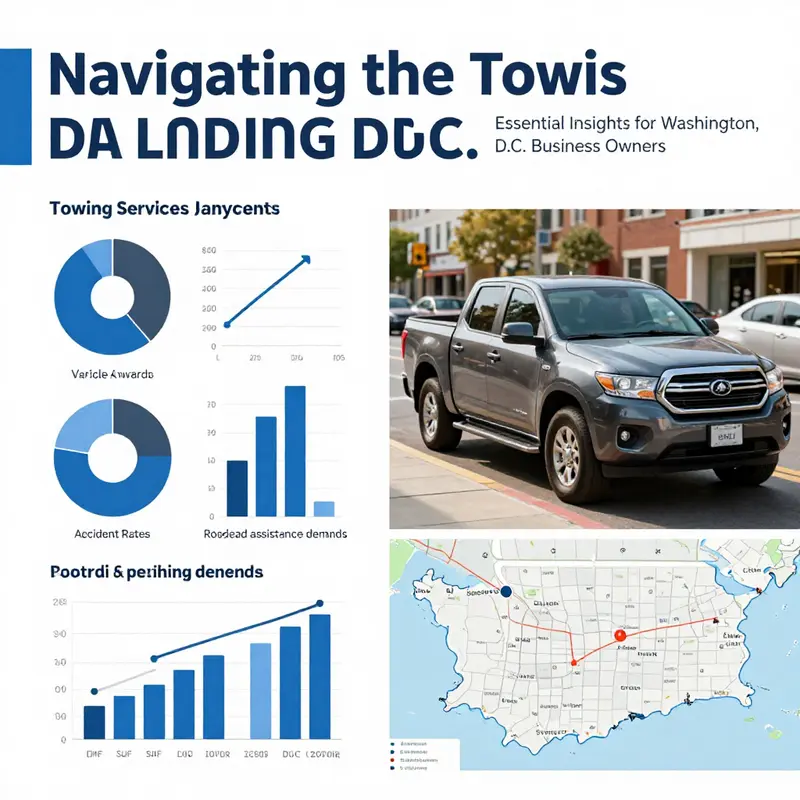
Washington, DC sits at the intersection of dense urban life, stringent regulation, and a continuously evolving auto-service ecosystem. The city’s towing scene is a microcosm of how modern metropolitan markets balance consumer protection with rapid, on-demand mobility. In DC, towing services operate under a carefully choreographed framework maintained by the District of Columbia Department of Motor Vehicles and the Metropolitan Police Department. This blend of regulatory rigor and operational necessity shapes every part of the market, from who is licensed to tow to how a motorist in distress is served within minutes of a roadside call. The market’s strength stems from two converging forces: the city’s persistent demand generated by its traffic patterns and government-anchored activity, and a broader continental current toward digitization and professionalization within emergency roadside services. Taken together, these dynamics position Washington, DC as a pivotal node in the North American towing and roadside ecosystem while also reflecting the unique local pressures that govern urban service delivery. For readers seeking a concrete glimpse into the local service landscape, a representative DC towing service example helps illustrate how authorities balance regulatory compliance with the need for fast, reliable help on crowded streets: Washington DC towing service. This chapter threads those realities into a view of the market’s trajectory, underscoring how policy, technology, and urban growth intersect to shape both current operations and future opportunities.
The market backdrop is clear on three fronts. First, the broader North American emergency roadside service sector has been expanding at a brisk pace. As of 2025, the region’s market stood at about USD 9.88 billion, with a projected compound annual growth rate of roughly 14.6% from 2026 onward. This growth is not merely a reflection of more vehicles on the road; it embodies heightened expectations for rapid response, transparent pricing, and dependable dispatching. In Washington, this macro trend translates into a reinforced demand for professional towing outfits that can deliver on promised response times while maintaining regulatory compliance in a jurisdiction known for tight traffic lanes and complex parking rules. Second, the DC market benefits from a high baseline of activity: a dense population, a heavy overlay of government and private-sector fleets, and a robust mix of residents and commuters who routinely require assistance during irregular hours. This creates a sustained need for towing services as both a preventive and responsive measure, ensuring that immobilized vehicles, whether due to accidents, breakdowns, or illegal parking situations, are moved safely and swiftly. Third, the market’s growth is reinforced by a larger industry arc that sees demand rising in parallel with urban development, infrastructure projects, and increased car ownership in metropolitan centers. The DC corridor is no exception, and operators who align with this broader growth are those who invest in capability rather than simply expanding fleets.
Regulatory structure in Washington, DC acts as both a safety net and a performance standard. The local framework codifies who may operate towing services, what kinds of notices are required to be given to vehicle owners, and the procedural steps for vehicle recovery. The DC DMV and MPD maintain oversight that ensures a consistent, predictable process for motorists and businesses alike. This regulatory precision creates a market environment where reliability matters as much as speed. A towing provider that complies with licensing standards, adheres to scheduling directives, and follows proper notice procedures earns legitimacy in a market where the wrong move can lead to fines, legal complications, or a loss of public trust. For operators, this means a steady demand for credentialed personnel, updated training, and compliant equipment; for motorists, it means predictable expectations and a clearer path to reclaim their vehicles. The regulatory discipline thus acts as a centripetal force, drawing in professional operators and pushing out less scrupulous participants, which ultimately benefits consumers by reducing the frequency of improper towing practices.
Technology has become a force multiplier in Washington’s towing arena. Modern fleets rely on GPS tracking to locate stranded drivers with precision, reducing dispatch time in a city where every minute counts. Real-time dispatch systems optimize routes through congested corridors, a feature particularly valuable on routes that intersect major government districts, memorials, and high-density neighborhoods. Mobile app integration further enhances the service experience by enabling motorists to track arrival estimates, understand fee structures, and receive updates about retrieval steps. For an operator, these technologies translate into leaner, more predictable operations; for a motorist, they translate into greater transparency and reduced anxiety during a stressful moment. In practice, a DC towing operation may deploy a combination of digital dispatch, proactive ETA sharing, and paperless invoicing to meet the dual aims of compliance and customer-centered service. In a market where street curb rules and tow-away zones can change with city priorities, such digital capabilities are not a luxury but a necessity for dependable service delivery.
Looking ahead, several forces are poised to tighten the bond between market performance and strategic investment in Washington. First, sustained urban development will continue to channel increased demand into towing services. DC’s ongoing infrastructure projects, reshaped commercial corridors, and evolving transit integration generate new edge cases for roadside help—from work zone incidents to high-traffic event days when the capital fills with visitors and temporary parking rules shift daily. For operators, this suggests a need to scale smartly: not just adding vehicles, but upgrading systems, refining dispatch logic, and training staff to handle a wider spectrum of roadside scenarios with professionalism. Second, policy initiatives emphasizing traffic safety and emergency response will likely keep the market on a modernization path. Towing companies that align with these policy objectives—whether through enhanced vehicle reflectivity, improved incident reporting, or collaboration with law enforcement during special operations—stand to gain favorable positioning. Third, there is a clear push toward modernization across the DC marketplace. Fleet modernization, better driver training programs, and the deployment of customer-centric platforms are not optional; they are prerequisites for meeting rising consumer expectations and for competing with neighboring jurisdictions that also regulate and attract high-quality service providers.
In this context, market survivors are those who knit together regulatory compliance, technical capability, and a keen understanding of local traffic dynamics. The DC market’s emphasis on licensing and notice requirements reduces the risk of predatory practices and ensures that consumers understand what to expect when a vehicle is towed. At the same time, the market rewards operators who can demonstrate rapid response, clear communication, and transparent pricing. The combination of a stable regulatory framework and a dynamic demand base creates a space where professional, well-governed towing services can thrive, even as the city’s streets grow more complex and the surrounding economy continues its expansion.
The broader regional perspective is also instructive. Washington, DC’s towing market does not operate in isolation; it sits within a web of adjacent markets in the Northeast that share regulatory norms, urban traffic patterns, and consumer expectations. This regional context matters because it helps explain the pace at which technology and best practices migrate into the DC market. Operators that observe neighboring jurisdictions, adopt proven dispatch and tracking platforms, and maintain high standards for personnel training are often better prepared to respond to shifts in policy or demand. The consequence is a more resilient local market that can weather fluctuations in vehicle ownership, seasonal traffic cycles, and the occasional disruptive event, such as a major road closure or a public safety incident. In short, DC’s towing services are strengthening their infrastructure to keep up with urban growth while staying within the bounds of careful governance that protects drivers and pedestrians alike.
For practitioners and scholars alike, the DC case underscores a core dynamic of modern urban services: markets succeed when regulation, technology, and customer experience reinforce one another. The city’s towing operators have to balance the imperative to be fast with the obligation to be fair and transparent. They must also invest in digital tools that translate into tangible benefits on the ground. The result is a market that can deliver dependable service in a high-demand environment, while still aligning with the broader trajectory of the North American roadside service sector, which looks set to extend its reach through continued digitization and service improvement. The looming question is not whether Washington will continue to attract more towing capacity and more sophisticated operations, but how operators will use data, training, and customer communications to turn that demand into consistently excellent outcomes. As infrastructure and policy evolve, those who deploy thoughtful modernization while upholding regulatory integrity will shape the future face of DC towing—one where speed, safety, and service quality converge to keep the city moving.
External resource for broader market context: industry forecasts for North American roadside services reinforce these expectations and help frame local growth as part of a continental trend. North America Emergency Roadside Service Market – LinkedIn
Final thoughts
Understanding the regulatory landscape and market dynamics of towing services in Washington, D.C. is crucial for business owners looking to thrive in this industry. By adhering to regulations and staying informed about market trends, businesses can effectively navigate the challenges and capitalize on emerging opportunities in the towing sector. With a robust infrastructure in place to support towing operations and a growing market demonstrating increasing demand, companies can position themselves strategically for success in the capital’s towing industry.