
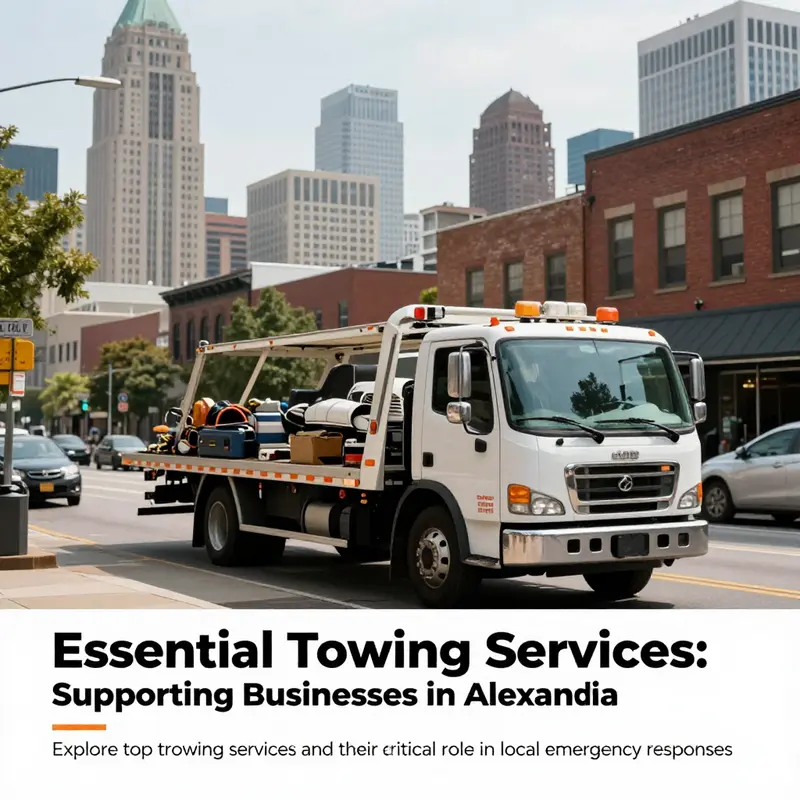
In Alexandria, VA, effective towing services are critical not only for individuals facing roadside emergencies but also for local businesses that operate fleets or rely on transportation. With several reputable towing companies offering reliable support, business owners can benefit from understanding the landscape of available services. This article examines leading towing providers that cater to Alexandria’s needs, as well as the indispensable role these services play in emergency response systems, ensuring safety and operational continuity for enterprises in the area.
Guiding Lights on the Potomac: A Deep Dive into Alexandria’s Leading Towing Services
Alexandria sits along the Potomac with a winding blend of historic streets, modern corridors, and the constant hum of traffic that carries residents, commuters, and visitors alike. In such a city, the need for reliable towing services is not a luxury but a practical certainty. When a vehicle stalls on a quiet side street, a busy arterial, or near a crowded waterfront, the value of a swift, professional response becomes immediately clear. The local towing landscape is built to meet a spectrum of needs, from minor roadside hiccups to major recovery operations, and it does so through a network of providers who distinguish themselves by reliability, readiness, and the care they show in the handling of a vehicle and its owner’s time and peace of mind. In this setting, the leading operators are not simply transporters of broken cars; they are partners in safety, logistics, and the often complex choreography that follows an incident on the road.
To appreciate what makes a towing service stand out in Alexandria, it helps to imagine the range of incidents that can occur on any given day. A flat tire in Old Town, a dead battery on a late-night stretch along the highway, a vehicle stuck in a difficult urban location after a collision, or a truck that requires a heavier wrecker to manage a scene safely. The strongest providers maintain fleets that span that spectrum. They are equipped for small, practical tasks and large, critical recoveries alike. They operate around the clock, understanding that emergencies do not observe business hours and that the first hour after an incident can dramatically affect the total time and cost of resolution. Their teams include seasoned drivers and technicians who bring not only heavy equipment and the know-how to deploy it but also a calm, customer-centered approach that reassures drivers who may be stressed, frustrated, or unfamiliar with the process of tow and recovery. The result is a service ethos that blends technical proficiency with a steady, communicative presence at every stage of a tow.
The reputational auras of leading providers in Alexandria rest on several converging threads. Foremost is reliability: the ability to respond quickly, reach the location with precision, and perform the necessary task without creating new complications. Quick arrival is especially critical when a vehicle is stranded on a busy arterial or during adverse weather, when every minute can feel like an ordeal. Beyond speed, professional standards matter. A top-tier operator keeps its vehicles and equipment up to date, adheres to licensing and insurance requirements, and maintains staff training that covers safety, traffic management, and proper handling of different vehicle categories. The industry also rewards transparency. Drivers and dispatchers who can outline a clear plan, provide an estimated arrival window, and offer straightforward pricing help to reduce the anxiety that often accompanies a roadside emergency. No one wants a surprise on a bill after a difficult afternoon; the best services minimize guesswork by presenting flat-rate options where applicable and by clarifying the coverage of any added fees.
In Alexandria, the relationship between towing services and the ecosystem around them matters too. Several local providers have cultivated integrated approaches that extend beyond simply hauling a car from point A to point B. For example, some have established collaborative workflows with nearby body shops and DMV-related services, creating smoother passages from accident scene to repair shop or administrative processing. Such collaborations can streamline the broader process—the tow may be the first step in a chain that ends with the vehicle back on the road more quickly, with less relative disruption to the owner’s schedule. In practical terms, a centralized planning approach can translate into smoother insurance communication, more efficient vehicle handoffs, and a more coherent post-incident experience for the driver. These capabilities reflect a modern towing landscape that recognizes the value of efficient, end-to-end service rather than a narrow, transactional encounter.
Another thread worth noting is the variety of service formats you might encounter when seeking help in Alexandria. Some calls will be straightforward roadside assistance: booster starts, tire changes, fuel delivery, or a light tow to a nearby shop. Others involve more complex recoveries from tight spaces, ditch lines, or multi-vehicle scenes that demand careful traffic management and specialized equipment. The strongest providers maintain the capacity to handle both ends of the spectrum. Their inventories span light-duty tow trucks and flatbeds for delicate handling of newer vehicles, along with heavier wreckers capable of managing large-scale recoveries. In practice, this means that the choice of service should align not just with the immediate need but also with the anticipated next steps. If a driver suspects that a vehicle may require long-term recovery planning or post-accident repair coordination, choosing a provider with established local connections and a track record of reliability can make a meaningful difference in the overall experience.
For drivers and residents evaluating options, a few practical criteria help separate the excellent from the merely adequate. Proximity remains important; a closer tow can arrive faster, shortening the period of vulnerability on a busy street or along a dimly lit stretch of road. Availability around the clock is equally crucial; a truly dependable service responds at any hour, including weekends and holidays, when road conditions and traffic patterns can be unpredictable. Licensing and insurance are non-negotiables, not just regulatory formalities but practical assurances that the provider has met minimum standards for safety and financial responsibility. Customer feedback is another reliable signal. Online reviews and anecdotal notes from neighbors and commuters offer real-world perspectives on how the company handles dispatch efficiency, communication, and the actual tow experience. Those who read reviews with care—looking for consistency in timeliness, transparency regarding pricing, and the demeanor of operators—often arrive at more informed choices.
In the more specialized corners of Alexandria’s towing scene, some providers emphasize the broader ecosystem of moving vehicles after incidents. One facet frequently highlighted is the collaboration with automotive restoration and collision repair facilities. In such arrangements, the tow becomes the initial leg of a coordinated journey—an integrated process that can reduce the total time to repair and improve the logistical flow after a crash. While this may not be essential for all drivers, it can be a meaningful benefit for those dealing with post-accident procedures and insurance claims. It is also worth noting the broad reach of proficient operators who extend their service radius beyond city limits to adjacent jurisdictions, including neighboring communities and corridors that connect through major roadways. In practice, this broader service footprint translates to predictable response patterns for out-of-area travelers and residents who frequently commute across county lines.
As with any essential service, a practical starting point for most people is to consult a concise, up-to-date resource that surveys the local landscape. For readers seeking to immerse themselves in Alexandria-specific options with a focus on the practicalities of service, it can be helpful to explore a dedicated overview that concentrates on local availability, response times, and the breadth of services offered by nearby providers. A succinct overview of the Alexandria towing scene can be found at towing-service-alexandria-va. This resource emphasizes the importance of proximity, 24/7 availability, and transparent pricing, while also illustrating how a well-connected operator can partner with other local services to ease the path from roadside incident to resolution. In this same spirit, drivers are reminded to consider the broader ecosystem when choosing a partner. A strong local provider is not merely a person with a tow truck; it is a stakeholder in the community’s mobility, safety, and daily rhythm, someone who can be trusted to handle a stressful moment with skill and courtesy.
For readers who want to hear the voices of customers directly, a quick look at community reviews offers a tangible sense of what actual experiences feel like. The overall sentiment often centers on reliability, the empathy shown by operators, and the clarity of communication throughout the process. In Alexandria, a city with narrow lanes near historic districts and busy arteries around the waterfront, those qualities are not just virtues—they are essential to reducing risk and minimizing disruption. A well-regarded provider is not simply the one who arrives fastest but the one who arrives prepared, communicates what will happen, manages expectations honestly, and completes the service with care for the vehicle and for the driver’s circumstances. When such attributes are found together in a single local partner, the result is a tow that not only moves a vehicle from point A to point B but also restores a degree of order to a moment that can otherwise feel out of control. For those who want a broader sense of consumer experience, refer to widely used community review platforms that continually reflect shifting patterns in response times, technician demeanor, and pricing transparency.
In sum, Alexandria’s leading towing services embody a blend of speed, safety, and service clarity. They recognize that towing is more than a mechanical task; it is a sequence of decisions that affect safety, liability, and daily living. The best operators keep their fleets flexible, their communications clear, and their prices upfront or easily traceable. They meet emergencies with a posture that blends urgency with care, ensuring that a driver in distress is met with someone who can guide them through the process with patience and competence. They sustain relationships with automotive and DMV-related partners that help shepherd a vehicle through incident, repair, and return to the road. And they remain accountable to the community that relies on them, continuously refining their practice based on feedback, regulatory changes, and the evolving realities of city driving. For anyone navigating the uncertainties of a roadside situation in Alexandria, these are the qualities to look for: timeliness, accessibility, legitimacy, and a consistent, respectful approach to every call. When these elements align, a towing service becomes less about moving metal and more about restoring momentum to a life interrupted by a moment of car trouble. For those who wish to explore more about the local options, the Alexandria-focused guide mentioned earlier offers a thoughtful entry point, while consumer perspectives can be gleaned from widely used review platforms that capture the real-world sense of what it means to rely on a tow service in this vibrant corner of Virginia.
Clearing the Way: How Towing Services Stand as the Hidden Backbone of Alexandria’s Emergency Response
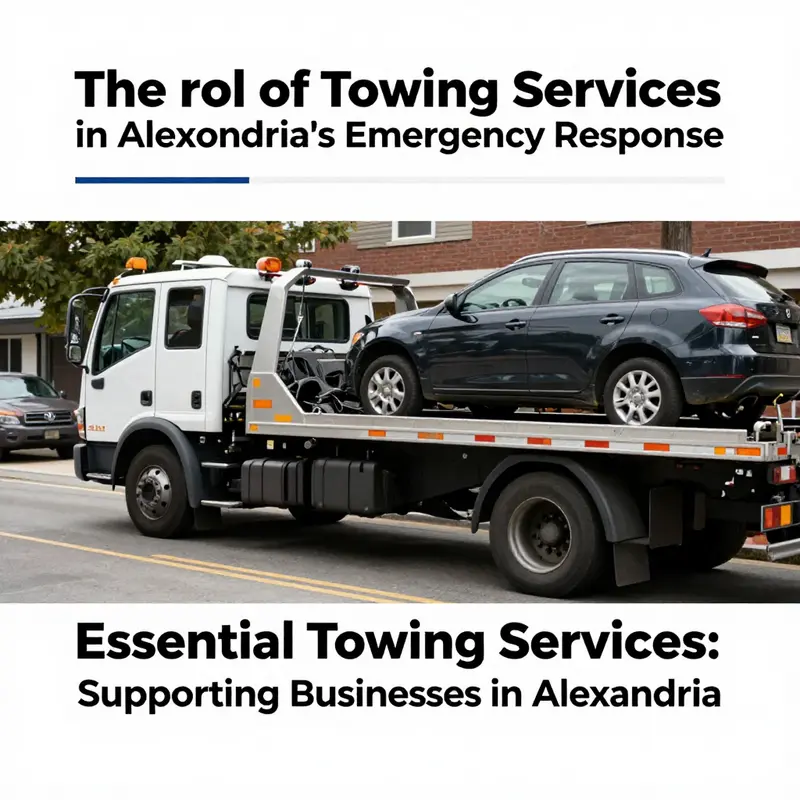
When a vehicle falters on a busy artery or after debris scatters along a curb, the right towing response does more than move metal. It shapes risk, time, and how quickly a city can recover from disruption. In Alexandria, arterial streets braid through neighborhoods and the George Washington Memorial Parkway threads commuters to and from the region, the role of towing services extends beyond roadside relief. They function as a critical backbone of the emergency response framework. These teams arrive as logistics and safety specialists on wheels, with the skill to secure a scene, stabilize a vehicle, and shepherd traffic back toward normal rhythm. The best outcomes hinge on speed paired with caution, on precise communication with police and transportation authorities, and on safety protocols that protect survivors, responders, and bystanders alike.\n\nThe immediacy of towing response is most noticeable during peak hours when King Street resembles a living artery and weather or construction can magnify delays. A rapid tow eliminates bottlenecks that would otherwise cascade into new incidents. When a vehicle breaks down at a choke point or after a collision scatters debris, a trained operator evaluates the scene with a calm assessment: Is the lane safe to pass while the vehicle is secured? Should traffic be diverted, and if so, where is the safest exit for approaching drivers? Answers to these questions are not improvised on the spot. They stem from a well-oiled system in which dispatch centers, road patrols, and tow crews share real-time information, aligning response times with road conditions and public safety mandates. This synchronization allows the city to reclaim capacity quickly, reducing the probability of follow-on collisions and speeding up the return of commerce and daily life to their normal cadence.\n\nA robust towing network also plays a pivotal role in protecting the integrity of crash scenes. Scene safety begins the moment responders arrive. Tow operators work with caution to minimize vibrations, jostling, or unintended contact with vehicles, which could disturb important forensic traces or shift positions of evidence. Even when a driver’s account is uncertain or an insurance claim is in contention, the goal remains constant: preserve the scene’s integrity while removing the vehicle from the roadway so that investigators can document evidence and use it to determine fault. In practice, this means careful placement of the disabled car, skirting of delicate fluid spills, and secure towing techniques that avoid unnecessary damage to surrounding components. These steps may seem routine, but they are essential to ensuring that investigations proceed without compromise and that the public record remains accurate for future claims and legal processes.\n\nBeyond the immediate aftermath of incidents, towing services in Alexandria anchor the broader emergency response through continuous accessibility. They operate around the clock, ready to respond to dispatcher calls, hospital or police requests, or urgent needs from motorists stranded in unfamiliar or dangerous locations. The 24/7 model is not merely about convenience; it is a deliberate choice to reduce exposure to hazards for stranded drivers and to keep traffic moving in the most efficient way possible. When weather turns harsh, storms complicate road surfaces, and visibility narrows, the ability of a tow crew to arrive promptly becomes a matter of safety. A well-coordinated system also allows for mutual aid across jurisdictions during large events or severe weather, ensuring that equipment, personnel, and expertise can be allocated where the risk is greatest without leaving other corridors unattended.\n\nAs a city dependent on a steady stream of people, goods, and services, Alexandria benefits from a network of local operators whose experience translates into quicker, safer outcomes. These providers bring more than a tool kit; they bring local knowledge of alleyways, loading zones, and legally permissible lots for temporary storage. They know where to position a tow truck so that approaching vehicles are not startled by sudden maneuvers, and they understand how to communicate with police units about lane closures or detours without fueling confusion. In practical terms, this means incidents are managed with minimal disruption to traffic flow, even when the incident occurs on a corridor with heavy foot and vehicle traffic or in congested retail zones where parking demands collide with response needs. The result is not just a cleared roadway, but a safer, more predictable environment for drivers who previously faced the uncertainty of a stalled or damaged vehicle in a high-risk area.\n\nResidents and visitors benefit most when they recognize the towing provider as part of the city’s safety ecosystem rather than a last-minute option. In moments of stress, a clear path to help—an on-call number, a dispatch confirmation, a transparent estimate—can noticeably reduce anxiety and speed resolution. To navigate this landscape, the right choice is guided by three core principles: reliability, transparency, and locality. Reliability means rapid arrival and consistent performance under pressure, regardless of time of day or weather. Transparency entails upfront communication about service scope, pricing, and expected timelines, so motorists are not surprised by unexpected costs or delays. Locality reflects the advantage of working with services that understand Alexandria’s streets, parking rules, and typical incident patterns. This intimate knowledge allows crews to maneuver through narrow lanes, locate safe staging areas, and coordinate with law enforcement or transportation officials with minimal friction. When these principles converge, the result is a seamless continuity of care that begins with a phone call and ends with a road open and a driver, if needed, guided through the next steps of recovery.\n\nTo illustrate how this integration works in practice, consider the moment a vehicle stalls along a busy stretch during a rain squall. Time is counted in minutes, and every turn of the wheel matters. A dispatcher receives the call, notes the exact location, and assigns a nearby tow team equipped for quick access to the scene. The team arrives, sets up traffic safety measures, and begins a careful assessment of the vehicle’s condition. If the car can be safely loaded, the operator communicates with on-scene police or DOT staff to ensure that the maneuver does not disrupt a critical clearance or create a new hazard. If the vehicle must be relocated to a nearby lot for inspection or assessment, the operator selects a route that minimizes exposure to traffic and protects the surrounding area from debris or fluids. In parallel, evidence preservation steps are executed with the same care. A shielded area is established to capture witness statements and collect any relevant data, while the vehicle is removed to a secure site that will not impede the investigation. This coordinated approach, practiced daily across the city, embodies the subtle artistry behind what many drivers may overlook when they focus solely on the next destination.\n\nFor residents who want to engage with this system more thoughtfully, the advice is straightforward: keep a list of trusted local providers, understand the typical response times for your area, and ask clear questions about service range and pricing when you call. Even though a roadside emergency can feel chaotic, a prepared driver who knows the protocol can steer the situation toward safety and efficiency. When selecting a local partner, consider evaluating their communication clarity, readiness to adapt to changing conditions, and willingness to explain the process of towing, storage, and release. An accessible provider may offer a web presence that explains service areas and a simple mechanism to request help, which in turn reduces uncertainty in a moment of need. For those who prefer self-sufficiency during routine vehicle issues, this prospective relationship becomes a crucial piece of a broader safety net that the city offers to residents and visitors alike. The aim is not to replace existing emergency services but to complement them with a dependable, well-coordinated local option that can respond rapidly and responsibly when standard travel must be interrupted.\n\nIn considering how to connect with a local provider, many people gravitate toward one practical pathway: a direct line to a trusted operator who understands Alexandria’s terrain and traffic patterns. Such a partner can act as a bridge between a distressed driver and the city’s wider safety ecosystem, ensuring that every step—from the moment a call is placed to the moment a vehicle is cleared and released for release—occurs with minimal disruption and maximum accountability. This is the essence of what it means for towing services to be a functional part of the emergency response: not glamorous, but essential, reliable work that keeps roads open, injuries minimized, and the urban fabric intact.\n\nIf you are curious to explore options within Alexandria, you can learn more about local providers and their offerings by visiting a dedicated Alexandria towing resource. The page reflects the city’s emphasis on rapid, professional assistance and may serve as a practical guide when you need help in an urgent moment. Alexandria towing services.\n\nExternal resource for broader context on the role of towing in emergency response: https://www.superiortowingservices.com
Final thoughts
Understanding the range of towing services available in Alexandria is invaluable for local business owners. These services not only provide essential support during vehicle breakdowns but also foster a more resilient community in times of emergencies. As businesses navigate the complexities of transportation and logistics, partnering with trusted towing providers ensures a safeguard against potential disruptions. By being informed and prepared, businesses can maintain operational efficiency and focus on their core mission.