
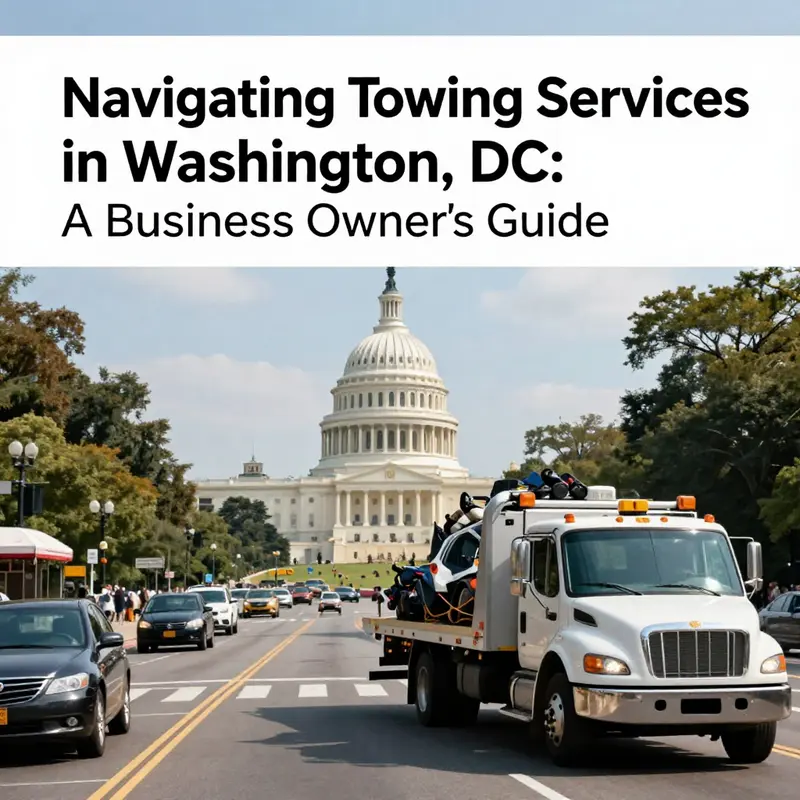
Towing services play a crucial role in the dynamic urban landscape of Washington, DC, catering to various business needs and emergency situations. For business owners, having a reliable towing partner is essential for maintaining operations and ensuring employee safety. This article delves into the intricacies of towing services in Washington, DC, exploring their structure, standards, and how to select the right provider to meet business demands. The chapters will guide readers through an overview of available services, the key regulations governing towing operations, and factors to consider when choosing a towing company to safeguard your business interests.
Washington, DC Towing Landscape: Roadside Rescue to Heavy-Equipment Transport
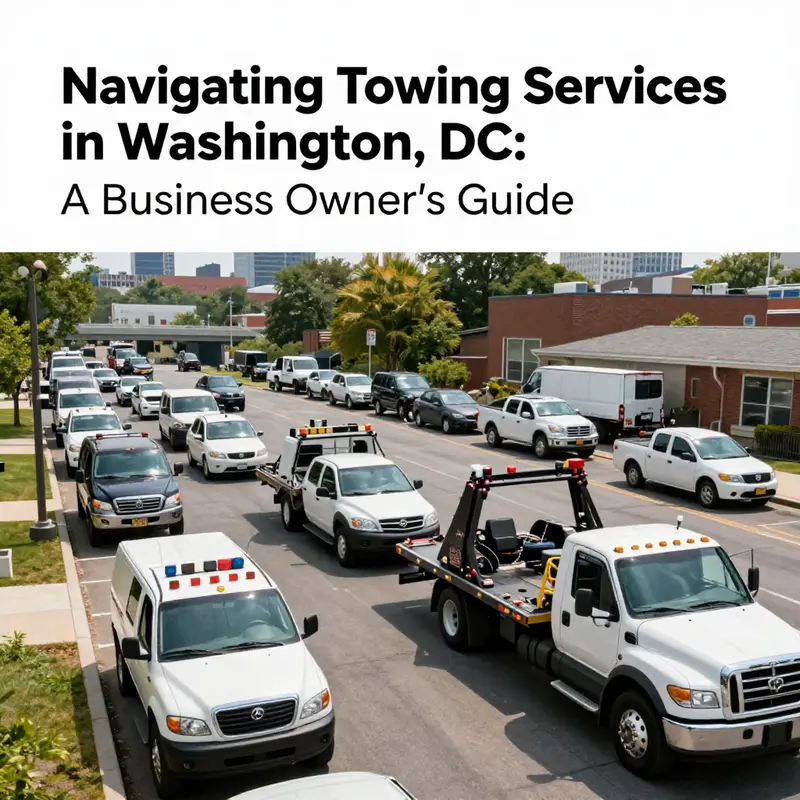
A connected system of response and transport shapes towing in Washington, DC. The city’s towing services do far more than move broken cars. They keep traffic flowing, support emergency planners, and enable large public events that require complex logistics.
Urban towing sits at the intersection of roadside assistance, municipal policy, and specialized heavy-haul capability. On a typical day, providers respond to lockouts, dead batteries, flat tires, and minor collisions. At the same time, a separate tier of operators maintains the equipment and expertise to handle oversized loads, heavy trucks, and even military gear when events demand it. This dual role means the region needs both fast, local response and heavy-equipment readiness.
Major public events make the difference visible. During a recent parade in June 2025, heavy armored vehicles were transported into and out of the city on tractor trailers. That movement required preplanned routing, certified towing rigs, and coordination with traffic and public-safety officials. The same planning process is used for any oversized or high-profile transport: route surveys, police escorts, bridge and overpass clearances, and staging areas. These efforts show how towing links to broader urban planning and emergency management.
For everyday drivers, the foundation of towing is insurance-backed roadside assistance. Most mainstream policies include a small number of complimentary tows each year, typically three to five incidents. The standard base distance covered is around 30 miles per tow, though some plans extend that to 50 miles. Beyond those limits, carriers commonly bill about $12 to $15 per mile. Drivers should also expect to pay for tolls, impound fees, and other third-party charges incurred during transport.
Coverage can be national in scope. Many roadside programs advertise protection across all 50 states and Washington, DC. Exceptions exist for remote areas. Rural Alaska and some distant Hawaiian islands often face single-tow limits of 50 miles due to practical and cost constraints. Policy terms also include conditions: the vehicle must meet state safety inspection rules and must not have illegal modifications that jeopardize safe towing. If a vehicle sits in a legislatively restricted zone, law enforcement or road authorities may need to clear the scene before a tow crew can work.
Commercial operators in the region serve a range of customers. Light-duty towing supports day-to-day incidents and private drivers. Medium- and heavy-duty operators focus on commercial fleets, construction equipment, and logistics firms. These providers often combine repair shops with recovery rigs, enabling same-site diagnosis and limited repairs. That integration reduces downtime for commercial vehicles. Local trucking fleets and municipal agencies depend on this level of service to keep schedules on track.
Specialized heavy-haul firms are indispensable when oversized equipment must traverse urban corridors. They bring licensed drivers, multi-axle trailers, and load-distribution knowledge. Permitting is a critical part of the job. Oversized loads require city, state, and sometimes federal permits. Towing firms work with permitting offices to schedule moves at times that minimize disruption. They also coordinate real-time traffic control and contingency plans in case of structural or mechanical issues along a route.
Safety standards and industry initiatives shape how providers operate. National-level events and trade gatherings have increased focus on towing safety. In mid-2025, an industry exhibition emphasized a national towing-safety week and a federal recognition program. The goal is to push adoption of stringent compliance checks so all trailers and rigs meet federal motor vehicle safety rules and industry best practices. For consumers and municipal partners, higher and more uniform standards lower accident risk and improve reliability.
Operational resilience also matters. Urban towing providers maintain rapid-dispatch systems and scalable resources. During peak commute hours, snow events, or major demonstrations, demand spikes. Providers rely on dynamic routing, staged tow trucks, and mutual-aid agreements with neighboring jurisdictions to respond. This resilience is a network property. Individual operators contribute capacity, but coordination across companies and agencies delivers citywide reliability.
Technology plays an increasing role. GPS-enabled dispatch, digital payment and invoicing, and online scheduling streamline interactions. For commercial customers, telematics and real-time condition reporting help prioritize tows and repairs. For everyday drivers, mobile apps reduce uncertainty by showing estimated arrival times and transparent pricing. These tools make the service experience faster and more predictable.
For readers looking for local options and service descriptions, a regional page that focuses on Washington, DC towing services outlines typical offerings and response expectations. Visit the tow truck washington dc page for a concise local overview and contact details for immediate needs.
All of this comes together in a system that balances speed, safety, and scale. Roadside assistance meets individual drivers’ needs. Commercial and heavy-haul capabilities support businesses and major public functions. Industry-wide safety initiatives and resilient operational practices reduce risk and improve reliability. Whether handling a dead battery at a curb or routing heavy military equipment during a parade, the towing ecosystem around Washington, DC operates as an essential urban service.
External reference: https://www.yelp.com/biz/top-10-best-towing-service-in-washington-dc
Washington, D.C. Towing Rules and What Every Motorist Should Expect
Understanding how towing is regulated in Washington, D.C. can save time and money when a breakdown or an unexpected tow happens. The District enforces a clear set of consumer protections and operational expectations for tow operators and road assistance providers. These rules focus on service coverage, transparent pricing, licensing and authorization, and a complaint process that empowers vehicle owners. Knowing the essentials helps you make smarter choices at the roadside and avoid surprise charges.
Within the District, most local tow and roadside assistance providers offer service across the city limits. Nationwide roadside programs also often cover D.C., but mileage limits can apply. As a practical benchmark, many roadside plans nationwide include a basic towing allowance of roughly 30 to 50 miles. If your vehicle must go farther, expect a per-mile charge beyond that allowance. Because these mileages vary by provider and by policy, confirm limits before you rely on any advertised “free” tow.
Not all locations are equal. Restricted areas, such as gated federal facilities or controlled-access zones, require official authorization before a vehicle can be moved. In those cases, police or roadway authorities usually clear the scene or order the tow. Afterward, a standard tow company may handle transport under direction from the responsible agency. If you encounter a tow in such areas, ask the responding staff which public agency authorized the action so you can document it later.
Pricing in D.C. is not fixed by a single universal tariff, but the District monitors industry practices to protect consumers. Expect the basic components of a tow bill to include a hookup or base fee, a per-mile transport charge, and possible extra charges for special circumstances. Night, holiday, and severe-weather calls often trigger surge rates; typical industry increases range from about 30% to 50% above daytime rates. Dangerous locations, heavy equipment needs, or multiple-operator recoveries will also increase the final cost.
Transparency is a legal and practical priority. Law requires that you be informed of charges and that a driver provide an itemized receipt upon request. Before work begins, ask for an estimate and a clear explanation of which fees are included. If a tow truck driver refuses to provide a written estimate or attempts to pressure you into unauthorized services, do not sign anything and record identifying details like company name, truck number, and the driver’s ID. Photographs of the scene, the vehicle, and the truck help preserve evidence of the interaction.
Insurance-based roadside assistance is a common alternative to direct-pay towing. If your policy includes a roadside endorsement, it should explicitly state the procedures and limits: whether service includes gas delivery, lockout, tire change, battery jump-start, or towing; the mileage limit; and any restrictions for highways or special roads. Always verify the presence of a roadside assistance endorsement in your policy documents. If you call for help through your insurer, be ready to provide your policy number and verifying information, such as the plate number and vehicle identification number. When requesting assistance without the policyholder present, companies may require verification, typically a portion of the insured’s social security number or another identifier.
When a tow is required, a few short actions increase your protection. First, contact your insurer or your roadside provider to request service. If you must engage a private tow company, ask to see their operating permit and proof of insurance. Confirm the destination before the truck begins the tow. Request an estimate in writing and retain any receipts. Keep a record of the time, the responding company’s name, the truck number, and the driver’s name. If you suspect the tow is unauthorized—such as a vehicle removed from private property without clear signage—contact local consumer authorities or police and insist on documentation that justifies the removal.
Disputes over fees are handled through the District’s consumer protection channels. The local consumer affairs office accepts complaints about unauthorized towing, inflated charges, and fraudulent practices. Investigations can result in fines and remedies for consumers. The existence of penalties underlines how seriously the city treats dishonest towing. Because enforcement actions are possible, reputable providers will follow the rules on authorization and disclosure. If you face an unreasonable charge, file a complaint and submit the documentation you collected at the scene.
Certain environments create extra complexity. Highways, tunnels, and busy arterial roads often require special equipment and staging. These jobs are inherently riskier and usually cost more. Likewise, tows performed during inclement weather or late at night will often incur additional fees. Ask about any surcharges upfront so you can weigh options. If a vehicle can be temporarily repaired at the roadside, a short-term fix may avoid a long tow and a larger bill.
For motorists who want to be proactive, assemble a roadside kit that includes policy information, a concise note of emergency contact numbers, a fully charged phone, and flashlight. Keep images of your registration and proof of insurance accessible on your phone. If you need to search for a local provider that operates in the District, consider providers with established D.C. coverage and documented operating permits. For a quick local reference, see a page dedicated to towing services in the D.C. area here: towing-service-dc.
Finally, remember that the legal framework in Washington, D.C. centers on transparency and consumer rights. Your best protection is knowledge: check your policy, ask clear questions, document interactions, and report unlawful conduct. For authoritative guidance or to file a complaint about towing practices, consult the District government office that handles consumer affairs. More information and contact details are available from the Consumer Affairs Office: https://dc.gov/service/consumer-affairs-office
识别差异、做出明智选择:华盛顿特区拖车服务的比较与决策要点
识别差异、做出明智选择:华盛顿特区拖车服务的比较与决策要点
在华盛顿特区寻找拖车服务时,表面看似简单的选择实际上包括多个维度。城市的道路网络、繁忙时段、不同车型的需求以及保险覆盖范围,都会影响最终决策。理解这些差异能帮助车主在紧急情况下迅速判断哪类服务最适合自己。本文以服务覆盖、响应速度、定价规则与透明度、专业能力与增值服务四个主线,呈现一个连贯的比较框架,便于在实际场景中立即应用。
服务覆盖与响应速度通常是决定性因素之一。大规模服务网络在市区普遍能提供更短的到达时间。密集网点和调度系统让他们在高峰或复杂路段仍能保持30至60分钟的到场时间。对比之下,本地小型公司可能在中心区外的社区费时更长,因为它们的拖车资源分布有限。考虑到华盛顿特区的交通管制和部分道路限行,选择具备城市经验和熟悉路网的服务商很重要。与此同时,夜间或节假日期间的可用性也会显著不同;能提供24小时全天候响应的团队,往往意味着更稳定的救援体验。
定价模式是另一个必须弄清楚的方面。行业中常见的计价方式包括固定起步价加里程费,按服务类型分层定价,或针对大型车辆和特殊拖运情形单独报价。起步价范围差异大,里程费与是否跨区运输也会影响总费用。夜间和节假日附加费是普遍现象,通常在30%到50%之间浮动。对车主来说,最实用的做法是事前询问完整报价清单,明确起步费、每英里费用、等待时间费与任何可能的额外收费项。若车辆在保单覆盖范围内,保险公司可能提供的免费拖车服务,可以显著降低费用,但需要核实条款细则,例如里程限制、适用车型、以及是否可用于事故或隧道内救援。
专业能力与增值服务反映了服务商在实际救援中的质量差异。基础拖车只解决车辆转运问题,但许多优质提供者会额外提供简单现场维修、燃油输送、临时牵引或替代交通安排。这些服务能在短时内恢复车辆行驶或至少确保乘员安全。员工培训、设备现代化程度与安全操作标准同样重要。具备资质证书和标准化流程的团队,往往在事故车辆处理、重型货车拖运或复杂机械故障时表现更好。此外,透明的服务协议和清晰的责任划分能减少事后纠纷。
在选择时,口碑与信誉是直观可信的判断依据。口碑信息来源包括客户评价、当地社区反馈与第三方评分。结合这些信息来评估一个公司的稳定性和服务一致性,会比单纯比较低价来得更有价值。除了评价,明确的联系方式、清晰的服务区域说明与便捷的支付方式,也能提升在紧急情况下的可操作性。建议保存首选服务商的电话,并在车里或手机中备份,以便需要时立即联系。
一个实用的决策流程可以这样执行:首先确认紧急程度和车辆类型。对私家车的小范围故障,可优先考虑保险内的免费拖车或附近小型服务点。若处于高速或存在安全隐患,应优先选择响应速度快、具备事故处理经验的服务商。其次,快速询价并确认是否存在夜间或特殊路段附加费。第三,查阅近期客户反馈,重点关注到场时间、服务态度与账单透明度。最后,确认支付手段与发票开具方式,确保后续能通过保险或公司报销。
另一层面是面对大件或商用车辆时的特殊考虑。大型卡车和拖挂式车厢的拖运需要专门设备与更为周密的操作计划。并非所有拖车公司都能安全处理重型载具。选择此类救援时,应优先确认公司是否具备相应的重型拖车许可和完备的保险责任覆盖。另一方面,如果经常在区域内通勤或从事商业运输,建立长期合作关系能带来更优的响应优先权与优惠定价。
最后,保持信息透明与提前准备,是避免被动选择的关键。事前了解不同公司的服务边界、询问完整报价、保存联系方式并核对保险条款,能在需要救援时迅速做出决定。若想了解更多关于本地区常见拖车服务选项和流程,可参考这份本地资料:Washington, DC towing resource。
欲探索区域内先进物流与运输设施如何影响拖车服务可用性,请参阅相关物流设施来源:https://www.ups.com/
Final thoughts
Understanding the towing services landscape in Washington, DC is vital for business owners seeking reliable roadside assistance. From recognizing the operational standards and regulations to selecting the ideal towing partner, each aspect plays a significant role in ensuring smooth business operations. As you navigate these waters, consider the specifics of your business needs and the capabilities of potential towing services to forge a partnership that enhances your operational reliability and protects your interests.