
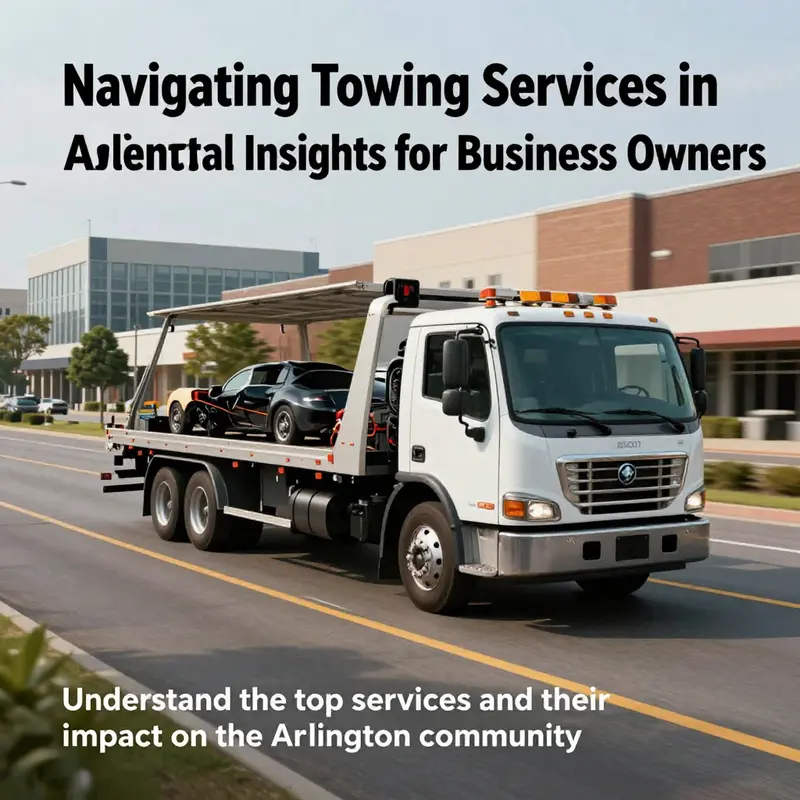
In Arlington, TX, reliable towing services are crucial for businesses and residents dealing with vehicle emergencies. This article highlights the most reputable local towing options, such as Express Towing Arlington and Prime Towing DFW, showcasing their strengths and services. Additionally, it examines the broader impact of these services on the Arlington community, emphasizing their role in supporting local businesses and ensuring highway safety. As we explore these chapters, business owners will gain valuable insights into how towing services can enhance their operations and benefit the community.
Choosing the Right Towing Help in Arlington: What Matters Beyond the Tow Truck
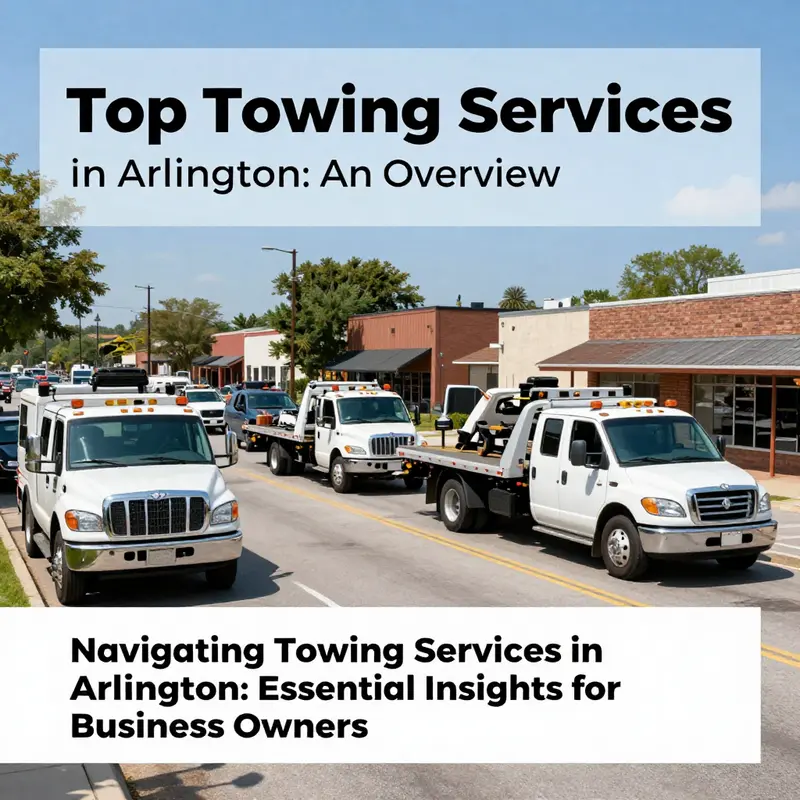
Arlington’s road network and the steady flow of commuters create a continual need for dependable towing help. This chapter focuses on what truly matters when you call for a tow in Arlington, and how to evaluate providers so you get safe, timely, and transparent service. Rather than cataloging company names, the discussion emphasizes the concrete qualities and service practices that separate reliable operators from the rest.
Start with response time and reach. A fast arrival matters more than a low headline price. When a vehicle is disabled on a busy thoroughfare, minutes affect safety and stress. Look for providers that publish or confirm estimated arrival windows. Ask whether they operate from multiple stations or a centralized yard. Operators with several staging points across Arlington can usually reach downtown and suburban areas faster. Confirm whether the provider tracks trucks in real time and can reroute the nearest unit to your location. That capability shortens wait time and reduces the chance of extended exposure on a roadside.
Next, consider the type of equipment available. Flatbeds, wheel lifts, and heavy-duty wreckers each serve different needs. A flatbed is the safest choice for modern all-wheel-drive vehicles and motorcycles. Wheel-lift trucks are efficient for quick local moves, while heavy wreckers handle larger commercial vehicles and severe crash scenes. Ask the dispatcher about the truck type that will arrive. A mismatch can force a second tow and higher fees. Also confirm whether the operator carries specialty gear like winches, dollys, or vehicle stabilization tools. These items make recovery from ditches, median barriers, and parking-lot incidents safer and more efficient.
Insurance and licensing are not optional. Always verify a provider’s liability insurance limits, worker compensation coverage, and local licensing. An insured tow company protects you if damage occurs during recovery. Licensing indicates compliance with municipal and state rules, including safe towing practices and vehicle storage regulations. Insist the dispatcher provide policy details or confirmation numbers when you request a tow. If the company resists sharing this information, treat that as a red flag and consider an alternative.
Transparent pricing reduces friction and surprises. The most useful quotes include a clear hookup or dispatch fee, a per-mile rate, and any additional charges for after-hours service, winching, or heavy equipment. Some operators present a single flat fee for a common move. Others list each component. Both approaches work if the total cost is clear up front. Ask for estimated totals for both hookup and per-mile charges. If possible, get the estimate in writing through text or email. A follow-up receipt should itemize charges and reflect the initial estimate. Providers that emphasize “no hidden fees” and consistently honor written estimates earn trust quickly.
Availability matters beyond standard business hours. Arlington drivers need help late at night and on holidays. Confirm that your chosen provider operates a true 24/7 emergency line. Some companies accept calls around the clock, but deploy fewer trucks overnight. Ask whether nighttime calls might come with premium rates or longer waits. If you rely on roadside assistance from an insurer or auto club, check whether they partner with the towing provider, and whether the tow operator can bill the insurer directly. That coordination often speeds authorization and avoids out-of-pocket payment.
Customer experience and reputation remain powerful indicators. Review recent feedback on local review platforms and community forums. Look for patterns across multiple reviews rather than isolated ratings. Positive themes include courteous drivers, clear communication, and fulfillment of price estimates. Negative trends often cite long waits, disputed charges, or equipment damage. When reviews raise concerns, contact the provider and ask how they resolved past complaints. Companies that publish resolution stories and follow-up policies tend to treat customers as long-term clients rather than one-off calls.
Specialized services can be essential for business fleets and complex recoveries. Fleet management programs include scheduled relocations, discounted per-call pricing, and centralized billing. If you manage a small business or a local delivery fleet, ask whether the towing operator offers fleet contracts and what service-level guarantees accompany them. For accident scenes, specialized providers can secure vehicles, document damage, and coordinate with law enforcement and insurers. Verify that the operator is comfortable working at accident scenes and can produce scene reports or photographs for claims.
Safety and driver training are often invisible but critical. Enquire about operator training standards. Look for companies that require ongoing certifications for winching, vehicle handling, and crash-scene management. Properly trained drivers reduce the chance of vehicle damage during a tow and handle complex recoveries with less risk. If you feel uneasy about a driver’s technique on site, request a supervisor or another truck. A professional firm will prioritize safety and offer reassignment without friction.
Storage and vehicle release policies matter when a tow involves impoundment or secure storage. Ask about storage yard conditions, access hours, and release procedures before authorizing a tow to a private lot. Verify whether the yard applies daily storage fees and whether the company handles title issues or lien filings. If you expect to retrieve your vehicle outside normal hours, confirm whether after-hours release is possible and what identification and paperwork will be required.
Communication and documentation prevent disputes. A competent operator texts or emails an arrival window, driver details, and a clear cost estimate. On arrival, the driver should explain the hookup process and outline any additional work that might alter the price. Insist on a written receipt that lists the tow origin, destination, mileage, and any ancillary services. If you pay by card, ensure the terminal prints an itemized receipt. Keep images of the vehicle’s condition before tow as a reference for any later claim.
Local knowledge and traffic familiarity can cut delay times. Providers who operate regularly in Arlington understand common choke points and rush-hour patterns. They plan routes to minimize delay and often know best practices for working on major corridors and near stadium areas. When you call, mention notable location details, like entrance ramps, cross streets, or nearby landmarks. A driver who understands the area will arrive faster and begin recovery sooner.
Several operational practices increase overall value. One is flexible payment options. Accepting cards at the scene, mobile pay, and invoicing for accepted fleet accounts simplifies transactions. Another is partnership with repair shops and salvage services. If a tow leads to a repair or salvage situation, coordinated referrals and transport can streamline the post-tow process. Finally, look for operators who provide simple follow-up options, such as short surveys, direct manager contact, or rapid escalation paths for billing concerns.
Choosing towing help in Arlington is a blend of immediate needs and long-term trust. Fast arrival and proper equipment address the urgent risk. Clear pricing, insurance verification, and documentation protect your finances. Fleet and accident-scene specialists reduce headaches for businesses and complex recoveries. Strong local knowledge, driver training, and courteous communication build lasting relationships. When these elements align, a towing call becomes a manageable chapter in your day rather than an open-ended problem.
For a local overview and user reviews of Arlington towing providers, consult a current regional list and community ratings. These resources reflect recent customer experiences and ranking trends. The latest real-time ratings and aggregated reviews can be found at this directory: https://www.yelp.com/biz/top-10-best-towing-service-in-arlington-tx.
For additional local context about towing operations in Arlington, see this Arlington towing guide. https://acex-towing.com/arlington-towing/
Steering Through the Night: How Arlington’s Towing Network Keeps Roads Safe, Open, and Moving
Arlington sits at a crossroads of traffic, commerce, and community life. Its streets pulse with commuters, families, delivery trucks, and emergency responders who depend on timely movement to keep daily life flowing. In the quiet hours and during the bustle of peak times, a specialized network operates behind the scenes to keep roads clear, incidents contained, and mobility restored as quickly as possible. That network is the towing service in Arlington, a fleet of responders whose work extends beyond merely hauling a disabled car from the shoulder. It is a critical infrastructure that supports safety, efficiency, and economic resilience across the city. When a vehicle falters on the road, when an accident blocks a lane, or when a car is parked in a space where it shouldn’t be, towing professionals rise as swift, reliable partners in public safety. Their role begins the moment a breakdown or obstruction is detected and continues until the curb is clear, the scene is secured, and the flow of traffic resumes. In a city as densely trafficked as Arlington, every minute saved in clearing a lane reduces the risk of secondary crashes, helps emergency responders reach the scene faster, and minimizes disruption to neighborhoods, schools, and local businesses. The practical impact of this work is felt far beyond the immediate problem of a stalled vehicle. It shapes travel times, safety outcomes, and the overall quality of urban life.
Traffic management and safety sit at the heart of the towing function. When a vehicle breaks down or a wreck occurs, debris and blocked lanes can rapidly transform a normal commute into a hazardous bottleneck. Towing teams, trained to work in live traffic environments, act with precision to isolate the incident area, remove the obstruction, and restore a safe corridor for other drivers. This process reduces the risk of secondary accidents that often follow a single incident as rubbernecking or lane weaving create fragile conditions for nearby motorists. Arlington’s roads—like those in many urban centers—often feature multi-lane arteries and complex interchanges. In such settings, the early clearance of a disabled vehicle is not just a courtesy but a public safety imperative. The towing operator’s timely action minimizes the window during which a lane is unusable, enabling police, fire, and emergency medical services to navigate around the incident more effectively. The result is a more predictable travel environment, which in turn lowers stress for drivers and reduces the likelihood of additional incidents that might arise from confusion or impeded navigation.
Cooperation with law enforcement and city agencies is another essential axis of the Arlington towing ecosystem. Local authorities rely on tow operators to enforce parking regulations, clear abandoned or illegally parked vehicles, and maintain order in public spaces where violations can create hazards or impede access for responders. This cooperation requires clear procedures, consistent training, and reliable communication channels. Tow operators participate in coordinated response plans, sharing information about vehicle location, condition, and any potential safety concerns. They also contribute to the city’s code enforcement efforts by ensuring that violations are addressed promptly, which helps preserve parking availability for residents, visitors, and essential services. The integration with law enforcement and city protocols is not a one-time collaboration but a continuous, adaptive relationship that responds to new regulations, evolving street layouts, and changing patterns of use. In Arlington, this synergy supports a city that can react quickly to incidents and maintain orderly public spaces that function as intended.
Beyond safety and regulation, towing services contribute to the local economy in meaningful ways. They enable quick vehicle recovery and repair, minimizing the downtime that can disrupt personal routines, shift work, and the operations of small businesses. When a delivery van or service vehicle is towed efficiently and released back onto the road with minimal delay, the broader economic activity that depends on timely transportation remains intact. Moreover, the presence of a dependable towing network creates employment opportunities and strengthens the service economy. Local technicians, dispatch coordinators, and support staff collectively form a workforce that keeps Arlington’s logistical chain moving. The economic ripple extends to vehicle repair shops, insurers, and other allied services that form a resilient ecosystem around essential mobility. It is a network that, while invisible to most drivers, quietly stabilizes daily life and underpins the city’s capacity to host events, sustain commerce, and support households in navigating routine and extraordinary circumstances alike.
The 24/7 nature of many Arlington towing providers is a vital feature of urban resilience. Day or night, weekdays or holidays, there is a readiness to respond. That availability matters when storms disrupt traffic, when a vehicle stalls on an expressway ramp, or when a car is found abandoned and poses a safety concern. The round-the-clock service reduces vulnerability to time-based risk—speeding up the transition from incident to clearance and, with it, the restoration of normal traffic patterns. This constant readiness is not a casual feature but the outcome of careful staffing, robust dispatch systems, and a commitment to reliable, predictable response times. In a city where the rhythm of life can change suddenly—whether due to a major event, a weather pattern, or a late-night emergency—the ability to summon help at any hour shapes how residents experience safety and mobility. The knowledge that help is close at hand reduces anxiety for drivers, reinforces trust in public-facing services, and supports a sense of security that allows people to plan their days with greater confidence.
The community dimension of Arlington’s towing network is perhaps most evident in how it supports mobility for residents and commercial activity for local businesses. Reliable towing services enable people to maintain their routines even when a vehicle fails. They deter the paralysis that can occur when a car is stranded on a busy corridor near a school, a hospital, or a shopping district. They also support the city’s logistics and delivery operations, ensuring that time-sensitive goods move efficiently through urban corridors. For small business owners who depend on timely transportation for inventory, service calls, and customer visits, a rapid towing response reduces downtime, protects revenue, and preserves service levels. In neighborhoods where curb space is at a premium, the presence of a dependable, well-coordinated towing system helps maintain order and predictability. It creates a more navigable environment for residents who park on streets near their homes or in front of local establishments, because the process of removing a vehicle that violates codes is orderly, transparent, and timely.
As Arlington continues to grow and evolve, the towing network also plays a role in urban planning and street management. Municipalities increasingly recognize that the efficiency of emergency response and routine mobility depends on the pace at which obstructing vehicles can be cleared. Tow operators contribute to this planning by providing insights from the field about typical bottlenecks, common trouble spots, and the practical realities of responding to incidents in mixed-use areas. This feedback helps city planners, law enforcement, and traffic engineers design better interventions—whether it’s clearer signage for tow-away zones, more effective incident response workflows, or the reallocation of curb space to balance loading zones, parking, and emergency access. The end result is a city that is not only safer but also smarter in how it uses its streets. Arlington’s towing network thus sits at the intersection of safety, efficiency, and urban design, quietly shaping a city where mobility remains a core strength even when disruptions arise.
Residents and visitors alike benefit from a culture of reliability around Arlington’s towing services. The most important impression is not the presence of a vehicle on the shoulder but the assurance that, when a problem occurs, a trained, licensed, and insured professional is nearby, prepared to respond with care and competence. This assurance translates into everyday peace of mind. People can drive with the confidence that assistance is accessible, that traffic can be managed without cascading delays, and that the city’s infrastructure is supported by a robust, professional support system. In practical terms, this means that a family headed to a game, a nurse commuting to a clinic, or a business owner coordinating a crucial supply run can proceed with reduced worry even when an unexpected setback interrupts their plans. The towing network thus becomes a partner in everyday life—an unsung component of Arlington’s public safety, its economic vitality, and its capacity to host a thriving, dynamic community.
For readers seeking to understand or engage with Arlington’s towing landscape, the key is to look for a provider with a demonstrated commitment to speed, safety, and transparency. A strong local presence, accessible 24/7 service, clear pricing, and licensing that aligns with state and city requirements are non-negotiable markers of reliability. In addition, the ability of a towing service to coordinate smoothly with law enforcement and city agencies is a meaningful signal of professional standards and accountability. While the specifics of each incident will vary, the overarching theme remains constant: when a vehicle obstructs a roadway or breaks down in a challenging urban environment, the response that clears the way, controls risk, and returns life to its normal cadence is what keeps Arlington moving.
Within this broader narrative, Arlington’s local towing ecosystem also offers a practical path for residents seeking support. For those who want to explore more about Arlington-specific towing resources, a dedicated local hub provides guidance, rapid response options, and access to services tailored to this city’s unique streets and codes. Arlington towing resources (https://acex-towing.com/arlington-towing/) can serve as a starting point for understanding how these services integrate with other public safety and civic functions. The link, while outward-facing in its utility, reflects the interconnectedness of private and public actors in maintaining a thriving urban environment.
As the city advances, the continuing collaboration among towing operators, law enforcement, and municipal agencies will be essential to preserving Arlington’s mobility, safety, and economic vitality. The towing sector’s quiet effectiveness—operating around the clock, coordinating with responders, and preserving access for emergency vehicles—makes it a backbone of the city’s daily life. The result is a transportation system that not only moves people and goods but also reinforces a sense of security and continuity for residents who rely on predictable, resilient urban infrastructure every day. In short, the Arlington towing network does more than recover stranded vehicles; it sustains the rhythm of the community, enabling people to live, work, and explore with confidence.
For readers seeking additional regulatory context or broadening their understanding of how such services fit into city systems, useful external information is available through official city channels. More information on towing regulations and services in Arlington, Texas, can be found at the City of Arlington’s official site: https://www.arlingtontx.gov
Final thoughts
Towing services are more than just emergency responders; they are vital components of Arlington’s connectivity and safety. By offering quick, reliable assistance, they not only help businesses avoid downtime but also contribute to the overall well-being of the community. Establishing connections with trusted towing services like Express Towing Arlington and Prime Towing DFW can enhance business operations and foster a sense of security among residents. Understanding their significance paves the way for local enterprises to thrive and support a resilient community.