
In Centreville, VA, the need for reliable towing services has surged among business owners. Whether it’s managing a fleet of vehicles or dealing with unexpected breakdowns, these services are crucial for maintaining operational efficiency and minimizing downtime. This article explores the trusted towing providers in the area, analyzes pricing dynamics, and underscores the importance of emergency response. Each chapter contributes to a comprehensive understanding of how towing services can support businesses effectively and reliably.
Centreville on the Move: Navigating Local Towing with Reliability, Transparency, and Ready Help
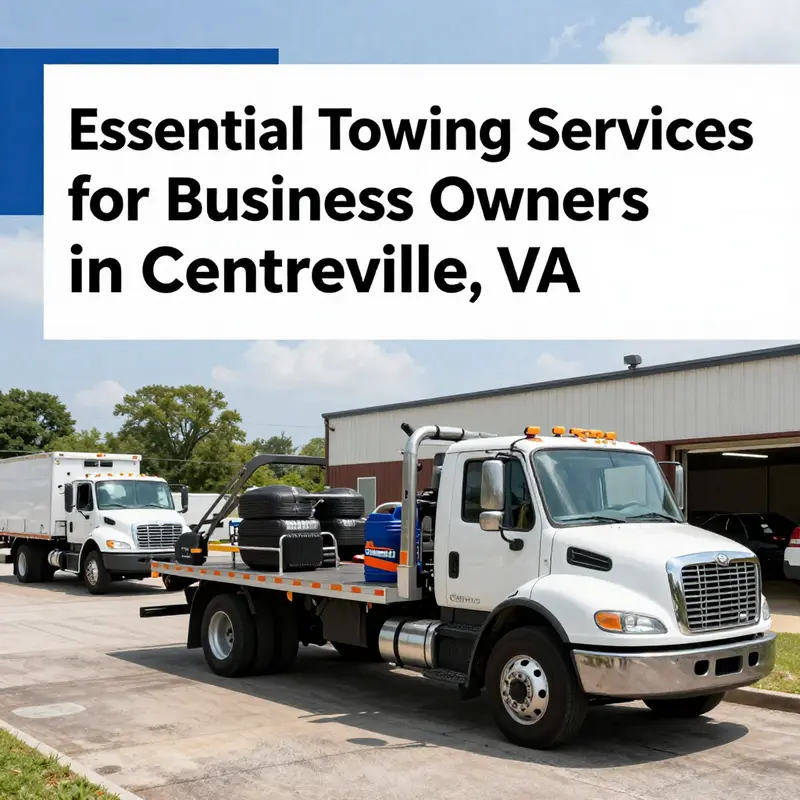
Centreville, Virginia sits at a crossroads of busy commuter routes and sideline streets where the daily rhythm can shift in a heartbeat. When a vehicle breaks down, or a collision closes a lane, the first calm decision many drivers make is to find a towing service that can respond quickly, handle the vehicle with care, and communicate clearly about what happens next. In Centreville, the landscape of towing is shaped by reliability, local knowledge, and a willingness to adapt to a wide range of needs. The best options are not just about the quickest pickup or the lowest price. They are defined by how well a service aligns with the moment you are in — the location, the weather, the condition of the vehicle, and the urgency of the situation. In practice, this means you want a provider that can handle everything from a flat tire to a complex accident recovery, from a routine roadside assist to a long-haul transport, without turning a stressful event into a multi-step ordeal.
A strong towing environment in Centreville features a spectrum of capabilities that mirrors the area’s mix of suburban and commercial traffic. There are emergency responders who can be dispatched at any hour, trained to assess risk, manage safety on the roadside, and stabilize a vehicle before it is moved. There are specialists who can perform light to medium towing with modern flatbeds and wheel-lift trucks, designed to minimize damage and protect sensitive components. There are heavier haulers able to move larger or damaged vehicles, sometimes even requiring on-site equipment to secure a proper loading, crane-style recovery, or long-distance transport. The common thread uniting these providers is not a single service type but a demonstrated readiness to respond promptly and to explain the process in plain terms. When you call, you should sense that the dispatcher and the driver are coordinating as a small, efficient team: the dispatcher who pinpoints arrival times and direction, the driver who executes the plan with care and keeps you informed along the way.
The practical realities of Centreville’s roads also shape what you can expect from a reliable towing partner. Local traffic patterns, seasonal weather, and road construction can affect response times, but the essential measure is consistency. A reputable service will offer around-the-clock availability, transparent pricing, and clear communication about what is included in the tow. You should be told whether the quote covers the load, the mileage, storage fees if the vehicle must be held, and any extra charges that may arise due to unusual circumstances. The vehicles in service should be well maintained, with compliant equipment that minimizes the risk of further damage during loading and transport. This includes flatbed units for passenger vehicles and appropriate setups for specialty or heavier loads. A trustworthy operator will also show evidence of proper licensing and insurance, and they will be straightforward if a vehicle’s condition calls for a safer alternative to immediate towing, such as on-site tire changes or a jump-start when appropriate.
For drivers who are new to Centreville or who are visiting from nearby communities, the practical challenge is often not understanding the range of services but identifying the right questions to ask and knowing what to provide during the call. When you reach out, have your location ready with cross-streets if possible. A concise description of what happened, the direction you are facing, and any hazards will help the dispatcher assess risk and plan for a safe recovery. Mention the type of vehicle, approximate weight, and any special considerations, such as a compromised battery or a vulnerable exhaust system. If a vehicle is in a dangerous position on a busy roadway, you should ask about the safest approach to secure the scene and whether traffic control will be needed at the moment of pickup. If you have a preferred tow method, such as a flatbed transport, communicate that preference but remain flexible if safety requires a different configuration. A reliable operator will explain the steps, provide an estimated time of arrival, and keep you updated if circumstances shift.
The role of local knowledge cannot be overstated. Centreville’s drivers often navigate familiar back routes and less congested corridors to minimize delays, which can be the difference between a smooth arrival and a prolonged wait in adverse conditions. This is where a nearby, well-established network becomes valuable. The closer a provider is to you, the more responsive they can be in delivering targeted, timely assistance. It also helps if they have experience coordinating with police, roadside units, or insurance adjusters in the region. In that sense, reliability is as much about the relationship as it is about the mechanical ability to lift and tow a vehicle. When a vehicle leaves a scene, the process should feel orderly: the driver confirms the destination, inspects the vehicle for damage, and ensures that documentation is complete before transfer.
For readers who want to explore related local options, consider looking at nearby communities that share similar logistical footprints. A nearby resource page focusing on Burke, Virginia, for example, offers a dedicated overview of towing services in a similar suburban network. It can be useful to review the Burke VA towing service page to understand how nearby operations structure their dispatch, pricing, and service scope. Burke VA towing service.
In Centreville, the bottom line for most motorists is that dependable towing is a service rooted in preparedness and clear communication. A trustworthy provider will greet you with a straightforward approach: they will acknowledge the problem, arrange a safe plan to address it, and execute the tow with minimal disruption to your day. This means upfront questions about location, vehicle type, and the preferred mode of transport, followed by transparent pricing and a realistic timetable. It also means a promise of safety and security. Professional tow operators treat each vehicle with care, securing it on the tow rig so that chain-of-custody concerns are avoided and the vehicle reaches its destination intact. If the vehicle is headed to a repair shop or a storage facility, the driver will coordinate with the indicated facility and facilitate the handoff, providing documentation and receipts that help you move forward with your insurance claim or owed repairs without unnecessary back-and-forth.
When you’re stranded, you want more than a truck that can haul a car. You want a partner who can explain what they are doing and why, and who can adapt to the evolving circumstances of the roadside environment. Centreville’s towing landscape thrives on that balance of technical capability and human reliability. The best services integrate modern dispatch practices with seasoned on-the-ground know-how, ensuring rapid responses, careful vehicle handling, and transparent communication from the moment the call is placed to the moment you retrieve your vehicle. In the end, the choice comes down to the quality of the interaction as much as the equipment, because a successful tow is as much about trust and reassurance as it is about movement and distance.
External perspective can help calibrate expectations. If you wish to compare options or read unbiased feedback from other drivers in Centreville, a well-regarded local reviews resource aggregates recent experiences and highlights common strengths, such as prompt arrival, courteous service, and fair, written estimates. This broader view complements the firsthand guidance you receive when speaking with a dispatcher and helps you feel confident about your decision under stress. For a broader sense of Centreville’s towing providers, see the community-driven resource linked above, and consider visiting the Yelp guide for Centreville’s towing services to gauge the latest feedback from local customers. Yelp: Top Towing Services in Centreville, VA.
How Towing Rates Work in Centreville, VA: A Practical Pricing and Value Guide
How pricing works and what drives costs
Towing in Centreville, VA does not have a single price tag. Local rates vary with time, distance, vehicle type and the complexity of the job. A typical local tow in the area usually starts between $75 and $150 for a short, standard tow. That base figure is only the starting point. Different conditions push the final bill up or down, and understanding those variables helps you make better choices under pressure.
A few clear patterns explain most of the variation. Tows requested outside normal business hours often carry a premium. Early morning, late night and weekend calls may add a surcharge to the base fee. Distance matters next: many companies include the first 5 to 10 miles in the base, then add a per-mile charge beyond that. The type of vehicle matters too. Heavier vehicles, all-wheel-drive models, and trucks usually require different equipment. That equipment and extra time translate directly into higher rates. Finally, specialized work—flatbed hauls, winching a vehicle out of a ditch, or recovery after an accident—often triggers additional fees.
Pricing usually breaks down into simple components. The dispatcher quotes a base hook-up or dispatch fee, a mileage rate, and any service charges for special equipment or labor. The base fee pays for the truck, the driver’s time and the initial hook-up. Mileage covers the distance from the tow truck’s location to the incident and from the incident to the destination. Service charges appear when extra labor or tools are required, such as a winch, wheel-lift adapters, or a recovery crew. Because those pieces are discrete, you can often negotiate or at least clarify them before a tow begins.
Understanding how providers bill helps avoid surprises. Some operators bill a flat fee for defined services. Others list base price plus per-mile. Ask whether quoted prices include taxes, administrative fees, or storage fees if the vehicle goes to an impound lot. If your vehicle must be stored, daily storage rates can eclipse the towing amount within a few days. Always ask where the vehicle will be delivered, and whether that destination incurs a dropping-off fee.
Time-specific pricing is more than a surcharge. After-hour calls can cost 20–50% more. An evening call may be slightly higher; a midnight winch-out may be much higher because it ties up crews and equipment that would otherwise be offline. If you are not in immediate danger, consider waiting for regular hours when safe to do so. If waiting is not safe, the higher fee may be a reasonable price for rapid and secure removal.
Distance and logistics shape the math in predictable ways. Short urban moves within Centreville usually fall into the lower end of the range. Long-distance tows, vehicle transport to a dealership, or moves across county lines add mileage and sometimes coordination fees. If a tow crosses into neighboring jurisdictions, the provider may need permits or have to deal with different impound rules, which can add to the bill. If you plan ahead for vehicle transport, consider scheduling during off-peak hours to reduce travel time and potential surcharges.
Vehicle type and condition change the equation. Flatbed towing costs more because flatbeds carry larger loads and take more time to load and secure. Disabled or damaged vehicles that are hard to access take more labor, increasing cost. Classic cars, low-clearance sports cars and electric vehicles often require special handling and equipment. If your vehicle has a nonstandard configuration, mention it right away so the dispatcher can send the correct truck and quote a realistic price.
There are ways to reduce unexpected expenses. If you have roadside assistance through an insurer or membership program, check coverage terms before you call. Many plans include a capped towing distance or provide direct billing to the provider, which minimizes out-of-pocket costs. When possible, request an estimate over the phone, including the base fee, mileage, and likely surcharges. Ask whether the company accepts credit cards, and whether payment is required on scene. Keep a record of the dispatcher’s name, the estimated arrival time and the quoted price. That helps if you need to dispute charges later.
Transparent reviews and third-party resources help validate local pricing. Consumer review platforms and business rating organizations often list recent customer experiences and common price ranges. These sources can also flag businesses that consistently add unexplained fees or have billing disputes. Use them to confirm the reasonableness of a quote and to choose a company that communicates clearly.
In many situations the right choice balances cost with speed and safety. A slightly higher fee may be worth it if the crew can arrive quickly and remove your vehicle safely from a hazardous spot. For non-urgent moves, comparing quotes from two or three providers can lead to savings. If you frequently need towing or roadside help, evaluate membership options or a local plan that bundles service calls and discounts.
Finally, local context matters. Centreville sits near busy commuter corridors and several neighboring towns. That proximity affects response times, competition among providers, and pricing pressure. If a tow requires travel into a neighboring area, consider a provider that regularly operates on those routes. For more regional towing guidance, see this short resource on towing in Fairfax for additional context and tips: towing in Fairfax.
For a quick estimate tool, you can compare a provider’s quote with an independent estimator. The AAA towing cost estimator offers a baseline to judge local quotes and see how vehicle type and distance influence price. https://www.aaa.com/automotive/towing-cost-estimator
Always Ready: 24/7 Emergency Response and Roadside Assistance in Centreville, VA
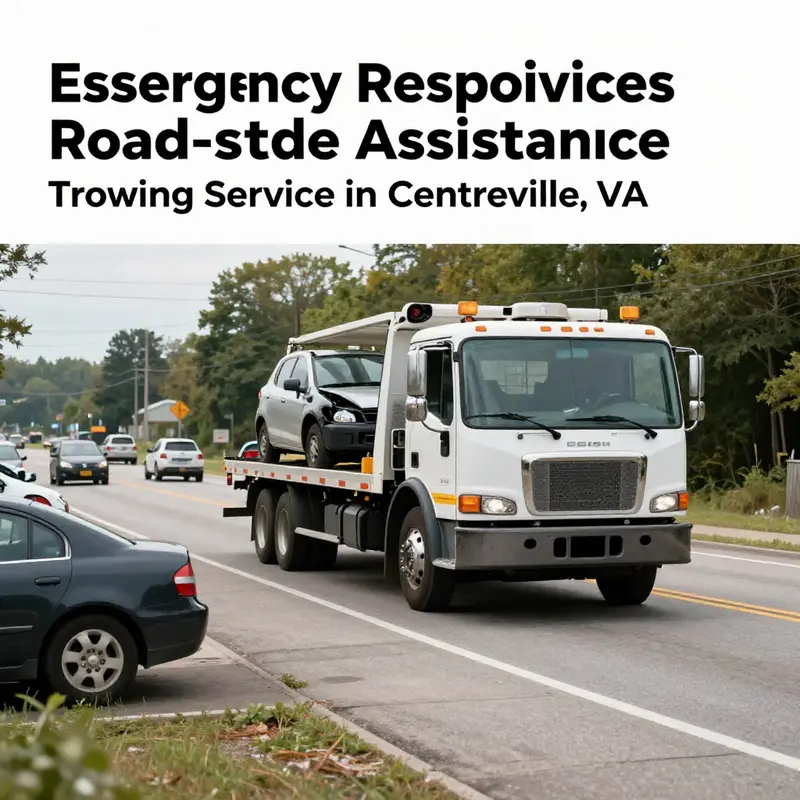
Emergency response and roadside assistance in Centreville, VA work on a simple promise: help arrives quickly, professionally, and with the right equipment. When a vehicle fails, an accident occurs, or a flat tire strands a driver at an odd hour, the immediate priorities are safety, clear communication, and knowing which provider can resolve the situation fastest. Centreville’s network of towing and recovery teams is built to meet those priorities, with many operators offering round-the-clock coverage and specialized capabilities for a wide range of incidents.
A reliable emergency response begins with a rapid, accurate dispatch. Expect to be asked a few direct questions: location, vehicle make and model, whether anyone is injured, and a brief description of the problem. Clear answers help the dispatcher select the right truck and crew. Many local tow operators keep a fleet that includes light-duty flatbeds, wheel-lift trucks, heavy-recovery rigs, and equipment for winching vehicles from ditches or embankments. That variety matters in Centreville, where incidents range from highway breakdowns to parking-lot collisions.
Response time is a crucial measure of service. In populated areas of Centreville, priority calls—those involving disabled vehicles in travel lanes or accidents—are routed to the nearest available crew. For non-emergencies, such as scheduled vehicle moves or planned recoveries, arrival windows tend to be broader, but reputable providers still offer predictable times. When comparing options, ask how the company calculates arrival times and whether they provide live updates or estimated time of arrival via text message.
Roadside assistance extends beyond towing. A comprehensive provider handles jump starts, flat tire changes, fuel delivery, lockouts, and minor onsite repairs. These quick actions can often return a vehicle to the road without the need for a tow. But for unsafe or mechanical conditions, a tow is the appropriate choice. Skilled crews know when a tow is necessary, how to secure different drivetrains and suspension types, and how to avoid secondary damage during load-up.
Complex recoveries — rollovers, heavy-equipment extractions, or multi-vehicle incidents — require experienced recovery technicians and specialized rigs. In those events, teams coordinate with local emergency services and sometimes with traffic management agencies. Look for operators who maintain recovery certifications, carry winches and rigging gear, and have a documented safety protocol. Those credentials reduce the risk of further damage and speed the path to clearing the scene.
Insurance and payment are practical considerations. Many towing firms accept direct billing to major insurers and offer transparent pricing for common services. Still, policy coverage varies. Before authorizing a tow, verify whether your insurer covers the service, whether the provider will bill the insurer directly, and what your out-of-pocket costs will be. Keep a digital copy of your insurance ID and a secondary contact method for your insurer in your phone. That preparation shortens processing time at the roadside.
Safety at the scene is non-negotiable. When waiting for assistance, move off the roadway if it is safe and possible. Use hazard lights and set up warning triangles or flares when available. Remain inside your vehicle if it keeps you out of harm’s way, particularly on high-speed roads. Follow the instructions of the responding crew and emergency personnel. Experienced technicians will assess traffic flow, secure work zones, and position trucks to protect both the vehicle and the crew.
Choosing a service in Centreville means balancing speed, capability, and reputation. Reviews and word-of-mouth give insights into reliability and professionalism. Ask friends or local community groups for recommendations. You can also confirm license, insurance, and any local registrations. Providers who invest in modern equipment and ongoing training signal a commitment to consistent, safe service.
Communication matters from the first call to the final invoice. Expect clear explanations of the chosen recovery method, an estimate of time, and a transparent price breakdown. If a tow involves specialized equipment or a long-distance transfer, request a clear written estimate before work begins. Good operators keep clients informed and reduce surprises.
For drivers who travel beyond Centreville, it helps to pre-identify nearby service areas. Some operators in neighboring towns provide reliable cross-coverage. For instance, if you frequently drive near Chantilly, researching local options can cut response times. A useful resource for this is the local page for tow truck services in the neighboring community, which can help you plan for incidents near the Centreville border: tow truck Chantilly VA (https://acex-towing.com/tow-truck-chantilly-va/).
Finally, consider a few simple actions that improve any roadside experience. Keep an updated emergency kit and phone charger in your car. Record your vehicle identification number and a primary contact in your phone. Share your precise location using maps or GPS coordinates when calling for help. If you belong to a roadside assistance program, confirm coverage details before an incident occurs.
Centreville’s towing and recovery landscape is built to keep drivers moving and to resolve emergencies safely. Operators that offer twenty-four-hour availability bring a particular advantage: predictable help regardless of time. When choosing a team, prioritize clear communication, documented capabilities, and transparent payment practices. Those factors make the difference between a stressful delay and a managed, efficient recovery.
For direct details about a 24/7 towing provider serving the area, refer to the local resource listed below.
https://www.mapquest.com/business/towing-auto-24-7-centreville-va
Final thoughts
In conclusion, reliable towing services in Centreville, VA are essential for business owners seeking to minimize downtime and ensure safety during emergencies. By understanding pricing structures and the importance of quick response times, businesses can make informed decisions that enhance operational efficiency. Partnering with local towing providers not only bolsters reliability but also supports local economy—making it an investment worth considering for any business owner. Emphasizing these services can safeguard your assets and ensure that you are never left stranded when it matters most.