
The towing industry in Alexandria, VA, offers vital services that not only assist motorists but also serve a critical role for local businesses. Understanding the unique landscape of this sector can empower business owners to make informed decisions regarding collaborations and services. This article delves into two pivotal chapters. First, we will explore the legal and financial aspects that underpin the operations of towing companies in Alexandria, including compliance issues that could impact their services. Following this, we will discuss the operational challenges faced by these companies and provide an overview of the market, equipping business owners with valuable insights necessary for navigating partnerships or addressing towing needs effectively.
Navigating the Legal Currents and Price Realities of Towing in Alexandria, VA
Emergencies on the road seldom arrive with a neatly printed brochure about who may tow a vehicle and under what terms. In Alexandria, VA, the moment a vehicle breaks down or blocks a lane, the scene becomes a blend of haste, safety concerns, and the legal framework that governs every tow. Drivers facing this moment often feel pressed to choose an available wrecker, yet the laws that apply are not merely bureaucratic hurdles. They are guardrails designed to protect car owners, insurers, and the public from hidden charges, unlicensed operators, and improper storage. Understanding these rules helps people navigate the process with confidence, even in a high-stress moment. The chapters that follow aim to illuminate how the law shapes what a tow looks like in practice, and how the costs are set and disclosed, so readers from Alexandria and its surrounding suburbs can distinguish fair practice from questionable charges.
The legal framework governing towing in Virginia places a strong emphasis on licensing and accountability. Towing operations fall under the auspices of Title 46.1 of the Code of Virginia, a body of law crafted to ensure that operators meet minimum standards. A basic expectation is that towing companies hold a valid license to operate. This licensing requirement is not merely ceremonial; it is a signal to the public that the operator has met state criteria and can be held to standards if problems arise. The law also imposes insurance obligations, typically requiring liability coverage of a level that reflects the risk of towing and storage activities. While figures can evolve, a common threshold cited in regulatory discussions is a comprehensive level of coverage, designed to protect vehicle owners from losses arising during transport and while a vehicle is in storage.
Beyond licensure and insurance, Virginia rules mandate careful documentation. Tow operators must maintain records of each removal, transport, and storage event. The practice of providing written notices to vehicle owners is not optional; it is a condition of lawful operation. This documentation helps create a transparent chain of custody for a towed vehicle, clarifying who authorized the tow, the location to which the vehicle is taken, and the fees that will apply. For a consumer, this means that a written invoice should accompany payment requests, detailing the charges in a clear, itemized manner. The aim is to prevent ambiguity about what is being charged and why. The DMV’s broader guidance on towing and storage reinforces this emphasis on clarity and fairness, encouraging operators to communicate openly about costs prior to payment and to specify any storage-related fees that may accrue.
The consumer protections embedded in these regulations are practical and tangible. Vehicle owners must be notified promptly when their car has been towed, which minimizes the time spent in confusion or in a limbo that can give rise to disputes. Fees must be disclosed clearly before payment, and customers should receive a written invoice that itemizes labor, distance, time, vehicle type, and any special handling required. The written record serves not only as a billing artifact but also as a receipt of the contractual relationship established at the moment the tow occurs. In essence, the state expects the process to be as transparent as possible, even in the stressful context of an urgent roadside incident.
In Alexandria itself, local practice aligns with these state-level standards, though individual operators may vary in their approach to logistics and scheduling. A responsible operator will distinguish between emergency and non-emergency tows, as the latter often involves different timing, priority, and sometimes pricing. Emergency tows, by their nature, demand rapid response and the coordination of multiple factors, including location, weather, and traffic conditions. This can influence charges in ways that reflect the immediacy of the service rather than a simple distance-based model. However, even in urgent scenarios, the fundamental expectation remains: clear communication, proper licensing, sufficient insurance, and a transparent invoice before any payment is completed.
For residents who wonder about the financial footprint of a tow, several factors shape the final bill. The distance a vehicle must be transported is a primary determinant, but time spent on the road can also contribute, particularly if the tow requires additional handling or heavy-duty equipment. The type of vehicle matters as well; oversized or specialty vehicles often require special equipment and expertise, which can raise both towing and storage costs. Emergency versus non-emergency status remains a core distinction in pricing, with urgent situations typically carrying higher rates to reflect the greater immediacy and resources involved. Storage is another critical element. When a vehicle is impounded for parking violations or other infractions, owners can face daily storage charges that accumulate quickly if the vehicle stays unclaimed. The law requires that these storage terms be documented and disclosed up front, with a clear path for retrieval once fees are settled.
The decision to tow and the subsequent charges are not left to whim. Even when a motorist feels pressed by time or circumstances, the operator must adhere to the rules of licensing, insurance, documentation, and disclosure. This framework protects consumers from surprise costs and helps ensure that any dispute can be addressed through the written records created at the time of the tow. To those who navigate this landscape, the practical upshot is simple: know what to expect, demand a written invoice, and confirm that the operator is properly licensed and insured. Informed consumers can better assess whether a quote aligns with standard practice, and they can more effectively advocate for themselves if charges seem excessive or unclear.
For a practical overview of local towing services in the city, see the Alexandria towing information. Alexandria towing information provides a grounded sense of how operator practices align with regulatory requirements while illustrating how a typical tow unfolds from roadside call to vehicle release. This resource can help readers distinguish routine business processes from irregularities that warrant closer scrutiny.
The broader regulatory backdrop also encourages continuous improvement among operators. Compliance is not a one-time event but an ongoing process of training, record-keeping, and transparent communication. When operators adhere to the law, they reduce the likelihood of disputes and build trust with clients who may need to rely on their services in moments of distress. For consumers, this environment creates a baseline expectation for fairness, while local authorities retain mechanisms to verify compliance and address complaints.
As this chapter moves from legal requirements toward practical realities, it is essential to remember that the DMV offers central guidance on towing and storage that complements local practice. The official resource explains the standards for notices, fees, and the responsibilities of both tow operators and vehicle owners. In tandem with Title 46.1 provisions, these guidelines help create a coherent framework that supports safe, predictable, and fair towing experiences in Alexandria and beyond.
For official guidelines, see the Virginia DMV towing and storage requirements. https://www.dmv.virginia.gov/vehicles/towing-and-storage-requirements.htm
Tow Lines in the Capital Corridor: Navigating Alexandria’s Towing Landscape with Precision and Prudence
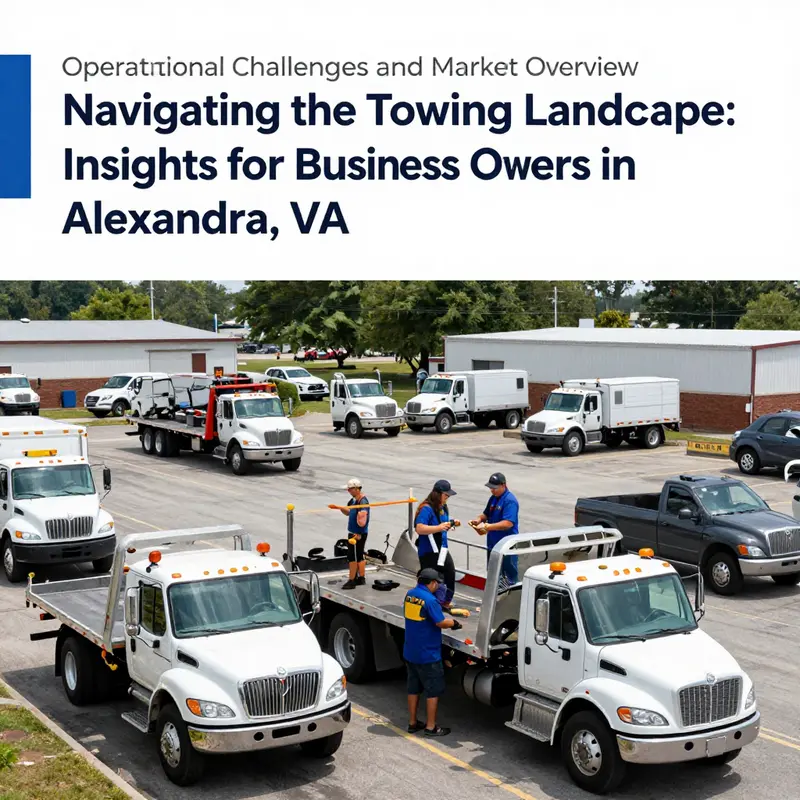
Alexandria sits at the intersection of dense urban life and aging infrastructure, where streets tighten, parking is a commodity, and moments can pivot from routine to emergency. In such a landscape, towing services become more than a roadside convenience; they are a critical arm of urban mobility. When a vehicle breaks down on a busy arterial, or a car is parked where it shouldn’t be, the demand for swift, professional assistance rises quickly. The market in this Virginia community thrives on reliability and speed, yet it operates under a set of pressures that can complicate every dispatch. Demand remains robust due to the city’s high vehicle ownership and the constant churn of commuters, visitors, and residents who rely on their cars to navigate a city that blends history with modern hustle. This environment rewards operators who can translate capacity into consistent, predictable service, preventing bottlenecks that cascade into frustrated motorists and stalled traffic.
Regulatory frameworks shape how towing is delivered in Alexandria as much as market forces do. The city imposes clear rules on when and how to tow, requiring proper signage, notice procedures, and designated impound yards. These protections are designed to safeguard consumers and minimize disputes, yet they add a layer of legal rigor that every operator must respect. A lapse in protocol can trigger fines, penalties, or liability, turning a routine roadside call into a compliance risk rather than a simple service call. Within this context, a broader statewide framework also matters. Recent updates indicate that at least one local firm faced a “fee delinquent” status with the Virginia State Corporation Commission in early 2023. While that status alone does not declare a company defunct, it signals how regulatory health can influence perceptions of reliability and the ability to carry out ongoing operations. Such a note underscores the practical reality: in a tightly regulated market, timeliness and transparency are not optional; they are part of the value proposition of any trustworthy operator.
The congestion that defines downtown and the narrower corridors of Alexandria compounds the challenge of mobilizing a tow vehicle. Traffic density creates a delicate balance between arriving quickly and maneuvering safely, particularly during peak hours or in the aftermath of an incident. Narrow lanes, frequent parking restrictions, and the need to navigate around pedestrians all demand careful planning and disciplined driving. Tow trucks must be equipped and dispatched with a clear understanding of best routes, parking impacts, and local rules to minimize disruptions. Every delay translates into increased idle time, higher fuel consumption, and a greater likelihood that a driver’s ETA will slip, which in turn erodes customer trust. In many cases the difference between a satisfied customer and a complaint rests on a few minutes’ variance in response time and the smoothness of the handoff to the storage facility or the next leg of the journey.
Competitively, Alexandria’s towing sector is characterized by a mix of long-standing, trusted operators and newer entrants who push price, speed, and service quality in tandem. Without naming names, it is clear that the market rewards a consistent track record: transparent pricing, reliable dispatch, and a courteous, professional team can build a durable reputation within a community that shares notes and reviews. These dynamics push companies to invest in efficient dispatch practices, driver training, and dependable equipment. The tension between scale and small-business agility creates a diverse ecosystem where some operators optimize margins through volume and standardization, while others differentiate through rapid response and personalized customer care. The result is a market that remains competitive and capable of absorbing shocks—from fluctuating fuel costs to shifting insurance premiums—so long as operators maintain operational discipline and a clear value proposition.
From a market perspective, the Alexandria towing scene remains robust precisely because demand comes from a city that relies heavily on personal vehicles for daily life, work, and leisure. In practice, this means a broad suite of revenue opportunities beyond roadside rescue. Providers diversify into long-distance towing, vehicle storage, and sometimes ancillary services that support fleets and individuals alike. The breadth of offerings helps spread risk and cushion the hit from any single revenue stream’s volatility. Consumer feedback on platforms that capture local experiences shows a willingness to trust certain providers based on consistency and responsiveness, which in turn fuels growth through repeat business and referrals. Yet the same platforms remind operators that trust is earned daily, through accurate ETA forecasts, clear pricing, and respectful communication when plans change or delays occur. The market’s resilience depends on a sustained commitment to these standards.
For consumers seeking reliable assistance, the path to a satisfactory experience in Alexandria begins with due diligence. Prospective customers should look for providers with verifiable credentials and transparent pricing, and they should weigh online reviews as part of a broader assessment that includes licensing, insurance, and a clear description of services offered. It is prudent to request a straightforward explanation of any storage or idle-time fees and to confirm expected response times for the caller’s specific location. In this environment, the ability to communicate clearly with a dispatcher—sharing exact locations, hazards, and vehicle condition—can dramatically influence the outcome of a roadside incident. For those curious about how an established local provider frames its Alexandria operations, readers can explore the dedicated information page on Alexandria tow-truck service, which offers a concise overview of service areas, response commitments, and standard procedures. Alexandria tow-truck service
Beyond the immediate call, a responsible operator stays attuned to the broader urban fabric: safe traffic handling, proper cooperation with police and municipal authorities, and a clear pathway for vehicle retrieval at impound facilities that minimizes delays for owners. This holistic approach helps translate raw capacity into dependable service, ensuring that a breakdown or parking violation does not derail a driver’s day. The interplay between regulatory compliance, traffic realities, competitive pressures, and economic constraints creates a dynamic environment where excellence is defined less by speed alone and more by the quality of the entire experience—from the moment a caller picks up the phone to the moment a vehicle is safely recovered and the customer informed of next steps. In such a setting, the chapter of Alexandria’s towing market reads like a map of careful coordination: precise dispatch, lawful practice, strategic pricing, and a relentless focus on restoring mobility with dignity and efficiency.
External resources provide a window into broader consumer sentiment about local towing services and the way residents perceive performance across the region. For a snapshot of how customers evaluate local providers on public review platforms, see the Yelp listing for a local Alexandria towing provider. This external perspective helps contextualize the real-world impact of service quality on reputation and repeat business, reinforcing the notion that reliability in this market is earned through steady, professional operation rather than isolated acts of speed alone.
Final thoughts
Navigating the towing service landscape in Alexandria, VA, involves understanding both the legal frameworks and the operational hurdles unique to the area. Business owners must remain vigilant of compliance issues, as these can affect relationships with towing companies and the services they provide. Whether dealing with fee delinquency or operational inefficiencies, awareness and proactive engagement can lead to fruitful partnerships and smoother transactions. Embracing these insights not only enhances your knowledge but also strengthens your position as a responsible business owner within the Alexandria community.