
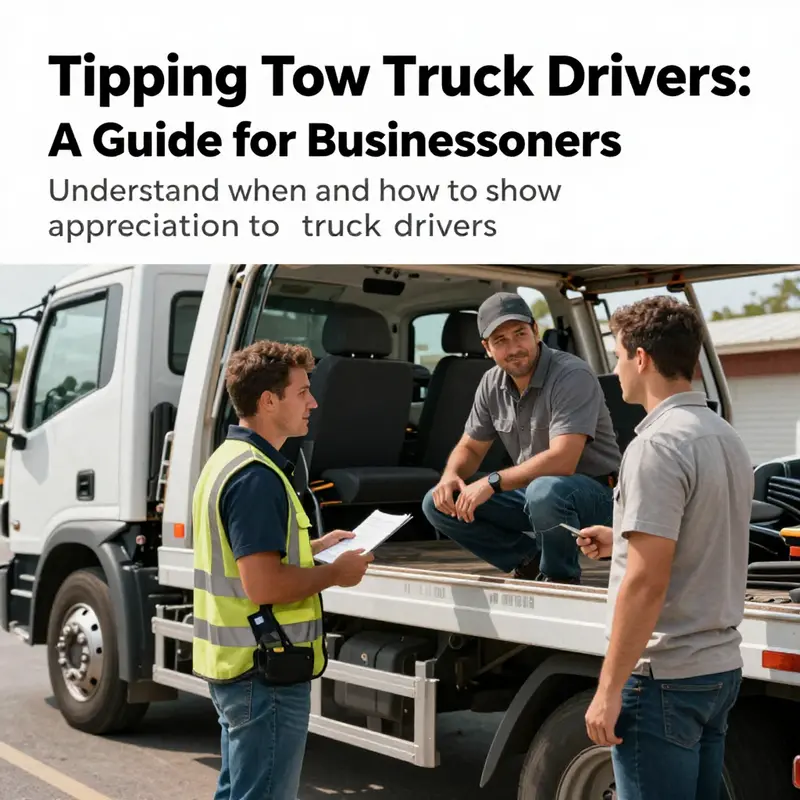
Tipping tow truck drivers is not just a matter of courtesy; it reflects the acknowledgment of their hard work and expertise in challenging situations. For business owners, understanding the norms and practices around tipping these professionals is essential. This guide will explore key aspects, including when to tip, how to calculate an appropriate amount, and various factors that can influence the decision to give a tip. By examining these elements, business owners can cultivate a respectful relationship with service providers while ensuring that their teams are well-supported during roadside emergencies.
Beyond the Dash: The Subtle Etiquette of Tipping Tow Truck Drivers
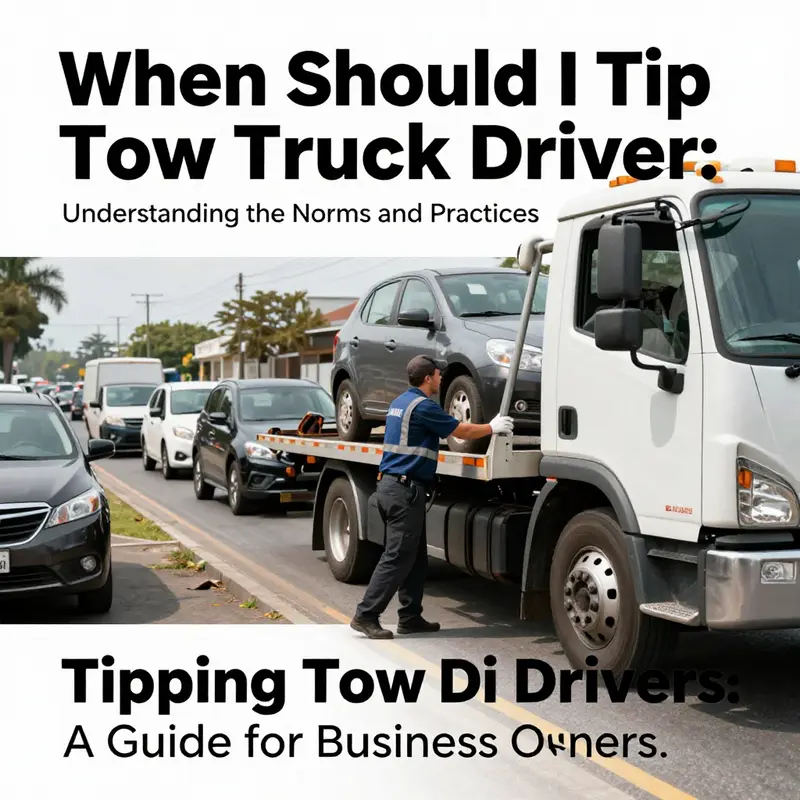
When you call a tow truck, you invite a professional into a moment of disruption, uncertainty, and sometimes danger. The driver arrives with headlights cutting through rain, ice, or darkness, and the vehicle you depend on is suddenly immobile, exposed, and vulnerable to a roadside scene that can be stressful for everyone involved. In those tense minutes, the human side of the service matters as much as the technical one. Tipping emerges not as a rigid rule but as a reflective gesture—an acknowledgment that the driver has earned more than the standard fee by handling a difficult situation with calm, skill, and clear communication. It is not universal law, and not every company expects it, but it remains a meaningful way to express gratitude for service done well under pressure. In many communities, a thoughtful tip helps sustain a profession that often contends with long hours, hazardous conditions, and unpredictable recoveries on crowded highways or in remote cul-de-sacs. The gesture communicates respect for the driver’s expertise and a willingness to recognize the risks that accompany a roadside operation.
Tipping practices cluster around a few practical norms. For standard tows, a tip in the range of 10% to 15% of the total service charge is commonly felt as appropriate by drivers who deliver a smooth handoff: they arrive promptly, secure the vehicle without additional damage, explain the process, and leave you with usable guidance about what comes next. When the scene is more demanding—think a fast-developing storm, a tow performed at night, or a recovery in heavy traffic—the stakes rise. In such moments, a higher tip, potentially up to 20%, recognizes the extra time, effort, and risk involved. If the job is routine and you are satisfied with the outcome, a modest tip in the $5–$10 range can still convey appreciation, especially if the driver has gone the extra mile to reassure you, check your options, or offer prudent advice about next steps. These figures function less as rigid mandates and more as signals of fair reciprocity in a service relationship that depends on mutual respect.
Company policies complicate the landscape. Some towing outfits include gratuity in their pricing or have explicit guidelines that discourage additional tipping. Others simply don’t expect tips, or they leave tipping to the discretion of the customer. In any case, the core rule remains simple: respect the policy, but let your discernment guide you if you believe a driver deserves extra recognition. If you are uncertain, you can ask politely about policy before tipping, or you can choose to reward the driver after the service if you feel the performance merits it. Cash, handed directly to the driver at the end of the encounter, is still the most straightforward method. It preserves immediacy and allows the driver to decide how to allocate the gratuity, while avoiding any confusion about the company’s own compensation structures. When you offer a tip, do so discreetly and with a concise expression of thanks. A quiet, sincere acknowledgment often means more than a large note attached to the receipt.
For many people, geography influences tipping habits. In a busy metropolitan area, where drivers encounter a higher volume of calls and more challenging scenes, a tip can feel especially meaningful. If you’re in the Washington, DC region, you can find local services such as Tow Truck Service Washington DC and related providers that understand the dynamic of urban roadways and the toll they take on responders. You may choose to reference a local option like Tow Truck Service Washington DC when considering your approach to service in the area. The right tip, delivered with clarity and courtesy, reinforces the message that you value the driver’s professionalism, not just the end result of the tow.
Beyond the mechanics of money, tipping conveys something deeper: it acknowledges the ethical dimension of roadside help. The driver steps into a scene that might be fraught with anxiety, weather hazards, or the potential for miscommunication. A tip can reflect the driver’s ability to communicate clearly, to explain repair options without pressuring you, and to perform the tow with care for your vehicle as if it were their own. In moments when the tow is a matter of safety—pulling a car from a ditch, extricating a vehicle from a traffic-laden curb, or navigating a narrow residential lane—the additional effort deserves visible thanks. If a driver’s actions reduce your stress, protect your safety, or help you avoid further damage, a tip becomes a concrete form of appreciation for a job well done.
Tipping is not a performance metric that defines every encounter, and it should never be expected as a burden. The most important takeaway is to assess the service against the surrounding conditions and the quality of communication you received. If you were kept informed, if the driver treated your vehicle with care, and if you felt securely guided through a potentially overwhelming moment, a tip can be a natural extension of that positive experience. If you choose to tip, making it a modest, respectful gesture ensures it remains a personal thank-you rather than a transactional obligation. And if you cannot, a courteous thank-you and a clear acknowledgment of the driver’s effort still communicates your appreciation.
For a broader view on tipping etiquette in challenging conditions, you can explore expert guidance such as this New York Times piece on tipping delivery drivers during extreme weather: https://www.nytimes.com/2026/01/27/style/tipping-delivery-drivers-extreme-weather.html
The Tip Gauge: Determining a Fair Gratuity for Tow Truck Drivers
When a tow truck arrives, you’re not just getting transportation from point A to point B. You’re inviting a trained professional into a moment of stress, danger, or urgency. The road may feel unpredictable, the clock may run fast, and every decision the driver makes carries weight. In that context, tipping becomes more than a social nicety; it becomes a quiet acknowledgment of skill, resilience, and service under pressure. The question isn’t simply, should I tip, but how does a fair tip reflect the effort, risk, and value delivered in a towing situation?
To answer this, think of tipping as a gauge that calibrates the driver’s experience to your own experience of the moment. A thoughtful tip signals appreciation for competence—clear communication, careful handling of your vehicle, and a steady, safety-first approach even when conditions are far from ideal.
The standard tipping range is roughly 10% to 15% of the total service charge and forms a reasonable baseline in many parts of the country. This guideline exists alongside the practical reality that tow services aren’t always priced with tipping in mind, and some customers may feel the bill already reflects the work done. If the total bill is modest, tipping within that band still yields meaningful appreciation. If the service was billed as a straightforward tow with no unusual complications, a tip closer to the lower end—say 5% to 10% or a flat 5–10 dollars—can feel appropriate for a routine, well executed job.
Conversely, when the situation tested the driver – stormy weather, a nighttime call, a high traffic scene, or a particularly challenging extrication – the bonus beyond 15% becomes a reasonable way to recognize extra effort and risk. In those moments, 20% or more can be a meaningful show of gratitude, especially if the driver navigated hazards or accomplished a difficult tow with professionalism and calm under pressure.
It’s important to balance the tip with the value you perceive in the service. Tow operators often work long hours, handle heavy equipment, and respond to emergencies that demand split-second judgments. A tip becomes part of a broader culture of fair compensation for frontline workers who keep people moving and vehicles out of dangerous places. If you’re unsure whether tipping is expected in a particular situation, a quick, polite question to the dispatcher or driver can prevent awkwardness. In many cases, staff will tell you whether gratuity is welcomed or included in the service charge, and you’ll be guided by their response.
For situations that feel more like emergencies, the tip can reflect the additional challenge and the extra miles the driver covers. If the tow involves a hazardous climb or a release from a ditch, or if the driver provides extra assistance such as helping you arrange a ride after the tow, coordinating with a roadside assistance plan, or ensuring your car is safely secured at the destination, the tip should acknowledge that extra layer of service. In these moments, it is not just the mechanical act of pulling a vehicle that counts, but the entire episode: arriving promptly, communicating clearly about the process, inspecting for safety hazards, and ensuring your vehicle is placed in a safe, accessible location.
If you’ve already received a wordless receipt at the end of the service, there’s still room to express your appreciation with a tip. When paying by card, you can add a gratuity to the bill if the option is offered, but many drivers still appreciate cash tips handed directly with a brief word of thanks. A small, sincere note can also accompany the tip—something like thanks for handling that tricky tow with patience and care. This personal touch reinforces the value of the driver’s expertise beyond the mechanics of the job. For specific local norms, you may consider looking at nearby service pages as a practical reference, such as the dedicated page for a towing service in Washington DC, which reflects how local providers frame service and courtesy: https://acex-towing.com/towing-service-washington-dc/.
Context matters as well. A routine tow following a minor accident might warrant a modest tip, while a rescue-style lift from a ditch or a car extraction under limited visibility warrants a more generous gesture. If you’re satisfied with the service, a tip communicates your gratitude and your understanding of the driver’s expertise. If the driver has gone above and beyond—making the tow safer, explaining options clearly, or coordinating with additional responders—allow the gratuity to reflect that elevated level of care. And if you’re in a situation where tipping isn’t customary in your region or is explicitly discouraged by a company policy, showing appreciation in other ways, such as a positive online review or a straightforward compliment to the company, remains valuable. The core idea is to recognize the driver’s effort in a direct, respectful way that aligns with your experience of the service.
In the end, tipping remains a personal decision guided by the service quality you receive, the risk involved, and the context of the tow. The best approach is to assess the entire experience, including communication, safety handling, and the final outcome for your vehicle. If you’re unsure, err on the side of generosity for difficult or dangerous jobs, and consider a leaner amount for routine tows that were completed efficiently and courteously. Remember that gratuity is not a legal requirement, but a widespread custom that reinforces a mutual respect between customers and the workers who keep roads safer and help people regain mobility. For further guidance on tipping etiquette in the broader context, you can consult trusted sources that outline contemporary practices across services: https://www.usnews.com/news/best-states/articles/2023-08-17/tipping-etiquette-in-the-us
null
null
Final thoughts
Understanding the nuances of tipping tow truck drivers is crucial for business owners providing support in roadside emergencies. By recognizing when and how much to tip, you foster a supportive environment that values the hard work of towing professionals. This practice goes a long way in building dependable relationships with service providers, ultimately contributing to your business’s reputation and customer satisfaction.