
For business owners navigating the complexities of service industries, understanding proper etiquette towards tipping can enhance relationships and service quality. Tow truck drivers frequently work in high-pressure situations requiring technical skills and quick thinking, yet the customs surrounding gratuities can be unclear. This guide addresses whether you should tip tow truck drivers, taking into account industry expectations and pertinent factors in decision-making. Additionally, it provides practical guidelines for determining an appropriate tip amount. By the end, business owners will be well-informed on ensuring their appreciation for the hard work that goes into towing services.
null
null
To Tip or Not to Tow: How Service, Timing, and Conditions Should Influence Your Gesture
When a tow truck pulls into view on a roadside stretch or at the edge of a dimly lit parking lot, the moment often feels charged with urgency. The vehicle is stuck, you are late or stranded, and the driver arrives with tools, trucks, and a calm efficiency that can turn a crisis into a controlled, solvable situation. In that context, the question, should I tip a tow truck driver, rises with practical gravity. The short answer is nuanced: tipping is not universally expected in towing, and the fee you pay usually covers labor, equipment use, and operational costs. Yet the decision to tip can be a meaningful signal of appreciation when the driver has gone beyond the basic call of duty. It is a form of social reciprocity that recognizes effort, risk, and the emotional weight of being stranded in difficult conditions.
Part of the nuance comes from how towing work is structured. Many tow operators are independent contractors or employees of a company, and their compensation is built into a charged service. In that sense, gratuities are not a standard expectation, and some professionals within the industry may even discourage relying on tips to subsidize a fair wage. This reality does not erase the gesture’s potential value; rather, it places tipping in a discretionary space where the driver’s conduct and the situation itself become the deciding factors. When the driver handles your vehicle with care, communicates clearly about costs and options, and remains courteous under pressure, a tip can feel like a genuine acknowledgement rather than a social reflex.
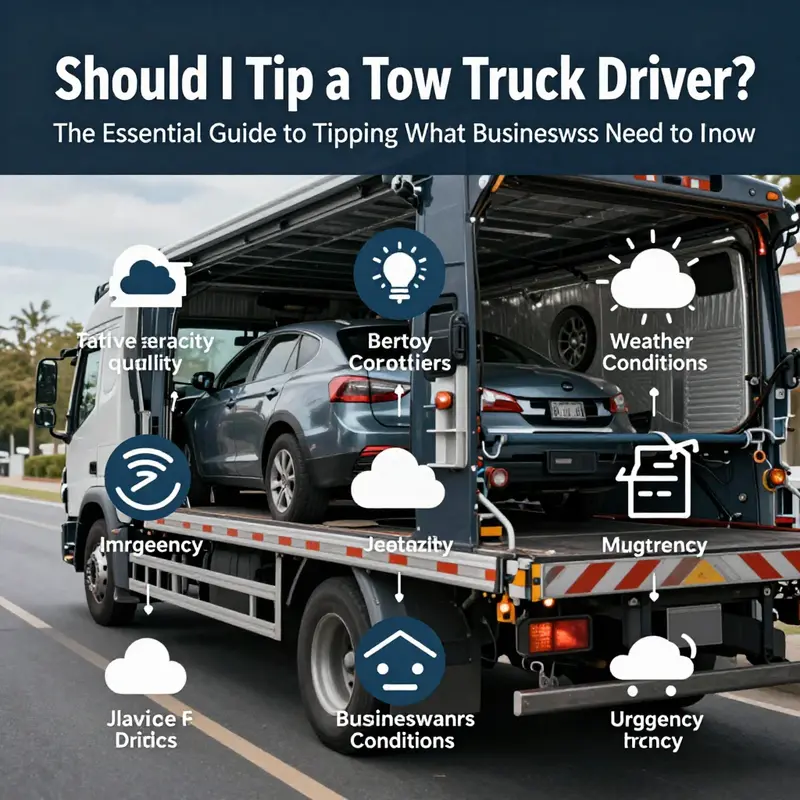
The moments that typically elevate a routine tow into something worthy of a tip include prompt arrival during an emergency, steady and transparent explanations of what will be done, and a calm, safety-conscious approach to moving, winching, and loading a vehicle. If the driver goes the extra mile—offering to check tire pressure, assisting with a fuel stop, or providing thoughtful guidance about the next steps in a snagged recovery—these are the times when many people choose to show appreciation with a small gratuity. Weather and terrain often amplify the risk and effort. A tow done in a snowstorm, during heavy rain, or in a remote location can carry added hazards that deserve recognition through a gesture of thanks. In these cases, a tip can feel less like a demand and more like a respectful acknowledgment of risk and professionalism.
When it comes to amounts, there is no hard rule. A practical range tends to be modest: something between five and twenty dollars, or, if the service charge is significant and the driver’s contribution was proportionally exceptional, a tip closer to ten to twenty percent of the total bill can be appropriate. The key is to keep it proportional to the service and to your financial ability in the moment. It’s also reasonable to opt for a flat amount rather than a percentage if the total is small or if credit-card processing or other fees complicate the math. What matters more than the exact figure is the intention: a brief note of thanks, a calm tone, and a discreet handover of cash or a digital tip if that’s the driver’s preferred method.
One important caveat remains: tipping should never be seen as a substitute for fair pricing or transparent billing. The primary responsibility rests with the provider to present a reasonable, itemized charge for the work performed. If you’re unsure whether tipping is expected or welcomed, you can listen to the driver’s cues and, when in doubt, ask a respectful, immediate question about tipping etiquette. Some drivers may indicate that they accept tips, particularly if they work independently or for smaller, local outfits. In other cases, a sincere thank-you and a positive review can be just as meaningful and may help a respected technician or dispatch team in the long run.
For readers curious about how service models shape expectations in different regions, exploring the broader context of towing services can be illuminating. For instance, you can learn more about the practical scope of tow service in Washington DC through local service providers that emphasize clear pricing and professional conduct: tow truck service Washington DC.
If you want independent guidance on navigating tipping and pricing in the towing industry, reputable consumer bodies offer helpful perspectives. The Better Business Bureau provides up-to-date considerations on towing services, emphasizing transparency and fair billing practices as foundational to trust. For authoritative guidance, see the BBB article: https://www.bbb.org/article/automotive-services/towing-services-what-you-need-to-know.
Tow Troubles and Tiny Gestures: Should You Tip a Tow Truck Driver?
When a vehicle breaks down or is stalled on a busy shoulder, the moment you meet the tow driver can set the tone for how the entire episode feels. Tipping a tow truck driver is not a universal expectation the way it is for restaurants or rideshares, but it’s a gesture that many drivers appreciate when the service goes above the ordinary. The practice sits at a curious crossroads of courtesy, personal circumstances, and local culture. Understanding when a tip feels appropriate means reading the situation: the weather, the urgency, and how carefully the driver handles your car all matter as much as the price quoted for the tow.
Most tow operators are paid a fixed fee by the vehicle owner or the insurer. That payment is designed to cover labor, equipment, and the truck itself, not to compensate for every extra mile of service. Because of that, tipping is not automatic and is not embedded in the price. Drivers who operate as independent contractors may have more flexibility, but gratuities are still not guaranteed or expected. The practical takeaway is simple: tipping remains a discretionary gesture rather than a mandated one, and a driver should not be counting on it.
That said, there are moments when a tip feels meaningful. If the driver arrives quickly in an emergency, communicates clearly amid stress, handles your vehicle with care, or offers practical guidance about next steps, a small gratuity can acknowledge that extra effort. Local customs vary; some regions cultivate a stronger tipping habit for roadside assistance, while others keep it lighter. If you pay cash directly to the driver rather than through an insurer, a tip is more acceptable, but it remains optional. The key is to follow your own judgment rather than social pressure or a one-size-fits-all rule.
Guidelines vary and there is no single formula that fits every tow. A practical range for many situations is modest but thoughtful: about five to ten dollars for solid, professional service. If the work is lengthy, difficult, or performed in harsh weather, you may choose to offer a bit more. Some broad recommendations suggest ten to twenty percent or a flat ten to twenty dollars, but these are less common in practice for tow services. The important idea is to calibrate the tip to the value you perceived: did the driver reduce your stress, protect your vehicle, and get you back on the road with minimal hassle? If the answer is yes, a little extra can feel right without feeling obligatory.
If the service is handled through your insurer, tipping is less likely to fit the billing structure since the insurer pays a set fee. If you’re paying cash on the spot and the driver handles the transaction directly, a tip can be a straightforward sign of appreciation. In any case, tipping is never a requirement; it should be a voluntary expression of gratitude for service that felt above and beyond the ordinary.
To keep the moment smooth and avoid awkwardness, you can express your appreciation in simple ways. A sincere thank you, a quick note to the dispatcher, or a positive online review can carry weight even if you decide not to tip. If you do choose to tip, hand the cash discreetly with a brief acknowledgment, such as, “Thank you for getting me out of a tight spot.” Respecting the driver’s time—especially in rain, snow, or a busy stretch of highway—matters as much as the amount.
For readers navigating local options, it helps to have a practical reference handy. If you’re in Washington, DC, a local option you can explore is Washington, DC tow service. It keeps the discussion grounded and guides readers toward a workable next step without derailing the main point.
Guidance on tipping norms continues to evolve as compensation structures shift and regional practices vary. The Spruce’s 2024 guide offers a concise snapshot: tipping remains optional and situational, not obligatory, and the best approach is to match your gesture to the service you received. For readers seeking a compact reference, this external resource provides a helpful complement: https://www.thespruce.com/tip-tow-truck-driver-4768898
Final thoughts
Tipping a tow truck driver is not just a matter of etiquette; it reflects recognition of their essential role in emergencies and roadside assistance. Business owners benefit from cultivating positive relationships with service providers, like tow truck drivers, by acknowledging their hard work through gratuities. By understanding industry expectations, considering various influencing factors, and applying the guidelines for determining appropriate tip amounts, business owners can foster goodwill and rapport with drivers. Ultimately, the act of tipping signifies respect and appreciation, enhancing the service experience for all parties involved.