
Business owners in the towing industry can draw important insights from the recent developments surrounding Manassas Towing Service, which has officially closed its operations. This closure, marked by the challenges faced amidst rising competition and market dynamics, reflects the broader issues within the towing industry. In analyzing the factors that led to the closure of Manassas Towing Service, and comparing it to the still-operational Manassas Towing in Manassas Park, we can uncover critical lessons on sustainability and operational resilience. The following chapters will delve into the operational analysis and the comparative landscape, equipping business owners with actionable insights for their own enterprises.
From Breakdowns to Rebuilds: Navigating the Aftermath and Market Dynamics of a Manassas Towing Service Closure
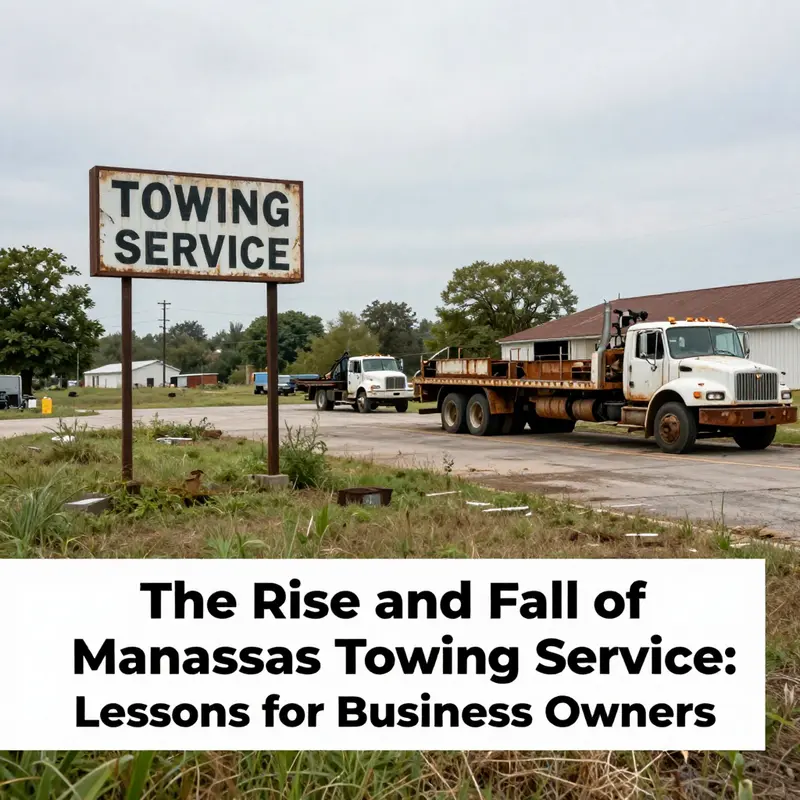
When a car breaks down on a quiet road or during the late rush hour, the road feels wider and time seems to speed up. In Manassas, a community accustomed to commuter traffic and weekend trips, a local towing operation once stood as a steady, almost taken for granted promise: help would arrive when it was needed most. The business wore the silhouette of a small, service oriented operation—a modest facility at 9203 Enterprise Court, a dispatch line that rang, and a fleet of tow trucks ready to roll at any hour. For years this arrangement proved sufficient, and residents learned that 24/7 response was not a luxury but a necessity in a region where weather, traffic, and mechanical wear could strand a driver far from home. The ethos was practical and direct: rapid response, transparent pricing, and the ability to handle a broad range of scenarios, from a jump start to a heavy tow for a commercial vehicle. In that sense, the shop embodied a familiar pattern in small town and suburban service economies, where daily life meets the discipline of a single, reliable operator.\n\nYet as of early 2026 the reassurances that once seemed permanent began to look less like certainty and more like a snapshot in time. The Manassas area operation appears to have closed permanently, a status reflected in local directories and review platforms. There is no active website to consult, no current phone line to call, and no recent social footprint indicating ongoing operations. The evidence is not only anecdotal but procedural: maps and listings label the business as permanently closed, and the absence of new customer feedback or updated contact details reinforces the sense that the venture has exited the market. For people who trusted this source of help in moments of crisis, the closure is more than a business obituary. It changes how they plan breakdowns, late night drives, and fleet dispatch in the absence of a long standing local option. In the context of the broader article about Manassas towing services, the closure becomes a data point about how local economies evolve and how customers adapt when a preferred channel disappears.\n\nThe operational logic that once sustained the shop 24/7 accessibility, rapid mobilization, and a straightforward pricing approach was not unusual for towing operators in similar markets. The around the clock service is demanding in a competitive environment where fuel costs, labor, maintenance of heavy equipment, licensing, and insurance compress margins. The business that closed had carved a niche by serving both automobiles and larger trucks, a capability that required a diverse fleet and skilled operators capable of handling a spectrum of tows, recoveries, and roadside tasks. This breadth is exactly what customers seek in a trusted responder during a roadside emergency: a single call and a single point of coordination. When that apparatus shuts down, the implications ripple through the community. Not only does the immediate response window lengthen as other providers mobilize, but the psychological comfort of having someone always ready also erodes. The sense of security a regular customer feels is hard to quantify, yet tangible in how people plan emergencies and allocate contingency resources when a local partner may no longer be available.\n\nIn the wake of closure, the Manassas area reveals a familiar pattern: demand is absorbed by neighboring operators who promise comparable speed and reliability. A nearby firm, advertising round the clock service and flexible payment options, appears to have stepped into the void. The existence of this competitor does not simply replace the old option, but reshapes the regional service map. For residents and businesses, this creates an opportunity to reassess criteria for a towing partner. Speed remains paramount, but predictability of arrival time and consistency of the dispatch process become equally important. The dispatch workflow—phone intake, location verification, ETA calculation, and payment handling—tests a provider’s operational discipline more than any single price point. A customer stranded near a highway exit at night will remember the clarity of the ETA, the transparency of surcharges, and how the technician communicates while en route.\n\nThe closure also invites a careful examination of cost structures and market dynamics. Small towing businesses operate at the intersection of high fixed costs and episodic demand. A single mechanical failure in a busy week can ripple through labor scheduling and maintenance planning. The pressure to maintain modern, well kept tow rigs and a full complement of specialty equipment is nontrivial. When demand softens, or when competition intensifies, operators must decide whether to absorb higher costs to maintain service levels or to adjust capably and perhaps reduce some service lines. The local environment is particularly instructive: a community with a sustained need for emergency assistance, a mix of private vehicles and commercial operations, and a network of insurance relationships that rely on dependable partners for timely roadside support. In this setting, a single closure is not merely the loss of a single storefront; it is a test of how the remaining operators manage capacity, maintain a high standard of customer communication, and protect the trust that customers invest in a local service economy.\n\nFor readers and researchers, the takeaway is more nuanced than a simple “shop closed, move on.” It is about recognizing the resilience embedded in the system. The market’s ability to reconfigure itself—bringing in another operator to cover emergency calls, expanding the footprint of a few trusted providers, and encouraging new entrants to sharpen service models—speaks to a dynamic ecosystem. The health of a region like Manassas depends on more than a sign on a door; it depends on reliability, fair pricing, and straightforward access to a dispatcher who can reassure customers in distress. That reassurance often hinges on a few concrete indicators: the hours of operation, the capacity to tow varying vehicle classes, and the payment methods accepted at the point of service. With these elements in flux, customers naturally gravitate toward providers who can demonstrate steady performance across these dimensions, and the broader market rewards those who keep the customer experience simple and transparent even when other variables change.\n\nFrom a consumer guidance perspective, the current landscape underscores why building a small, personal emergency plan makes sense. Before a breakdown occurs, it is prudent to preselect a short list of dependable options with clear turnaround expectations and verification steps. Prospective customers should simply confirm that a provider is actively operating, understand what vehicles and service types are supported, and ask about typical response times under different traffic conditions. It is especially valuable to confirm payment flexibility ahead of a crisis, whether that means accepting credit cards, digital wallets, or insurance-billed services. In parallel, motorists can maintain a ready set of reliable contact channels—stored numbers, an offline backup list, and access to reputable online directories that can be consulted in real time when a call lines up against a rate chart. The synergy of these practical habits—operational clarity, fleet mobility, and transparent pricing—builds trust and reduces anxiety in moments when every minute counts.\n\nFor those following the broader arc of the article, this episode is not a standalone incident but part of a larger pattern in which local service ecosystems continually reconstitute themselves in response to shifting demand and competitive pressures. A city or county that supports a diverse roster of providers—rather than a single dominant operator—tends to experience greater resilience in times of disruption. The ongoing presence of at least one twenty four hour, card accepting provider is a stabilizing factor for residents and for businesses that rely on predictable roadside assistance. The chapter’s narrative thus nudges readers to consider not just the health of one shop but the health of the network that sustains the crucial function of rapid, reliable towing and roadside support. It invites policymakers, industry observers, and consumers to examine how local regulations, licensing processes, and market incentives shape the sustainability of these essential services. It also highlights the need for accessible information in the digital age; even when a trusted local operator closes, the citys driving public should be able to locate responsible alternatives quickly, with confidence in their legitimacy and capability.\n\nReaders seeking a snapshot of the current landscape can turn to local resource pages that aggregate nearby options and provide practical details such as service areas, hours, and contact points. These resources can guide someone who is stranded and unsure where to turn, helping to reduce the stress of an emergency by pointing them toward a provider known to be actively serving the community. More broadly, the narrative illustrates how the removal of a familiar option triggers a recalibration of expectations and a reallocation of market share among the remaining players. It is a reminder that the health of a local towing ecosystem depends on continuous competition, clear communication, and a shared commitment to helping people who need assistance without delay, with courtesy, and at a fair price. As the story continues to unfold, the communitys approach to roadside support will likely evolve, balancing the strengths of established operators with the opportunities that new entrants bring to the table.\n\nInternal link for further context: for a current overview of the area’s towing options, see the dedicated local page on Manassas towing. This resource consolidates up-to-date information about nearby providers and can serve as a practical starting point for anyone seeking immediate help or planning ahead for future incidents. Manassas towing\n\nExternal reference: https://www.google.com/maps/place/Manassas+Tow+Truck/@38.656268,-77.667917,15z/data=!3m1!4b1!4m6!3m5!1s0x89b1d8a3c9f7a5b5:0x6e594a3b1d8a3c9f7a5b5!2sManassas+Tow+Truck!3m2!1d38.656268!2d-77.667917
Two Local Tow Routes: Mapping the Towing Landscape of Manassas Through Manassas Towing Service and Manassas Towing in Manassas Park
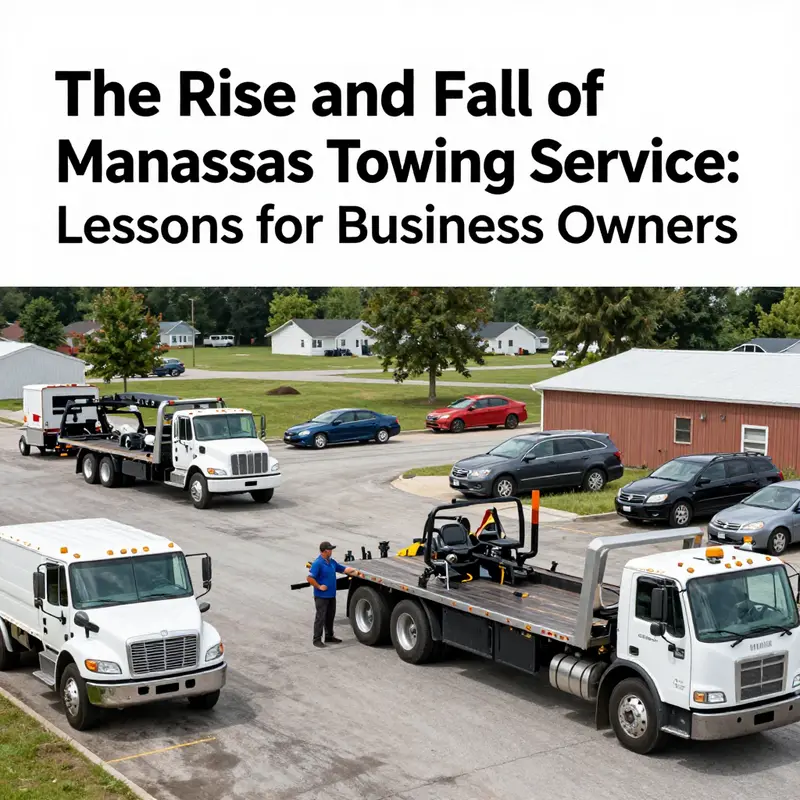
When a vehicle breaks down on a northern Virginia road, the choice of a towing partner becomes part of the roadside map a driver unwinds in the heat of an unexpected moment. In the Manassas area, two distinct towing entities shape this map in different neighborhoods and with different histories. One navigates the broader Manassas region from a base that sits just outside the city lines, while the other anchors its focus in the neighboring, denser enclave of Manassas Park. Their paths cross daily in the normal course of road incidents—flat tires, fender benders, or the simple need to move a car out of a problematic spot. Reading the landscape of these two providers reveals not only contrasts in service areas and business structure but also the practical implications for response time, reliability, and local regulation. In this chapter, the threads of their stories are pulled together to illuminate how a community gauges prompt, professional roadside help and why the nuances matter when every minute counts on a highway shoulder or a local strip alongside a busy corridor.
Manassas Towing Service, LLC sits at the heart of a wider Manassas geography, with a history that traces back to early 2000s registration and a portfolio of services that align with typical regional towing needs. The company’s physical presence—traditionally linked to an address like 8304 Singleton Terrace in Manassas, Virginia—speaks to a footprint that extends beyond a single neighborhood. An active business registration, dated as far back as April 4, 2002, suggests a long-standing commitment to the craft of roadside recovery. In the local business ecosystem, this longevity matters: it signals not only experience in handling a range of incidents—car accidents, stalled vehicles, and the inevitable need for light- to heavy-duty towing—but also an ongoing interaction with state and local regulatory structures that govern licensing, insurance, and safe towing practices. The possible alternative naming, United Towing Service, LLC, hints at the possibility of branding changes or a broader network under which the same entity may operate. A public-facing asset, such as a website, can be a window into this broader history, with a domain that links to the public-facing narrative of service offerings, service areas, and contact information. The broader impression is that Manassas Towing Service, LLC situates itself as a conventional, regulation-conscious operator within the Virginia towing sector, capable of handling routine roadside recoveries with established procedures and a recognizable local presence.
Yet, the landscape is not static. Public notices and business records periodically surface questions about status, continuity, and branding, especially in a field where emergency service quality hinges on reliability and immediacy. In some years, discussions around a company’s active status can cohere with a sense of closure in certain public channels, while other sources still list the business under its registered name or a rebranded alias. Framing these possibilities, however, does not diminish the practical reality of who is accessible to a driver at 2 a.m. on a Saturday or who can reliably respond to a call for a stalled vehicle on a busy Arlington-Manassas corridor. The best approach in such cases is to verify directly by phone and to consult the Virginia state business registry for the most current standing. The kernel of the matter for customers is clear: the presence or absence of a longstanding local operator matters less in theory than the actual ability to arrive promptly, carry out safe towing, and settle accounts with transparent payment options.
On the other hand, Manassas Towing in Manassas Park frames a different but complementary piece of the regional puzzle. Situated within the city limits of Manassas Park, this operator emphasizes a tighter geographic focus and a 24/7 operational posture that directly translates into rapid response within a defined urban footprint. This is not a mere marketing claim; it’s a practical assertion about where the company’s crews are positioned, how they stage their equipment, and how they align with the rhythms of a smaller, more densely mapped city. For drivers stranded in the heart of Manassas Park or along the streets that thread through its neighborhoods, access to a local tow partner that treats the area as a core service territory can shave minutes off a response time—the difference between a vehicle being roadside and a vehicle being on the move again.
The logistical consequences of these distinct orientations begin to reveal themselves in the everyday experiences of motorists and fleet operators. If a driver’s location is closer to a Manassas Park address or within the city’s limited grid, a local operator with a known 24/7 schedule can be expected to dispatch quickly, with a clearer understanding of street layouts, parking restrictions, and access routes. Conversely, for residents and commuters across the broader Manassas region, a longer-standing entity like Manassas Towing Service, LLC may offer a wider service net, broader equipment capabilities, and a track record accumulated across a variety of incidents and terrain—from suburban streets to rural byways. These differences are not a matter of superiority or inferiority; they reflect a practical division of labor within the same regional ecosystem, where two operators serve overlapping but not identical needs.
There is also a practical, regulatory dimension that customers rarely see at the moment of crisis but which shapes the quality of service over time. The formal registration status of operators matters because it anchors them in a framework of licensing, insurance coverage, safety training, and compliance with state rules governing towing procedures. In Virginia, like many states, a business that wants to tow cars responsibly must demonstrate license compliance, correct insurance, and a transparent approach to charges. The Virginia State Corporation Commission maintains a database that can be consulted to confirm details about a company’s legal structure, active status, and any corporate aliases. Accessing these records is not a burdensome chore, but it offers a reliable anchor for people who want reassurance about the legitimacy of the provider they call. In this sense, the two Manassas-area operators—whether encountered as two sides of the same local economy or as distinctly branded yet neighboring services—embody a practical model for how roadside service has matured in suburban Virginia: the blend of local familiarity, regulatory legitimacy, and responsive availability becomes as essential as the mechanical act of towing itself.
The differences between these two operators also illuminate a broader question for drivers: when faced with a roadside emergency, should a caller prioritize proximity or pedigree? The answer, understandably, varies by circumstance. A driver stranded in Manassas Park, for instance, may benefit from the immediacy of a nearby operator who can arrive within minutes, potentially reducing the stress and danger that comes with a stalled vehicle on a busy street. If the breakdown occurs at the edge of the larger Manassas region, the reliability of a more established operator with a longer operational history could translate into a smoother process—from dispatch to payment processing and the eventual handoff to a secure storage location or a repair shop. This is not merely about who shows up first; it is also about the reliability of the entire chain: whether the tow truck arrives with the right equipment, whether the driver can handle the specific vehicle type, and whether the payment options align with the customer’s preference.
Consumers can practically orient themselves by asking a few essential questions before a crisis strikes: Is the company licensed and insured in Virginia? Does it operate 24/7, and can it provide a rapid estimate of response time? Are credit cards accepted, and is there a transparent mechanism for the final bill? Does the operator have a local base that suggests intimate knowledge of the roads through Manassas and Manassas Park? These questions matter more when the roadside moment arrives, and the answers help determine not only who is contacted but also how smoothly the process unfolds from dispatch to the vehicle’s safe return to the road.
Beyond the specifics of two companies, the landscape of Manassas towing reflects a balance between scale and local competence. A larger, regionally established operator may bring greater dispatch resources and a wider set of towing capabilities, including specialized equipment for heavier loads or complex recoveries. A smaller, neighborhood-focused operator, by contrast, can excel in situational awareness—navigating tight streets, understanding municipal parking policies, and coordinating quickly with nearby garages that service common makes and models found in the area. The choice between these paths is not a rigid dichotomy; it is a spectrum, where a driver’s priorities—speed, price, reliability, and the specific vehicle type—shape which operator best serves the moment.
For readers who want to explore further, there is value in looking at how local directories and professional associations shape public perception of these companies. A user who lives in Manassas or travels through the region might prefer a quick comparison of nearby providers, including those listed under the umbrella of towing services in Manassas, VA. To support this kind of local exploration, you can find a concise guide to Manassas-area towing options that highlights the breadth of providers serving the area, with focus on proximity and 24/7 availability. This context helps put the two core players in perspective while also offering a practical path for drivers to evaluate service quality in real time. For readers who want to see more about the landscape of local providers, our broader coverage includes additional resources such as a dedicated page on towing companies in Manassas, VA.
Internal link to related coverage can provide a quick, user-friendly path to compare local offerings: towing companies in Manassas, VA. This resource anchors the local map visually and practically, showing how proximity, hours, and payment options come into play when a breakdown occurs. It is not a guarantee of quality, but it is a practical starting point for people who want to be prepared and informed before trouble arises. The real value is that this information complements the lived reality of drivers who rely on fast, professional assistance when the roadside becomes a fragile place.
The broader point, once you assemble the variables—the geographic focus of each operator, the tempo of their dispatch cycles, the regulatory scaffolding that supports safe practice, and the visible signals of reliability in public records—is that the Manassas towing ecosystem is not a monolith. It is a living system defined by two kinds of local strength: the endurance of an established business that has weathered seasons of demand, and the nimbleness of a park-centered operator that can promise immediacy in a specific urban zone. When you combine these elements, you see a practical answer to the question drivers ask themselves at the moment of need: which partner best aligns with where I am, what I drive, and how I prefer to settle the matter after the tow is completed? The answer will vary, but the framework remains consistent—choose a provider that is accessible, properly licensed, and prepared to meet the moment with clear communication and responsible service.
For readers who want to validate the formal status of these entities, official verification remains a prudent step. The state’s business registry can confirm active registrations, alias names, and other pertinent legal details. This due diligence matters not only for peace of mind but for ensuring that the service performed aligns with professional standards and consumer protections. In the end, the roadside is a place where trust, proximity, and policy compliance intersect, shaping the reliability of any tow. The two Manassas-area operators exemplify how a local market can sustain diverse responses to the same essential need: help, when you need it most, delivered with competence and care.
External reference for official verification: https://www.dos.virginia.gov/businesses/online-services/corporation-search/
Final thoughts
The closure of Manassas Towing Service serves as a cautionary tale for business owners within the towing industry. By examining the operational decisions and market conditions that lead to its downfall, alongside the successful strategies employed by Manassas Towing in nearby Manassas Park, we highlight the multifaceted nature of business sustainability in this sector. Adopting a proactive approach, focusing on customer service, and utilizing effective marketing could foster resilience against similar challenges. Stay vigilant and adaptive to changes in the market to ensure longevity in your towing operations.