
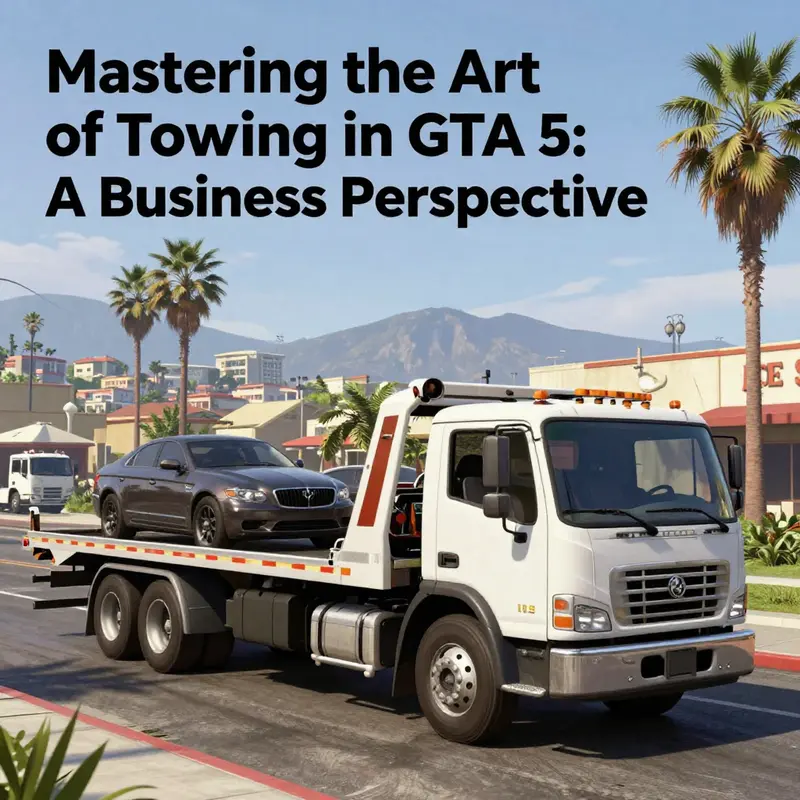
Understanding how to properly use a tow truck in GTA 5 can greatly enhance your operational efficiency, especially for business owners who rely on vehicle management strategies. Whether managing a fleet, rescuing stranded vehicles, or engaging with the vibrant world of Los Santos, mastering the functionalities of a tow truck can offer numerous advantages. This guide will first equip you with knowledge on locating and entering a tow truck, followed by essential operational procedures and safety tips critical for successful towing. By the end, you’ll have a clear roadmap to leverage towing capabilities effectively within your GTA 5 gameplay.
Tow Truck Tactics in Los Santos: Mastering Vehicle Recovery, Loading, and Transport in GTA 5
A tow truck in GTA 5 is more than a simple fetch tool. It is a mobile toolkit that reshapes how you move through the city, clear roads of wreckage, and complete objectives with a precision that cars alone cannot offer. In the sprawling map of Los Santos and Blaine County, these hulking machines become a lens through which you can see the city as a network of recoveries, routes, and timing. The mechanics of locating, entering, and operating a tow truck are surprisingly intricate when you zoom in on the details, yet they become intuitive with practice. This chapter treats tow trucks not as a gimmick but as a functional extension of your driving repertoire, inviting patience, planning, and a steady rhythm rather than speed and flash. It is a narrative about technique that unfolds in real time, with the map as your stage and every hook a potential pivot point in the sequence of moving a stranded or recovered vehicle from street to destination.\n\nFirst, the path to mastery begins with the search. Tow trucks spawn in several places across the landscape, but the reliable routes lie in the typical hubs where you would expect maintenance vehicles or service fleet traffic to appear. Junkyards tucked away near Paleto Bay are a classic spawn point. The occasional truck might lurk around the Mission Row district by the Car Lab, or near the Chinatown area where alleys breathe with a different kind of traffic. They can also roll up on the street in random spawns, almost like a street-level surprise that rewards exploration. The moment you spot one, you know a small unlock has occurred: you have a dedicated tool for a new set of tasks. In online play, these vehicles may appear in more purposeful contexts, and their availability can shift with the cycles of missions and player activity. The moment a tow truck slides into your line of sight, the work ahead stops being rumor and becomes a concrete plan.\n\nEntering the vehicle is the simplest act in a sequence that quickly grows in complexity. Approach the tow truck and press the interaction button to take the driver’s seat. On PC, this is the F key; on PlayStation, the Triangle button; on Xbox, the Y button. It is easy to overlook the subtle differences in control schemes, but once you lock the habit, stepping into the truck feels like slipping into a purpose-built chair. The seat is not a throne but a cockpit, a place from which you control a small but meticulous operation and, if you are careful, you can begin to sense the weight of responsibility that comes with towing another vehicle. The moment you feel that weight, you also feel a shift in your perception of traffic. The road is not just a path; it is a line of loading states waiting to be managed.\n\nPositioning the tow truck behind the vehicle you intend to move is the first real technical moment. The hook at the back must align with the rear of the target car, and the alignment is more subtle than it appears at first glance. You want the hook positioned just beneath the bumper or the frame, so that when you engage, the vehicle sits squarely on the tow mechanism. The key is to reverse slowly, keeping the target in your line of sight and maintaining a straight path. Precision matters: a slight misalignment can cause the hook to slip, and an attempt that ends in a failed latch is not just frustrating—it is a disruption in your whole plan. The moment of alignment is a micro-drama of patience and geometry, where timing and space converge into a stable hold under the weight of the towed car.\n\nOnce you have the truck backed into position, the hook requires careful adjustment. The height of the hook must be calibrated so that it catches securely without dragging on the ground or bouncing off the bumper. On PC, you use Shift to raise the hook and Ctrl to lower it, with the readouts helping you monitor the position against the vehicle’s geometry. On consoles, R2 or RT lowers the hook, while clear feedback will tell you when the hook is near the correct height. The art here is in small, deliberate moves: a lift, a slight downward tilt, a check for clearance, and then another lift to lock the hook into the ideal angle. When the hook finally aligns with the target and the manual control confirms engagement, the moment you press the engage button—E on PC, Square on PlayStation, A on Xbox—the latch snaps shut. The vehicle is connected, and you have to trust the physics of the tow—weight, balance, and momentum—to keep the car from shifting or detaching as you begin to move.\n\nThe act of hooking is not just a mechanical step; it is a small negotiation with the road you are about to travel. The towed car shares your air, your momentum, and your traction, so you must drive with a measured caution. For many players, this means embracing a steady tempo rather than a reckless rush. You will want to accelerate slowly, brake with intention, and keep your line true through turns. Sudden velocity changes or sharp steering can unsettle the vehicle being towed and cause the connection to loosen or fail. The procedure becomes a rhythm: approach, align, lift, latch, then move with care. The moment you feel the towed car settle securely across the bed or wheel-lift platform, your attention shifts from attachment to transport—the next phase of the operation where route, speed, and destination converge into a single objective.\n\nTowing brings another layer of choice: how the towed vehicle will ride while in motion. There are variations in tow truck design that influence your technique and the risk of a loss of connection. A low bed tow truck, for instance, is designed to carry cars on top of a flat platform, letting you drive the target vehicle directly onto the bed in a more controlled manner. This setup minimizes ground clearance issues and often reduces damage during loading, making it a preferred option when you want to preserve the vehicle’s appearance or when you face a delicate configuration. In contrast, wheel-lift tow trucks rely on hydraulic forks to lift either the front or rear wheels off the ground. This method is particularly effective in tight urban spaces where room to maneuver is limited. It does not fully cradle the entire vehicle, but it offers a compact, nimble approach to short-distance towing. The choice between these configurations is more than a pattern; it is a tactical decision that players make based on the surroundings, the type of vehicle, and the risks they are prepared to manage on the street.\n\nAs you begin to move the towed vehicle, the road itself becomes part of the challenge. The dynamics of a loaded tow are different from those of driving a car under its own power. The towed vehicle can shift in yaw and roll, especially when you encounter potholes, uneven pavement, or sudden turns. To minimize the chance of detachment, maintain a steady, composed rhythm. Avoid high-speed turns, sudden lane changes, or aggressive braking. If you hear or feel a shake, slow down and drive in a straight line for a moment to regain balance before continuing. The towed object is not a standalone cargo; it is part of a system that includes you, your vehicle, and the road. Each decision you make in speed, direction, and road texture translates into a small set of variables that govern whether the load stays connected and arrives at its destination intact.\n\nThere is also the question of purpose. In the world of GTA Online, tow trucks appear in the service economy as tools for mission-based objectives and challenges. One notable objective, the Truckin challenge, rewards the player for driving a tow truck at a higher speed for a specific duration, roughly 10 to 15 seconds, to satisfy a mission requirement. This objective underscores that towing is not merely about moving a car from point A to point B; it is about mastering the tempo of motion and balancing risk against reward. While turning this into a strategy for a solo session is one thing, coordinating with teammates or players adds a social dimension that enriches the practice. The dynamics of teamwork can lighten the load of a long transport, as a partner can scout routes, manage traffic, or cue you to an impending hazard that would threaten your connection. The real value emerges when you begin to apply the technique to more complex tasks: recovering a vehicle from a cluttered alley, clearing a blocked lane in a busy street, or transporting a car that has been recovered in a high-tension scenario where the stakes feel personal and immediate.\n\nIn addition to the mechanics of hooking and hauling, you will notice that the type of tow truck influences how you approach loading. Low bed models require careful alignment to ensure the car can be driven onto the bed or pulled up onto the platform. The driver’s seat perspective is your guide here; you are not simply towing a piece of metal but guiding the target vehicle through a precise interface where the geometry of both vehicles meets. Wheel-lift variants, by contrast, make the loading a little more about balance and control, especially when you are working within urban canyons and narrow streets. The driver’s intuition grows with experience as you learn where to position the truck relative to cross streets, traffic flow, and the curve of a curb. In practice, you will eventually develop a sense for the most reliable approach: how much to reverse, how to angle the vehicle, when to pause to check the hook, and when to proceed. It is the same logic you apply when backing a trailer in real life, a reminder that the in-game practice mirrors a universal set of physical principles—weight distribution, friction, and momentum—without needing to leave the game world to understand them.\n\nAs you progress, you might reach a moment of refinement that transforms towing from a routine to a craft. You learn to anticipate the weight shift of a car if you corner too quickly or traverse a rough patch. You learn to micromanage the hook’s height, sometimes nudging it by inches to keep a secure hold through uneven ground. You develop a quiet confidence that comes from repeated practice and a steady tempo under pressure. The road continues to present challenges—a curb that bites, a street that narrows, or a convoy that swallows you in a maze of traffic—but the tow truck becomes a reliable instrument rather than a liability. With time, you begin to treat each loading as a small problem with a clear set of constraints rather than a chaotic moment that demands improvisation. And when you successfully deliver a vehicle—when the hook releases cleanly at the destination and the car sits safely on the ground—you experience a small, earned satisfaction that belongs only to the drivers who have learned the language of the hook and the road.\n\nFor players who want to connect the in-game practice to real-world terminology or further reading, a practical way is to reference real-world towing concepts and terminology that echo the same logic you use in GTA 5. A useful way to visualize this is to consider resources that map out the basics of tow truck operation and terminology in real life. This approach helps to bridge the gap between game mechanics and real-world understanding, reinforcing the idea that towing, whether virtual or real, is a disciplined sequence of steps that rewards precision and patience. For those curious about how the hook alignment and vehicle interaction translate outside the game, a simple reference to a real-world guide can illuminate the shared principles without requiring a direct endorsement of any particular service or brand. The connecting thread is the idea that a careful approach to alignment, load management, and controlled movement remains constant across contexts, and that the skill develops with repetition and attention to detail.\n\nUltimately, the journey to towing proficiency in GTA 5 is a journey through space, time, and rhythm. You travel the city with a tool that changes the way you see the map, the way you plan routes, and the way you understand risk. It is a practice in balance: balance between speed and precision, between momentum and restraint, between the desire to finish quickly and the discipline to protect your load and your surroundings. The more you tow, the more the city reveals itself as a grid of potential recoveries and routes, a dynamic stage where timing and location cooperate to accomplish a purpose that is both practical and satisfying. And if you ever feel you are losing control, return to the basics: realign, lower, latch, move slowly, and keep straight as you traverse the road. There is a quiet confidence that comes from doing this well, a confidence that makes a difficult task seem almost serene, a small testament to the idea that in the world of GTA 5, the tow truck is more than a mechanic’s tool—it is a conductor’s baton that guides motion through the urban symphony.\n\nFor a grounded reference that links game technique with real-world terminology, you can explore towing concepts through practical resources that outline the basics of tow truck operation and terminology in real life. This approach helps to bridge the gap between game mechanics and real-world understanding, reinforcing the idea that towing, whether virtual or real, is a disciplined sequence of steps that rewards precision and patience.
Tow Lines and Time: Mastering the GTA 5 Tow Truck with Skill, Strategy, and Safety
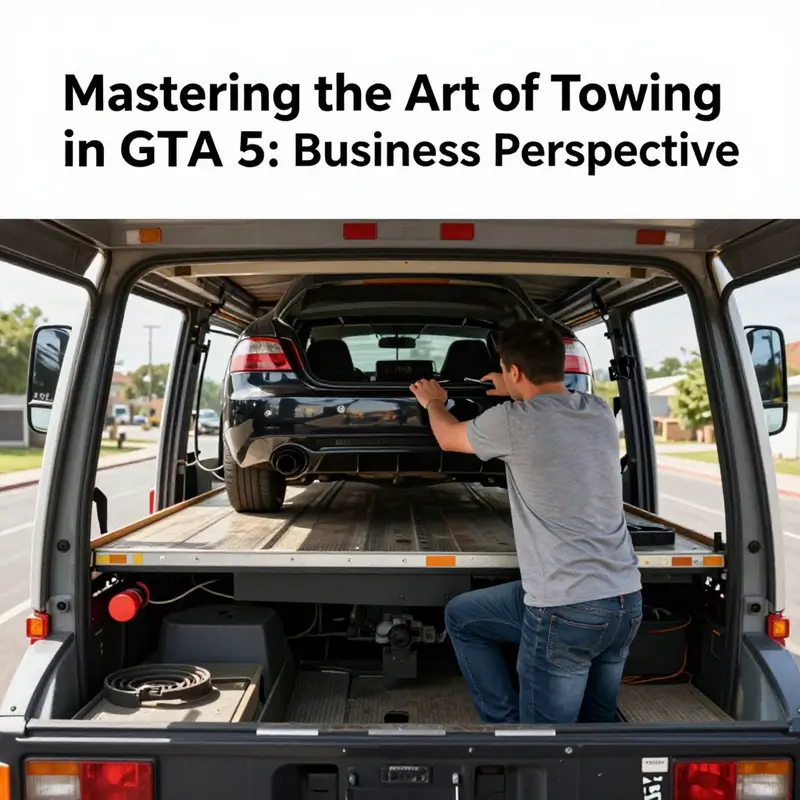
In the sprawling streets of Los Santos and the rugged expanses of Blaine County, the tow truck is more than a gimmick or a novelty vehicle. It’s a precise instrument that can unlock missions, unlock a steadier flow of cash, and give you a practical edge in both single player and online play. Mastery doesn’t come from brute speed or flashy stunts; it comes from a calm, practiced sequence of setup, hooking, and careful transport. The tow truck’s mechanics are simple on the surface, yet they reward patience, positioning, and a feel for how weight shifts and how weight impacts steering. When you start seeing the winch, the lift arm, and the platform as components of a single, integrated system rather than as separate tools, you’ll operate with a confidence that makes towing feel almost surgical. And in a world where a stumble can turn a routine pickup into a chaos-filled scramble, that confidence is more valuable than a fleeting head-start on the clock.
To begin, you’ll locate a tow truck in the open world—these trucks spawn in a few predictable spots, and you’ll often come across one near garages, towing companies, or the cluttered lots around Los Santos and Blaine County. You’ll learn to recognize the signs of a ready tow: the distinctive rear hook glinting under streetlights, the sturdy frame built for pulling other vehicles, and a silhouette that looks almost out of place among ordinary cars until you need it. When you actually see one, you pull up, and you’ll know it’s time to step into the driver’s seat. On PC, that begins by approaching the cab and pressing F to enter the driver’s seat; on PlayStation, Triangle; on Xbox, Y. The moment you settle in, you’re not just driving another vehicle—you’re operating a small, specialized machine with a single purpose: to connect and carry, to secure and deliver, with a mind toward balance and control.
The mechanical core of the tow truck rests in its winch and its lifting apparatus. With the vehicle in your field of view, you’ll align the truck behind the car you intend to tow. The method is deliberate: back up slowly, tracing the line of sight to the target’s rear bumper. A careful approach matters because the hook at the back needs to intersect with a stable point on the towed vehicle. Once you’ve found a solid alignment, you’ll activate the winch to pull the target toward the truck. On PC, press F to engage the winch; on PS, Triangle; on Xbox, Y. The winch is your primary force multiplier in this operation, but it’s only the first step of a careful choreography. After initiating the pull, you’ll move to the lift arm. The lift arm is what you use to lift or secure the vehicle so it can be carried properly. On PC you press E to raise or lower the lift arm; on PS you use Square; on Xbox, X. It’s important to time the lift so that you aren’t lifting a car that’s still bouncing or jolting on the ground, which could cause it to slip or crash during transit.
As the target vehicle comes into view, you’ll adjust the height of the hook so that it latches onto a sturdy point—rear bumper, frame, or a similarly solid anchor. The lifting process is not about brute strength; it’s about a steady balance of motion. Lower the hook to engage, and when you’re certain the connection is secure, you’ll engage the lock. On PC, you press E to engage the hook; on PS, Square; on Xbox, A. When the vehicle is securely attached, the tow truck is no longer a simple passenger of the street’s chaos but a controlled carrier, ready to take a load where you intend. At this moment, you can begin to move. You’ll want to drive with patience, especially through turns or rough terrain. The weight of the towed vehicle can alter your steering, widen your turning radius, and even affect your braking. This is where experience matters. You’ll learn to anticipate shifts in momentum, how to time your brake pressure, and when to ease off the accelerator to preserve the integrity of the linked load.
The actual act of towing is more nuanced than simply pulling a car onto a platform. After the hook is engaged, you’ll want to ensure the vehicle is properly locked in place before you accelerate. The goal is to maintain a stable connection from start to finish, so that the towed car remains seated on the platform or inside the bed without shifting violently during turns or while negotiating uneven surfaces. The safest practice is to make slow, measured turns and to avoid aggressive maneuvers altogether. In a game world where a misstep can cause the towed vehicle to detach, patience becomes a practical weapon. You’ll also want to keep an eye on the towed vehicle’s orientation. If the rear wheels lose contact or begin to wobble, you’ll need to slow down, straighten your path, and guide the load to a straight line as you head toward your destination.
When you reach your destination, the release is almost as important as the hookup. You’ll stop the tow truck safely and then use the release sequence to drop the vehicle. On PC, release is H; on PS you’ll use Circle; on Xbox, B. Watching the towed vehicle settle onto the ground after you’ve let go completes the transport cycle. You may be surprised at how routine this becomes after you’ve practiced a few times. A well-executed tow is not flashy; it’s quiet, controlled, and adds to the player’s resourcefulness. It’s a reliable way to complete objectives that require a vehicle’s repositioning, whether you’re moving a broken-down car during a mission or hauling a damaged ride back to a safe zone for repair or resale.
The practice of towing doesn’t exist in a vacuum. It sits within a broader system of safety and spatial awareness that applies whether you’re running a solo session or playing online with others. The streets in GTA Online teem with unpredictable traffic, players with their own agendas, and environmental hazards that can complicate even simple removals. The same rules that govern city driving apply here: keep a broad field of vision, mind your pace, and respect the space other drivers require. In online play, the stakes can feel higher because your load is visible to others, and a heavy, bobbing vehicle can become a hazard or an attention grab. It’s wise to move to open spaces or less congested streets when you’re learning to tow. It gives you more time to react and reduces the chance of an accidental detachment or crash that could attract unwanted attention from rival players or pedestrians who might collide with your rig.
Beyond the practical, the tow truck also opens doors to an array of mission opportunities and earnings strategies. There are mission-driven towing tasks where you recover and transport vehicles as part of a larger objective. In GTA Online, some players approach tow trucks as a business asset, adding a layer of strategy to their activities by taking on requests that pop up in your in-game feed. You can also encounter side jobs that revolve around transporting stranded vehicles or participating in specialized contracts. The bottom line is that the tow truck isn’t just a tool for getting from point A to point B; it can be the centerpiece of a methodical approach to earning in-game currency and expanding your operations within the virtual world. The wall of tension, risk, and opportunity that surrounds a towing run makes the craft more than a pastime; it becomes a practical vocation—one you can master through patience, steady hands, and a measured approach to each job.
The system’s depth is reinforced by a few essential safety reminders. First, avoid high speeds when towing. A loaded platform behaves very differently from a standard car, and rapid accelerations or sudden decelerations can cause the towed vehicle to destabilize, potentially detaching or causing damage to both vehicles. Second, always verify that the towed vehicle is secured before you begin moving. A loose connection isn’t just a minor nuisance; it can lead to a dangerous detachment at a critical moment. Third, plan your route with wide, generous turns. Tow trucks are longer than typical cars, and tight corners or cramped alleyways invite contact with walls, pedestrians, or other cars. Fourth, stay aware of your surroundings. In online play, other players may attempt to intervene in your operation by blocking your path, snatching your load, or mischief of various kinds. It’s wise to keep your tow rig in view and consider creating a little distance between your garage or secure location and the thoroughfares where players loiter. These practices aren’t about fear; they’re about maintaining the discipline that keeps operations smooth, predictable, and profitable.
If you’re curious about how the real-world towing industry emphasizes control and safety, the parallels are instructive. In a real-world setting, the winch’s load rating, the anchor points used for hook-ups, and the method used to secure a vehicle are all critical to a safe operation. You can explore real-world perspectives on towing and the challenges operators face by checking resources that discuss industry standards and daily practices. For a sense of the practical, grounded experience, you can refer to Burke VA towing service, which offers a tangible look at how professionals approach towing tasks day in and day out. This real-world reference isn’t a blueprint for GTA play, but it provides a helpful perspective on the core principles that make towing a demanding, precise craft. Burke VA towing service
As you refine your technique, you might look toward more specialized approaches such as flatbed operations, which carry cars on top rather than on a rear platform. In GTA Online, you can access variations of the towing experience through specific missions or in-game purchases that unlock different types of equipment. The core mechanics—hooking, lifting, and securing—remain constant, but the way you implement them shifts with the equipment at your disposal. The versatility of these options means you can adapt to the demand of different jobs, choosing the setup that balances efficiency, safety, and the potential payout. The most important guideline remains consistent: prioritize stability and control over speed and drama. A well-executed tow is often quieter, more reliable, and more profitable in the long run than a reckless, high-speed pull that ends in failure.
In the course of a session, you’ll learn how the tow truck’s extended length changes your approach to turns and lane positioning. The front wheels of the towed vehicle will respond to your movements, while the truck’s own weight distribution will influence steering dynamics. A practical rule emerges: when towing, you should begin a turn earlier and with a wider arc than you would for a standard vehicle. This reduces the risk of clipping a curb, catching a parked car, or dislodging the hook. If a vehicle begins to shake or if the hook shows signs of strain, slow down, straighten, and re-check your connection before continuing. It’s a small habit, but it safeguards your load and your progress. Over time, these adjustments become intuitive. You’ll find that you’re not just moving a vehicle; you’re choreographing a short, controlled operation that requires space, timing, and a steady, confident hand. The more consistent your technique, the more reliable your yields—whether your objective is to complete a mission, finish a job for a paying client online, or simply to test your own growing mastery of one of the game’s most practical tools.
To keep the narrative grounded in the mechanics you’ll actually use, let’s summarize the core workflow in a compact, repeatable rhythm. Locate a tow truck; enter the vehicle; position behind the target; reverse slowly to align the hook with a solid anchor; raise the hook with the lift control; lower it gradually to catch the bumper or frame; engage the hook; drive to destination with a measured pace and smooth steering; release at arrival by cutting the connection; and finally, park the tow truck safely to prevent detachment or theft in online play. Each step contributes to the overall reliability of the operation, and each choice you make—how you approach, how you lift, how you move—builds your capability for more complex tasks in future sessions.
The practice of towing in the GTA world is, at a deeper level, a study in controlled risk. It’s about managing momentum, maintaining a secure link, and translating a real-world sequence of tasks into a virtual environment that rewards patience, precision, and foresight. That emphasis on the careful balance between control and opportunity is what makes the tow truck such a versatile, enduring tool in the game. It’s not merely about how quickly you can attach a car or how far you can haul it; it’s about how consistently you can execute a safe, reliable transport under varying conditions, from crowded urban streets to remote, open stretches where a single misstep could derail your progress. The payoff for that discipline is tangible: fewer detours, more completed missions, and a steadier income that grows with each well-executed tow.
Finally, it’s worth noting that the chapter on operation and safety isn’t a final word but a foundation. As you gain experience, you’ll start to notice the subtle interplays between your vehicle’s dynamics and the environment—how weather, road grade, and traffic density alter your approach, how the towed vehicle’s center of gravity shifts during a turn, and how small adjustments in speed and steering can in aggregate yield huge dividends in time and safety. The tow truck, in this sense, becomes a microcosm of the game itself: a system with rules, constraints, and real consequences, where steady practice transforms basic tools into a reliable, cash-generating capability that complements your broader GTA 5 adventures.
External resources for control mappings and gameplay tips can provide a helpful reference as you refine your technique. For official guidance on vehicle controls and related tips, you can consult the GTA 5 Vehicle Controls page. This resource articulates the control scheme that underpins the kinds of actions described above, including winch activation, lift operations, and hook engagement. While in-game mechanics differ from real-world operation, understanding the control framework enhances your ability to perform the steps smoothly and with confidence. Official guides like these are valuable anchors as you continue to practice and expand your skill set in this distinctive toolset within the game.
Final thoughts
Navigating the use of a tow truck in GTA 5 not only enhances your gameplay but also allows business owners to implement effective vehicle management strategies. By understanding how to find, enter, and operate a tow truck, you can seamlessly integrate these tactics into your business framework. Emphasizing safety and operational efficiency ensures that you can handle towing tasks without disruption or damage to vehicles. Equipped with this knowledge, you can confidently approach towing scenarios and maximize your strategy in the immersive world of Los Santos.