
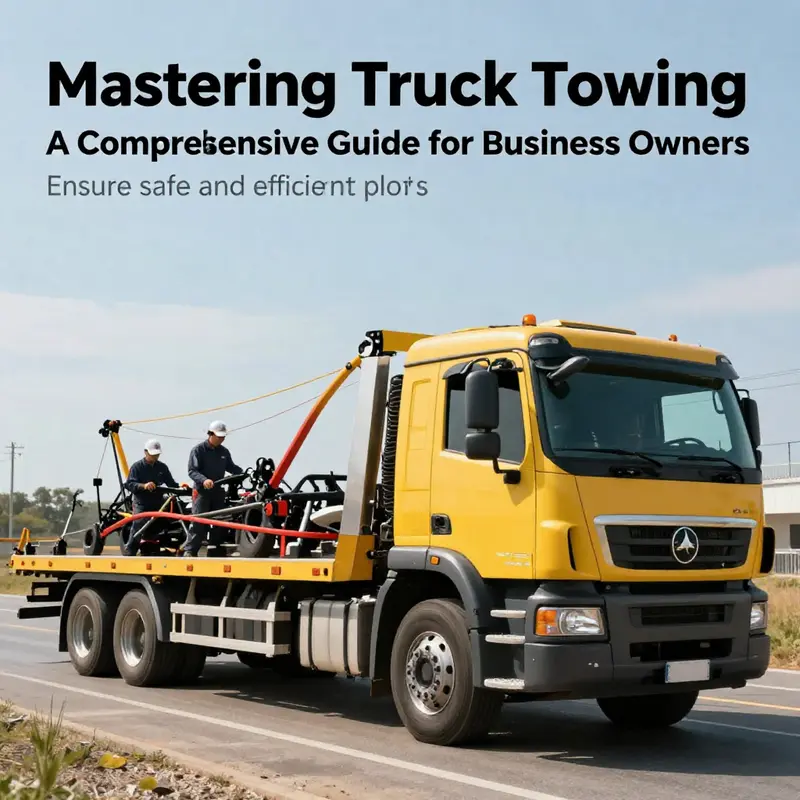
Successfully towing a truck requires careful planning and execution, particularly for business owners who depend on their vehicles for daily operations. This guide outlines the essential steps in preparing for towing, from thorough vehicle inspections to selecting the right equipment and following safe driving practices. Each chapter builds upon the last, providing a cohesive understanding of the towing process, helping you maintain operational efficiency while ensuring safety on the road.
Pre-Tow Readiness: Mastering Thorough Vehicle Checks Before You Tow a Truck
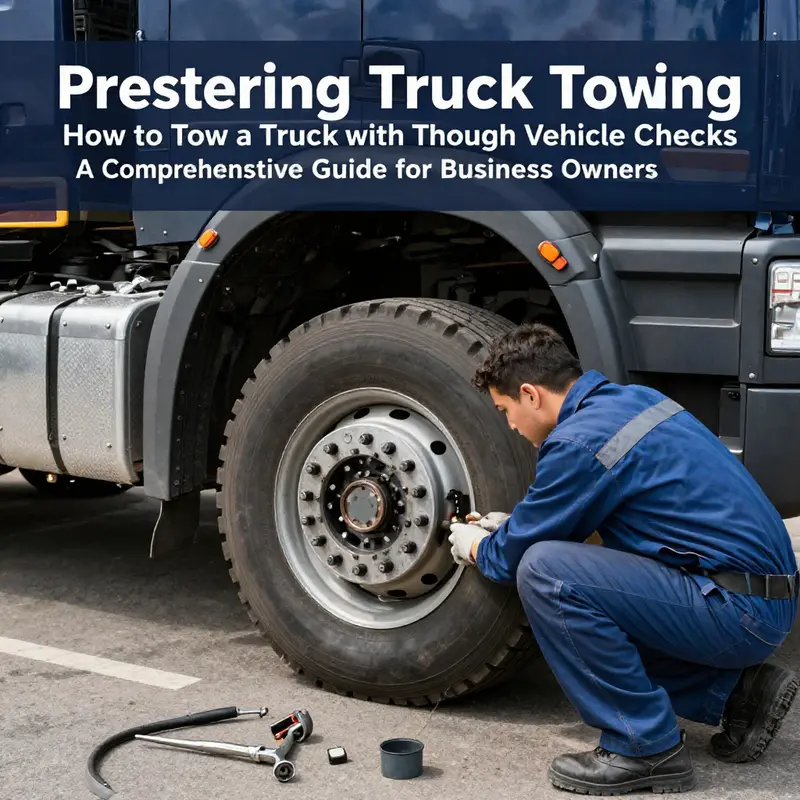
Towing a truck safely begins long before the first movement. It starts with a disciplined, methodical check of every component that links the puller to the towed and every setting that governs how they behave on the road. A thorough pre tow routine reduces the chance of a breakdown, protects the vehicles involved, and keeps bystanders and other drivers out of harm’s way. The goal is not to rush into a rescue or a routine move, but to establish a dependable baseline of readiness that translates into smooth operation from start to finish. In practice, that readiness centers on two streams of inspection: the condition of the towed vehicle, particularly its tires and drivetrain, and the integrity of the towing setup, including the hitch, connections, and electrical signals. When these elements are sound, the tow is inherently more predictable, and predictability is the first demand of safe towing.
On the towed vehicle, tires are the first detail to confirm. Inflate to the manufacturer’s recommended pressure, then recheck after the vehicle is loaded for towing. Worn tread, cracks, or bulges in any tire threaten a sudden failure that can create a dangerous pull or a roadside emergency. Beyond tires, identify the drivetrain configuration, because it informs the correct towing method. Front wheel drive, rear wheel drive, and all wheel drive each carry different implications for how the wheels are allowed to behave during towing. Owned by time and condition, AWD vehicles, for instance, demand more careful treatment; many experts and manufacturers advise flatbed towing for these models to prevent internal drivetrain damage. The drivetrain reality should be clear before any rope or bar or any angle of pull is set.
The towed vehicle should also be neutral, with the parking brake fully released. Automatic transmissions must be in neutral, and manual transmissions require neutral with the clutch disengaged. These neutral states prevent the transmission from being dragged or forced into engaging gears during movement. If the vehicle has electronic stability control or other assistive systems, these should be disabled prior to tow, unless the manufacturer specifies otherwise. A dead battery introduces a further complication; the mechanical override for the handbrake should be identifiable and functional so the tow does not drag the car against its own parking brake. The end aim is wheels that rotate freely without resistance, so that the movement of the towed vehicle truly follows the movement of the pulling platform rather than fighting against locked components.
Equally critical is the towing equipment itself. The choice among tow bar, tow rope, or a flatbed trailer depends on distance, vehicle configuration, and the risk tolerance of the drivers. A rigid tow bar keeps the towed vehicle on a straight path and minimizes wheel wear, but it can be less maneuverable and may require more intrusive installation. A tow rope or strap is a lighter, lower cost option for short gaps, but it must be of high quality and properly secured to reinforced tow points. A flatbed trailer, by far the safest long distance solution, eliminates drivetrain stress by never letting the towed vehicle’s wheels bear the load. Regardless of the method, the connection must be solid. The tow hitch, ball mount, and any pin or locking mechanism should be rated for the weight involved and fully secured before any movement. Electrical connections deserve careful attention as well. Brake lights, turn signals, and hazard indicators must function as expected to communicate intentions to following traffic. A failure in signaling can invite rear end collisions or poor lane discipline from others on the road.
Before any movement, a final connection check is essential. The vehicles should be aligned straight, and the tow bar or rope must attach to designated tow points on both cars. For a tow bar, pins should be fully seated with safety locks engaged. For a rope, ensure the knot or locking mechanism is secure and not twisted, and add a bright center marker for visibility. A thorough tug test completes the physical checks; pull each end firmly to confirm there is no slack. The towed vehicle must be in neutral and its parking brake released. With the mechanical basics confirmed, a quiet confidence returns to the operation, but the next phase keeps that confidence intact through careful driving and communication.
Safe driving during tow hinges on discipline and anticipation. A prudent speed cap is essential; many guidelines prescribe a maximum of about 30 km per hour, or roughly 19 mph, to minimize jerks, steering errors, or sudden weight transfers. Acceleration and braking should be smooth and progressive, with deliberate, longer braking distances to preserve stability. Turns demand extra caution; taking wider arcs helps prevent the towed vehicle from clipping curbs or pulling away from the tow line. Communication between drivers is not optional but part of the plan. Agree on a simple method, such as a two way radio or predetermined signals, so slow, stop, or any needed adjustment can be conveyed rapidly. Hazard lights should remain on to warn surrounding traffic of the unusual configuration. In addition, maintain constant situational awareness—watch the tow, the trail of any cable or bar, and the reaction of the front vehicle—so minor shifts do not escalate into bigger problems.
Vehicle-specific considerations are where the pre tow routine becomes truly practical. For automatic transmission cars, the rule of thumb is not to tow long distances; many manufacturers advise a cap around 50 kilometers and to plan periodic stops for cooling if a long move cannot be avoided. If the trip exceeds that limit, the safe answer is a flatbed. For AWD and 4WD vehicles, the potential for damage grows when power is transmitted through moving wheels, so experts generally recommend flatbed towing unless the owner’s manual explicitly permits another method. Electric and hybrid vehicles add another layer; if possible, disconnecting the high voltage battery may become a requirement, and the towing speed often needs to be restricted well below conventional limits, sometimes to as low as 20 km per hour. Clearly mark the towed vehicle to alert following drivers to its status, and avoid towing in hazardous conditions such as heavy rain, snow, fog, or rough terrain where traction and visibility are compromised.
The responsible approach to pre towing checks also extends into the practical, everyday readiness of the operator. The plan should include a clear communication protocol, a simple but effective signaling system, and a readiness to abort if any component shows even a hint of weakness. The importance of a structured safety checklist cannot be overstated; it guides the entire operation from the first vitals check through the final securement before departure. For a broader safety reference, see Safety Science in their vehicle towing safety checklist, which consolidates the core checks described here and translates them into actionable steps for real world scenarios. If you are planning a tow in a specific locale, consider linking to a local resource for regionally tailored guidance such as a nearby towing service page that reflects the local norms and regulations. For example, resources focusing on Washington DC area towing can provide localized context and points of contact. towing service in Washington, DC.
Putting these elements together yields a robust, flowable pre tow routine. The tires and drivetrain on the towed vehicle are ready to rotate without resistance, the hitch and connection are verified and secure, and the signaling and light systems communicate correctly to other road users. The movement itself then becomes a controlled sequence rather than a gamble. This approach protects not just the vehicles involved but the people around them and the broader traffic environment. Following a disciplined pre tow regimen creates a reliable baseline from which to execute the actual towing procedure, and it harmonizes with the broader objective of the article: to outline a practical, safety oriented path for towing a truck from point A to point B. For readers seeking a concise, professional safety reference to supplement these checks, the external resource linked above offers a comprehensive framework that can be consulted alongside manufacturer guidelines.
External resource: https://www.safetyscience.org/vehicle-towing-safety-checklist/
Choosing the Right Equipment: How to Tow a Truck Safely
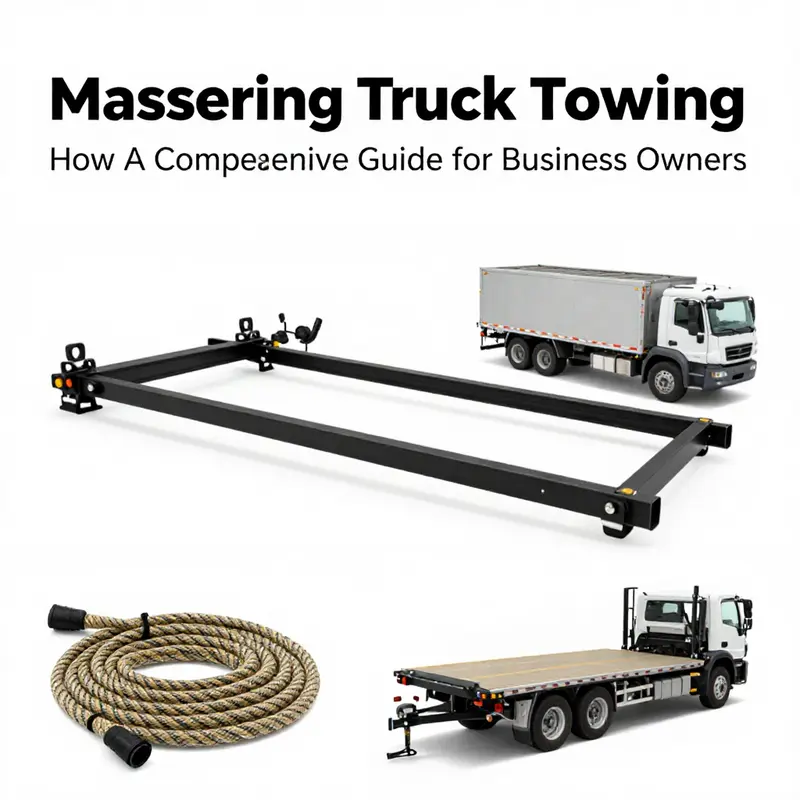
When you face the task of towing a truck, the choice of equipment is the quiet hinge on which safety and damage prevention swing. The decision rests on a careful assessment of the vehicle’s weight, drivetrain, distance to be covered, road conditions, and the precise points where you can legally and safely connect the towed vehicle. This chapter treats equipment as more than a tool; it is a carefully matched system that keeps momentum controlled, prevents jolts, and protects both vehicles from unnecessary wear. The path to a secure tow begins with a clear understanding of the options and ends with verification that every link in the chain is ready for the journey.
Tow ropes, or tow straps, can be tempting for their portability and low cost, but their role is best suited to short, light-towed scenarios and straightforward surfaces. A durable nylon or high-strength fiber rope with a breaking strength well above the vehicle’s weight offers some resilience, yet it transfers energy in a way that can produce sudden jerks if the driver at the wheel makes a careless move. A key detail is the energy-absorbing feature some ropes provide; this cushion can reduce peak forces during acceleration or braking, which helps minimize damage to bumper points and the towed drivetrain when the lead vehicle changes speed unexpectedly. For trucks with heavier masses, a rope remains a supplementary option at most, and it should be used only with properly reinforced tow points and clear visibility cues—the bright cloth stuffed in the center helps other drivers spot the tether’s path.
On the other end of the spectrum sits the rigid tow bar, or tow dolly. This equipment connects the vehicles with a solid, fixed link, keeping the towed vehicle’s wheels on the ground and substantially reducing the risk of a sudden swing or misalignment. The stability of a tow bar is especially valuable when surfaces are slick or when braking bursts are required. However, the rigid connection brings its own demands: installation can be intrusive, often requiring removal or access to trim panels for secure mounting, and maneuverability is reduced compared with a rope. The choice hinges on the situation—shorter, more controlled recoveries frequently favor the tow bar, while quick, low-budget recoveries on accessible roads might call for a rope under strict guidelines.
A third option, the flatbed trailer, represents the safest, most drivetrain-friendly path for many trucks. By lifting the entire vehicle onto a deck, a flatbed eliminates the stress on the transmission, transfer case, and differentials that can occur when wheels rotate during towing. This method is especially prudent for four-wheel-drive and all-wheel-drive trucks, whose complex drivetrains tolerate only minimal, if any, towing with the drive wheels on the ground. For longer hauls or vehicles with special damage risks, the flatbed is often the prudent choice, though its use depends on the availability of a compatible trailer and suitable access to the recovery site.
Across these options, the weight and type of the vehicle to be towed dictate the required rating and certification. Any rope or bar must carry a safety certification and a load capacity that comfortably exceeds the vehicle’s weight, including a margin for dynamic forces encountered on the road. A common misstep is underestimating weight or ignoring the towed vehicle’s configuration. Trucks with heavy front ends, unusual bumper geometry, or reinforced frames demand extra caution and sometimes a professional setup. The goal is not just a secure connection but a predictable, controllable pull that preserves steering and braking control in both vehicles.
Before any equipment is deployed, the connection procedure itself deserves thoughtful execution. Alignment matters: position the tow vehicle and the truck so that they travel in a straight line, and connect only to designated tow points. If you are using a tow bar, slide the pins fully and engage safety locks. If a rope is used, coil any twists, attach securely at reinforced eyelets, and ensure the rope length provides a straight line with no sag or drag along the pavement. A final tug test, applied gently, confirms there is no slack and that the connection cannot detach under modest tension. Above all, the towed vehicle must be in neutral with the parking brake released, to avoid binding the wheels or generating resistance that can heat components during the tow.
Once the physical link is secure, the choice of equipment also shapes how you drive. In most jurisdictions, towing speed is limited to 30 km/h (about 19 mph) to allow gradual acceleration and braking, and to prevent sudden jerks that can yank the towed vehicle off line or damage the drivetrain. Smooth, progressive inputs are essential; accelerate and brake gently, and take wider turns to prevent the towed vehicle from striking curbs or sliding sideways. Clear communication between drivers becomes a safety artifact in its own right—prearranged hand signals, a two-way radio, or even a simple agreed-upon honk count keeps actions predictable for both parties. Keeping hazard lights on alerts nearby drivers to the unusual setup and helps maintain visibility in urban or congested corridors.
The chapter’s practical guidance extends beyond generic towing fundamentals when the vehicle type demands special consideration. For automatic transmissions, many manufacturers recommend limiting towing distance and time with the drive wheels on the ground. Short highway drags may be permissible, but lengthy pulls after the engine ceases to circulate transmission fluid can invite damage; when in doubt, a flatbed becomes the safer long-term option. For four-wheel-drive or all-wheel-drive trucks, consulting the owner’s manual is nonnegotiable. Drivetrain components like the transfer case and differentials are not designed for prolonged towing with the drive wheels engaged, and the manual often contains specific cautions that supersede general rules. Electric vehicles pose their own caveats: if feasible, disconnecting the high-voltage battery is advisable, and the tow speed should be capped well below conventional limits. A rear-facing “Hybrid/EV Fault” indicator in the towing configuration can help other road users anticipate the vehicle’s behavior, while the travel speed must be kept as low as possible to minimize energy transfer through electrical systems.
Finally, there is the matter of context. Even with the best equipment, adverse weather or rough, unpaved surfaces can overwhelm careful planning. If there is any doubt about proper method, the safest option is the flatbed lift, which avoids drivetrain stress altogether and preserves both vehicles’ integrity. For readers seeking further guidance tailored to their area, a reliable local service can provide a hands-on assessment and, when required, professional towing to a safe destination. When you need additional assurance, consider reviewing official guidance from national safety authorities, such as the National Highway Traffic Safety Administration, which offers comprehensive safety tips and regulations related to towing, available at https://www.nhtsa.gov. For a practical, locally informed resource, you can also consult a trusted regional provider like Towing Service DC, which can help determine the most appropriate approach for your specific truck and situation.
The Secure Link: Mastering the Tow Connection
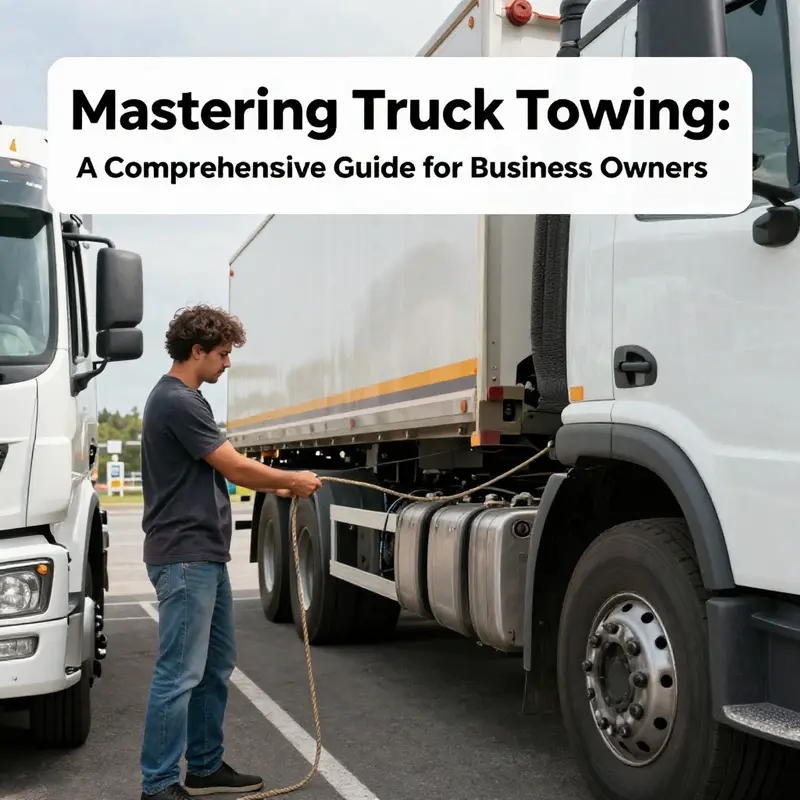
The moment you decide to move a disabled truck, the most important act is establishing a secure, predictable link between the pulling vehicle and the towed one. The connection is more than a piece of hardware; it is a discipline that sets the tempo for every maneuver. When done correctly, it protects both vehicles, helps bystanders stay safe, and turns a potentially stressful job into a controlled, manageable operation. The connection you establish determines how smoothly the entire tow unfolds.
Choosing the proper towing method matters from the outset because it defines how the towed truck will be held, how much of the drivetrain remains in play, and how much room you need to maneuver. A wheel-lift or dolly keeps most of the vehicle on the ground and minimizes drivetrain stress, which is helpful for shorter moves and many front-wheel-drive applications. A flatbed, by contrast, immobilizes the entire vehicle and eliminates drivetrain concerns, but it may require more space and coordination. The choice blends practicality with the specifics of the truck you are towing and the distance you must cover. Whatever method you pick, the connection that follows must be anchored in solid practice and careful alignment.
Preparation is the quiet partner of any connection. The towing equipment must be in excellent condition, rated for the weight you intend to move, and free of wear, corrosion, or loose fittings. Tow bars, dollies, straps, and chains should all be inspected before use. If you opt for a strap or rope, choose a high-tensile material and understand its limits. In some heavy-duty situations, Kevlar tow straps are recommended for their extreme strength, but their low elasticity demands steady speed and very smooth acceleration and braking. The weight and balance of the truck matter as well; the connection points become the focal targets. These points are reinforced frame mounts designed to bear load, not bumper covers or suspension components. If a hydraulic winch is part of the setup, anchor the cable securely to a solid point on the towing vehicle and keep the winch line clear of people, pets, and obstacles. The goal is control, not improvisation.
Securing the connection is where preparation meets execution. Align the vehicles so they travel in a straight line. Attach the tow bar pins fully and engage safety locks, or, if you are using a tow rope, attach it to designated tow points with a secure knot or locking mechanism that cannot loosen under tension. Do not let the rope twist or slacken; a misaligned rope can walk off the point and cause a dangerous snap. Before moving, perform a deliberate tug test to remove any remaining slack. The towed vehicle should be in neutral, and the parking brake must be released so the wheels can rotate freely. These checks are not extra steps; they are the essential safeguards that reduce the chance of a sudden shift or a binding condition once movement begins.
With the connection secured, the real work begins in earnest: moving both vehicles as a cohesive unit. Drive slowly, with smooth, progressive inputs. Abrupt starts or harsh braking can translate as a dangerous jolt to the towed truck, stressing its drivetrain and potentially loosening the connection. When turning, take wider arcs than usual to avoid curbs and to maintain alignment. Communication between the drivers is critical. Pre-arranged signals, a two-way radio, or even simple agreed hand cues help you stay in step. Hazard lights should remain on while towing to alert other road users to the unusual configuration of two vehicles cooperating on the roadway. This shared discipline—clear signals, steady speed, and constant awareness—transforms a tow from a test of nerve into a controlled operation.
Special considerations for different vehicle types remind you that not all tows are identical. Automatic transmissions often tolerate only short tows with proper precautions, and many manufacturers advise against long distances unless the vehicle is on a flatbed. Four-wheel-drive and all-wheel-drive models demand the most care; towing with wheels on the ground can damage the transfer case or differentials unless the owner manual explicitly allows it. Electric vehicles add another layer of complexity, including the need to manage high-voltage systems and to mark the vehicle clearly for other drivers. In all cases, if there is any doubt, slow down and reassess the approach. Avoid towing in hazardous conditions—heavy rain, snow, fog, or rough surfaces magnify risk and can overwhelm even the best plans.
If you feel uncertain about the setup or the weight distribution, professional hands can provide reassurance and reduce risk. A local tow service or technician can offer expertise, the right equipment, and a test tow that matches your vehicle’s configuration. This is not cautioning against learning the procedure; it is recognizing when a second set of experienced eyes will help you achieve a safer result. For more information about reliable local options, you can consult a certified towing provider in your area.
In the broader framework of towing, the secure connection is the hinge that unites preparation, technique, and safety into one continuous action. Practice builds confidence, but high standards prevent accidents. Expect that the connection will be tested by road conditions, wind, and the weight of the towed vehicle. Maintain a conservative pace, stay vigilant for signs of loosened hardware or shifting weight, and be ready to stop and re-check if anything feels off. By treating the link as a living part of the operation—worthy of inspection, adjustment, and respect—you preserve momentum without compromising safety. The connection procedure is not a one-time requirement; it is an ongoing practice that informs every step from setup to roadway travel.
Final thoughts
Towing a truck, especially in a business context, requires more than just connecting the vehicles. It demands thorough preparation, the right equipment, and careful execution to ensure safety on the road. By following the guidelines outlined in this article, you can minimize risks and ensure that your vehicles are towed correctly and safely. Remember, forethought and attention to detail are paramount in maintaining the efficiency of your business operations while navigating the challenges of towing.