
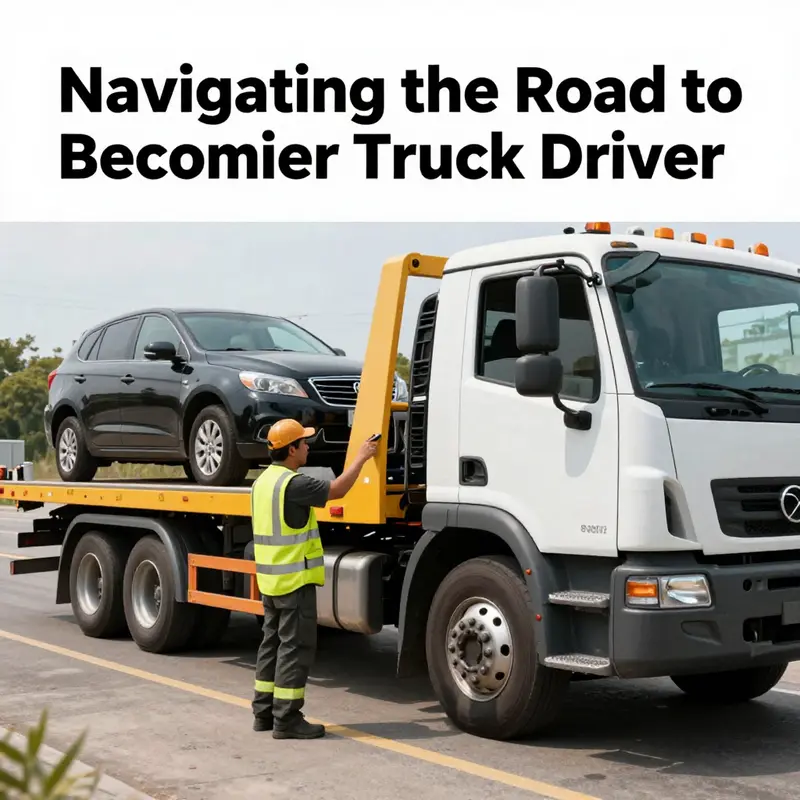
The demand for reliable towing services continues to grow, making it a viable career choice for many individuals. For business owners looking to expand their operations or start a new venture, understanding how to become a licensed tow truck driver is crucial. This article delves into the necessary requirements and training pathways that equip potential drivers with the skills and licenses needed to operate tow trucks effectively. The first chapter will outline the requirements to become a tow truck driver, while the second will focus on the training and certification needed for success in this industry. Together, they provide a comprehensive overview that informs and prepares business owners for this rewarding career path.
On the Road to Towing: The Essential Roadmap of Requirements to Become a Tow Truck Driver
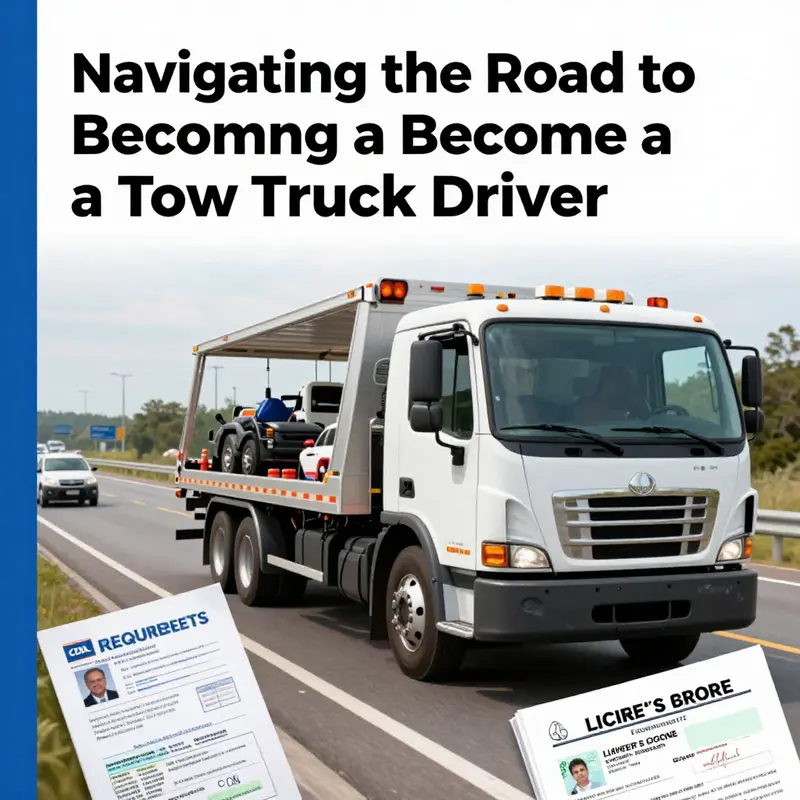
The call to a stalled vehicle, the chorus of humming engines, and the glow of brake lights at 2 a.m. is more than a scene from the road; it is a doorway into a skilled trade that blends physical work, judgment under pressure, and careful adherence to rules. The path to becoming a tow truck driver is rarely a single leap. It is a sequence of gatekeeping steps—legal, practical, and personal—that together shape who can safely perform this demanding job. The first gate is straightforward in its simplicity but enormous in consequence: you must be old enough to shoulder the responsibilities that come with life on the road. In most places, the minimum age is 18, a threshold designed to ensure a baseline of maturity and judgment when you are asked to operate heavy equipment in traffic. Some employers, especially for certain kinds of towing operations or night shifts, may prefer or require you to be 21 or older. It is not merely a formality; it reflects the realities of shift work, exposure to unsafe conditions, and the expectation that a driver can stay calm and focused long after most people have called it a night. The age gate is the first signal that this job is a career path, not a hobby, and that continued training and experience will be essential as you move forward.
Beyond age, the core requirement is the ability to drive legally and professionally. A valid driver’s license is the baseline, but the kind of license switches the game. Tow trucks are not typical passenger vehicles, and the weight, size, and configuration of the truck you will operate determine the licensing framework. In practice, most tow truck drivers pursue a Commercial Driver’s License (CDL). The exact class you need depends on the vehicle’s weight and how you will tow. A Class B CDL often covers many of the heavier tow trucks used for roadside recoveries and transport, while more specialized setups can demand different classifications or additional endorsements. In particular, endorsements become relevant when you consider towing operations that involve transporting other vehicles and, in some cases, hazardous materials. If your work ever requires carrying hazardous materials or complying with specialized safety rules, you’ll pursue the corresponding endorsements. The emphasis is on matching the vehicle’s specifications to the right credential so you can operate within the law and within safety standards set by regulatory bodies.
A clean record is the next unglamorous but essential accountability check. Towing companies prioritize safety and reliability, and a driving history free of major violations signals that you understand and respect the responsibilities of sharing public roadways with strangers’ vehicles. This often means a review of your driving history for incidents like DUIs, reckless driving, or multiple violations. Employers want to know you won’t pose a risk to yourself, your colleagues, or the people you assist. Because the job can put you in complex, high-pressure situations—lanes of fast-moving traffic, night visibility challenges, and the unpredictable behavior of motorists—a background check is standard. In tandem with this, a pre-employment drug screen is typical. The safety profile of a tow operator hinges on predictable, sober performance behind a heavy machine that can weigh several tons and must respond to emergencies with precision.
Even when legality and safety are secured, there is a practical, hands-on dimension to joining the field. Specialized training is highly valued, even when it isn’t always a legal requirement. Vocational schools, community programs, or accredited training centers offer curricula that cover vehicle operation, safety protocols, winching techniques, tire changes, accident scene management, and customer service. On-the-job training can be a doorway too, but the advantage of a formal program is a structured understanding of best practices, a certification you can display to employers, and a smoother transition into real-world assignments. This training incubates the motor skills and procedural discipline needed to handle a variety of vehicles—from compact cars to heavy-duty trucks—while preserving your own physical safety and the safety of bystanders.
Speaking of safety, the physical nature of the job demands more than endurance. Tow truck work often involves heavy lifting, awkward positioning, and exposure to environmental extremes. Practically, this means a foundation of physical fitness and strength is essential. You’ll be lifting and maneuvering heavy equipment, operating winches, and sometimes wrestling with damaged or awkwardly positioned vehicles. Work conditions span rain, heat, cold, and overnight hours, so stamina and resilience matter as much as a steady hand and a calm mind.
Insurance and bonding come into play particularly when you strike out as an independent operator or when you touch private client work. Some employers require you to carry personal liability insurance or to be bonded. These protections are about reducing risk for both you and the people you tow for. They may seem like hurdles, but they are practical safeguards that allow you to operate with credibility and peace of mind. In the long run, they open doors to more diverse work, such as private-property towing or assisting in more complex recovery operations, where the financial protections matter.
As you accumulate experience, there is also a dimension of professional development. Certifications and continuing education, while not universally mandated, can profoundly boost your career prospects. Certifications related to hazardous materials, if applicable, or to advanced towing techniques show a commitment to the craft and a willingness to adopt higher safety standards. They signal reliability to employers and clients, and they can unlock opportunities in districts that require or reward higher qualifications. Even when a state or company does not require particular certifications, they often recognize and value this additional training, treating it as evidence of your capability and professionalism.
To navigate these gatekeeping steps smoothly, it helps to have a practical sense of how the work unfolds, not just what licenses you need. In practice, the daily rhythm of a tow truck driver combines readiness with adaptability. You prepare by reviewing your route, understanding the specific vehicle you will be handling, and pre-inspecting your truck and equipment. You must be prepared to respond to urgent requests, sometimes in dangerous conditions where traffic is heavy and visibility is compromised. You learn to size up a scene quickly: What type of vehicle is involved? What are the risks to bystanders, passengers, or other motorists? What equipment is required for safe winching or loading? Your ability to communicate clearly with dispatchers, vehicle owners, and other first responders becomes an asset that makes the operation safer and more efficient.
The practical path forward is as much about strategic planning as it is about hand skills. Start with a clear understanding of your state’s specific requirements because CDL classes, endorsements, and even minimum age can differ. Then map out a training plan. If you are still in school or just entering the job market, look for vocational programs that emphasize towing operations, safety, and customer service. If you already have a driving job or a broader transportation role, seek internal training opportunities or partner with a local towing company to gain hands-on experience. The experience you gain in service calls—how you handle customers who are stressed, how you manage traffic, how you secure a vehicle for transport—will be as valuable as the technical know-how you acquire.
As your knowledge grows, you will likely encounter people who operate in specific regions with their own operating cultures. For a sense of how the day-to-day realities can vary by locale, consider how Washington DC area operations structure their tow services and respond to incidents. You can explore practical examples of that daily workflow through local service resources such as the Washington DC tow service landscape. tow-truck service in Washington DC. This kind of regional exposure helps you imagine how you would fit into a team, how shifts are scheduled, and how customer communications are handled in a fast-paced urban setting.
All along this journey, it is valuable to maintain a realistic long-term view. Entry into the field is just the beginning. With experience, you’ll learn how to optimize your responses to roadside incidents, how to minimize risk in chaotic scenes, and how to balance speed with safety. You may discover that certain niches align with your strengths—heavy-duty towing, winching in restricted spaces, or building a reputation for reliable dispatch communication. Some drivers transition into fleet maintenance roles, become instructors who train new hires, or specialize in commercial or private-property towing. The ability to adapt, to maintain a high safety standard, and to cultivate the soft skills that elevate customer interactions can define your career trajectory as much as the mechanical know-how you possess.
In sum, the road to becoming a tow truck driver starts with recognizing that the job sits at the intersection of regulation, capability, and character. You’ll move through a sequence of gates: eligibility by age and licensing, a clean driving and criminal record, a screen for safety and health, and the completion of focused training that translates into practical, on-the-road confidence. You’ll supplement that with ongoing learning and certifications that expand your options and deepen your credibility. When you marry the right credentials with hands-on experience and a calm presence under pressure, you are prepared not just to respond to calls but to support communities during one of their most stressful moments. The work is exacting and demanding, but it also offers a clear pathway to a skilled trade with real hands-on impact every day you go to work. For those who value problem-solving under pressure, who appreciate the gravity of helping people when they are at their most vulnerable, the road to towing becomes less about a single job and more about a vocation—one where safety, service, and steady practice open doors to opportunity. If you’re ready to begin, start by checking your state’s licensing requirements, seek formal or structured training, and seek out a reputable employer who values safety and professionalism as much as you do. The journey is long, but it is defined by progress, not shortcuts, and that progress follows a straightforward arc: learn, practice, verify, and serve.
External reference for broader guidance: https://www.indeed.com/career-advice/finding-a-job/become-tow-truck-driver
Beyond the Hook: Training, Certification, and the Making of a Skilled Tow Truck Operator
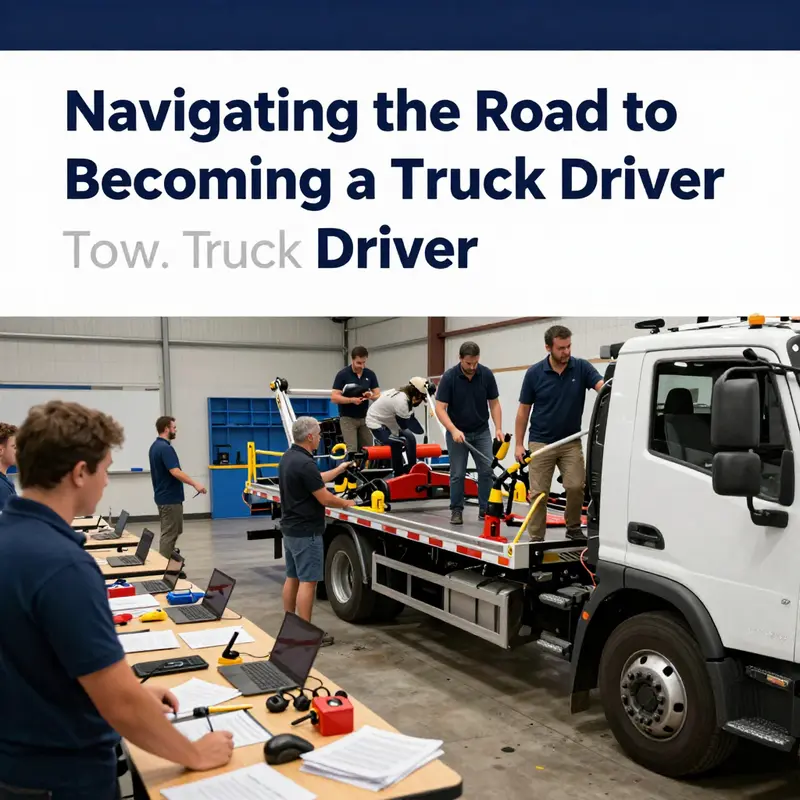
The job of a tow truck driver is often the quiet backbone of roadside reliability. On a dimly lit highway shoulder, a driver might be wrestling with a stubborn vehicle, a winch sighing with effort, while another car inches by with just enough space to spare. Behind that moment lies a careful blend of training, discipline, and certification that turns potential hazards into controlled, repeatable practice. This chapter charts the path from first interest to proficient professional, and it grounds that journey in the practical realities of licensing, learning, and maintaining the standards that keep roads safer for everyone. It is a narrative built not on bravado but on procedure, safety, and the steady work of turning knowledge into reliable action. The route begins with some nonnegotiables that apply across the board: you must be at least eighteen to qualify, you need a valid state driver’s license, and in most cases you will pursue a Commercial Driver’s License or a similar credential that aligns with the tow truck’s size and weight. These prerequisites are not mere formalities; they are the first line of defense against situations where a driver’s skill and judgment can mean the difference between a smooth recovery and a dangerous roadside encounter. The moment you decide to pursue this line of work, you are choosing to operate under a set of rules designed to keep both you and the public safe. Those rules are not static; they evolve with technology, with evolving vehicle configurations, and with lessons learned from countless roadside operations. As a result, training becomes less a one-off event and more an ongoing investment. You will increasingly encounter requirements that blend state regulations with national best practices, the latter often expressed in guidelines that, while not legally binding in every jurisdiction, shape employers’ expectations and define industry benchmarks. In this sense, becoming a tow truck driver resembles earning a professional credential: a combination of formal coursework, hands-on practice, and continuous education that expands your ability to respond to a broad spectrum of scenarios. The most critical thread running through this transformation is safety. Tow trucks operate in complex environments where vehicles, pedestrians, weather, and traffic conditions intersect in potentially volatile ways. Training addresses these dynamics head-on, teaching you to plan before you lift, to communicate clearly with the vehicle’s occupants, and to execute a sequence of steps that minimizes risk. You will learn to assess the load, confirm the vehicle’s weight distribution, and select the appropriate hook-up points without compromising structural integrity. You will study the mechanics of the tow apparatus, understand weight limits, and become fluent in the signaling and lighting systems that alert nearby drivers. You will also practice emergency procedures, from accident scene management to the safe handling of fluids and potential hazards. The training landscape can appear fragmented at first, but it coalesces around a few core pillars: licensing, formal instruction, and practical experience that translates theory into reliable, repeatable performance. In the United States, the licensing pyramid typically begins with the baseline requirements: you must hold a valid driver’s license, and if the vehicle you will operate falls into the category that triggers it, you will need a Commercial Driver’s License with the appropriate endorsement. The exact CDL class—Class B or another designation—depends on the tow truck’s configuration and the typical weight of the vehicles towed. This is not merely about being able to drive a larger vehicle. It is about understanding the additional responsibilities that come with operating heavy equipment, safely attaching and detaching towed loads, and adhering to stricter hours-of-service and vehicle inspection standards that accompany commercial operation. Even when a CDL is not technically required for smaller operations, most reputable employers expect some formal training in towing operations, safety procedures, and vehicle handling. This is where accredited vocational programs or dedicated training centers become valuable. They provide structured coursework, hands-on practice with winches, wheel-lift devices, dollies, chains, and binders, and exposures to a range of vehicle types. The content typically includes driveability checks, recovery techniques for different vehicle configurations, and the choreography of mobilizing a stranded vehicle without creating new hazards. On-the-job training is a common complement to classroom learning. It allows students to observe, then assist, then perform under supervision, gradually increasing the complexity of tasks as competence grows. For many students, this apprenticeship-like phase is the bridge between theory and the split-second decisions demanded at a roadside incident. It is during this period that the value of mentorship becomes most evident: seasoned technicians impart tacit knowledge about scene safety, problem-solving under pressure, and the delicate balance between speed and caution that characterizes professional recovery work. The specifics of what you learn during training are, in part, shaped by standards issued by authorities and industry bodies. A useful reference for understanding the broader frame is Transport WA’s Tow Truck Technical Standards. While these guidelines come from Western Australia, they are widely cited due to their thoroughness and their emphasis on the elements that consistently appear in high-quality training curricula: mandatory equipment, payload and weight considerations, and the procedural expectations that govern safe operation. The standards emphasize a set of mandatory equipment that every tow truck should carry and maintain. Securing devices are essential, because every vehicle you tow must be fastened securely to prevent movement during transport. Fire extinguishers are another prudent inclusion, reflecting the reality that incidents can occur even in careful hands. Clean-up equipment and appropriate vehicle signage help manage the scene, protect other road users, and minimize disruption. Rear underrun protection is part of the safety architecture that prevents smaller vehicles from sliding under a larger tow vehicle, a risk that becomes concrete at night or in low-visibility conditions. The standards also call for reliable lights and warning devices, which are not mere add-ons but critical tools for communicating the truck’s status and intent to nearby drivers. Finally, weight classifications and the correct configuration of equipment are not only about regulatory compliance; they are about safety and performance. These technical expectations filter into training curriculums, guiding what instructors teach and what students must demonstrate. They also shape the testing and certification processes that companies use to evaluate readiness. In practice, U.S. training programs mirror this emphasis on safety and reliability, though the specifics vary by state. Accredited institutions and vocational schools frequently structure their curricula around core competencies: vehicle recovery techniques, safe towing practices, emergency response, and scene management. On a practical level, a student learns to identify the best attachment points on various vehicles, to use winch lines and binders correctly, and to execute lifts and transports without compromising the integrity of the vehicle or endangering bystanders. The coursework also extends to understanding how to handle different types of tow trucks and configurations, since the approach changes depending on whether one is dealing with a flatbed, a wheel-lift, or a traditional hook-and-chain setup. The broader legal and regulatory environment is not a mere backdrop; it actively shapes what you train for and what you evidence as competency. For example, owning or operating a tow truck is not only about mechanical skill but also about compliance with insurance requirements, bonding where applicable, and the possibility of background checks and physicals in the hiring process. Many employers include a medical examination to ensure the driver can perform physically demanding tasks, endure long shifts, and tolerate potential exposure to road hazards. A clean record, particularly regarding driving history, is commonly sought after because it serves as a proxy for reliability and judgment under stress. The path to certification often includes formal testing that covers both knowledge and practical skill. Written exams assess understanding of safety protocols, weight limits, and regulatory requirements. Practical assessments, sometimes conducted on a training lot or a controlled course, test the ability to secure a vehicle, operate the winch, and perform a tow from start to finish while maintaining control of the scene and protecting all parties involved. Once you earn the basic license and complete the initial training, the work does not stop. The industry rewards ongoing education and professional development. Certifications in related areas—such as hazardous materials handling or advanced towing techniques—can broaden opportunities and increase earning potential. Even when not strictly required, these credentials symbolize a commitment to safety and competence that can distinguish a driver in a crowded market. In addition to formal credentials, some employers require or encourage personal insurance or bonding when workers operate on private property or with freelance arrangements. This requirement reflects a broader risk-management strategy: securing liability protection for the driver and the employer, which in turn helps sustain trust with clients and insurance providers. Those who pursue independent contracting or operate their own towing businesses must anticipate insurance considerations, licensing renewals, and the ever-present need to stay current with training standards. The dynamic nature of the industry means that the most successful drivers treat training as a career-long endeavor rather than a one-time hurdle. They seek opportunities to refine their craft through continued practice, periodic refreshers, and participation in industry-specific seminars or workshops when available. Even in regions where regulations evolve slowly, a culture of continuous improvement tends to emerge among reputable operators. The practical implication of all this training and certification is simple, yet powerful: it increases your readiness to respond to a broad spectrum of scenarios with confidence, efficiency, and safety. It also expands your prospects. In many labor markets, especially around major metropolitan areas, employers value drivers who can demonstrate not just the ability to drive a big truck, but also the aptitude to manage complex scenes, communicate clearly with clients, and adapt to a variety of tow configurations. Opportunities can appear in places like the Washington, DC area, including Alexandria, where local towing services actively seek skilled operators who understand best practices and can handle the nuance of urban traffic, emergency responses, and private-property recoveries. For aspirants exploring regional openings, a practical step is to connect with a local tow service such as a tow-truck service in Alexandria, VA, which often lists roles that align with training and certification milestones. This kind of prospect underscores a broader truth: training is not a gate that closes after a single exam. It is the framework that supports a career built on reliability, trust, and the ability to stay calm and effective when pressure mounts. While the specifics of licensing and training will vary by state and municipality, the underlying architecture remains similar. You start with the basics—age, license, and possibly a CDL—then you pursue formal instruction and supervised practice, progress through internships or on-the-job training, and finally earn certifications that validate your competence. Throughout this process, safety, accountability, and continuous learning drive every decision you make on the road, in a shop, or at a client’s scene. As you advance, you will begin to see how the early focus on securing equipment properly, understanding weight and load dynamics, and adhering to clear signaling and lighting conventions translates into smoother operations and fewer incidents. The work becomes less about brute force and more about disciplined technique and situational awareness. In this light, training is less a hurdle to clear than a toolkit you carry into every shift. It shapes your professional identity and anchors your daily practice in a shared standard of care that protects you, your passengers, and the drivers near you. If you take one thing away from this chapter, let it be this: certification is not a final stamp but a baseline to build from. The road to becoming a tow truck driver is a journey of growing capability, governed by rules, refined through hands-on practice, and sustained by a commitment to safety. That commitment, more than any single skill, defines a true professional in the towing field. For more on practical regional opportunities, consider exploring local listings and services such as the Alexandria-based tow-truck service offering in the region. tow-truck service in Alexandria, VA.
External resource for further reading on global standards and best practices in tow truck training and certifications: Transport WA – Tow Truck Technical Standards. https://www.transport.wa.gov.au/transport-standards/tow-truck-technical-standards
Final thoughts
Becoming a tow truck driver involves meeting specific qualifications and acquiring essential training to ensure both safety and efficacy on the road. Business owners must value the importance of adhering to the legal standards while exploring options for training and certification, which can significantly enhance their operational capabilities. By understanding the dual focus on requirements and training, aspiring drivers can position themselves for success in the towing industry, ensuring that they are equipped to meet both market needs and client expectations.