
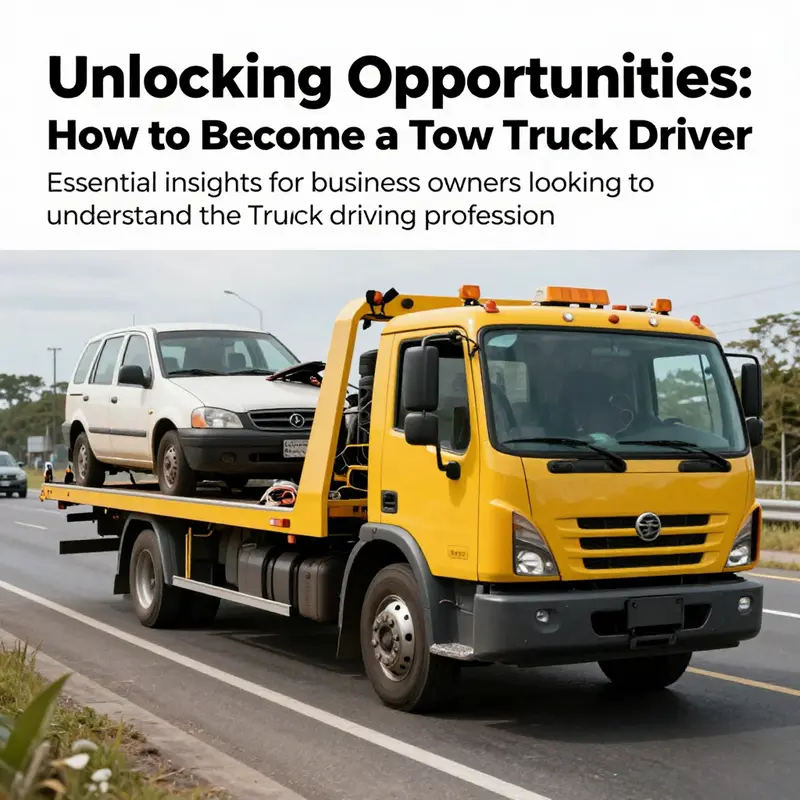
Becoming a tow truck driver represents a vital role in the transportation and roadside assistance industry. For business owners, understanding the essential requirements, training, and career trajectories of tow truck drivers is crucial to optimizing operations and ensuring regulatory compliance. This article delves into the core competencies needed to become a tow truck driver, provides insights into the necessary training and skills, and explores the employment opportunities that exist in this sector, thus offering business owners a comprehensive view of this essential service.
The Gatekeepers of the Road: Essential Steps to Becoming a Tow Truck Driver
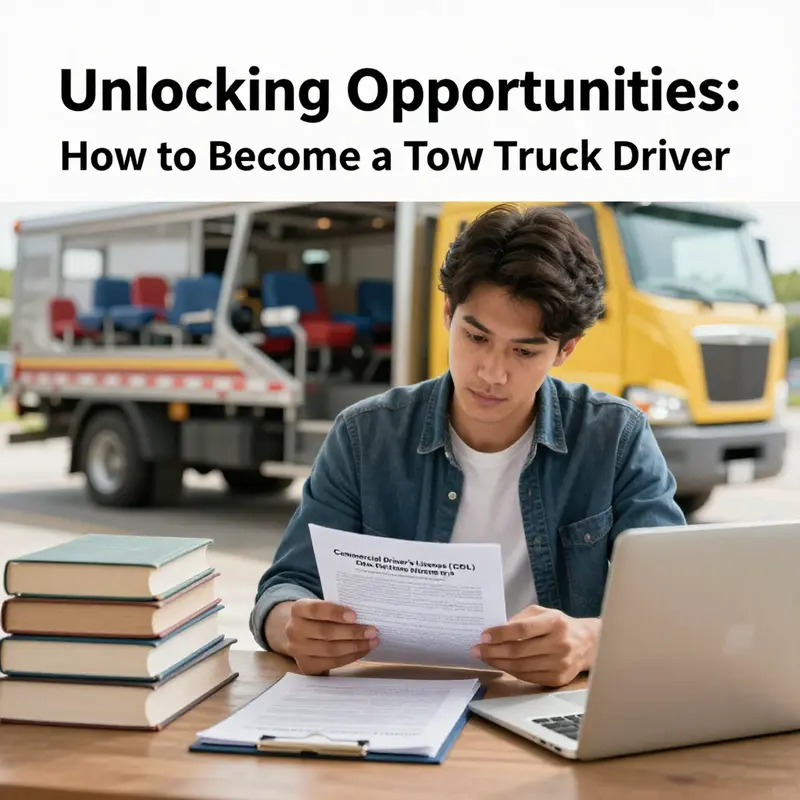
The road might look straightforward from the passenger seat, but the job of a tow truck driver sits at a hard-won convergence of hands-on skill, rapid problem solving, and strict compliance with safety and the law. It’s a role that asks you to show up steady when a vehicle won’t start, when a driver is stranded, or when traffic bears down and time is short. You don’t just drive; you diagnose, secure, and transport, all while keeping your own crew, the client, and any bystanders safe. This depth of responsibility makes the path to the cab a set of well-defined steps, not a sprint. The pages that follow map those steps in a way that keeps the broader goal in view: you become someone trusted to handle the worst moments on the road with professionalism and care. You’ll find that the essential requirements are not obstacles so much as gatekeepers that ensure you can do the job without compromising lives or property, including your own.
A practical entry point is understanding the licensing landscape, which is where the journey begins in earnest. Laws around age and credentialing vary by state, but the core idea remains consistent: you must be legally able to operate a vehicle and then prove you can handle more due to the vehicle’s size and the duties involved. In many places, the minimum age to drive is 18, but commercial roles frequently demand you be 21 or older, especially if you’ll operate interstate or manage heavier tows. A valid state driver’s license is non-negotiable, yet the real hinge is the Commercial Driver’s License. The class you pursue—Class A for heavy combinations or Class B for mid-sized tows—depends on the type of tow truck you intend to drive. The CDL process blends a written knowledge test with a practical driving skills test. You’ll perform a thorough pre-trip inspection, demonstrate basic control skills, and complete an on-road driving evaluation. Passing these steps marks the transition from learner to professional, but it’s only the first milestone.
Beyond the CDL, specialized training is where the art of towing begins to take shape. A solid program will teach you the mechanics and safe handling of winches and hydraulic systems, how to load and secure a vehicle properly, and the differences between flatbeds, hook-and-chain setups, and wheel-lifts. You’ll learn safety protocols for working on busy roadways and at night, how to assess the scene, and how to communicate effectively with dispatchers and customers under pressure. This training isn’t merely bureaucratic—it’s the difference between moving a stalled car without causing further damage and creating a roadside accident chain. Employers recognize this, which is why many require or strongly prefer candidates who have completed a tow-truck driving course or earned on-the-job experience that demonstrates a practical fluency with the equipment and procedures you’ll rely on every shift.
The quiet but decisive filters don’t stop there. A clean driving record and a dependable background are highly valued, because the job routinely intersects with sensitive circumstances. A Department of Transportation medical exam certifies that you meet basic physical and health criteria, including vision and hearing standards, to operate a commercial vehicle safely. Drug screening is common, with pre-employment tests and ongoing random checks to preserve safety across the fleet. In tandem with these checks, many employers conduct a thorough background investigation to ensure there are no disqualifying criminal convictions that would impair judgment during emergencies or calls. The upshot is simple: if you want to stay in the cab, you need to cultivate a track record you can stand behind, one that shows reliability, restraint, and responsibility.
With those fundamentals in place, the path toward employment opens. You’ll apply to tow companies, auto repair shops, or insurers that offer towing services. Some organizations provide on-the-job training, while others want you to arrive with a baseline of skills and a demonstrable commitment to safety. A strategic early move is to connect with a respected local operator who can mentor you through the practical realities of the grind: how to triage calls, how to handle scenes with multiple vehicles, and how to coordinate with other road responders. Local networks often become your fastest route to experience, hours, and the kind of on-ramp that turns a learner into a dependable team member. For readers in regions with established roadside support ecosystems, there are tangible resources you can explore; one such option is ACE Towing Service, which serves as a practical reference point for understanding the local workflows and expectations. ACE Towing Service
As you pencil out a realistic timeline, a few core steps emerge: verify CDL requirements with your state’s DMV, assemble the necessary documents, enroll in a recognized tow-truck program or partner with an employer willing to train you, study the knowledge material for the written test, and then schedule and pass both the knowledge and skills assessments. You’ll also need to complete the DOT medical exam and secure any endorsements your specialization may demand. While the exact prerequisites may shift by jurisdiction, the symmetry of the process remains: credibility first, capability second, and safety always. When you align with a company that values uniform standards of safety, service, and professional conduct, the road to earning your place behind the wheel becomes less a leap and more a measured ascent—one that voltage-boosts your confidence with every successful tow. This is how the title of tow-truck driver becomes not a designation but a responsibility you carry into every call. For broader guidance and deeper exploration, you can consult a detailed industry resource such as the Indeed guide on becoming a tow truck driver: https://www.indeed.com/career-advice/finding-a-job/become-tow-truck-driver.
From CDL to Roadside Mastery: The Training Path That Builds a Tow Truck Driver into a Lifeline on the Road
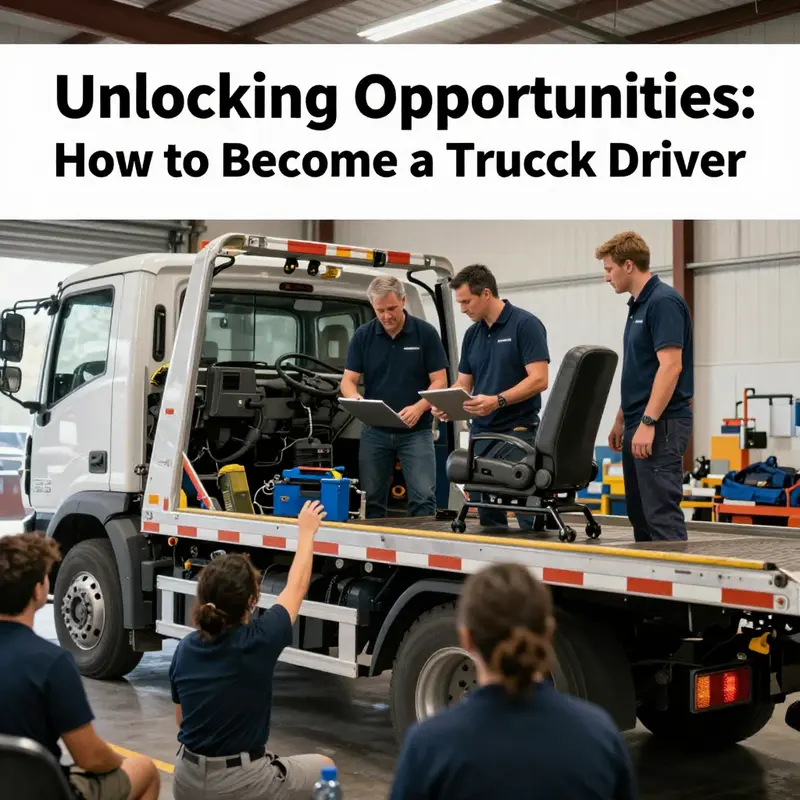
Choosing to become a tow truck driver means embracing a role that blends technical skill, practical problem solving, and service under pressure. Training is not a one-time hurdle but a continuous arc that shapes every roadside interaction into a safer, faster, more respectful outcome. The path starts with the basics that unlock the road: you must be at least eighteen, hold a valid state driver’s license, and then pursue the Commercial Driver’s License that matches the job you intend to do. The class of CDL you need depends on the vehicle you will operate. A larger, heavier tow truck pulling big equipment may demand a Class A CDL, while solo van-sized wreckers often fit a Class B. The licensing process itself is twofold: you study for a written knowledge exam and you demonstrate real-world skills on a practical driving test that includes a pre-trip inspection, basic vehicle control, and an on-road segment. Passing is less about memorizing rules and more about proving you can apply them under time pressure while keeping vulnerable motorists safe.
Beyond the CDL, specialized training enters the picture. Tow trucks use a mix of winches, hydraulic systems, and varying mounting rigs, so becoming proficient means learning how to operate these tools without risking injury or property. You’ll learn how to secure different kinds of loads, recognize fragile or unusually shaped vehicles, and choose the right equipment—flatbeds for stable transport, wheel-lifts for selective tethering, or hook-and-chain setups when necessary. The professional training also covers essential safety procedures for working along busy roadways, where quick decisions must be balanced with long-term safety for you, your crew, and the public. There is a cadence to learning in this field: an initial boot camp of in-class and hands-on instruction, followed by on-the-job practice under experienced supervision, and then ongoing refreshers to keep techniques sharp.
Agencies and employers frequently conduct background checks and require a Department of Transportation medical exam, ensuring you meet the physical standards to handle lifting, hauling, and long hours behind the wheel. The medical exam is not a formality; it screens conditions that could compromise reaction time, endurance, or vision in demanding roadside situations. Once you’re cleared, the real work begins in earnest as you apply for roles with towing companies, auto repair shops that offer roadside assistance, or insurers providing towing services. Some firms provide on-site or in-house training once you’re hired, recognizing that the combination of CDL qualifications and practical know-how yields the safest, most reliable responders.
The most effective training goes beyond the mechanics. It includes a steady emphasis on customer service. Tow operators regularly encounter stressed drivers, stranded families, or business owners counting on rapid service. Clear communication, a calm demeanor, and the ability to explain what you’re doing and why can defuse tension and speed up recovery. In certain regions, practical programs emphasize local regulations and common roadside scenarios, and prospective drivers may find value in regional offerings such as towing-service-washington-dc. The best training also stays current with evolving vehicle technology. Electric vehicles, hybrid powertrains, and advanced driver-assistance systems require updated knowledge about charging shutoffs, sensor behavior, and safe towing practices for automated systems. Certification helps validate this ongoing competence. Many professionals seek credentials offered by recognized bodies or by state licensing authorities, signaling a commitment to safety and quality that goes well beyond the minimum legal requirements. Industry involvement—attending workshops, participating in peer-to-peer sessions, and sharing field-tested techniques—fosters innovation and continuous improvement in loading, securing, and transporting.
As you advance, make continuous learning a habit. Track changes in regulations, new equipment, and evolving best practices. The goal is not simply to pass tests but to build confidence that every point of contact with a disabled vehicle is handled with precision and empathy. For safety guidance and a broader view of the standards in towing and recovery, consult the National Highway Traffic Safety Administration’s Towing and Recovery Safety Guidelines.
External resource: https://www.nhtsa.gov/vehicle-safety/towing-and-recovery-safety-guidelines
Shifting Gears: Navigating Career Pathways and Advancement in Tow Truck Driving
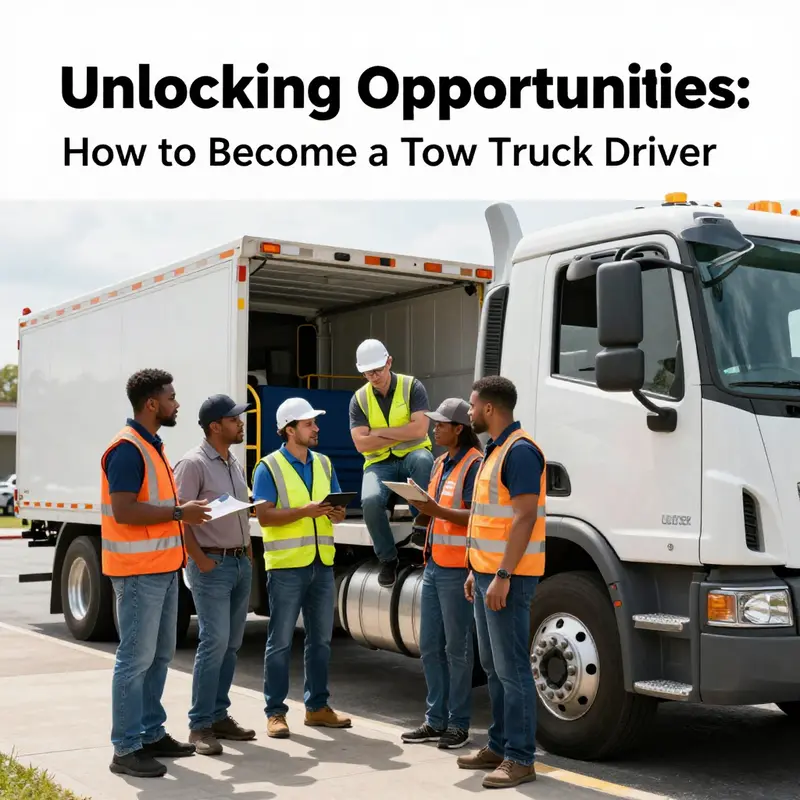
A tow truck driver’s value isn’t just in the tug of a disabled vehicle from the shoulder; it’s in the reliability, judgment, and calm presence that keeps traffic moving and people safe under pressure. This chapter isn’t about a single gate you pass to get the job. It’s about a trajectory that begins with the basics—age, a valid license, and a Commercial Driver’s License tailored to the size of the equipment you’ll operate—and then expands into a spectrum of opportunities. The foundational steps remain the same: you must be at least 18, hold a valid state driver’s license, and earn the CDL appropriate to the type of tow truck you’ll drive. Beyond that, specialized training follows. You’ll learn how to operate winches and hydraulic systems, how to load and secure disabled vehicles without causing further damage, and how to work with different equipment—flatbeds, hook-and-chain setups, or wheel-lift units. This isn’t mere mechanical know‑how; it’s a safety discipline. You’ll also practice working on busy roadways, a skill that requires discipline and situational awareness to protect yourself, the vehicle, and the public. The licensing path intersects with a broader standard: most employers require a background check and a DOT medical exam, underscoring the emphasis on fitness and trustworthiness. With those prerequisites, you’re positioned to seek employment with towing companies, auto shops that offer roadside services, or insurers that handle vehicle recovery. Some firms provide on-the-job training after hire, which can be a practical bridge between theory and real-world practice. The job market data you’ll hear about when you start looking is tangible. Regional demand varies, but the trend is consistently robust because roadside assistance is a non‑negotiable service. In large metros and growing regions alike, openings appear regularly as fleets expand to cover peak travel times and incidents. For example, public listings have shown hundreds of opportunities in expansive markets, with smaller but steady postings in other states. These roles often carry titles like Tow Truck Driver, Operator, Lot Patrol, or Transporter, reflecting different duties and shifts rather than a single job description. A driver’s first months usually involve meeting a driver’s record standard: a clean driving history, a solid safety record, and a willingness to pass ongoing drug screens. Those criteria aren’t obstacles so much as filters that ensure the team stays capable of handling heavy vehicles, sudden calls, and high-stakes scenes with professionalism. Once you prove reliability and demonstrate a steady hand on the wheel and the winch, doors begin to open. Advancing in this field can take several routes. Many drivers move into supervisory roles, such as fleet supervision or dispatch management. In some cases, drivers become owner-operators or start their own small towing business, stepping into entrepreneurship with a combination of drive, customer service savvy, and business sense. Additional training can accelerate this path: accident‑scene management, specialized equipment operation, and even hazardous materials handling if you anticipate work in more complex environments. These credentials aren’t merely add-ons; they signal readiness for more challenging assignments and higher pay. The daily rhythm of a tow truck operator—responding to calls, coordinating with dispatch, ensuring safety, and delivering dependable service—also hones soft skills that future leaders rely on. Strong communication, calm problem-solving, and a client‑focused attitude translate well beyond day-to-day calls. If the goal is leadership, you’ll benefit from understanding fleet metrics, routing efficiency, and safety compliance, which help reduce downtime and insurance costs for a company. For those weighing the pros and cons of climbing the ladder versus striking out on their own, the industry offers a feasible scale of commitment and risk. Owning a tow truck business involves capital, licensing, insurance, and a solid customer base, but it also grants control over workload and growth. In any path, the steady demand for dependable responders and the chance to refine a unique combination of hands-on skill and people-facing service create a durable career framework. In markets like Washington DC, the landscape can be particularly dynamic, where larger networks provide structured progression and mentorship within the service ecosystem. Washington DC towing service can serve as a practical example of how a driver might integrate into a broader network that supports growth and reliability on the road. As you plan, keep in mind that job boards can be a helpful compass. They reflect real opportunities and evolving requirements, and they remind you that the next rung on the ladder often depends on a mix of driving performance, safety record, and the willingness to expand your toolkit. For ongoing listings and market trends, you can explore external resources such as Indeed’s postings for tow truck driver roles: https://www.indeed.com/jobs?q=tow+truck+driver&l=
Final thoughts
In conclusion, understanding the multifaceted journey to becoming a tow truck driver is imperative for business owners looking to engage with this crucial service. By recognizing the essential requirements, providing necessary training, and exploring diverse employment avenues, business owners can better navigate the complexities of the towing industry. This knowledge not only fosters a more competent workforce but also enhances the overall quality of service provided to customers who rely on timely towing solutions.