
Understanding the costs associated with tow truck services is crucial for business owners. Whether you manage a fleet of vehicles or rely on them for daily operations, knowing how towing fees are structured can save your business money and ensure you’re prepared for emergencies. This article breaks down the typical costs associated with towing, providing clarity on base services and additional fees, ultimately empowering you to navigate the towing landscape more effectively. By examining these key elements, you can better anticipate expenses and make more strategic decisions regarding your vehicle management.
Decoding the Base Costs Behind Tow Truck Fees: A Clear Look at the Core Service
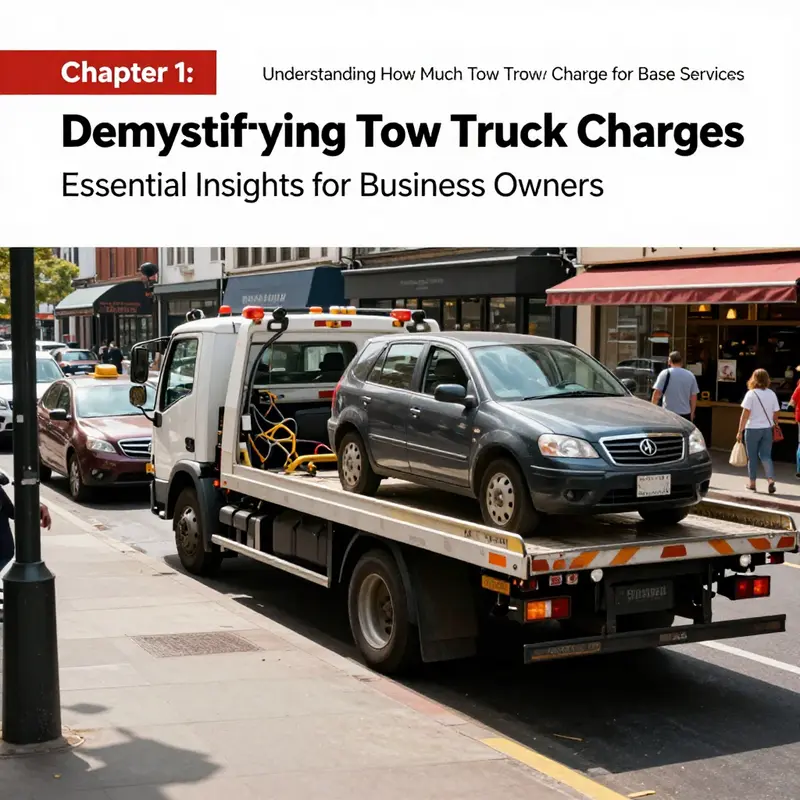
When a roadside crisis hits, the most immediate question isn’t always what happened to your vehicle, but what the tow will cost. The base charges that bring a tow truck to your door form the foundation of the final bill, and understanding them helps you avoid sticker shock when the driver arrives and you’re already stressed. The base service is the essential act of getting your vehicle off the road and into a secure space where it can be evaluated, repaired, or transported to a shop of your choice. It is the frame upon which every extra fee—distance, equipment, time of day, or storage—hangs. For most people, the base charge is the starting point, and from there, the cost can climb quickly depending on several predictable factors. A clear picture of these elements makes it possible to anticipate costs, compare quotes, and decide on the best course of action during a stressful moment.
The first component that typically greets you when you call for help is the base hook-up fee. This fee is sometimes described as a dispatch, service, or call-out charge. Its purpose is to cover the truck’s arrival and the initial response to your location. In practice, this base fee tends to fall within a fairly broad band, roughly between fifty and one hundred fifty dollars. The reason for such a spread is straightforward: different markets have different labor costs, regulatory environments, and competitive dynamics. In denser urban areas with higher labor overhead and traffic-related challenges, the base fee tends to tilt toward the higher end of the range. In rural settings, the same service can frequently be obtained at a lower base rate due to lower operating costs. Regardless of location, the base fee represents the obligation you accept simply by requesting the tow service and having the driver begin the process of assessing the vehicle and planning the move.
Beyond arrival, the next significant layer is the per-mile charge. Once the initial response is complete, you typically pay a per-mile rate for the distance the vehicle is towed. This rate is designed to cover the fuel, vehicle wear, driver time, and the logistical effort required to transport the vehicle from its current spot to a nearby or preferred destination. In many markets, the per-mile price lands somewhere in the range of two to four dollars. There are, of course, outliers: urban cores, peak hours, or particularly regulated zones can push rates higher, reflecting the extra labor, navigation complexity, and potential delays. Short moves within a city—where you might expect to rise from a curb to a nearby parking lot or a tow yard—will still accrue mileage charges, but the total is modest compared to long hauls that leave the metro area. A clear, itemized quote often separates these miles from the base fee, providing a transparent look at how each mile adds to the total.
Long-distance tows are where the math becomes more pronounced. If you need a move that extends far beyond the typical nearby pull, the cost can escalate quickly. Some operators apply a higher per-mile rate for longer trips, especially when they exceed fifty or a hundred miles, and there may be additional surcharges—for example, a flat additional fee for long-haul coordination, or a requirement for overnight or multi-day storage if the vehicle cannot be dropped off immediately at the destination. The result is a total that can jump from a few hundred dollars to well over six hundred dollars depending on distance, urgency, and the logistics involved. The emphasis here is that distance matters more than many people anticipate, and the base costs are just the starting point. The longer the journey, the more latitude a provider has to apply various surcharges tied to time, distance, and safe handling.
An equally important distinction in base costs is the type of tow equipment that the service uses. The base service is not a single, uniform operation; it can involve wheel-lift, or it can involve flatbed towing. Each method carries its own economics and implications for the vehicle being moved. Wheel-lift towing, the more common method for everyday cars, typically involves lifting one end of the vehicle onto a specialized cradle and dragging it to the destination. This method is generally less expensive and faster for standard passenger cars and light-duty trucks. On the other hand, flatbed towing, where the entire vehicle is loaded onto a bed that rises and lowers, is a premium option. It is preferred for luxury or low-slung vehicles, for cars with all-wheel drive requiring careful handling, or in situations where the undercarriage may be compromised by the move. Flatbed tends to add a noticeable premium—often in the vicinity of one hundred to two hundred dollars above standard wheel-lift costs—reflecting the additional equipment, setup time, and the more careful handling required.
In most markets, the base costs are complemented by a set of predictable surcharges that kick in depending on the circumstances. After-hours or emergency towing is one such circumstance. If you call outside regular business hours, you will typically see a rush or emergency surcharge, often in the neighborhood of fifty to one hundred dollars. This premium acknowledges the driver’s disruption of personal time, the likelihood of travel in less favorable road conditions, and the coordination required to deploy service during nights, weekends, or holidays. It is not universal, but it is common enough that travelers keep an eye out for it when quoting a job after dark.
Another factor that can influence the base cost is where the vehicle ends up after it is towed. If the vehicle is moved to a lot, shop, or impound lot that stores vehicles temporarily, daily storage fees may accrue. Storage is an ongoing cost that can accumulate at a modest rate—often in the range of twenty-five to seventy-five dollars per day, depending on the location and the type of storage facility. If the vehicle requires special handling, or if it sits in storage for an extended period due to a repair backlog, those daily charges can add up quickly. In situations like accidents or immobilized vehicles, storage may be the single largest ongoing cost after the initial tow, especially if the owner cannot authorize movement to a preferred destination promptly.
The spectrum of base costs also includes a “dispatch” or “call-out” fee. Even if the tow ends up not being completed—perhaps because a roadside repair becomes viable on site or the vehicle is moved by another party—the dispatch fee is often charged to cover the process of coordinating the arrival, including the time the dispatcher spends aligning resources and preparing the tow plan. This fee typically ranges from fifty to one hundred dollars and is a reminder that the service infrastructure behind tow operations is a coordinated effort that begins the moment the call comes in. It is worth noting that in some cases, the dispatch fee is bundled into the base hook-up fee or presented as a separate line item depending on the company’s pricing structure. For customers seeking transparency, asking for a detailed, itemized estimate that separates the base fee, mileage, and any potential surcharges at the outset is a smart step.
The base services are also influenced by the vehicle’s characteristics and the job’s logistical realities. A standard passenger car that is accessible from the curb without hitting obstacles is the simplest scenario. In contrast, a car that is stuck in snow or mud may require a winch or another form of specialized equipment to extract it. A vehicle with a damaged undercarriage or one that is involved in an accident may demand extra care, additional personnel, or a more complex securing process. In each such case, operators can apply a “special equipment” or “extra handling” surcharge to reflect the added risk and time. While these charges are not part of the base fee in the strictest sense, their occurrence is common enough that they deserve emphasis when you’re budgeting for a tow. If you anticipate a stabilizing factor—such as on-site roadside assistance that resolves the issue without a tow—your overall cost profile will change, making it worth discussing on the front end to avoid surprises later.
A practical way to approach base costs is to recognize that the majority of the core fees are governed by the same logic across the United States, but with regional increments and differences. The base hook-up fee serves as the anchor, the mileage charge scales with distance, and the equipment choice translates into a premium. The presence of a dispatcher fee compounds the total, especially if it is charged even when the tow is not completed. The after-hours surcharge reflects the added burden on the provider’s schedule. Storage costs kick in only when the car is not retrieved promptly. The whole package is designed to cover the real-world costs of operating a towing service—in particular, the cost of quickly deploying a crew, safely securing a vehicle, and transporting it under the demands of road conditions and time constraints. Understanding these elements helps you anticipate what you will owe and where you might be able to negotiate or optimize.
To illustrate how these pieces come together, consider two representative scenarios. In a short city tow of about ten miles, a base fee of roughly eighty dollars is common, followed by mileage charges of about three dollars per mile. The math would look like this: base fee around $80 plus mileage (10 × $3) equals about $30, for a total of roughly $110, before any additional charges for special handling or after-hours service. In a longer, more involved move—say a hundred miles—the base fee might be about one hundred dollars. Mileage at four dollars per mile would total four hundred dollars. If the job required a flatbed or special equipment, you could expect a premium in the vicinity of one hundred fifty dollars on top of that, bringing the total to around six hundred fifty dollars in a straightforward long-haul scenario. These examples aren’t universal price points, but they reflect the kind of arithmetic you’ll encounter across many markets, and they illustrate how the base cost and the distance-driven costs interact to form a final invoice.
Cost transparency is a critical element in this landscape. A reputable tow operator will present an itemized quote in advance, or at least give you a detailed breakdown when you request it. In today’s market, where mobile apps and online platforms have made price visibility more common, you can often obtain a preliminary quote quickly. This upfront clarity helps you compare options without committing to the service first. It also minimizes the risk of hidden charges that could appear after the vehicle has already been picked up. If you want to see a concrete local example, you can explore Tow Truck Service Washington DC to get a sense of how a regional provider describes its core services and the way it frames base costs within a broader pricing structure.
As you navigate the pricing landscape, you will also encounter guidance about how to reduce costs without compromising safety or reliability. The first principle is to obtain multiple quotes. Calling at least two towing companies and asking for an itemized price quote gives you a comparative baseline and strengthens your negotiating position during a stressful moment. Another practical step is to check whether your auto insurance policy includes towing coverage. Often, policies provide coverage per incident, typically up to a modest amount, which can significantly mitigate the out-of-pocket expense if you need a tow. Roadside assistance programs—whether bundled with an auto policy or offered through a membership program—can also provide either free or discounted towing. In addition, many credit cards offer roadside benefits that can be applied to tow charges, depending on the card’s terms. While these programs vary by policy, understanding what your coverage includes and how to access it is worth the effort before you actually need the service.
Even with a clear plan, the notion of “base” charges should be viewed as a starting point rather than a final verdict. Emergencies and time-sensitive decisions sometimes push drivers to adjust pricing on the spot. It is reasonable to request an up-front, written estimate before service proceeds and to ask for a detailed explanation if the cost changes after the initial call. This approach protects both you and the provider—ensuring you are paying for the actual services performed and not for assumptions about your situation. The logistics of dialing up a tow are not always straightforward; you may be rescued by a driver who has to navigate a blocked access point, or you may find yourself in a location where the clock is ticking. In such cases, the focus should remain on safety and reliability, while maintaining a firm grasp on the billing framework that governs the service.
To close the loop on this discussion of base costs, the essential insight is that the base fee is the anchor. The distance, the method of transportation, the time of day, and any specialized handling all shape the final amount. The more you know about how these pieces fit, the better prepared you will be to engage in a constructive conversation with a tow operator, to compare quotes thoughtfully, and to decide on the option that safeguards your vehicle while preserving financial reasonableness. If you’d like a broader, external reference on current average base service rates and pricing structures across U.S. markets, you can consult the Roadside Assistance Network’s pricing guide, which provides a discipline-driven view of what providers charge for base services and related components. The guide helps situate local quotes within a national framework, making it easier to interpret the numbers you see on a truck’s written estimate. For readers seeking a broader external source, the following resource offers a comprehensive overview: Roadside Tow Pricing Guide.
In short, when you assess a tow, start with the base charge as the fundamental reference point. Add the distance-driven mileage, consider the potential for a flatbed or other premium transport method, account for after-hours or emergency surcharges, and include any storage or special equipment fees that might apply. Though the final total will vary by location and situation, the structure remains consistent enough to allow for informed budgeting and strategic decision-making when you need to call for help on the road.
Internal link note: For a local context and to see how a regional provider frames its base services, refer to the local page here: Tow Truck Service Washington DC.
Chapter 2: Decoding the Extra Costs—What Tow Fees Really Add Up To
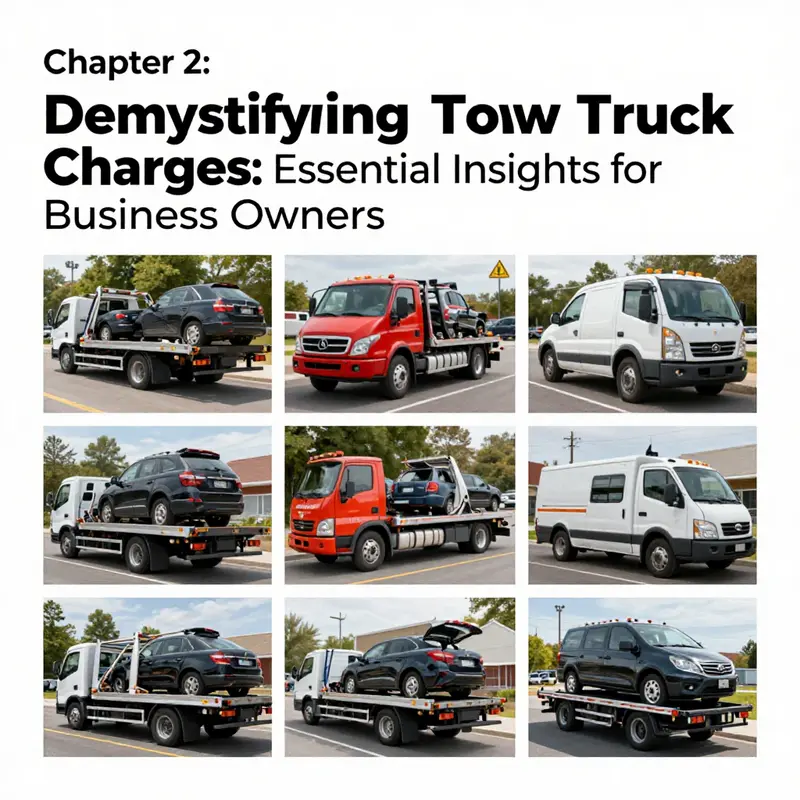
When you plan for a tow, the sticker shock often isn’t the base charge alone. The moment a tow truck pulls up, the clock starts, and every additional service or circumstance can turn a straightforward move into a layered bill. The base hook-up fee is the entry point, but it represents only a fraction of what you’ll actually pay. The journey from the first call to you and your vehicle arriving at a shop or a safer spot on the roadside unfolds through a series of line items that reflect the job’s complexity, the time of day, the vehicle type, and the distance ahead. Understanding how these extras arise is essential if you want to avoid surprises, compare quotes with confidence, and decide when to engage roadside assistance or insurance coverage. It is not just about getting the car from point A to point B; it is equally about knowing what each addition to the bill represents and why it appears in the final tally.
The most familiar of the extra charges is often described in plain terms: a “hook and roll” or similar fee. This charge covers the labor and equipment involved in attaching a tow mechanism to your vehicle and securing it for transport. In practical terms, it acknowledges the hands-on work required to get a car unstuck, hooked up safely, and prepared for transport. The range for this kind of fee can be surprisingly broad—roughly from fifty dollars to a hundred dollars or more depending on where you are and how complex the job is. If your car is immobilized in a ditch, on an incline, or involved in a collision that demands careful rigging and stabilization, the hook and roll portion climbs higher because the operator faces extra risk, more labor, and possibly specialized equipment. It is a reminder that the base rate is not a universal cost; it is the minimum service window, and what follows can reflect the true difficulty of the assignment.
The next leg on the cost ladder is the beyond-the-base-mileage component. Per-mile rates are a standard part of towing pricing, but they rarely tell the whole story alone. The per-mile element typically factors in wear and tear on the tow vehicle, fuel use, driver time, and the operational costs of the crew who must stay paid while they move your car. In urban areas or during peak periods, these per-mile charges can creep upward. The distance matters—short hops through city streets versus longer hauls out of town or into a shop district can swing the final bill significantly. A short, 10-mile city tow might carry a modest per-mile charge, but as miles accumulate, so does the intensity of the fee, especially if the route includes congested corridors or toll-ish detours that the operator must navigate.
Long-distance tows illustrate how quickly costs can escalate when the journey stretches far beyond urban grids. Some common long-haul scenarios push the per-mile rate toward the upper end of the spectrum, and the base fee tends to be higher as well because the operation becomes a longer, more sustained job. In these cases, you’ll often see not just the per-mile charge, but also other ancillary fees that reflect the extended time on the road, the need for additional fuel or rest, and potential coordination with other facilities along the way. The math can accumulate rapidly: a single long-distance tow may include base charges, miles billed at a higher rate, and an extra flatbed surcharge if a specialty truck is required to handle the motion or the vehicle’s condition. It’s not unusual for the total to approach or exceed several hundred dollars, depending on distance, vehicle type, and the specifics of the pickup and drop-off points.
Beyond the basic framework of base fees and mileage, the picture widens with location-based surcharges. Rural routes that take longer to reach the destination can trigger higher fuel costs and more time spent on the road. In these cases, crews may quote a rural surcharge or simply include the extended travel in the per-mile rate. Conversely, in dense urban centers, the hourly demand and traffic conditions can push prices up through what is effectively a peak-hour premium. The same incident can feel far different depending on whether it occurs in a sleepy suburb or a bustling downtown corridor at rush hour. Those surcharges are a practical acknowledgement of real-world constraints—fuel, time, and the opportunity cost of diverting a crew from other calls.
There is also the reality of special handling or equipment needs when the vehicle requires more than a standard tow. A car with a disabled engine, a hybrid or electric vehicle, or a luxury model with low clearance or valuable electronics may require a technician with additional training and the right tools to move it safely without causing damage. In those cases, a “rescue” or “lift” fee can appear. This reflects the extra labor, heavier lifting capacity, and sometimes a second technician or a more capable rig. The same principle extends to situations where the vehicle is on its side, trapped in mud, snow, or some other challenging environment that makes stabilization and securing the vehicle considerably more time-consuming and risky. The result is a higher charge that corresponds to the additional complexity and risk involved.
Another often overlooked layer is the potential storage fee. If your car cannot be retrieved immediately and is taken to an impound or storage facility, you’ll be charged daily for keeping it there. Storage costs vary by location and policy but typically fall within a modest daily range. Even a short overnight hold can add up when you’re already dealing with the upfront tow costs. It is worth clarifying storage terms in advance, especially if you expect a delay between the tow and the repair shop appointment or if you anticipate a repair timeline that could push the vehicle into a storage window.
Then there are the more technical charges tied to the specific circumstances of the tow. A winch or other specialized equipment may be needed in cases where the vehicle is stuck in mud, snow, or difficult terrain. The use of such equipment can drive up the fee because it adds time, requires specialized skill, and increases the risk exposure for the crew. Flatbed towing, in particular, is more expensive than wheel-lift or traditional dolly methods. Flatbeds are often used for luxury, low-slung, or damaged vehicles where a standard tow could cause additional harm or alignment issues. The extra cost for a flatbed can range from one hundred dollars to two hundred dollars or more, depending on the job’s specifics and the vehicle involved.
Amid all these variables, there is also the human factor—the time of day. After-hours or emergency towing is a frequent cause of price inflation. Nighttime calls, weekends, and holidays create a different demand dynamic, and many operators implement a “rush” or “emergency” fee to reflect the reduced availability and the longer time spent on a call when attention and safety protocols must be maintained in lower-light conditions. These fees can be modest in some markets but can double or triple the base rate in others, especially during holiday periods or in regions with high emergency call volumes. The overall effect is to ensure the crew is adequately compensated for working when most people are off duty and when the risk environment can be more challenging.
All these potential charges underscore a simple truth: the price you see at the end of the day is rarely determined by a single factor. It is the product of a spectrum of decisions and circumstances, shaped by where you are, the vehicle type, the time of your call, and the practical realities of getting a vehicle moving again. For the consumer, the practical implication is clear. You should ask for a detailed breakdown of every possible fee before you commit to a service. A responsible tow operator will typically provide a written estimate that lists the base hook-up fee, per-mile rate, and any anticipated extras. It is reasonable to request a line-by-line explanation, including whether a particular item is fixed or variable, under what conditions a surcharge would apply, and whether the price includes any standard storage or after-hours charges. In some markets, reputable providers publish transparent pricing online or share a customer-friendly calculator that estimates the likely charges given your location, vehicle type, and the route to the preferred destination.
To illustrate how this plays out in practice, consider a hypothetical short tow in a city: you’re towed 10 miles to a nearby repair shop. The base hook-up fee might be around $80. The mileage charges could be calculated at roughly $3 per mile, adding $30. The total before any extras would be about $110. But if the vehicle is trapped in a ditch or requires careful stabilization, the hook and roll could escalate to $120 or more, and a winch might add another $50. If the tow occurs after hours, an emergency fee of $50 to $100 could be tacked on. If the car is moved using a flatbed instead of a wheel-lift due to the vehicle’s suspected damage or its value, a flatbed surcharge could add $100–$200. Add storage if the car is held overnight, say $25 to $75 per day, and the final bill can easily reach $250 on a rough, after-hours, high-complexity call. In a longer-distance scenario, say 100 miles with a base fee of $100, mileage at $4 per mile equating to $400, and a flatbed surcharge of $150, the math climbs quickly. The total could be around $650 or more, again depending on whether the job includes after-hours demand, a heavy vehicle, or a need for specialized equipment.
If you want to minimize the chance of an inflated bill, there are practical steps you can take that fit naturally into the moment you call for help and into the weeks before any car trouble occurs. First, gather quotes from at least two towing companies. A direct phone call and a quick email or online quote request can yield a breakdown that clarifies what is charged and what isn’t. In some cases, you may discover that one company quotes a higher base rate but a lower per-mile charge, while another offers a lower base fee but a higher mileage rate. Either way, a direct comparison helps you understand the relative weight of each component in your particular scenario. Second, check whether your auto insurance policy includes towing coverage as part of the plan. Many policies cover towing up to a certain amount per incident, which can remove a portion of the financial risk should a breakdown occur. If you already have roadside assistance through a program or a credit card, review the terms. Some programs cover all or part of the tow, while others reimburse you after you’ve paid the bill, requiring you to work with your insurer to recoup costs. Those safeguards are often well worth activating before you need a tow rather than scrambling afterward.
Another layer of support comes from the wide array of roadside assistance options that exist to help you navigate the moment of a breakdown or immobilization. Some plans offer to coordinate with the local service providers, and in some cases they negotiate predictable, capped pricing to minimize the chance of a surprise. Even if you don’t subscribe to a formal roadside program, you can still leverage the knowledge you gain from comparing quotes. The goal is not to eliminate all fees—certain costs are inherent to the service—but to reduce the variability so you aren’t paying a premium because you didn’t understand what was included. When you discuss the estimate, it is reasonable to ask whether the quoted price assumes standard conditions and whether any additional fee would be added if the vehicle is in a difficult position, requires a winch, or needs a flatbed.
Within the broader landscape of weathered roads and busy streets, one practical approach is to request a written estimate that includes a detailed breakdown of potential costs. If the provider can show a transparent pricing model—base fee, mileage, and the categories of possible extras—you have a clearer view of how your final total could change as the job unfolds. It is also worth confirming whether the quoted price includes service fees, after-hours charges, and any location-based surcharges. By asking these questions early, you can decide which option best aligns with your priorities, whether you’re balancing cost against speed, or you’re trying to minimize risk to a high-value vehicle.
For readers researching local options in the region, it can be helpful to compare nearby services and consider more than price alone. If you’re researching local options in the DC area, you may explore Washington DC towing services to assess the range of pricing and service options available. Washington DC towing services can be a starting point for understanding how firms structure their charges and what kind of transparency they provide up front. But the key takeaway remains consistent: the extra costs behind the base rate are real and can be predictable if you ask the right questions and plan ahead.
The broader literature on towing costs emphasizes the same themes that surface in everyday practice. A reputable overview highlights how a comprehensive cost assessment includes the base hook-up, mileage, and a careful accounting of after-hours demands, the need for specialized equipment, storage, and any risk-related surcharges. It also stresses the importance of understanding that not all tows are created equal; the specifics of the vehicle, the terrain, the location, and the time of day all shape the final figure. As with many services, information is empowerment. When you know which line items exist and how they are calculated, you can navigate the situation with more confidence and less stress. In practical terms, this translates to better preparation, more informed decisions under pressure, and a greater likelihood that your out-of-pocket cost matches the service delivered rather than a worst-case scenario that unfolds in the moment.
Ultimately, the goal of this chapter is not to alarm you about hidden fees but to illuminate the realities behind the charges and to provide a framework for thoughtful questions and comparisons. The next step, after you’ve absorbed the potential line items, is to turn to the mechanics of obtaining accurate, region-specific estimates and to understand how insurance and roadside plans can interact with these charges. The cost of a tow is never merely a price tag; it is a reflection of the labor, risk, and logistics required to move a vehicle safely from the roadside to a repair bay. By demystifying the extra costs and arming yourself with a clear expectation, you stand a better chance of navigating a stressful moment with clarity and control.
For a broader understanding of towing costs, see Understanding Car Towing Costs. (https://www.thebalance.com/car-towing-costs-4173695)
Final thoughts
Navigating the costs of tow truck services doesn’t have to be convoluted, especially for business owners who rely on efficient vehicle management. By understanding the base costs associated with tow truck services, as well as the potential for additional fees, businesses can make proactive choices that minimize unexpected expenses. Engaging with multiple towing companies for quotes and ensuring you are aware of your coverage options can provide extra leverage in negotiations. Ultimately, being informed about how much tow truck services charge equips you with the knowledge necessary to safeguard your operations and prepare for any emergencies.