
As a business owner in the towing industry, understanding the ins and outs of tow truck insurance is essential. Monthly premiums can significantly vary based on numerous factors, making it vital to grasp the cost range and what affects it. This article delves into the average monthly costs of tow truck insurance and the myriad factors influencing these premiums, ensuring you are equipped with the necessary knowledge to make informed decisions about your coverage. Each chapter highlights crucial insights, from baseline costs to the specific variables affecting pricing.
Tow Truck Insurance by the Month: Decoding Costs, Coverage, and What Shapes Your Premium
When business owners ask how much tow truck insurance costs per month, they often want a single, crisp number. The truth is more nuanced. Monthly premiums reflect a mix of risk, policy design, and the realities of daily operation. Liability for injuries or property damage, physical damage to the tow truck, and cargo coverage for towed vehicles all sit under the same umbrella of cost, but each piece carries its own weight. Add in factors like regional crime rates, highway speeds, and weather risks, and the monthly sticker price becomes a moving target. The costs you see are not just a price tag; they are a map of exposure and protection designed to keep a business afloat when something goes wrong on the road or at the scene of an accident.
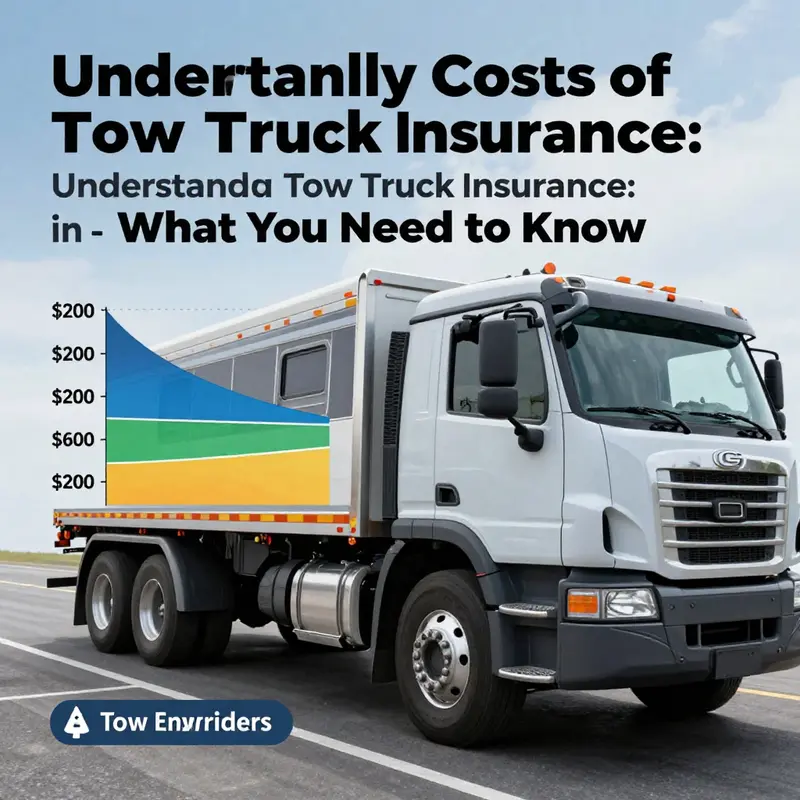
Across the United States, the typical monthly range for tow truck insurance is broad. For many small operators, the eye-opening part is not the minimum but the scale: a basic policy might hover around a couple of hundred dollars a month, while more robust coverage with higher limits, additional endorsements, and broader protections can push the bill well beyond the mid-range. A practical picture emerges when you compare what you are insuring against and where you operate. In many cases, monthly premiums fall roughly in the range of two to five hundred dollars, but it is not rare to see bills stretch toward six hundred, seven hundred, or more per month for fleets or for operators in high-risk environments. The range can widen further—into the over-$1,000 territory—when you step into high liability exposure, heavy-duty operations, or a multi-truck fleet with substantial annual mileage and complex service demands.
That variability mirrors the core element of underwriting: risk is not a static thing, it is a dynamic profile that grows or shrinks with your business realities. Lenders and insurers quantify risk by looking at what you do, how you do it, and what you have done in the past. The more your operation resembles a high-risk scenario—for instance, frequent long-haul tows, wreck recovery, or transporting numerous vehicles at once—the more likely your premiums rise. Conversely, steady, low-mileage use with a clean driving record can help keep costs closer to the lower end of the spectrum. Data from industry sources highlights the average tilt toward affordability for many small operators, but the same data also confirms outliers—the fleets and operators with ambitious coverage needs or risk profiles that require more financial protection.
The kind of tow truck matters as well. A flatbed, for example, generally commands different insurance considerations than a wheel-lift or an integrated tow rig. The equipment type influences the replacement cost, repair costs, and the potential for damage to towed vehicles or the tow truck itself in challenging recoveries. The policy designer weighs these technical differences, and so does the pricing sheet. Use-type matters, too. Local roadside assistance, long-haul towing, or specialized services like wrecking and recovery each carries distinct risk footprints. When combined with regional factors such as traffic density, road conditions, and even crime rates, the price tag begins to reflect not just what you own, but where and how you operate it.
Experience behind the wheel plays a meaningful role as well. Drivers with longer records of safe operation are more likely to secure favorable terms. Insurers assess accident frequency, severity, and the likelihood of future claims by weighing a driver’s history, the number of drivers on payroll, and hour-of-service patterns. The more predictable the operating profile, the more room there is for cost-conscious pricing. It is common to see lower premiums for operators who invest in ongoing driver training, safety programs, and proactive risk management. The result is not only a safer operation but a more predictable monthly cost, which is especially valuable for budgeting in a business with tight margins and variable revenue.
Location, location, location—this old adage still governs a significant slice of premium costs. Geography dictates exposure to weather events, urban congestion, fuel costs, and the likelihood of accidents and theft. Regions with higher incident rates, complex regulatory environments, or stringent minimum coverage requirements will push premiums upward. State regulations can mandate higher minimum limits or additional coverages, which, in turn, increases the base cost of staying compliant. For operators crossing state lines or maintaining multiple operations, the complexity can compound, affecting how the insurance package is assembled and priced.
Beyond the mechanical factors, the structure of the policy itself shapes the monthly amount. How much liability coverage you carry directly raises or lowers the monthly premium. Higher limits provide greater protection but come with a higher price tag. Similarly, the presence of endorsements such as uninsured/underinsured motorist, cargo coverage, bobtail coverage (which covers a tow truck when it is not towing), or comprehensive physical damage protection can significantly tilt the cost curve. Each additional layer adds a measure of peace of mind in exchange for a higher monthly payment. This is where the line between necessary protection and optional extras gets drawn in by the policyholder’s risk tolerance and financial strategy.
In practice, a typical small operator might experience monthly premium costs near the $200 to $300 range if the fleet is lean, mileage is moderate, and the claims history is clean. For a larger operation with multiple trucks, higher mileage, and diversified services, the price can quickly rise, sometimes moving into the $500 to $600 range or higher per month. The equation becomes even more pronounced when operators demand higher liability limits, comprehensive physical damage coverage, and cargo protection. High-risk operations—such as those with hazardous materials, nighttime responding, or operations in high-crime areas—can push costs well beyond the usual range. In some cases, premiums may exceed $1,000 per month, particularly for fleets with high exposure or specialized services, where the potential for liability and property damage is more substantial.
To ground these numbers in practical decision-making, many insurers and brokers emphasize the quality of risk management as a lever for cost control. A few straightforward steps can tilt the economics in a favorable way: implementing a robust driver safety program, investing in training and verification of credentials, maintaining up-to-date maintenance records for each tow truck, and installing telematics or fleet-tracking solutions that monitor driving behavior and miles driven. When insurers can see a well-documented safety program and a track record of lower claim frequency, they may respond with lower premiums or more favorable deductibles. In turn, the business gains predictable expense planning, better claims outcomes, and a clearer path to scaling operations without dramatically inflating insurance costs.
Practically speaking, the best approach to understanding where your numbers will land is to secure multiple quotes and compare apples to apples. It is important to discuss not only price but also the policy design: what coverages are included, what limits are chosen, and how deductibles are set. A broker who specializes in heavy equipment and towing can help tailor a policy that aligns with your service profile, ensuring you are not underinsured while also avoiding unnecessary coverage that inflates the monthly premium. According to industry benchmarks, the average cost of commercial auto insurance for tow truck operators sits around the mid-four hundreds per month, but this figure can vary widely with the specifics of the business and the risk environment. An informed quote process helps business owners understand the true cost of protection in context with their operating realities and growth plans.
For operators who operate in or near major markets, local nuances matter. Regional providers and pages that address local requirements can help illuminate how your monthly costs are shaped by jurisdictional rules. If your operation includes coverage needs or regulatory concerns in the Washington, DC area, you might explore region-specific information at towing service in DC. These local resources often distill the practical implications of state and city requirements, helping you align your coverage with the realities of your daily dispatches, while also serving as a practical touchstone during the quote process. The goal is to translate the abstract concepts of liability, collision, and cargo into a concrete monthly expense that supports stable operations rather than catching the business flat-footed when a claim arises.
The broader takeaway for operators seeking an affordable path to reliable protection is to approach coverage as an integrated part of fleet planning, not as an isolated expense. Understanding how each element of the policy contributes to the bottom line helps business owners decide where to invest for resilience and where to defer, based on risk tolerance and cash flow. In many cases, the smallest adjustments—choosing a higher deductible, bundling auto with other lines of protection, or reinforcing safety protocols—can yield meaningful reductions over time. And because the monthly premium is a function of both risk and protection, a well-maintained safety program often translates into lower long-term costs, reducing the financial volatility that comes with unpredictable towing jobs and the possibility of expensive, uncompensated losses.
As you navigate this landscape, remember that pricing is about context. The same policy that looks economical in one market may be impractical in another because of exposure, service mix, or regulatory demands. The bottom line is to build a pricing picture from the ground up: inventory the types of tows you perform, forecast annual mileage, document safety initiatives, and compare quotes from providers who understand heavy equipment and towing operations. With the right conversations, you can secure a policy that balances cost with the protection you need to operate confidently, whether you are a one-truck operation or a growing fleet. This balanced approach is what turns a monthly premium into a predictable, manageable part of running a tow business rather than a persistent source of stress.
For further context on cost drivers and practical budgeting guidance, you can explore additional insights from industry resources and guidance sites. And for operators who want to see real-world quotes in action, engaging with a broker who specializes in commercial auto insurance for tow services can prove invaluable in translating these concepts into a tailored, compliant, and cost-conscious plan. In short, understanding the range is not about chasing the lowest number; it is about aligning coverage with your operational profile so that protection and price work hand in hand to keep the business moving forward.
External resource: https://www.insurance.com/blog/insurance-for-tow-trucks/
Under the Hood: Navigating What Shapes Your Tow Truck Insurance Premiums Each Month
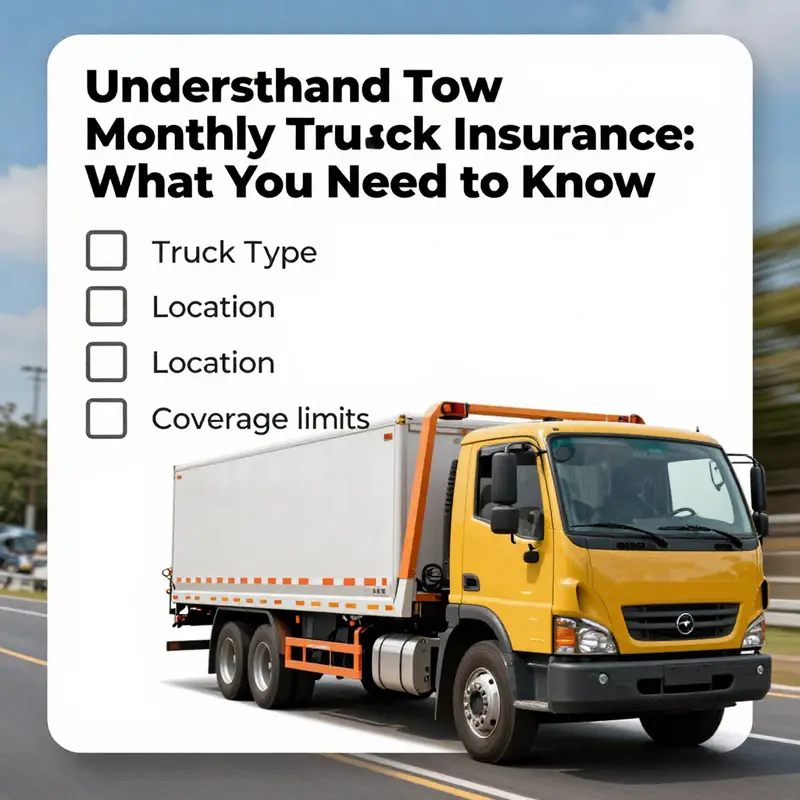
Tow trucks sit at a high-stakes intersection of service urgency and equipment vulnerability. Their monthly insurance costs aren’t a single price tag; they’re a mosaic built from risk, coverage choices, and the daily realities of the road. When you call out a number like $200 or $600 as a typical premium, that shorthand hides a web of variables that shift with your operation, your location, and how you balance protection with affordability. The numbers matter, but the story they tell is just as important: premiums reflect the risk the insurer assumes, and a small adjustment in operations can change the rate by hundreds of dollars each month. Understanding how those factors interact gives you a practical footing when you price protections for a tow business and, more importantly, when you negotiate them with carriers who specialize in commercial auto coverage for towing services. In fact, a common, real-world picture emerges from the data: for a single tow truck operated by an owner-operator with a clean driving record and minimal claims, monthly costs can hover around the low to mid hundreds, while larger fleets or operations in high-risk zones often push premiums well beyond that range. A notable takeaway from industry data is that while the average for commercial auto insurance for tow businesses sits near the mid-$400s per month, the actual price is always tethered to context rather than a universal average. This context-driven pricing is exactly what makes rate-shopping essential and why your insurance strategy should start with a clear, objective picture of what your business does and where it goes from day to day.
Vehicle type and usage form the first layer of that picture. The specific tow truck you own or operate matters a great deal. A newer, higher-value truck with sophisticated recovery gear can carry higher repair and replacement costs, naturally nudging premiums upward. Yet the usage pattern can matter even more than the truck’s age. If your primary work is routine commercial towing with predictable routes, you may face a different risk profile than a truck that regularly traverses congested urban corridors, construction zones, or long-haul recovery scenes. Heavy-duty operations, long hours on the road, or frequent on-scene recoveries introduce additional layers of exposure that carriers quantify with higher rates. The premium response to usage is practical: it rewards efficiency and predictability while pricing riskier or more expensive-to-repair scenarios at a premium. In this sense, the truck’s role becomes a shorthand for how a carrier estimates the likelihood and cost of a loss over the policy period.
The driver at the wheel is another critical variable. A seasoned operator with a clean driving history translates into a lower perceived risk. On the other hand, a record peppered with traffic violations, accidents, or incidents can quickly push the premium higher. The logic is intuitive: safer drivers tend to file fewer or less costly claims, which lowers the insurer’s expected losses. Your own experience matters too; even a single new driver on a previously quiet route can alter the risk calculus if that driver brings a different pattern of miles, reaction times, or on-scene behavior. This is especially relevant for small fleets where a single incident can have outsized financial implications due to both claims costs and potential increases in deductibles or policy limits.
Geography plays a foundational role in pricing as well. Urban environments, with their dense traffic, higher theft rates, and more frequent incidents, tend to drive higher premiums than rural settings where the operating environment is less congested and the wear-and-tear profile may be different. The interplay between location and usage is subtle but powerful: a truck that operates mainly in a high-traffic city but follows a predictable schedule and route can still be priced differently from one that roams multiple urban corridors, each with distinct risk attributes. State regulations add another layer. Some jurisdictions mandate minimum coverage limits or add endorsements that protect certain kinds of equipment or operations. When you cross state lines or operate across multiple states, the underwriting guidelines can shift, nudging the cost even if your day-to-day operations appear unchanged on the surface.
The level of coverage you choose has a direct, predictable impact on your premiums. Liability protection is the floor; adding collision, comprehensive coverage, and uninsured/underinsured motorist protection adds layers of security—and cost. Policy structure matters too: endorsements for specialized equipment, like winches, hydraulic jacks, or recovery gear, and hired auto liability protections can raise the monthly investment but are tailored to guard your business against the specific losses that accompany towing operations. In short, more comprehensive protection brings a higher price tag, but it also reduces your exposure to potentially ruinous losses that could cripple a small business after a single incident. This is where business risk management and financial planning intersect: you aren’t just buying coverage for next month; you’re shaping how your operations survive and recover from the worst-case scenarios that a tow truck business can encounter.
Underwriting guidelines—the hidden engine behind every quoted rate—vary across insurance providers. Even when two operators look similar on the surface, different carriers apply different risk models, scoring systems, and pricing levers. This is why identical coverage terms can yield very different monthly premiums from one insurer to another. The takeaway is simple: rate parity is not guaranteed, and quotes from multiple carriers are not merely advisable—they’re necessary to understand the full price spectrum for your particular risk profile. When you shop, you’re not just comparing numbers; you’re comparing underwriting philosophies, claims histories, service levels, and the ease with which you can adjust coverage as your business changes.
From a practical planning standpoint, the economics of tow truck insurance become clearer when you anchor them to the lifecycle of a small operation versus a growing fleet. A single-owner operator with a clean record and modest mileage may find monthly premiums in a relatively narrow band, whereas a fleet owner with multiple vehicles, paired with high annual mileage and exposure from heavy-duty recovery work, will experience a broader range and, often, higher floors on the monthly cost. A general mid-range expectation is that basic coverage with essential protections sits closer to the lower end, while adding full liability, collision, comprehensive, and supplementary protections pulls the price toward the middle or higher end of the spectrum. This aligns with broader market observations in which the average monthly premium for tow-related commercial auto coverage lands in the mid-range, but actual numbers hinge on the exact risk mix.
For operators seeking to make sense of these numbers, proactive management of the inputs matters most. Start with a precise description of your fleet and operations: vehicle types, typical routes, annual mileage, and the environment in which you operate. Gather and compare quotes from several carriers that specialize in commercial auto insurance for towing services, ensuring that you’re evaluating apples to apples rather than chasing a lower price that comes with gaps in coverage. Simple steps can yield meaningful savings: improve and document a clean driving record, minimize high-mileage stretches by scheduling and optimizing routes, and tailor coverage to your real risk exposure rather than a one-size-fits-all policy. If you’re unsure about the adequacy of your current limits, run a scenario analysis: what would it cost if you suffered a single severe claim? How would that affect cash flow if coverage didn’t meet your needs? These exercises translate into more precise but still flexible protection, enabling you to scale coverage as your operation grows without abruptly outpacing your budget.
As you consider the monthly price tag, it’s worth anchoring expectations to some practical numbers. The industry-wide balance suggests that the average monthly cost for commercial auto insurance in tow operations sits near the mid-$400s, with typical ranges from roughly $200 on the low end to $600 or more on the high end, depending on the mix of factors discussed above. For a small operation, a ballpark starting point of around $200–$300 per month is plausible if risk is well managed and coverage is appropriately scoped. For larger fleets or operators in riskier markets, the price can easily exceed $500–$600 per month, reflecting the higher likelihood and potential cost of losses. The key is not to settle on a single price but to understand how your specific risk factors drive the quote, then work with a carrier to align protection with actual risk while maintaining financial viability. As part of this alignment, consider visiting related content on your site to see how location-specific considerations reframe the pricing logic. For example, the DC area page on tow services can provide a contextual view of urban risk realities and operational demands that influence premiums in that market. towing-service-dc.
Ultimately, accurate pricing comes from dialogue with insurers who grasp the realities of tow operations. Ask for a detailed breakdown of each premium component, request rider options that may be essential for your equipment, and explore bundled options if you manage multiple risks under one policy. Remember that state regulations can alter the baseline, so confirm minimums and endorsements that may be legally required where you operate. If you want a practical starting point for broader insights into how risk assessment translates into premium, a respected industry resource offers foundational guidance on risk and rate setting. For a deeper dive into the regulatory and actuarial threads that shape pricing, you can consult the National Association of Insurance Commissioners’ resources. External reference: https://www.naic.org
Final thoughts
Understanding the monthly costs associated with tow truck insurance and the factors that influence these premiums is crucial for anyone in the towing business. By being informed, you can tailor your insurance plan to fit your operational needs while ensuring coverage that protects your investment. With average premiums ranging widely, it’s prudent to evaluate your unique situation and contact multiple insurance providers to find the best fit for your insurance needs.