
For business owners in the towing industry, understanding the intricacies of tow truck insurance is crucial for financial planning and risk management. This insurance covers potential liabilities and damages involved in towing operations. However, costs can vary significantly based on several factors. This article delves into the average insurance costs for tow trucks, the factors that influence these rates, and practical tips for obtaining accurate quotes tailored to your specific business needs. By breaking down each aspect, business owners can better navigate their decisions and optimize their coverage.
Tow Truck Insurance Demystified: Decoding Costs, Risks, and Real-World Quotes
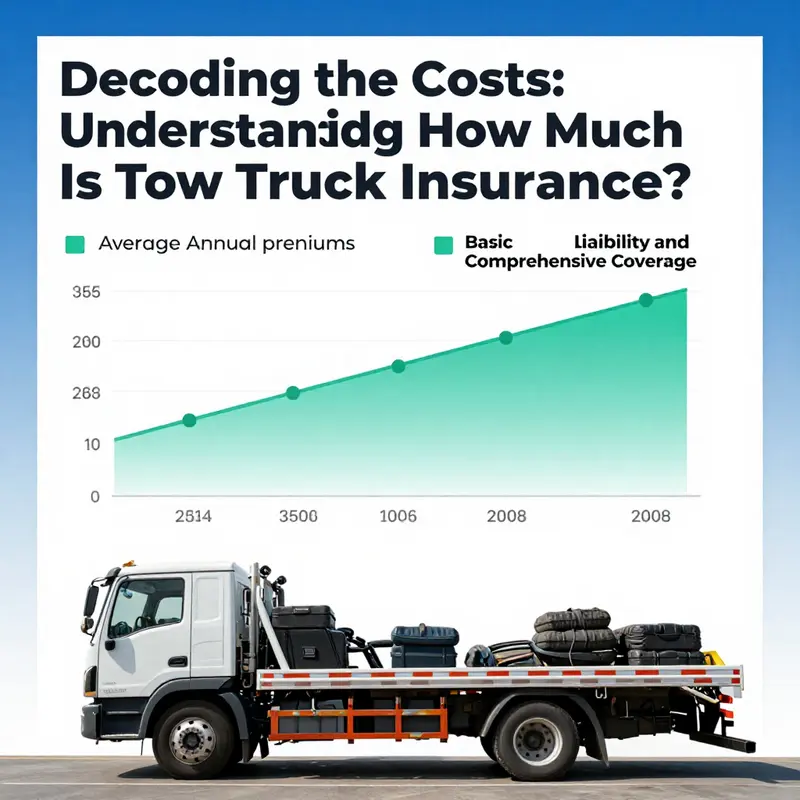
Insurance for tow trucks sits at the intersection of vehicle value, equipment complexity, and risk management on the road. For operators, the price tag is rarely a single number but a spectrum shaped by policy type, coverage limits, deductibles, and the specific realities of how the tow business runs. When you hear ranges like a few thousand dollars a year, think of them as starting points that can shift dramatically once the details are evaluated. In practical terms, basic liability coverage for a standard tow truck often lands somewhere between two thousand and four thousand dollars annually. Add a robust layer of protection—liability, collision, and comprehensive coverage—and the annual bill can push into the five-thousand-to-ten-thousand-dollar territory or higher, depending on risk factors and the vehicle’s profile. These are not one-size-fits-all figures; they are the product of how insurers assess exposure year after year on the road and at job sites.
The most pivotal variable is the type of tow truck itself. A rotator, with its rotating boom and added hydraulic complexity, is not just a mechanical challenge but a risk calculus for insurers. The same policy that covers a flatbed or a conventional wrecker may cost noticeably more when a rotator is involved, due to the higher potential for damage during operations and the greater likelihood of specialized equipment failure. If you operate a rotator, expect the premium to reflect both the higher replacement cost of the truck and the amplified exposure during heavy-duty recoveries. Vehicle value and the equipment installed—winches, hydraulic systems, and other advanced tools—also push rates up. Higher value equals higher replacement cost and a greater financial risk if damage occurs, so carriers price accordingly.
Experience and driving history remain core drivers of price as well. A clean record and seasoned operators typically yield lower rates, while accidents, violations, or prior claims tend to translate into higher premiums. The premium math also accounts for who is behind the wheel and how diligently risk is managed. Insurance exists to price the likelihood of a claim and the cost of paying it, and a driver’s track record is a near-perfect proxy for future behavior on busy roads, highway scenes, and recovery zones.
Location and usage patterns further complicate the equation. Urban environments with dense traffic present more frequent exposure to collisions and liability issues than rural operations, and the kinds of jobs you handle matter. Highway recoveries, urban roadside assistance, or long-haul tows introduce different risk profiles and expected incident frequencies. If your fleet runs on a schedule that keeps you moving through peak traffic hours, your insurer may weigh that higher exposure into the quote. Conversely, a business with predictable routes and shorter service intervals could be granted more favorable terms, especially if loss history aligns with a lower risk profile. Coverage limits and deductibles are another lever. Higher liability limits increase the premium because they raise the potential payout in the event of a claim. Likewise, choosing lower deductibles shifts more risk to the insurer, which raises the annual cost. For operators already managing multiple trucks, some insurers offer multi-truck discounts that can meaningfully reduce the per-vehicle price. The discount structure varies by carrier, but the reduction often reflects the pooled risk and the administrative efficiency of insuring a fleet rather than single units.
Beyond the basics, there are sometimes nuanced exposure scenarios that can push premiums higher. For instance, work at accident scenes, the transport of hazardous materials, or specialized recoveries introduce additional risk layers. The more complex the operation, the more rigorous the underwriting, and the higher the premium tends to be. This is precisely why a tailored policy designed with a broker who understands commercial auto insurance for heavy vehicles can make a meaningful difference. A broker can translate a fleet’s operational reality into a policy framework that aligns with both risk and budget, balancing the need for adequate protection with a sustainable price point.
What does this mean in practical terms for someone shopping around for tow truck insurance? It means that quotes aren’t just about the sticker price on a policy; they are about how well a carrier understands the business. Some quotes will reflect a baseline liability package, while others will you push toward broader protection, including physical damage and non-owned auto liability. It’s common to see rural operators with clean records paying less on average than urban operators with a history of claims, as data and risk assessments often favor the former. But the market is nuanced. If a shop runs several trucks, a broker can often secure a fleet discount that makes overall coverage more affordable than insuring each unit separately.
This is also where the practicalities of shopping matter. The numbers shared in industry overviews come from aggregations of broker quotes, carrier guidelines, and historical loss data. In many cases, a single tow truck with standard equipment can find a reasonable baseline around the low-to-mid teens in hundreds annually for basic liability, while a more protective package may push the annual cost into the thousands. Those numbers are increasingly influenced by where you operate and how you operate. For operators in bustling metro areas with a steady stream of high-risk calls, premiums can trend higher. For those serving more rural areas with careful driving records and limited accident histories, the pricing can be notably more favorable.
To illustrate how this translates into a real-world decision, imagine a shop with a small fleet of flatbeds and a single rotator. The rotator alone would likely pull the premium upward compared with flatbeds, even if the trucks share similar ages and values. If, however, the fleet demonstrates long- standing reliability, a clean driving history, and a defined risk-management program—certified operators, regular maintenance, and documented safety protocols—the provider may respond with more favorable terms, perhaps through a multi-truck discount or tailored deductibles that align with the shop’s cash flow. This is where the advisory role of a skilled broker becomes crucial: turning raw quotes into a policy that matches the shop’s day-to-day realities while maintaining coverage that protects the business when the unexpected happens.
For operators who want to ground their expectations in local context, consider how urban density shapes risk. A Washington DC–area fleet, for example, might experience higher exposure from urban traffic patterns and diverse recovery scenarios. This is a nuance a local service provider can reflect in the policy design. If you’re browsing options, you can explore practical guidance through a local resource like Washington DC towing services to understand how these environments influence risk profiles and cost considerations. Washington DC towing service can serve as a touchpoint for how regional operations translate into coverage decisions.
In the end, the core takeaways sit on a simple axis: price is driven by how much risk sits on the road and how much protection you want behind it. The most effective path to an accurate quote is a candid briefing with an insurance professional who understands commercial auto insurance for heavy vehicles. Prepare to share details about the truck types, the value of equipment, the planned routes, typical job types, and your safety and maintenance practices. The more transparent and organized the information, the closer the quote will resemble real-world costs rather than sketching out a best-guess estimate. And because the landscape shifts with claims experience and regulatory changes, ongoing policy reviews team with your business growth are prudent.
For readers who want a broader frame of reference beyond the narrative of ranges and factors, industry data consolidates a range of perspectives. It shows that while a single tow truck might cost between roughly one thousand five hundred and three thousand dollars per year for basic coverage in some markets, adding comprehensive features, higher liability limits, or specialty equipment can push costs into a much higher orbit. The balance between protection and price is ultimately a strategic choice, and it hinges on the fleet’s risk appetite, the nature of the work, and how much shield a business owner wants in the event of a serious loss. A thoughtful, broker-led approach can translate this understanding into a policy that not only protects the business but also preserves the financial viability of everyday operations.
External resource for further reading: Insure.com provides a detailed breakdown of how these numbers are derived across different policy types and risk profiles. https://www.insure.com/insurance-articles/automotive/tow-truck-insurance-cost/
Pricing the Tow: Unraveling the Factors That Shape Tow Truck Insurance Costs
Tow truck insurance does not arrive as a single fixed price. It arrives as a careful balance of risk, policy design, and the realities of the vehicle and its workload. For anyone running a towing operation, understanding why two trucks that look similar can carry markedly different premiums is not merely academic; it is essential for budgeting and strategic decision-making. In many markets, basic liability coverage for a standard tow truck sits in the lower to mid thousands annually, while a full package that combines liability with collision and comprehensive protections can push the annual cost higher, especially when the truck is high-value, outfitted with advanced equipment, or deployed on demanding jobs. Those figures are not universal, but they set the frame for how insurers appraise risk and how business owners should approach the market: pricing is shaped by the vehicle, its capabilities, and the way it is used, as well as by the insurer’s own underwriting stance. When planning a fleet, savvy owners compare quotes not just on price but on what each policy actually covers, where gaps may exist, and how deductibles and limits align with operational realities.
The first and most obvious driver is the vehicle itself—the type and the value. A rotator tow truck, with its rotating boom designed to lift and maneuver disabled vehicles from accident scenes, carries far more complexity and potential exposure than a basic flatbed or conventional wrecker. That complexity translates directly into the premium: more moving parts, higher risk of mechanical failure, and greater potential for collateral damage during a recovery operation. Higher-value trucks with sophisticated hydraulic systems, winches, or other specialized equipment naturally command higher insurance costs because the replacement or repair bill, in the event of a claim, would be correspondingly steep. This relationship between equipment value and premium is not incidental; it reflects a fundamental risk calculus that underpins the entire insurance market for commercial autos. When you pair a valuable asset with a demanding operating profile, the policy must provide a broader safety net, and that comes at a price that mirrors the potential exposure.
Driver experience and record sit alongside the asset itself as powerful modifiers of cost. Insurance isn’t priced in a vacuum; it prices risk. Operators with clean driving records, formal training, and a history of incident-free service present a lower likelihood of future claims. Conversely, younger or less experienced drivers, or those with recent tickets or claims, tend to push premiums upward. The insurance equation weighs the combination of the driver’s history and the job’s complexity because a single inadvertent error at a recovery scene can escalate a minor incident into a costly claim. Some carriers also consider the team running a particular vehicle—the experience of the operator behind the wheel and the crew handling the rig—together as a single risk profile. In practice, this means that a well-trained crew operating a high-value rotator in tough conditions will still cost more to insure than a smaller, simpler machine handled by veterans with pristine records, but the gap may narrow if the company invests in ongoing training, monitoring, and preventive maintenance.
Geography matters, too. The geographic region where a tow truck operates sets a backdrop for risk that is hard to ignore. Urban areas with heavy traffic, dense road networks, and higher accident frequencies push up insurance costs. Rural or low-traffic zones, while not free of risk, often present a different risk landscape and can yield lower premiums. The nature of the local enforcement environment, emergency response expectations, weather patterns, and even road quality can influence the likelihood and severity of claims. A truck that spends substantial time in highway recovery or congested city corridors will be priced differently from one primarily serving local, non-urban calls. Insurers look at exposure hours, typical run distances, and the kinds of incidents most likely to occur in a given area when shaping a quote.
The scope of operations also directly shapes cost. Companies that provide long-haul towing, hazardous materials transport, or 24/7 emergency services carry higher risk exposure. Long-haul operations introduce more miles, fatigue-related risk, and broader jurisdictional complexities. The inclusion of hazardous materials, even in small quantities, introduces specific regulatory and safety considerations that can raise premiums. Emergency services, with their around-the-clock demand and the unpredictable nature of scenes they respond to, likewise require coverage that anticipates more frequent or more severe claims. Each of these operational realities modifies the risk profile an underwriter sees, and the result is reflected in the premium. A fleet designed for rapid response across multiple counties, with crews that rotate shifts and carry redundant safety protocols, may ultimately secure more favorable terms than a leaner operation, but only if those protections are effectively demonstrated to lenders and regulators alike.
The exact policy design—coverage options, limits, and deductibles—plays a decisive role in price. Liability limits, physical damage coverage, and add-ons like roadside assistance are not mere extras; they are the core components that determine how a policy responds to losses. Higher liability limits increase the maximum amount the insurer could pay for a given claim, which raises the premium. Lower deductibles, while attractive at claim time, also raise annual costs because the insurer shoulders more upfront risk in every policy period. Physical damage coverage protects the asset itself from collision or other perils, and its cost scales with the vehicle’s value and the likelihood of damage during operations. When a company combines several coverage layers and raises limits to align with asset value and risk tolerance, the price climbs in step. Many operators discover that a balanced package—adequate liability, solid physical damage protection, sensible deductibles, and perhaps a modest umbrella—achieves a level of protection that suits their risk appetite while keeping annual outlays predictable.
Beyond the raw numbers, underwriting philosophies and prior claims history influence what a given insurer will offer. Some underwriters are more conservative, scanning for signs of elevated risk across the business—fleet size, maintenance records, driver training programs, on-road incident history, and compliance with safety protocols. Others may tailor pricing more tightly to individual risk factors and hold less weight in broader business metrics. In practice, the final quote often reflects a mosaic of the company’s claims history and the insurer’s appetite for risk in the specific market. This is why two operators with similar trucks and nearly identical service profiles can receive markedly different quotes from different carriers. The moral is clear: the pricing conversation is not just about the truck; it is about the entire risk profile the insurer is evaluating.
If you are navigating this terrain, the practical route is to engage multiple providers who specialize in commercial auto insurance for heavy vehicles and to supply consistent, comprehensive information about every facet of the operation. Detail the truck type and its value, outline the equipment, describe typical routes and job types, and present a driver roster with records and training credentials. Ask about how each insurer handles deductibles, limits, and any bundling options that could provide overall savings without compromising protection. And as you contemplate local realities, you can see how this plays out in real-world terms by exploring a nearby example of service pages that outline coverage considerations in practice, such as towing service Washington DC.
In the end, the price tag on tow truck insurance is not a single figure but a spectrum shaped by asset value, work scope, geography, and risk management. A well-prepared operator who can demonstrate attentive maintenance, controlled access to high-risk jobs, structured driver training, and a clear plan for incident response stands a better chance of securing favorable terms. The result is not merely a lower premium but a policy that actually aligns with how the business operates, what it protects, and how it plans to grow. For those seeking authority and current guidance, official regulatory resources provide the framework insurers use to determine pricing and coverage standards. External reference: https://www.naic.org
Tow Truck Insurance in Practice: Reading the Real Costs Behind Every Quote
Getting a precise read on tow truck insurance begins with acknowledging that price is not a single lever you can pull. It is the result of a balance between risk, coverage detail, and the specifics of your operation. When operators ask, “How much is tow truck insurance?” the answer usually lands somewhere on a spectrum rather than at a fixed number. In practical terms, basic liability coverage for a standard tow truck often falls in the range of roughly $2,000 to $4,000 per year. If a policy includes a more comprehensive package—liability, collision, and physical damage—the annual premium tends to land higher, typically in the $5,000 to $10,000-plus territory, with the exact figure driven by the truck’s value, the equipment onboard, and the operator’s risk profile. These numbers reflect industry pricing tendencies observed in recent data, but they only begin to scratch the surface of what determines a quote for a particular business.
The most obvious driver is the type of tow truck you operate. A basic flatbed or conventional wrecker is generally cheaper to insure than a specialized rotator with a rotating boom. The rotator’s mechanical complexity, heightened chances of on-road incidents, and the potential for heavy damage during recovery jobs all push premiums upward. Beyond the chassis itself, the value and sophistication of the equipment on board—heavy winches, hydraulic systems, stabilization gear, and other high-cost tools—also push up the premium. Vehicles with sophisticated gear are not just more expensive to replace; they represent greater exposure should something go wrong during complex recoveries. In this light, two operators with similar fleets can see noticeably different quotes if one runs rotators and the other sticks to basic tow trucks.
Driving history and experience form another critical axis of variation. A clean driving record with minimal claims tends to produce lower rates, while recent accidents, tickets, or a history of claims usually translates into higher premiums. This isn’t just about the operator behind the wheel; it extends to the company’s overall safety culture. Insurers look for evidence that drivers have up-to-date training, that vehicles are maintained, and that there are robust procedures for incident reporting and risk mitigation. The geographic footprint of operations matters as well. Urban routes, high-traffic corridors, and frequent highway recoveries increase exposure to accidents, theft, and more severe losses, all of which can lift quotes. By contrast, fleets concentrated in lower-risk areas with less highway exposure may enjoy more favorable pricing.
Coverage choices themselves shape the final number. Higher liability limits confer greater financial protection but come with higher annual premiums. Similarly, choosing lower deductibles shifts more of the risk onto the insurer, which enhances the coverage clarity for the policyholder but raises costs. Most operators balance these levers by considering the value of the equipment and the potential impact of a loss on the business. A fleet that regularly hauls high-value trucks or delicate machinery will logically require higher coverage limits, and that decision will be reflected in the premium. In practice, most operators start with a baseline liability and then adjust limits and deductibles to match the risk appetite of the business and the appetite of the insurer for the specific risk profile.
Location and usage patterns can tilt the pricing in meaningful ways. A company with urban operations encounters different risk dynamics than one serving rural stretches or tight local markets. The frequency of interventions, the typical job types—from local towing to on-highway recoveries—and the average annual mileage per vehicle all feed into underwriting models. Sector-specific exposures, such as the likelihood of weather-related incidents or theft in certain districts, can also shift expectations. It is these nuanced differences that make every quote unique, even for fleets that look similar on a surface level.
To get a sense of the overall cost landscape, it helps to consider the broader industry data. Insurance information and industry research often cite a wide range per vehicle, with averages that reflect the diversity of risk profiles across the United States. A notable point from recent analyses is that average annual premiums for tow truck coverage span roughly from the lower thousands to the upper-thousands per vehicle, depending on the combination of factors described above. This spread underscores the importance of personalized underwriting: a policy that fits a local, single-vehicle operation may look very different from a plan designed for a large, multisite fleet with rotators and high-mileage usage. For operators in dense markets, the premium can skew higher, while well-managed fleets with lower risk profiles can secure more favorable terms.
The process of obtaining accurate quotes is both an art and a science. Insurance providers typically require a thorough portrait of the business: the make and model of each tow truck, annual mileage, job mix (local vs. long-haul vs. specialized), and claims history. They will also want to know whether the trucks are used for commercial purposes, personal use, or a hybrid arrangement. In many cases, there are online quote tools that collect this data quickly, but the most precise assessments often come from working with an experienced broker who specializes in commercial auto policies. A broker can help ensure that nothing important is left out and can translate the operational realities—like peak seasonal demand, fleet expansion plans, or changes in service lines—into accurately priced coverage. They can also help illuminate gaps in coverage, such as appropriate physical damage protection for high-value equipment or appropriate cyber/loss controls if the business uses mobile dispatch systems or connected devices on the road.
When you plan your budgeting, it’s useful to anchor your planning on credible data sources while recognizing your own operational realities. The Insurance Information Institute compiles detailed analyses and trends for tow truck insurance costs, highlighting that averages can vary widely depending on risk profiles and underwriting approaches. Their data reinforces the point that precise quotes emerge only after a full disclosure of vehicle specifics, usage, and safety practices, and that even within national ranges there is substantial local variation. For a more complete view and the latest numbers, you can consult their dedicated resources on tow truck insurance costs.
For operators curious about how these considerations play out in a particular city, practical navigation helps. In urban markets such as Washington, DC, the premiums often reflect higher exposure to theft, urban congestion, and more frequent high-speed recoveries. If you want to see how a local site frames the requirements and typical coverages for that market, you can explore our dedicated DC-focused tow-truck service page, which provides a sense of how regional differences can influence policy design and pricing. Tow-truck Washington, DC page.
As you prepare to request quotes, gather the right data and approach screening with a plan. Start by listing each vehicle’s value and its equipment package, including lift systems, winches, and any custom safety features. Document the annual mileage and the main service areas. Create a brief summary of the safety program, driver training, and maintenance routines. Be prepared to share the fleet’s claims history for the past three to five years, including near-misses and incidents that didn’t result in a filed claim, since underwriters often weigh the quality of risk controls as much as raw accident counts. When you compare quotes, don’t stop at the price. Look for coverage clarity, inclusions, exclusions, and the ease of adding or scaling coverage as your business evolves. A broker can help balance these factors and translate the policy language into practical protections that align with your contractual obligations and customer expectations.
Ultimately, the price you pay for tow truck insurance should reflect a deliberate assessment of exposure and a disciplined approach to risk management. It is not merely a financial outlay but a tool that enables stable operations, reliable service, and resilience in the face of unpredictable events on the road. While the numbers can swing widely, the underlying message remains constant: tailor coverage to fit the operation, maintain a strong safety and maintenance program, and work with knowledgeable professionals who can translate risk into measurable protection. For more updated data, consult industry-wide resources that track these movements and provide context for your own underwriting conversations. External data sources such as the Insurance Information Institute offer ongoing analyses that help frame these conversations in real terms. External resource: https://www.iii.org/facts-and-statistics/insurance-industry-facts-and-statistics/tow-truck-insurance-costs
Final thoughts
Understanding tow truck insurance costs is essential for making informed decisions as a business owner. By analyzing average premium rates, recognizing the factors that drive those costs, and knowing how to obtain precise quotes, you empower yourself to select the right coverage for your business. This not only protects your assets but also enhances your operational capabilities in the towing industry. By being proactive in insurance matters, you can safeguard your business’s future in a competitive landscape.