
For business owners in the towing industry or those considering service expansion, understanding the cost of a tow truck is crucial. Prices for tow trucks can vary significantly based on type, size, and features. This article aims to provide a detailed analysis of how much tow trucks cost across different categories, along with the additional factors that influence these costs. Chapter 1 focuses on the specific cost breakdown by type of tow truck, while Chapter 2 delves into various additional cost factors that business owners should consider when budgeting for a tow truck purchase.
Tow Truck Price Realities: A Deep Dive into Costs by Type and What It Means for Your Operation
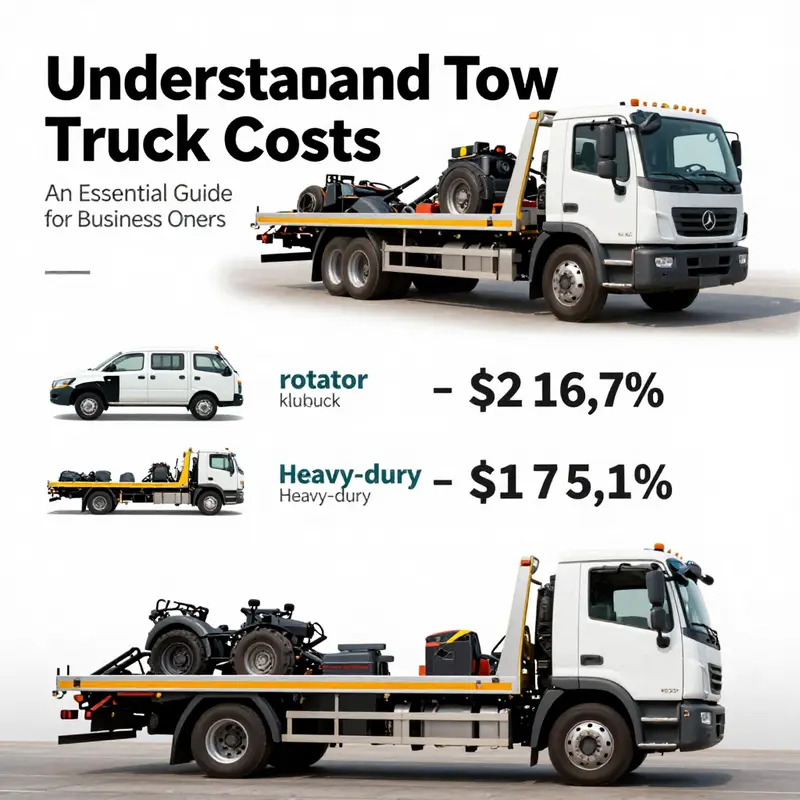
Pricing for a tow truck is not a single number, but a spectrum shaped by type, capability, and the intended mission. As of March 2026, the market presents a clear hierarchy: the most capable, purpose-built rotator tow trucks sit at the high end; flatbeds provide a balance of safety and versatility; and wheel-lift or light-duty wreckers offer a practical entry point for many operators. This chapter threads those price ranges into a practical narrative about how much a tow truck costs, what drives those costs, and how purchasers can translate sticker price into long-term value. The aim is to move beyond headline figures and help buyers align the upfront investment with the kinds of incidents they expect to handle, the regions they serve, and the service levels they promise to customers.
Rotator tow trucks, by design, are engineered for the toughest recoveries. They feature a 360-degree rotating boom, extendable and tiltable lift arms, and the ability to reach vehicles that are overturned or wedged in challenging terrain. In practical terms, rotators are built for emergency response, highway incidents, and complex extrications where other equipment would struggle. But that power comes with a premium. The price range for a rotator sits roughly between $150,000 and $300,000 or more. Beyond the initial price tag, operators must factor in higher fuel consumption, a larger footprint that requires more garage space and maneuvering room, and the need for specialized training to operate safely and efficiently. In many fleets, rotators are reserved for municipal departments, large service networks, and operators who routinely encounter hard-to-recover vehicles. The investment is not merely for capability; it is a statement about response time, reach, and the ability to perform at the limits of a tow operation when circumstances demand it.
Flatbed tow trucks occupy the middle ground in terms of capability and price, but they represent one of the most enduringly popular options for professional operators. A flatbed’s hydraulically tilting bed allows vehicles to be driven or winched onto the platform, with ground contact minimized to protect drivetrains, transmissions, and sensitive components. This is particularly important for modern cars with all-wheel drive, low ground clearance, or high-value electronics perched beneath the body. Flatbeds are praised for their safety profile and versatility, enabling both rescue and transport without subjecting the vehicle to a second insult during loading. Their price can vary depending on size, payload, and features; while basic models can be found at lower entry points, the broader market for new flatbeds generally settles in the range of roughly $80,000 to $150,000. The spread reflects variations in bed length, hydraulic systems, payload capacity, and whether the truck is configured for emergency response, long-distance hauling, or dealership service contracts. It’s also common to see flatbeds marketed as slide-in or conventional flatbeds, with slide-in variants offering faster loading at a similar price band. For buyers, the message is that flatbeds combine safety, adaptability, and resale value, making them a durable choice for fleets that prioritize vehicle protection and multi-vehicle capability on every call.
Wheel-lift tow trucks, sometimes referred to as light- to mid-duty wreckers, remain the most common and cost-effective option for many operators. They use a hydraulic lift arm to raise one or two wheels off the ground, allowing the vehicle to be towed without driving onto a platform. Prices for this category start in a more approachable range, typically around $40,000 to $70,000 for standard, well-equipped models. The appeal is straightforward: lower upfront cost, simpler operation, and good fuel efficiency compared with heavier platforms. Wheel-lift rigs are well suited for urban towing, roadside assistance, and municipal fleets that handle a steady stream of moderate calls. The trade-offs center on weight, stability, and the ability to handle heavily damaged or overturned vehicles. While not the best option for every scenario, the wheel-lift family remains the backbone of many service networks, delivering reliable performance at a price point that allows smaller operators to compete and grow. For businesses prioritizing daily dispatch volume and predictable maintenance, wheel-lift trucks offer a compelling balance of cost and capability.
Another configuration within the broader spectrum is the slide-in flatbed, a specialized variant that sits within the flatbed family. Slide-in beds are designed to slide a vehicle into a bed mounted on the chassis, combining the bed’s protection with a more streamlined load process. They typically fall within the same price neighborhood as traditional flatbeds, often in the $90,000 to $160,000 range depending on customization, payload, and the sophistication of loading automation. The economics of slide-in beds reflect a niche application: fast-loading, high-value vehicles, or operations that prioritize quick turnaround on high-demand runs. For any buyer considering this path, the takeaway is that the specialized nature of slide-in systems translates into a premium but potentially faster, safer, and more turnkey loading workflow.
The numbers above sketch a price ladder, but several ancillary factors push cost upward or downward well beyond the sticker. Shipping and import fees can add thousands of dollars depending on where a truck is built and where it is delivered. Maintenance costs escalate with the complexity of the system; rotators, with their hydraulics and rotating booms, require more frequent servicing and more careful uptime management. Fuel efficiency is not a cosmetic concern; rotators and heavy-duty wreckers burn more fuel and demand higher maintenance intervals, especially when they spend long hours on duty. Operator training deserves explicit attention. Advanced models, especially rotators and high-capacity flatbeds, demand formal, often multi-day training programs to ensure that operators understand not only how to use the equipment but how to manage safety risks in complex rescue scenarios. All of these factors translate into total cost of ownership that can exceed the initial purchase price by a meaningful margin over the life of the vehicle.
To move from sticker price to ownership planning, buyers should translate each type’s capabilities into their operational reality. A rotopneumatic camera on a rotator can provide 360-degree situational awareness on the scene, but that feature is wasted if a department or company does not routinely encounter overturned vehicles or complex recoveries. A flatbed may be heavily favored by auto dealers and long-haul service providers who require non-invasive transport, but it may underperform in narrow alleyways or on rough terrain where a wheel-lift’s compact footprint offers an advantage. Similarly, a wheel-lift unit is often the most economical choice for small garages or municipal fleets that handle a steady stream of wheel- and axle-level recoveries. Decision-makers should map anticipated call types, regional road conditions, and vehicle mix against the strengths and weaknesses of each type, acknowledging that the best choice is a balance between upfront purchase, ongoing operating costs, and the level of service a company pledges to its customers.
Beyond the core type, the total cost picture includes shipping, taxes, and warranty terms. These factors can swing the price by thousands, especially when sourcing from international suppliers. Operational costs—fuel, tires, maintenance, and routine inspections—will accumulate as the fleet ages. In addition, the operator’s own requirements shape the equation: a company that emphasizes rapid response in high-traffic areas may justify higher upfront investments in rotators or advanced flatbeds to reduce call duration and improve on-scene efficiency. Conversely, a small operator focused on steady, predictable demand might optimize for lower upfront costs and simpler maintenance, leaning toward wheel-lift configurations that still deliver reliable service. In short, the cost of a tow truck is a function of expected usage, risk profile, and the strategic role the equipment is expected to play in the business.
As a practical guide, buyers should solicit comprehensive quotes that itemize each component of the price. Shipping, taxes, financing terms, and warranty coverage should be clearly stated. The broader market today offers robust supplier networks and verified listings that can help buyers compare options with confidence. When evaluating quotes, it is wise to consider the total cost of ownership over a typical vehicle lifecycle, rather than focusing solely on the upfront price. This broader lens helps prevent sticker shock from clouding a rational investment decision and supports a plan for maintenance budgets, spare parts, and technician training.
For readers who are weighing regional considerations, there is value in looking at local service ecosystems and the availability of skilled operators who can support advanced equipment. If you are located in a dense urban center or a region with frequent heavy incidents, you may find that the incremental benefits of a rotator or high-end flatbed justify the extra cost, provided you have a plan for maintenance and operator training. If your operations are concentrated in smaller towns or suburban corridors with a steady but moderate call volume, a wheel-lift configuration may deliver the best balance of reliability, cost, and agility. Either way, the underlying message is consistent: the most important price is the one that aligns with your mission, your people, and your customers’ needs. The right choice depends on how often you face complex recoveries, the kind of vehicles you routinely tow, and the speed at which you need to respond to incidents.
There is also the practical step of narrowing choices through real-world trials, demonstrations, and pilot programs. A staged approach—starting with a single, purpose-built unit, then expanding as demand grows—can help avoid over-investment while still enabling service quality to scale with demand. In many markets, fleets have found success by pairing a trustworthy, versatile flatbed with a lighter wheel-lift for daily calls. As demand grows or the mix of calls evolves, a second unit can be introduced, possibly a more capable flatbed or even a rotator if the operation begins to require rapid handling of unusual recoveries and a broader service footprint. The goal is not to chase every latest capability, but to curate a fleet that consistently delivers on the core promise: safety, speed, and reliability for every vehicle they touch.
Navigating the pricing landscape requires more than number-crunching. It requires a clear view of the service proposition you want to offer, a precise map of the vehicle mix you expect to encounter, and a disciplined approach to ownership costs that accounts for maintenance, training, and regulatory compliance. In addition, buyers should consider the quality of after-sales support, parts availability, and the opportunity to customize the truck to align with specific workflows—whether that means enhanced stabilizers for off-road recovery, towing accessories for high-value vehicles, or integrated safety features for roadside assistance fleets. These elements often determine how quickly a truck recovers its cost through service capacity and utilization.
For readers exploring local options, a practical starting point is to look at nearby service pages that describe the range of towing capabilities and regional offerings. A local overview such as DC towing services can provide a sense of how regional contexts shape expectations for on-the-ground performance, response times, and equipment preferences. See more on this topic here: DC towing services.
In sum, the sticker price of a tow truck by type paints a broad picture of capability and intended use, but the true cost of ownership arises when you layer in maintenance, training, fuel, and the demands of your service commitments. Rotators deliver unmatched reach and versatility at a premium for operations that routinely face overturned or highly challenging recoveries. Flatbeds offer a durable, versatile balance that protects modern drivetrains and handles a wide range of incidents, with cost scenarios that scale with bed length and payload. Wheel-lift wreckers provide the most economical entry point and can form the backbone of small to mid-sized fleets, especially in urban environments where maneuverability and lower operating costs matter most. The nuanced choices—whether to pursue a slide-in variant, how much to invest in safety and automation, and how to structure after-sales support—shape the total cost picture and, ultimately, the service you deliver to customers on the road.
For those seeking a broader external perspective on how manufacturers price new tow trucks and what features drive those price points, an industry overview provides useful context and benchmarks. See this external resource for a wider look at prices and specifications that influence market decisions: https://www.towtruck.com/new-tow-truck-prices-overview-key-features-specifications-industrial-applications-explained/
Chapter 2: The Hidden Levers Behind Tow Truck Pricing—Timing, Terrain, and the True Cost of Recovery
When people ask how much a tow costs, they expect a single base rate. In reality, the final bill is shaped by multiple factors: timing, complexity, location, service scope, and equipment. Time of day and day of week influence demand and may trigger surge or premium rates. The complexity of the recovery—simple hooking versus multi-hour, equipment-heavy operations—adds labor, setup, and risks that drive up cost. Geography matters: urban markets have higher base fees to cover urban overheads, while rural jobs can incur higher travel or minimums due to distance and sparse competition. The requested service matters: a tow alone versus a jump-start, lockout, or multi-service rescue can bundle tasks and raise the total. The choice of equipment class—light-duty versus heavy-duty—affects the crew, fuel, and risk profile. Finally, broader economic and regulatory costs, such as fuel, insurance, and fleet maintenance, flow into pricing as operators seek to cover recurring expenses. In practice, most quotes are itemized or bundled; the best approach for customers is to request a detailed quote that breaks out labor, equipment, travel, and possible add-ons. Local market dynamics—competition density, traffic patterns, and permitting requirements—shape prices beyond the base rates. For readers seeking a benchmark, industry resources provide regional pricing models and typical ranges. The key takeaway: price is rarely a single number. It’s a dynamic equation that reflects demand, capability, risk, and the realities of running a towing fleet.
Final thoughts
Understanding the overall costs associated with purchasing a tow truck is essential for any business owner in the towing industry. From the wide price range of different truck types to various additional costs like maintenance, training, and fuel, a thorough grasp of these factors will enable owners to make informed financial decisions. By setting aside adequate resources and carefully evaluating options, business owners can ensure they’re investing wisely in their towing operations, maximizing both safety and efficiency on the road.