
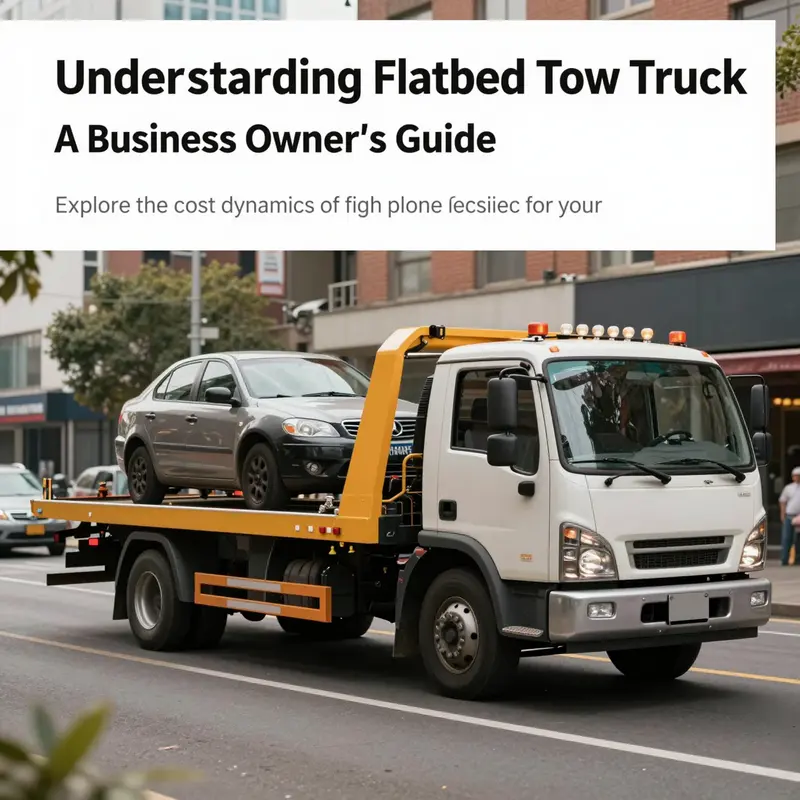
For business owners in the towing industry, understanding the costs associated with flatbed tow trucks is paramount. These vehicles are crucial for transporting everything from cars to heavy machinery, and their pricing can vary significantly based on several factors. In this exploration, we’ll detail the market pricing dynamics to provide clarity on how much a flatbed tow truck might cost you. Additionally, we’ll conduct a comparative analysis across different brands, revealing industry standards that help you align your purchase with your budget. Lastly, we’ll delve into the various cost factors impacting pricing, such as features and capacities, ensuring you have a full understanding of what to consider before making a purchase.
Decoding the Sticker: How Much a Flatbed Tow Truck Really Costs
Prices for flatbed tow trucks sit at a crossroads of capacity, bed design, and the extras a buyer chooses to include. In today’s market, a compact, two-car flatbed with rollback and wheel-lift capabilities can start around 15,500 dollars. As capacity, bed length, and utility rise, so does the price. A typical range for a 3- to 10-ton flatbed rollback model sits roughly between 15,500 and 52,900 dollars, with the specific number depending on bed length, tilt mechanisms, whether a wheel-lift is integrated, and if accessories like lighting or tie-downs are included. For operators who need more heft, an 8-ton flatbed paired with a 3-ton crane can commonly be found in the 15,000 to 50,000 dollar band. The crane option adds capability and cost, and buyers weigh the value of that reach against the upfront price. Specialized configurations—think longer flatbeds with heavier duty ramps or frames designed for heavier equipment—often land in the 35,000 to 70,000 dollar range, depending on ramp length, bed construction, and the sophistication of the hydraulic system.
Behind these ranges lies a web of variables that can push a price up or down. New machines with factory warranties, factory-installed safety systems, and turnkey service packages command the higher end. Used or reconditioned units appeal to buyers chasing an immediate price advantage, but they come with trade-offs: older hydraulics, worn brakes, rust or corrosion, and unknown maintenance histories require careful inspection and often a planned refurbishment. The decision is rarely about a single price tag; total ownership costs matter as much as the sticker price. Delivery charges, recent maintenance needs, spares accessibility, and any required training for new controls all factor into the bottom line. Even the cost of shipping or export paperwork can add several thousand dollars to the overall expenditure in some markets.
If you strip it down to the essentials, the price reflects how much duty the truck is expected to perform. A light-duty setup intended for frequent daily use with cars and light cargo will be on the lower end, while fleets that regularly move construction machinery or excavators will justify, and often negotiate for, heavier builds with longer beds, higher payload ratings, and more powerful hydraulics. The bed length itself is a practical lever: longer beds enable more simultaneous loads, but they also raise costs in material, power, and propulsion requirements. Add-ons such as a crane, winch, or a low-profile frame designed for specialty transport can tilt the scale markedly. In economic terms, buyers are weighing the marginal utility of every enhancement against its incremental cost, with the cadence of demand and supply in the market nudging prices in real time.
This market is not static. The broader sector of heavy-duty tow and recovery equipment has shown durable growth, with an upside in fleet renewal cycles and the expansion of services in urban and suburban areas. Price competition intensifies as manufacturers and dealers bundle warranties, maintenance plans, and delivery support into quoted packages. In a practical sense, getting to a fair price means requesting a full spec response that enumerates bed length, load ratings, tilt and ramp configurations, crane reach (if any), hydraulic pressures, control systems, and electrical/safety features. Buyers should ask for maintenance records if purchasing used, confirm warranty terms, and verify the availability of genuine parts and service networks in their region. When possible, obtain multiple written quotes to compare not just the bottom line, but the completeness of each offer. A comprehensive quote will spell out the equipment list, the expected delivery timeline, and any after-sales services included—information essential for a decision that will anchor a fleet’s daily operations for years.
For readers navigating this purchase from a local perspective, the realities of urban demand and regulatory environments can shape what a fleet considers essential. For example, in dense markets with tight loading docks and frequent short trips, a shorter bed and a versatile winch system may deliver more value than sheer lifting power. Conversely, operators serving larger sites or regional dispatches may prioritize extended bed length, tougher hydraulics, and modular tools that simplify loading across varied terrain. The practical implications of these choices are visible every day in maintenance planning and in how quickly a unit can return to service after a load carries through a demanding shift. To illustrate how these pieces fit into a real-world ecosystem, consider the role of a local towing service in a major metro area. For readers seeking context on how these machines fit into a specific market, the Washington DC area provides a useful lens on demand, regulation, and the practical realities of keeping fleets in service. A quick reference to the local operating landscape can be found at Washington DC towing service.
Prices also reflect the evolving expectations for support and after-sales care. Buyers increasingly value access to robust warranties, rapid-spare-parts availability, and the possibility of extended service contracts. These factors can add to the initial quotation, but they often reduce the financial risk of ownership. In some regions, buyers also encounter financing options that spread the upfront cost over time, aligning payments with the revenue-generating potential of a well-maintained asset. The key is to align the acquisition with the fleet’s strategic plan: what loads will be moved, how often, and under what conditions. If reliability, uptime, and predictable maintenance costs matter more than a few thousand dollars saved on the sticker price, the value proposition shifts toward better-supported, higher-grade configurations even when the upfront cost rises.
For anyone venturing into this market, the takeaway is clear: prepare for a price range that reflects a spectrum of capabilities and service commitments. The precise number you pay is a function of mission, geography, and supplier terms as much as it is of bed length or horsepower. When you’re evaluating quotes, build a checklist of must-haves and negotiables, and insist on a transparent breakdown of every line item. As with any major fleet investment, the best approach marries prudent budgeting with a clear understanding of how each feature translates into daily productivity, uptime, and your bottom line. External reference: https://www.alibaba.com/showroom/flatbed-tow-trucks.html
Pricing the Flatbed: A Practical Guide to Tow Trucks Across Brands, Capacities, and Configurations
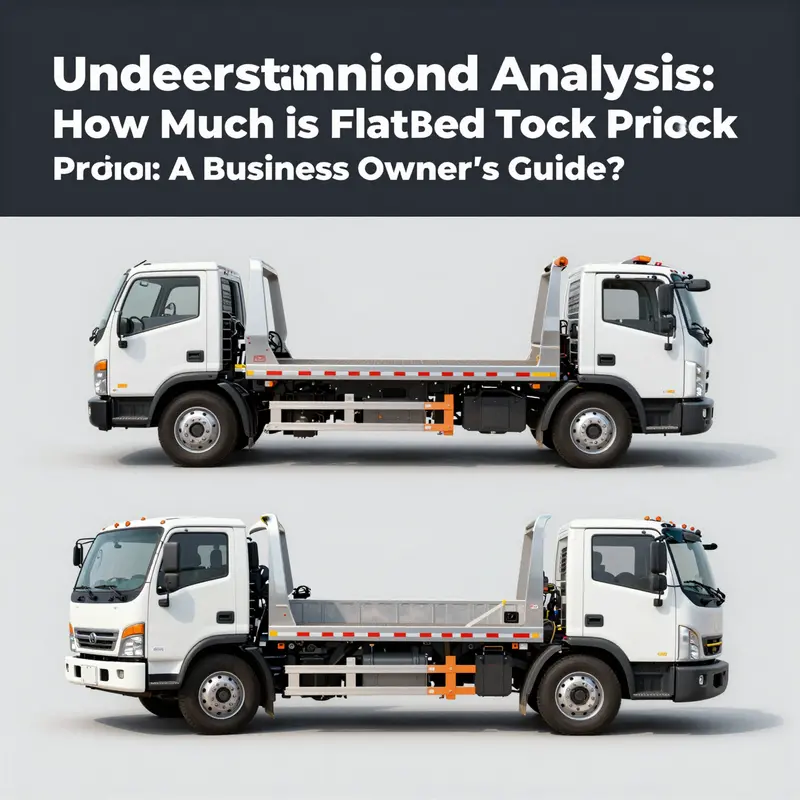
Pricing the flatbed tow truck landscape requires looking beyond a single sticker price. It is a market shaped by capacity, propulsion, build quality, and the kinds of duties the truck is expected to perform. In practical terms, buyers should think in tiers: light-duty models that are nimble for urban recovery, mid-range configurations that balance payload with maneuverability, and heavy-duty setups outfitted for municipal fleets or construction traffic. As of early 2026, the price spectrum reflects these tiers and the customization options that often accompany them. A typical 8- to 15-ton flatbed rollback, priced in sets from around $15,500 to $29,000, illustrates how bulk demand and the inclusion of features like a hydraulic rollback bed can shift the value proposition quickly. For smaller, 3- to 5-ton flatbeds—commonly used as car carriers or wheel-lift units—the range broadens markedly, from roughly $15,500 up to $52,900 depending on equipment, such as rotating cranes or integrated ramps. It is not unusual to see an 8-ton flatbed paired with a 3-ton crane, yielding a per-piece price in the neighborhood of $22,000 to $38,800. Across this spectrum, regional factors and after-sales terms matter almost as much as the base configuration. Shipping costs, warranty length, and the availability of local service can tilt a seemingly modest headline price into a longer-term financial consideration. For those shopping with an eye toward low-profile transport—think excavator movement or tight access—the bills tend to push higher still, with units ranging from the low $20,000s to nearly $50,000 per unit, depending on the level of customization and the specific chassis construction. In cases where customers require specialized capabilities, such as road-block removal or high-load handling, the price can spike toward the extraordinary, with some premium configurations approaching $70,000. These figures remind buyers that the sticker price is only a starting point. The real cost of ownership includes reliability, spare parts availability, and the cost of ongoing maintenance, which are deeply tied to the brand and the regional after-sales network that backs the truck.
Brand matters, but it is not the sole determinant of value. A comparative look at brands reveals a thoughtful pattern. Among entrance-level offerings, a Japanese 3-ton model may land in the $13,800 to $17,500 range, appealing for urban operators who prize reliability and low operating costs. The perception that Japanese engineering translates into longer service life can justify a higher price over time, especially for fleets that emphasize uptime over initial outlay. In the mid-range space, a durable 4-ton flatbed with a tilt tray is commonly priced between $18,000 and $28,000 in the 4×4 category, where the four-wheel-drive configuration expands the window of operation into rougher terrain or uneven city streets. This is particularly valuable for municipal fleets operating in adverse weather or steeper rural routes, where off-road capability can reduce response times and vehicle downtime.
The broader family of chassis-based heavy-duty models—assembled on platforms from a handful of major manufacturers—spans from roughly $15,500 up to well over $52,900. These models accommodate payloads from five to eight tons and frequently include advanced features such as rotating cranes with substantial lifting capacities, wheel lifts that can exceed twenty tons, and total towing capabilities that enable recovery of large or highly damaged vehicles. In this band, brand reputation begins to play a more pronounced role: premium Japanese engineering or well-regarded European-inspired designs may command higher upfront costs but deliver improvements in fuel efficiency, longevity, and resale value. Conversely, mid-tier Chinese brands can offer compelling price-to-performance ratios, especially when buyers are flexible about the long-term service footprint and warranty depth. The market also recognizes that customization can push costs up by roughly 10 to 25 percent. Adding escalated hydraulics, longer beds, or heavier-duty ramps is a straightforward path to higher capability—and higher price. This dynamic helps explain why two ostensibly similar units can diverge significantly in price once a buyer adds cranes, specialized ramps, or other aftermarket equipment.
What does this mean for someone weighing a purchase today? The answer depends on how the truck will be used, where it will operate, and how long the operator intends to keep it in service. For fleets primarily serving dense urban zones with tight parking and frequent vehicle exchanges, the economics tilt toward lighter, more maneuverable models with solid third-party support networks and good parts availability. These buyers often gravitate to the lower end of the 3- to 5-ton spectrum, where the combined benefits of agility and cost control align with high utilization rates. For operations spanning highways, construction corridors, and rural routes, the math shifts toward heavier-weight configurations. Here, a robust 6- to 10-ton class—whether built on a proven domestic chassis or a well-supported Asian platform—offers a compelling balance of payload, reach, and uptime. In either scenario, the decision is not merely about purchase price but about how long and how reliably the truck will perform. Buyers should assess total cost of ownership: maintenance costs, fuel efficiency, spare parts availability, and the strength of after-sales service terms, including warranty coverage and response times. These considerations can easily widen the gap between the cheapest option and the best fit for a given fleet.
Another practical lens is the value of customization. Small additions like longer ramps or upgraded hydraulics can push the price upward, but they also unlock higher efficiency on the job and reduce downtime. A unit fitted with a crane—whether a light 3-ton version or a more capable 30-ton setup—transforms the operational envelope of a flatbed tow truck, allowing more tasks to be completed in a single sortie. If a fleet routinely handles heavier vehicles or requires rapid recovery without outsourcing, that upfront investment in capacity can translate into lower long-term operating costs and fewer repair-related interruptions. This is especially true in regions where road conditions or regulatory requirements necessitate rugged, reliable equipment.
For readers who want to anchor their exploration in real-world options, the market offers a broad set of listings and supplier ecosystems. The negotiated terms can hinge on shipping logistics, local taxes, and the availability of factory-direct support or authorized service centers. It is wise to approach the buying process with a clear sense of the loads you will encounter, the geographic scope of operations, and the anticipated maintenance cadence. A structured approach—defining the maximum lifting capacity, bed length, ramp angles, and wheel-lift capabilities needed—helps narrow the field quickly and reduces the risk of overcommitting to features that won’t translate into improved performance on the road.
For readers seeking further context on local service options as part of a broader fleet strategy, consider a resource on tow-truck service in a major market. It can illuminate how fleet operators balance the cost of service coverage with the availability of local technicians, parts, and emergency response times: tow truck service in Washington, DC. This lens helps connect the dots between what a unit costs to buy and what it costs to keep it running when a job must be done quickly. In this market, keeping a dependable network of suppliers and service partners is as important as selecting a brand or a feature package.
As you compare options, also keep an external reference in view. A broad catalog of listings on major sourcing platforms corroborates the price bands discussed here and highlights how procurement trends shift with currency values, shipping costs, and after-sales commitments. A representative external resource provides a snapshot of current listings and configurations, illustrating how the ranges described above play out in real-world markets. For readers who want to cross-check the latest data, a widely used supplier directory offers timely listings and price bands aligned with the ranges described in this chapter.
In summary, the price of a flatbed tow truck is a function of capacity, brand, configuration, and service ecosystem. Buyers should start with the core payload and bed geometry they require, then layer in features such as tilt trays, cranes, and wheel lifts only as justified by the workload and uptime goals. When a fleet is planned for long-term use, it is often the combination of build quality, parts availability, and trusted after-sales support that delivers the best value, even if it means paying a bit more upfront. The numbers reflect that reality, and they point toward a decision framework that blends practical needs with strategic resilience in the face of daily road-side challenges.
External reference: https://www.alibaba.com/product-detail/8-Tons-flatbed-with-3-tons-crane-rollback_1600627788179.html?src=product&isPc=1
The Price Ladder of Flatbed Tow Trucks: How Capacity and Features Shape What You Pay
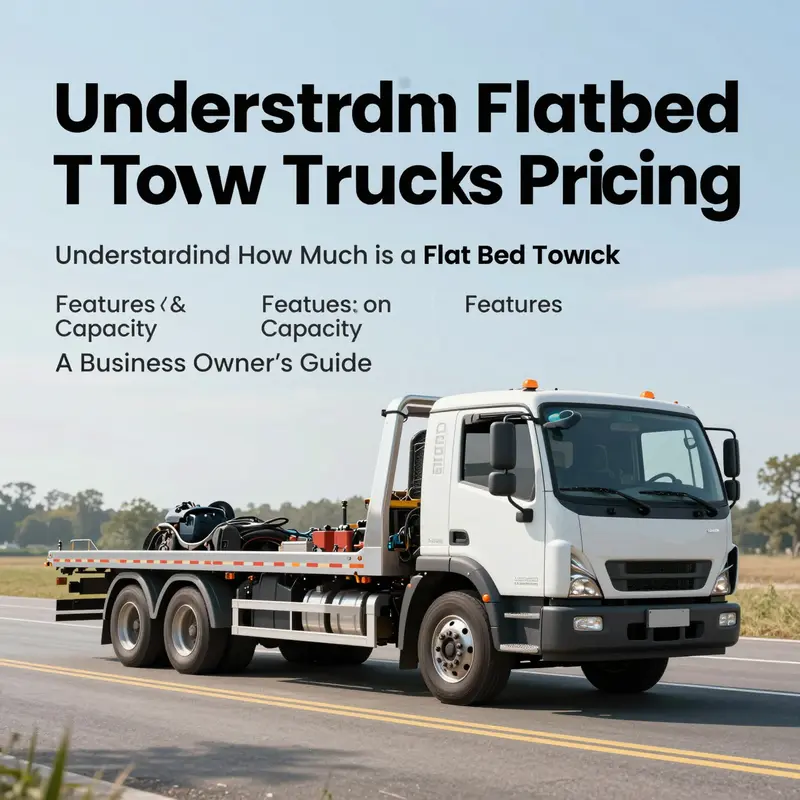
Pricing for a flatbed tow truck sits at the intersection of capability, durability, and the specific needs of a towing operation. When operators ask, “how much is a flat bed tow truck?” the answer is not a single number but a spectrum that widens as capacity increases and as the machine gains advanced features. The most immediate takeaway from current market observations is that price moves in predictable steps tied to weight class and added equipment. For example, 8- to 15-ton flatbed rollback configurations tend to sit in a range roughly between $15,500 and $29,000 per unit, depending on whether the operation leans toward a simpler, more rugged build or toward a cabin-and-control-intensive setup. This band reflects a baseline of heavy structural steel, hydraulic systems, and the reliability necessary for daily recovery work, but it also hints at a broader truth: bigger frames and heavier decks demand greater investment not just at the point of sale but across maintenance, parts, and downtime over the truck’s life.
Beyond the mid-range workhorse models, the market offers 3- to 5-ton flatbed tow trucks that cover the lighter end of the spectrum. Prices here can vary more widely, with ranges commonly cited from roughly $15,500 up to $52,900. The wide spread comes from variations in deck length, hydraulic lift capacity, and optional equipment such as stabilizers, more robust winches, or enhanced stabilization for wheel-lift configurations. The slide-in or slide-bed designs, favored for their stability and controlled loading when dealing with operable but stubborn vehicles, tend to command higher upfront costs than more basic, non-swing bed options. These designs can be easier on the vehicle under tow and immobilize the target vehicle with fewer tie-downs once it is aboard, but the initial investment and the longer learning curve for operators can tilt the total ownership cost higher in the early years.
Another layer of the pricing story unfolds with specific configurations aimed at larger or more specialized tasks. For instance, an 8-ton flatbed paired with a crane or rollback feature adds a layer of versatility but also a price premium. These pieces can range from the low $20,000s to the upper $30,000s, depending on crane capacity and the exact combination of hydraulics, reach, and reliability features. The addition of a crane is not merely a convenience; it expands the range of recoveries and loading scenarios a shop can handle, which translates into more revenue opportunities, but it also tightens the maintenance window and the skill requirements for operators.
There is also a niche yet important category: low-profile flatbeds designed for specialized transport tasks, such as moving smaller excavators or other machinery. These units often sit in a similar price neighborhood as mid-range trucks but can push toward the upper end—roughly $21,000 to $48,000 per unit—when the bed geometry, tilt angles, and overall streetability are tuned for demanding transport duties. And for fleets that require redundancy or bulk procurement, bulk orders for specific body styles, such as standardized bed-and-wrecker packages, can be priced in the low to mid-$20k range per unit, depending on the terms and the volume. In some cases, even larger or more specialized rigs—think long, 31-foot beds with ramps or dedicated excavator transport configurations—may climb toward $70,000 or more, highlighting how extreme specialization can radically alter the cost curve.
Navigating this price landscape requires attention to more than the sticker price. Shipping costs, warranties, after-sales service, and the availability of local or regional support can tilt the total cost of ownership by a meaningful margin. A seller offering a lower upfront price but limited warranty or scarce service options can end up costing more in downtime and parts replacements over the first few years of operation. Conversely, a higher upfront price that includes comprehensive warranties, robust training for operators, and a reliable network of service centers can produce lower long-run costs and improved uptime. The practical implication is that buyers should weigh the present price against projected maintenance intervals, parts availability, and the level of training required for safe and efficient operation. The balance between upfront investment and long-term reliability often determines which class of flatbed is the better economic choice for a given fleet.
The decision framework becomes even more nuanced when considering the intended use case. Routine roadside recoveries, dealership or fleet transport, and occasional heavy-duty recoveries call for different features and therefore different price incentives. A 3- to 5-ton model with a robust hydraulic system and a slide-bed mechanism might be ideal for frequent, smaller tows where loading speed and predictable positioning minimize risk. In contrast, operations that regularly handle heavier vehicles, off-road recoveries, or off-center loads may justify investing in higher capacity beds with enhanced balance, more precise controls, and premium hydraulics—even if that means paying a higher upfront price. In these scenarios, the long-term benefits—reduced vehicle wear, quicker turnover on jobs, and a broader service offering—often justify the larger investment.
Internal considerations also shape the final price tag. The choice between a used bed versus a new build, the availability of service warranties, and whether a unit arrives with pre-installed accessories or needs customization can all push the numbers up or down. Used beds can offer a compelling entry point for operators expanding a fleet or testing new capabilities, but they may require more immediate attention to wear, corrosion protection, and the quality of hydraulic seals. A new bed provides the certainty of performance and the latest safety features but comes at a higher initial price. For any buyer, a careful life-cycle cost assessment—factoring in maintenance, downtime, and the expected demand on the equipment—yields a clearer picture of total value rather than a singular purchase price.
To anchor this discussion in practical terms, imagine a small-to-midsize towing operation weighing between two paths: a mid-range, 8-ton bed with standard controls and a separate crane option, versus a lighter 3- to 5-ton slide-bed designed for speed and simplicity. The former offers broader recovery capabilities and a more robust range of services, with prices that typically land in the broader $22,000 to $38,800 band depending on configuration. The latter trades some recovery reach for a lower initial investment but demands tighter crew training and may restrict the scope of operations to certain vehicle classes. Either path can be a sound business decision when aligned with the fleet’s workload, geographic footprint, and service commitments—provided the operator accounts for the full spectrum of costs, from maintenance to training and the realities of on-road wear and tear.
For operators seeking local context while evaluating options, drawing on regional benchmarks can be helpful. For example, a nearby towing service’s web resources illustrate how local service networks support a broader fleet strategy, including maintenance and rapid response capabilities in the district and surrounding suburbs. See local service context here: local towing service in DC.
As you move from price lists to purchase decisions, one more resource worth keeping in view is a comprehensive industry guide that compiles price ranges, feature sets, and buying considerations in a single reference. It can help translate the numbers into a practical, forward-looking plan for fleet growth. For a broader, externally sourced synthesis of current pricing and feature tradeoffs, refer to the industry buying guide on flatbed tow trucks: https://www.truckinginfo.com/flatbed-tow-truck-prices-features-and-buying-guide/.
Final thoughts
Understanding the prices of flatbed tow trucks is vital for business owners looking to make informed investments. From market pricing dynamics to brand comparisons and individual cost factors, a comprehensive grasp of these elements enables owners to select the right vehicle that fits their operational needs and budget. As the market evolves, remaining updated on these price trends will ensure that your company’s towing capabilities remain competitive.