
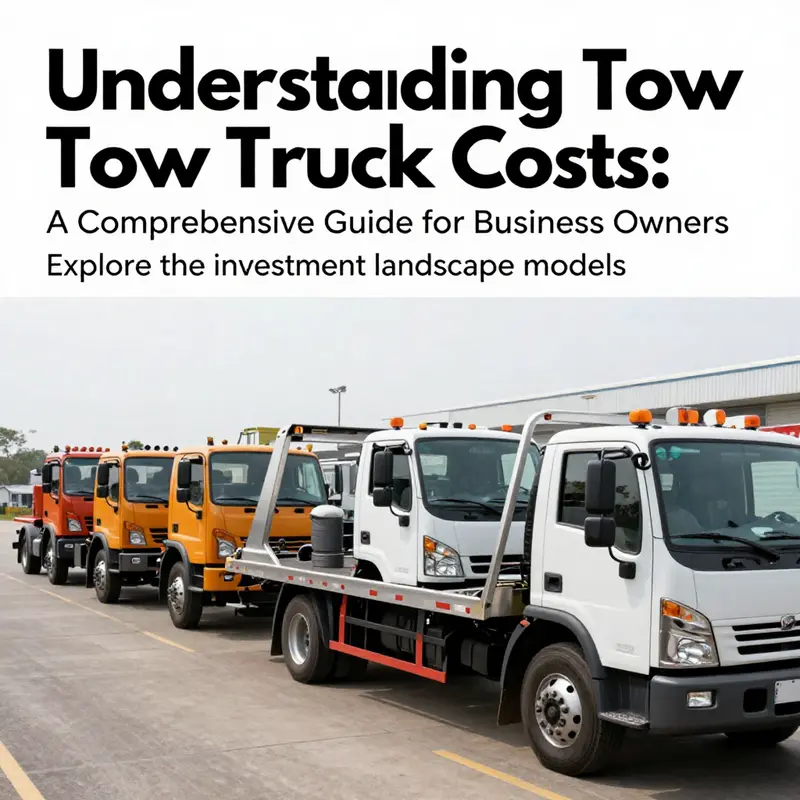
In the towing industry, understanding the cost of equipment is essential for business owners looking to invest wisely. Tow trucks vary significantly in price based on their type, size, features, and intended use. This article will provide an in-depth analysis of the costs and features of rotator tow trucks, renowned for their advanced capabilities, as well as a comparative overview of flatbed tow trucks, which are favored for their flexibility and safety. By delving into these two critical categories, business owners can make informed decisions tailored to their operational needs.
Rotator Tow Trucks: Weighing Power, Price, and the Art of Complex Vehicle Recovery
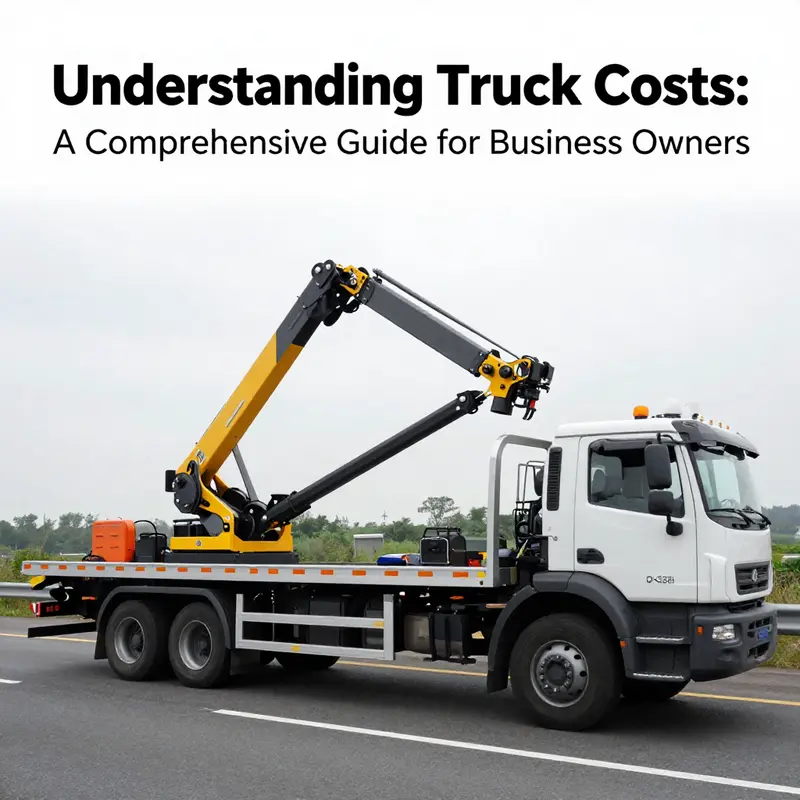
Rotator tow trucks stand at the apex of field recovery gear. They fuse a rotating crane with rugged chassis designed for difficult terrain, enabling precise work in awkward angles. The core feature is the rotator—the crane that not only lifts but swings and orients a vehicle in three dimensions. This capability makes it possible to recover overturned cars, trucks stuck in ditches, or equipment at remote worksites without resorting to high-risk rigging or manual extraction. In industrial settings, these machines become essential for emergency response, mining logistics, and infrastructure maintenance. They are not merely larger tow trucks; they are mobile work platforms that can reposition a loaded vehicle while maintaining stability through advanced hydraulics and counterweighting. When deployed correctly, they reduce scene time, lower risk to responders, and help preserve a vehicle’s structural integrity during a recovery. The result is a tool whose value extends beyond speed: it shapes how safely and efficiently complex recoveries are executed across unpredictable environments.
Cost analysis for rotator tow trucks follows a similar logic to other specialized heavy equipment. Price is driven by lifting capacity, reach, payload, drivetrain, and the sophistication of the hydraulic system. At the lower end of the market, new heavy‑duty rotators with a 20–25 ton capacity tend to sit in a broad band that reflects a balance of capability and cost. In many cases, a new rotator with this level of power can be found in the mid to upper six figures in US dollars, depending on the manufacturer and chosen options. Broader market snapshots show additional variation: the range for new configurations with larger booms and underlift features can run from roughly US$95,000 up to US$155,000. This band captures not only raw lifting power but also the integration of safety features, load-management electronics, and the durability of components designed for repeated, high-stress use in demanding environments. Where 50-ton configurations exist, the price footprint remains substantial, often aligning with the upper ends of these ranges when high-end configurations, automation, or specialized certifications are included. In practice, buyers confront a spectrum: mid-range rotators that deliver solid performance with 20–25 ton capacities are frequently negotiated within a $70,000–$120,000 window for new or lightly optioned builds, while more capable units push toward or beyond six figures as features accumulate.
The narrative shifts further when considering used-market opportunities. Pre-owned rotators, particularly those sourced from regions with robust vehicle maintenance standards and lower depreciation curves, can offer a compelling entry point. A 25-ton capacity rotator from a reputable used market can be found in a wide price band, roughly from about $23,500 to $98,000, with the exact figure tied to mileage, service history, refurbishment, and the condition of critical components such as the rotator mechanism, hydraulic pumps, and the undercarriage. For fleets operating in budget-constrained environments or for emergency services with irregular utilization, this price delta can be decisive. The caveat with used units is that maintenance cycles, spare parts availability, and operator training must be weighed more heavily, since the rotator’s performance hinges on tightly calibrated hydraulics and a precise rotation system. A neglected unit can incur more frequent repairs and longer downtime, which erodes the perceived savings.
Across both new and used options, a handful of features consistently push price higher and justify the premium to end users. The engine is typically diesel, valued for raw torque and reliability in challenging conditions. Compliance and safety certifications, such as CE marking, are often included to meet stringent standards for work on public roads or in critical infrastructure settings. The reach of the boom matters: some rotators offer extended reach that exceeds 11 meters, enabling operators to access vehicles buried under debris or perched on uneven terrain. Lifting capacity, expressed in tons or kilonewtons, usually spans from about 2 tons to 25 tons in mid-range models, with larger configurations designed for heavy-duty truck and industrial equipment recoveries. The price flags reflect not only lifting power but also build quality: the design of the operator cab, the sophistication of load-sensing systems, anti-rollback features, and the reliability of the rotary gear all contribute to long-term performance and maintenance costs. For many buyers, this translates into a practical decision: the upfront price must be weighed against expected workloads, terrain, and the cost of owning and operating the machine over its lifecycle.
Operational realities shape both the decision to acquire a rotator and the way it is deployed. The physical footprint of rotators is large, and their weight makes maneuverability a constant consideration in urban settings where space is at a premium. Training is not optional; safe operation rests on understanding load charts, boom angles, stabilizer deployment, and the interaction of hydraulics with uneven ground. Ongoing training compounds the total cost of ownership, but it is essential for reducing the risk of catastrophic lift failures. Fuel consumption tends to be higher than lighter towing equipment because the hydraulic systems and extended booms demand substantial power, especially during long or complex recoveries. Routine maintenance—fluid changes, winch service, hydraulic inspections, and engine checks—becomes a predictable expense that fleets budget for, given the critical nature of rotator work. When downtime occurs due to maintenance or component failures, the impact on response times and operations can be significant, especially in high-demand regions or during peak emergency periods.
For purchasers, the path to an informed decision lies beyond the sticker price. Rather than treating the rotator as a one-off capital purchase, the evaluation should start with a clear articulation of the expected workload: the typical vehicle mix, the terrains typically encountered, and the typical response time required by the organization or municipality. Then, translate those needs into a total cost of ownership that includes not only the acquisition price but also delivery, taxes, warranty terms, spare parts, and scheduled maintenance. Financial options exist in many markets, with some sellers offering installment plans or warranty extensions to soften the upfront burden. Yet even with financing, the buyer should insist on a full bill of materials and a transparent service ecosystem, including access to certified technicians and a reliable supply chain for parts. The alignment between capability and mission is what ultimately determines whether a rotator represents prudent investment. To situate this discussion within a regional frame and to appreciate how rotator capacity shapes local service availability, consider the local DC towing scene and its related service offerings, accessible here: towing-service-dc.
Finally, readers may wish to survey external listings to understand the breadth of rotator configurations on the market. Such listings illustrate how features, build quality, and after-sales support influence price and resale value, underscoring the importance of evaluating the broader support network, spare parts accessibility, and technician availability when planning a purchase. External resource: https://www.alibaba.com/showroom/rotator-tow-truck.html
In summary, rotator tow trucks occupy a unique corner of the market where capability, risk management, and total cost of ownership converge. The spectrum runs from affordable pre-owned units that deliver dependable performance to top-tier new machines with expansive booms and sophisticated load-management systems designed for the most demanding recoveries. The choice hinges on anticipated workload and site conditions, tempered by a realistic appraisal of training, maintenance, and reliability needs. As the chapter that follows will explore how flatbeds and lighter wreckers compare in lifecycle cost and practicality, the core takeaway remains: for frequent, high-stress recoveries in challenging environments, a rotator’s price tag is matched by a distinct and substantial operational advantage.
null
null
Final thoughts
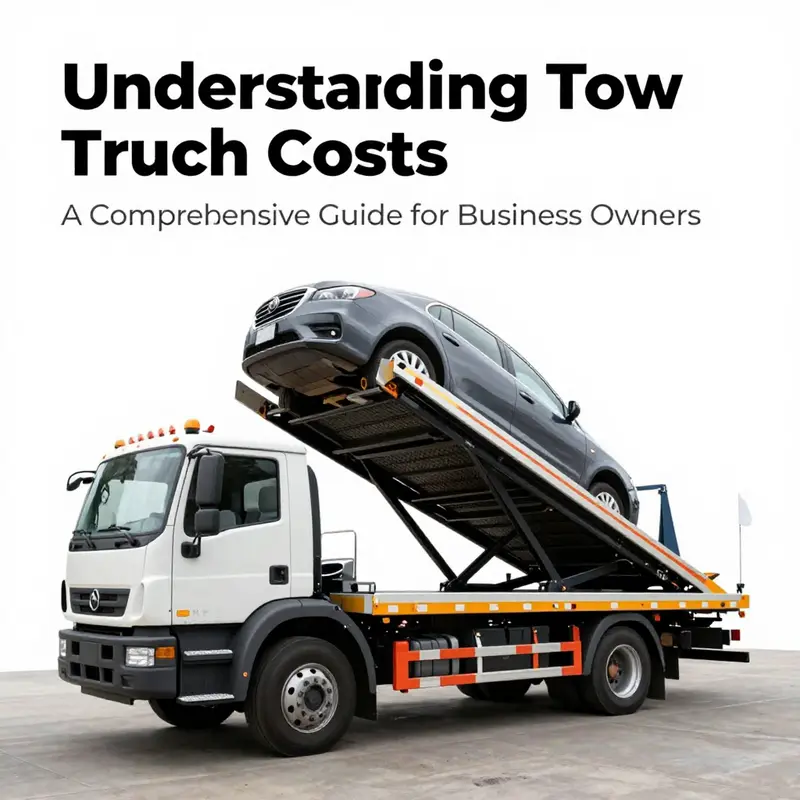
In conclusion, the costs associated with tow trucks vary greatly depending on the type and intended application. Rotator tow trucks, with their advanced features, cater to heavy-duty recovery scenarios and come with a significant investment price. In contrast, flatbed tow trucks offer versatility and safety at a more accessible price point for general towing needs. By understanding these distinctions, business owners can better align their equipment choices with their operational demands and budgetary considerations, ensuring a wise investment in their towing business.