
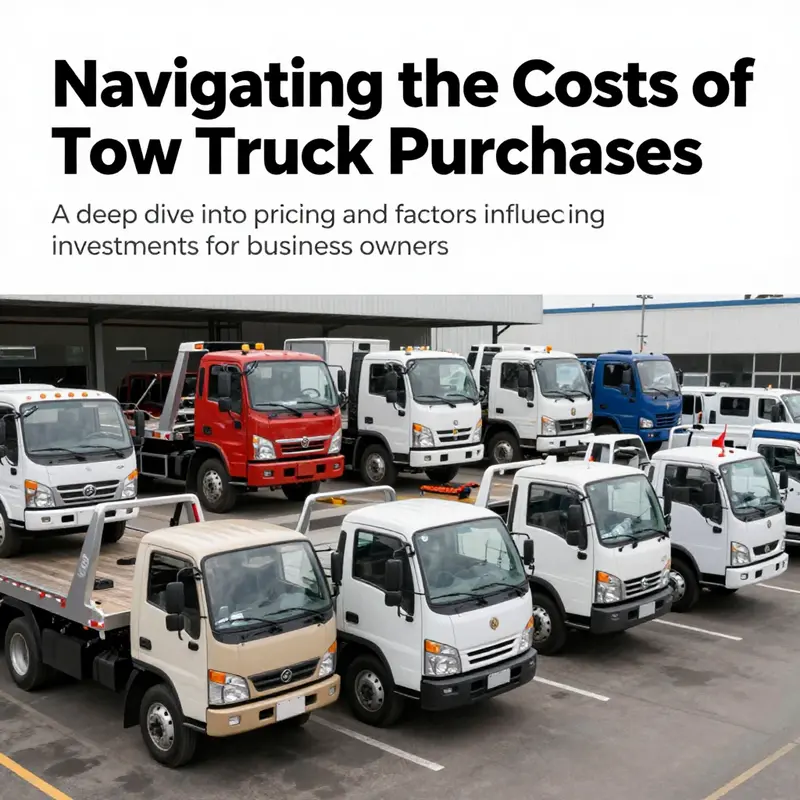
Purchasing a tow truck is a significant investment for business owners in the towing industry. Understanding the costs associated with new and used tow trucks is crucial for making an informed decision that aligns with both budget and operational needs. This article explores the financial landscape of tow truck acquisitions, breaking down the distinctions between new and used options, the key factors influencing pricing, and the latest market trends. Each chapter provides a comprehensive overview intended to help you navigate the often complex terrain of tow truck purchases, ensuring you find the right fit for your business’s demands.
From Upfront Price to Ongoing Costs: Decoding New vs Used Tow Trucks
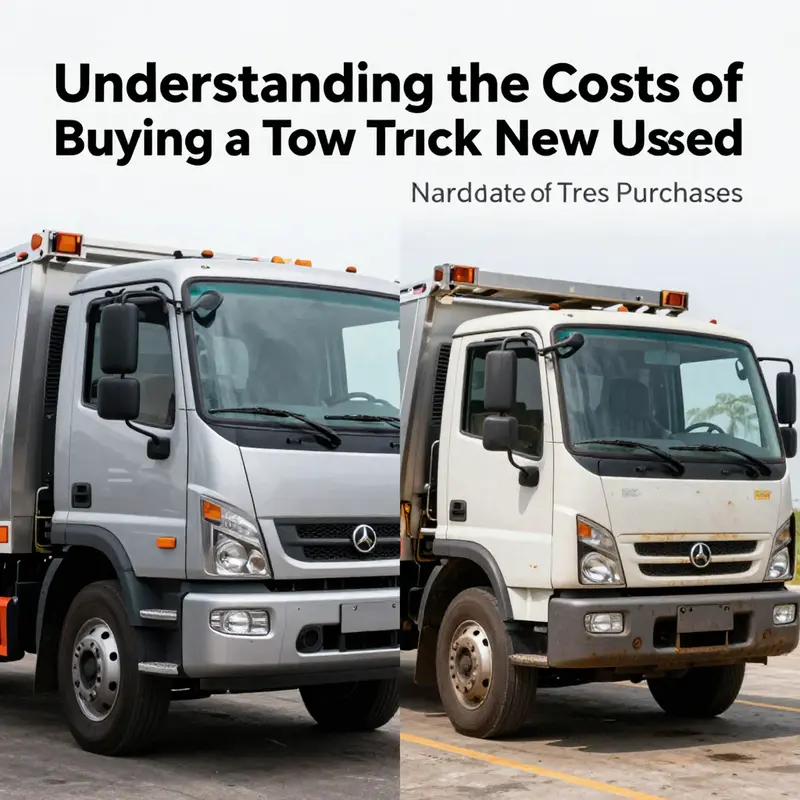
Deciding to buy a tow truck for a growing service requires more than choosing the vehicle with the flashiest chassis or the strongest winch. It demands a careful accounting of how the upfront price translates into a long-running operation. The chart of costs starts with the purchase price, but it quickly expands to a spectrum of ongoing expenses that can quietly reshape profitability. When you weigh new versus used, the pull of lower sticker prices on older units must be balanced against reliability, maintenance risk, and downtime. Across the market, price bands cluster around several broad categories, each with its own trade-offs in load capacity, equipment configuration, and long-term costs. In practical terms, the decision hinges on the type of towing you intend to perform, the distances you cover, and how critical uptime will be for your clients. Pricing data from current market observations show clear differences between new and used options, and those disparities echo across the range of tow truck styles, from basic flatbeds to specialized frame-style machines and high-low bed configurations. Understanding these layers helps you forecast not just the initial expenditure but the total cost of ownership over five, ten, or more years of service.
New tow trucks occupy the premium end of the market, but they offer a level of certainty that some operators value highly. Basic new models start at relatively modest price points, while more capable configurations, heavier loads, and advanced equipment push prices upward. In currency terms, many basic new models begin around 50,000 yuan (roughly $7,000 USD) and rise through standard flatbed configurations to the 100,000–200,000 yuan range (about $14,000–$28,000 USD) for widely used, entry-level setups. The landscape shifts when you consider designs intended for more complex recoveries. High-low bed tow trucks, designed to handle vehicles with low ground clearance or challenging access, commonly command prices in the 200,000–300,000 yuan zone (roughly $28,000–$42,000 USD). Among the most capable, frame-style or cradle designs— engineered to manage heavy or irregular loads—tend to inhabit the 300,000–500,000 yuan range (about $42,000–$70,000 USD). And for buyers aiming at premium brands or specialized import models, costs can climb well beyond 1 million yuan, reflecting advanced hydraulics, safety systems, and bespoke chassis engineering. It’s not unusual to see an example in the market where a domestic wrecker with a solid feature set sits around 180,000 yuan, while importing a larger, highly specialized machine can lift the price into the five-figure or even seven-figure yuan territory when duties and taxes are included.
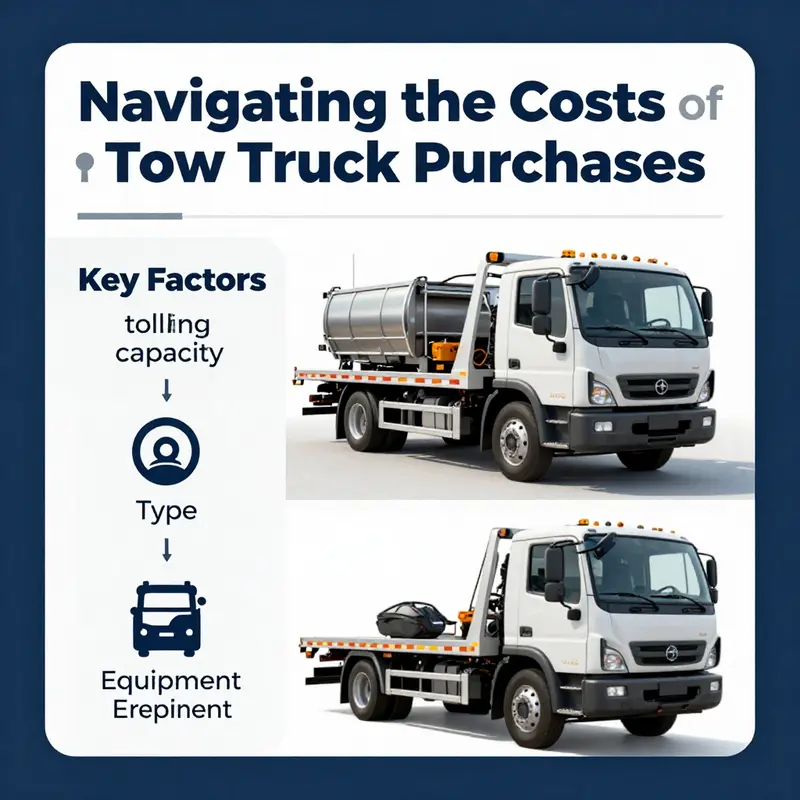
The factors that drive this price ceiling are consistent across markets: brand reputation and after-sales support, the structural heft of the chassis, the hydraulic and winching systems, and the degree of equipment customization. A new tow truck that leaves the showroom with a robust winch, a reliable hydraulic boom, and a full suite of safety features will, by design, carry a higher price than a more bare-bones unit. For operators who need maximum uptime and lower risk of unexpected repairs, the higher initial investment can be justified by reduced maintenance surprises and better residual value when it’s time to upgrade. The decision becomes a negotiation between short-term cash flow and long-term reliability.
Used tow trucks present a different economic equation. They offer a substantially lower upfront price, often 30% to 50% less than new models, which can make them attractive for startups or operators testing a new service line with limited initial capital. The general price range for used units tends to hover between 10,000 and 50,000 yuan (approximately $1,400–$7,000 USD). Within this band, the exact price tracks with age, mileage, customization, and overall condition. In practical terms, a light-duty enclosed van-type used tow truck might settle in around 30,000–60,000 yuan; mid-sized used cargo trucks usually fall in the 60,000–120,000 yuan range; and heavier, more specialized used rigs can exceed 150,000 yuan. The upside here is flexibility: for a fleet operator looking to cover a wider geographic area or to diversify services without tying up excessive capital, a used unit can accelerate market entry.
Yet, the savings on the purchase price come with cautions that deserve equal emphasis. Inspecting a used tow truck becomes a project in risk assessment. The most critical systems—the hydraulic setup, winch, chassis integrity, and the structural frame—should be evaluated with equal care to any other heavy-duty vehicle purchase. A well-documented maintenance history, verifiable mileage, and evidence of prior accidents or major repairs are essential clues about future reliability. Hidden costs may lurk in the shadows of used buys: immediate repairs to the hydraulic system, corroded frames, worn-out brakes, or failing electrical systems can erase the initial bargain quickly. Beyond the mechanicals, used trucks may lack updated safety features, spare parts access, or warranty protection that can appreciably lift ongoing operating costs. In short, the decision to buy used is often a balance sheet exercise: you trade a lower upfront price for higher risk and potentially greater maintenance needs, which translates into unpredictable downtime and cash outlays.
Between the two routes—new and used—some operators also weigh regional availability and practicalities of service delivery. Markets vary by region, and price dispersion can occur due to local demand, shipping costs, and the speed with which a dealer can provide parts and service. For readers curious about a particular city’s market, a localized reference such as the DC area can illustrate how price and turnover dynamics influence decisions in a real-world setting. See the DC market page for a closer look at how local supply shapes advertised prices and availability for tow trucks. This regional context helps you gauge whether a given price tier is a fleeting promotion or a structural market reality.
Beyond the sticker price, informed buyers should account for the ongoing costs that will accompany either path. New models carry higher initial costs, but they typically come with longer warranties, lower maintenance surprises, and greater energy efficiency from modern hydraulics and engines. Reliability reduces downtime, which is the currency of a service business, because a tow operation thrives on quick response times and consistent availability. Insurance is another fixed cost that scales with value, payload capacity, and usage. Fuel and maintenance dominate the operating ledger for any fleet, but the scale and frequency of replacement parts are influenced by whether the truck is a fresh build or a used chassis that has trekked more road miles. Equipment upgrades—additional winches, tie-downs, lighting, or safety gear—can add to both new and used purchases, but the incremental cost of upgrades is often more palatable when layered into new purchases rather than retrofitted onto aging units.
From a strategic standpoint, a practical approach is to map out a five-year depreciation and maintenance forecast before committing to a model. For some operators, a new standard flatbed in the 100,000–200,000 yuan range will provide a predictable maintenance cycle and minimal downtime, ultimately delivering a steadier return on investment. For others, a careful inspection of a thoroughly vetted used unit in the 60,000–120,000 yuan corridor might free up capital for additional units or coverage in more locations, provided the condition is solid and the history is transparent. The balance is rarely one-size-fits-all; it depends on your geographic footprint, the typical recoveries you perform, your response-time commitments, and the speed at which you can mobilize support with a spare part network.
As you navigate these choices, the process of pricing becomes a longer conversation about your business model. The initial cost is only one line item; the total cost of ownership is shaped by the cadence of repairs, the speed of parts delivery, and the risk you’re willing to accept on downtime. In this context, the conversation about new versus used shifts from a simple price comparison to a discussion about risk tolerance, uptime guarantees, and strategic capital allocation. For a grounded sense of how factors like load capacity, equipment configuration, and brand reputation drive price, ongoing diligence, including a thorough pre-purchase inspection and a clear evaluation of maintenance records, remains indispensable.
To connect this reasoning with regional realities, consider reviewing local market insights such as the DC tow-truck landscape, which can illuminate how demand and availability translate into pricing expectations in a specific market. This gives you a sense of how the numbers translate in a real-world setting beyond the glossy stickers of dealership showrooms. For broader context on how various factors affect towing costs beyond the purchase price, a trusted external resource offers a wider lens on the mechanical, financial, and operational determinants that shape what you’ll actually pay over time. External resource: https://www.towtruckguide.com/towing-cost-factors
null
null
Tow Truck Pricing Demystified: Reading Market Trends, Vehicle Types, and Long-Term Value
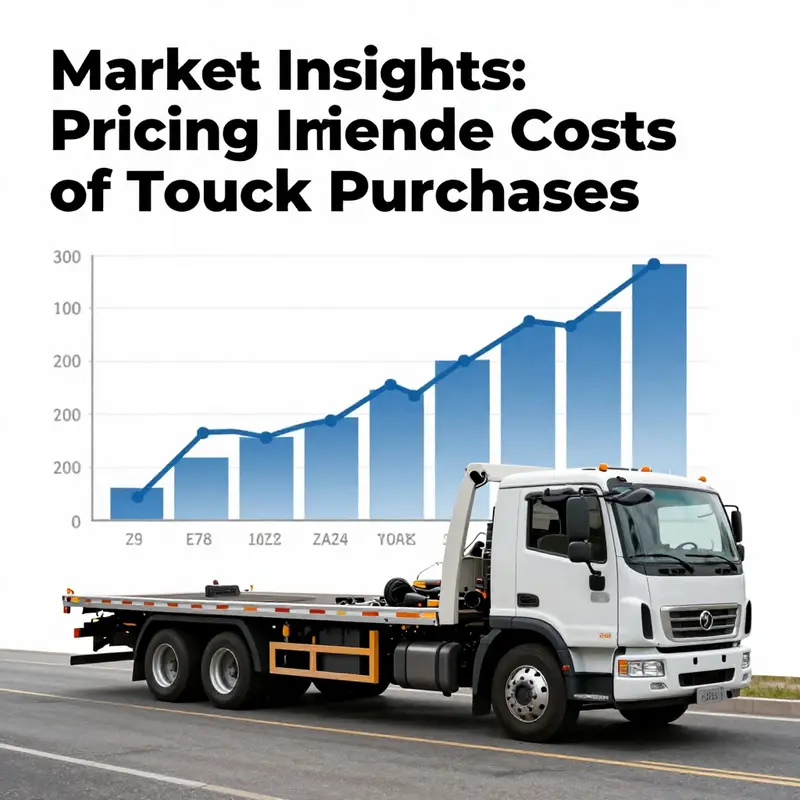
The price of a tow truck is not a single, fixed number; it is a window into how a market balances capacity, safety, and return on investment. Buyers today face a landscape where demand for roadside assistance, fleet management, and ever-improving recovery technology pushes prices upward in some segments while keeping others within reach for small operators. The market has shown steady growth, with the global tow truck segment moving from around USD 2.5 billion in 2023 toward roughly USD 4.3 billion by 2033. A compound annual growth rate of about 5.6 percent reflects a healthy pace of expansion, driven by more demand for on-call services and more sophisticated recovery equipment. Price, then, is less a single sticker price than a narrative about how a business envisions its capacity, its service window, and the durability of what it purchases.
Vehicle type is the most straightforward driver of pricing, but even that truth carries nuance. Tow trucks exist in several main configurations, each tuned to particular jobs and occupancy limits. Rollback tow trucks sit at a higher end of the initial investment due to their design and operational advantages. They tend to offer better safety, greater efficiency in loading and unloading, and enhanced operator ergonomics. These advantages translate into higher upfront costs, but many operators recoup the premium through faster job completion, reduced wear on the vehicle, and lower downtime. Flatbed tow trucks, by contrast, often present a more economical option in the short term while still delivering broad versatility. They are well-suited to vehicles with minor mechanical issues or to short-distance towing, where the flat loading surface reduces the risk of damage and broadens the range of vehicles that can be recovered.
Another common configuration is the underlift, which emphasizes compactness and urban maneuverability. Underlifts are typically the most affordable option among the main types and are popular for repossession and tight-city work where space is at a premium. They carry trade-offs in weight capacity and the breadth of vehicle types that can be handled, but for operators focused on dense markets or smaller fleets, they can offer a compelling balance of price and practicality. Price differences among these types extend beyond the chassis and mechanism; they reflect variations in safety systems, hydraulics, decking, and the intensity of daily use the truck is expected to withstand. In practical terms, buyers should expect that even within a given type, choices about equipment and build quality will push the price up or down. A rollback with advanced hydraulics, anti-skid decks, high-lumen LED lighting, and reinforced chassis will command a higher opening bid than a leaner, more basic setup. Conversely, a lean flatbed designed for shorter hauls and lower-duty cycles can be significantly less expensive while still meeting essential operational needs.
Turning to the numbers that frame the decision, the used market for tow trucks offers a broad range. For mid-range capacity models around 2 to 5 tons, a used flatbed commonly falls in the roughly $18,000 to $40,000 band. That range captures a spectrum from basic older units to relatively newer, well-maintained trucks with reasonable remaining life. On the other side, new tow trucks come with a wider spread, typically—from about $40,000 up to and beyond $100,000—depending on capacity, configuration, and the presence of premium features. A higher-torque winch, more robust hydraulic systems, enhanced safety features, and bigger payload capacities all push the price higher. This dynamic helps explain the wide differences that buyers encounter when they search the market: the same class of vehicle can yield a vastly different total investment, depending on what the buyer prioritizes during spec’ing and how aggressively they plan to scale operations.
Beyond the sticker price, owners must consider the broader economics of ownership. The total cost of ownership is shaped by fuel efficiency, maintenance costs, warranty protection, parts availability, and the strength of service networks. A truck that burns less fuel in routine deployments and has a more reliable hydraulic system can deliver lower operating costs over a multi-year horizon, even if its upfront price sits higher. Likewise, generous warranty terms and accessible service centers reduce the risk of costly downtime and expensive repairs. When operators compare options, they increasingly weigh the value of uptime against the initial outlay. A model that might seem more expensive up front can prove to be the more economical choice over a typical service life by delivering more consistent performance and fewer interruptions.
Regional variation also colors price expectations. Pricing is not uniform across markets or continents; it shifts with local demand, currency strength, and the presence of regional production hubs. In large manufacturing regions, competition among producers can yield more favorable terms for buyers, particularly when buyers are purchasing in bulk or establishing fleets. The global flow of components and assembled units means that some regions can offer better price-to-value ratios for different configurations. This is not merely a matter of price alone; it also includes the availability of after-sales support and the logistics of bringing a unit into service quickly after purchase. For buyers who operate across multiple locations, calculating the real-world cost of a truck means factoring in fuel, maintenance, and downtime for the same model in each locale.
As the market evolves, buyers increasingly balance upfront cost with strategic value. A lower initial price might appear attractive, but if the truck lacks the features, reliability, or service reach that keep a team on the road, that saving can quickly erode. In contrast, a higher-priced unit with proven durability, strong warranty coverage, and a robust service network can lower long-run costs by minimizing downtime and improving job completion rates. The decision often hinges on the intended use case—whether the operation prioritizes short-distance, frequent traction of minor issues, or long-haul recoveries with heavier loads and tougher terrains.
For readers who want a sense of local context, the price story also plays out in regional markets where service ecosystems influence value. Buyers should consider not just the purchase price but how easy it is to access parts, obtain timely repairs, and keep the fleet in compliance with safety standards. A nearby provider of towing services can be a helpful touchpoint for understanding typical utilization patterns, maintenance routines, and the kinds of features that deliver real-world benefits in a specific area. For a local perspective on service options, you can explore a nearby provider of towing service in Washington DC.
Market participants also look to the broader data when planning acquisitions. The industry has matured to a point where buyers frequently consult comparative analyses and long-term projections to gauge the best mix of price and performance. The latest industry analyses emphasize that buyers are increasingly prioritizing durability, uptime, and the quality of service networks over a narrow price comparison. In this light, the decision becomes a strategic investment rather than a one-off purchase. If you want to see how professionals weigh the trade-offs across different configurations, a structured comparison of rollback versus flatbed versus underlift options can be enlightening. A growing body of industry commentary highlights that the best choices often align with the operator’s geographic footprint, typical call types, and the speed with which a technician can reach a site when needed.
Ultimately, price is a doorway to value. The cost to buy a tow truck reflects how a fleet plans to serve customers today and adapt to tomorrow’s demands. Buyers who map out their daily routes, anticipated load profiles, and maintenance regimes tend to arrive at a configuration that balances upfront affordability with long-term reliability. The market will continue to move as technology and roadside services evolve, but the core question remains clear: which configuration, with which level of capability, will deliver the greatest uptime and the most consistent returns over the asset’s life? For readers seeking a model-by-model snapshot and the latest market chatter, this is a topic that benefits from ongoing reference to industry analyses and hands-on user experiences. For a broader, model-level discovery, see this external resource: Top 10 Best Rollback Tow Trucks To Buy For Strong Reliable Towing.
Final thoughts
Understanding the costs involved in purchasing a tow truck is essential for business owners in the towing industry. Whether you opt for a new model or a used truck, various factors such as towing capacity, truck type, condition, and market demand will significantly influence your final costs. By staying informed about pricing trends and key purchasing factors, you can make a more strategic decision that enhances your business operations, ensuring that your investment aligns with your operational goals. Equip yourself with knowledge and make informed purchase decisions in your tow truck journey.