
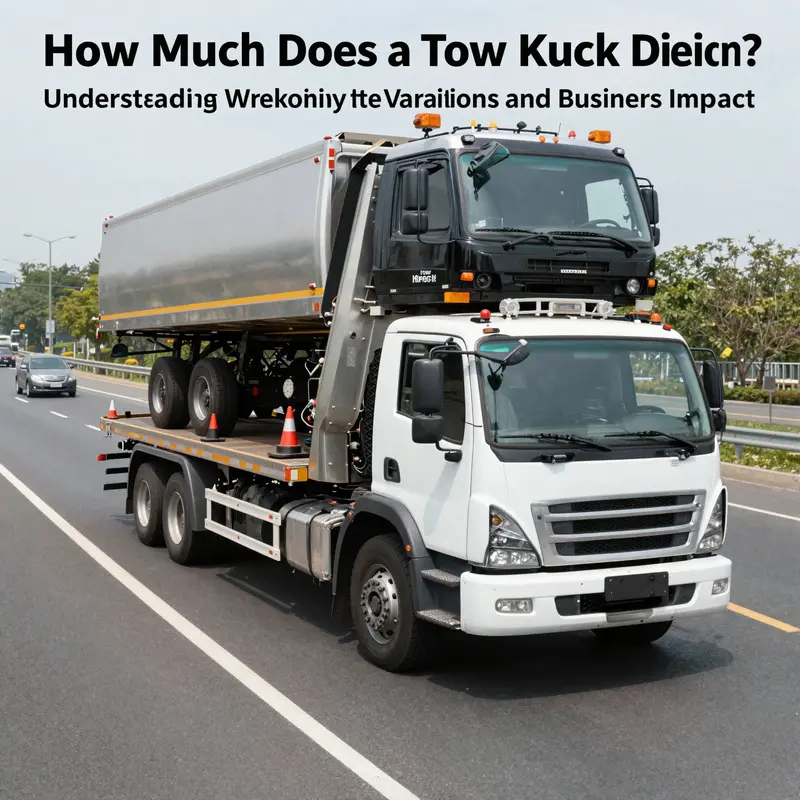
Tow trucks are essential assets for businesses involved in vehicle recovery, roadside assistance, and heavy-duty towing services. Understanding the weight of these trucks is crucial, as it influences operational logistics, compliance with transportation regulations, and equipment selection. This knowledge also impacts fuel efficiency, maneuverability, and the types of vehicles that can be safely towed. This article explores tow truck weight in two key dimensions: first, by examining the range of weights from light-duty to heavy-duty variations, and second, by analyzing specific weight specifications alongside their practical implications for business operations. These chapters provide a foundational understanding for business owners aiming to invest wisely and optimize their fleets.
From Light Duty to Heavy Duty: The Real Weight Behind Tow Trucks and What It Means on the Road
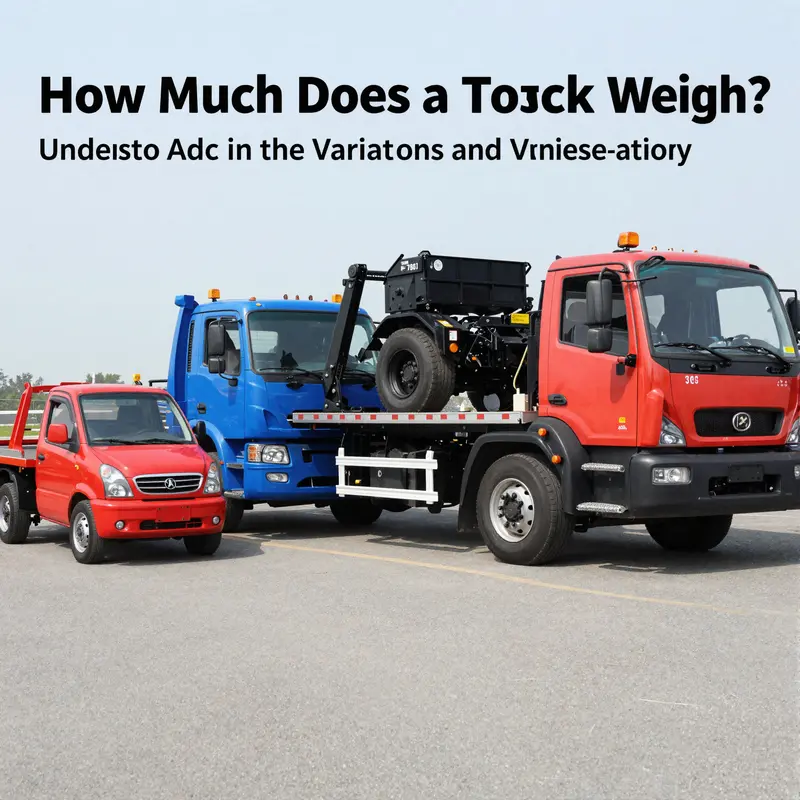
Weight is not a single figure but a spectrum that grows with size, purpose, and the engineering that backs a tow truck’s job. When people ask how much a tow truck weighs, they are really asking about a family of machines, each tuned for different kinds of recovery work. At the light end, a flatbed designed for cars and small pickups carries its own mass with little room for extra cargo. In practical terms, a representative light- to medium-duty flatbed recovery truck has a curb weight around 5,500 kilograms. Curb weight, the truck’s own mass without passengers or cargo, gives the baseline from which every recovery operation starts. This line matters because it frames how close the vehicle can get to its legal weight limits when it is loaded with damaged vehicles, equipment, and tools. It also hints at how the truck handles on the highway, how much fuel it consumes, and how stable it feels in crosswinds or at high speeds. The heft of a light-duty unit can be a practical advantage, enabling steady performance without sacrificing maneuverability in urban streets where many roadside assists occur.
As the automation of towing tasks grows more capable and the need to recover heavier cars, SUVs, and light trucks increases, manufacturers offer progressively stronger configurations. A mid-range example in this class has a curb weight near 5,495 kilograms. This figure isn’t just a number on a spec sheet; it sits at the core of a decision about what kind of incidents the truck is built to handle, what roads it can safely travel on, and how much payload it can legally carry without exceeding its GVWR, or gross vehicle weight rating. The GVWR is the capstone of the truck’s design. It is the maximum combined weight of the vehicle itself plus passengers, cargo, and the recovery gear loaded on board. For a light- to medium-duty unit, the GVWR is usually close to the curb weight plus a sensible margin for tools and the first tow. In practice, those trucks are optimized for frequent runs that require speed, agility, and economical operation rather than the brute mass needed to pull very large trailers or exceptionally oversized loads.
Move up a notch in the weight ladder, and the recovery spectrum starts to tilt toward heavier tasks. The middle ground is occupied by a class commonly used for more demanding recoveries, including larger SUVs, vans, and light trucks with significant damage or immobilization. In this tier, a typical curb weight sits around 6,500 kilograms. This additional mass often comes with upgraded chassis components, a more robust winch system, and a reinforced framing to support heavier loads and longer reach without compromising safety. The added mass translates to a stiffer, more composed ride under load, and it better preserves control when extracting vehicles from awkward positions or uneven surfaces. The boundary here is not a single threshold but a gradual shift in capabilities: more weight means higher potential tow capacities, but also more energy use, longer stopping distances, and the need for careful route planning to avoid weight-restricted roads.
For the heaviest tasks, the road calls for truly heavy-duty wrecker configurations. These machines are built to tackle large, immobilized vehicles or equipment that would challenge lighter units. The curation of a heavy-duty model yields a curb weight well above the 6,000-kilogram mark, and some robust 50-ton-class recovery configurations push the boundaries further still. In one documented example, the curb weight of a heavy 50-ton road recovery vehicle sits at about 6,555 kilograms, while the total vehicle weight—accounting for fuel, crew, and additional recovery gear—can reach up to roughly 9,400 kilograms. Although this particular entry emphasizes a high-capacity recovery setup, the key takeaway is clear: the more mass the truck carries by design, the greater its potential to control heavy loads, the sturdier its winch and stabilizing systems, and the more carefully its operation must be planned. These heavy-duty machines embody a balance between weight on the road and the leverage required to move or reset extremely heavy failures. They remind us that a tow truck’s mass is not simply a burden but a deliberate instrument of capability.
The range from about 5,500 kilograms to just under 10,000 kilograms speaks to a broader point: different configurations bring different strengths, and the weight differences reflect the specialized engineering each configuration embodies. Many heavy-duty units feature 6×4 or 8×4 chassis arrangements, multiple axles, and extended wheelbases to distribute mass and enhance stability when lifting or towing. Some even incorporate dimensions in the realm of nearly ten meters in length, with broad, sturdy frames designed to withstand the torque and leverage required for large-scale recoveries. The practical effect on the road is tangible. Heavier trucks demand more braking power, more careful speed management on declines, and a careful eye on axle load distribution. They also justify higher maintenance costs, longer intervals between tire changes, and, in some jurisdictions, different licensing or roadway restrictions.
A crucial distinction that often goes unnoticed outside workshop floors is the relationship between curb weight and towing capacity. The vehicle’s stated capability is a function of its powertrain, braking, frame strength, and suspension geometry, not simply its own mass. In many cases, heavy-duty configurations can tow loads that far exceed the mass of the truck itself because their design optimizes torque, winching capacity, and stabilizing geometry. The same machine that weighs several tons may be engineered to pull tens of tons, making it essential to understand both the truck’s own weight and the weight it is allowed to carry or tow under applicable laws and manufacturer specifications. When planning a recovery operation, operators weigh not just the target vehicle but the tow truck’s own mass and the distribution of that mass across axles and tires. Any miscalculation can affect steering, braking, and tire longevity, especially in adverse driving conditions or on uneven surfaces.
For readers considering the practicalities of selecting a tow truck, the weight data points illuminate how a seemingly small choice—whether to opt for a lighter, more nimble unit or a heavy-duty workhorse—sets a trajectory for service scope, scheduling, and safety protocol. It is not merely about moving from point A to point B; it is about ensuring that each movement is backed by the right machine mass, properly balanced and within legal limits. When you are choosing a service for a particular scenario, you want a vehicle whose weight matches the expected load, terrain, and incident complexity. In many regions, local operators provide nearby options that can be checked for availability and suitability. For a nearby option, see the local towing service DC.
External reference for further reading on heavy-duty recovery vehicle weights can be found here: https://www.alibaba.com/product-detail/Sinotruk-HOWO-50t-Road-Recovery-Vehicle-Tow_1600788255813.html?src=1111&scm=1007.14307.147921.0&search=1&spm=a2700.100112.147921.0&isg=KjYqZfFhQoKzRlCJZvMxUcDpWkT5L5aH
Mass on the Move: Unpacking Tow Truck Weights, Capacities, and Real-World Use
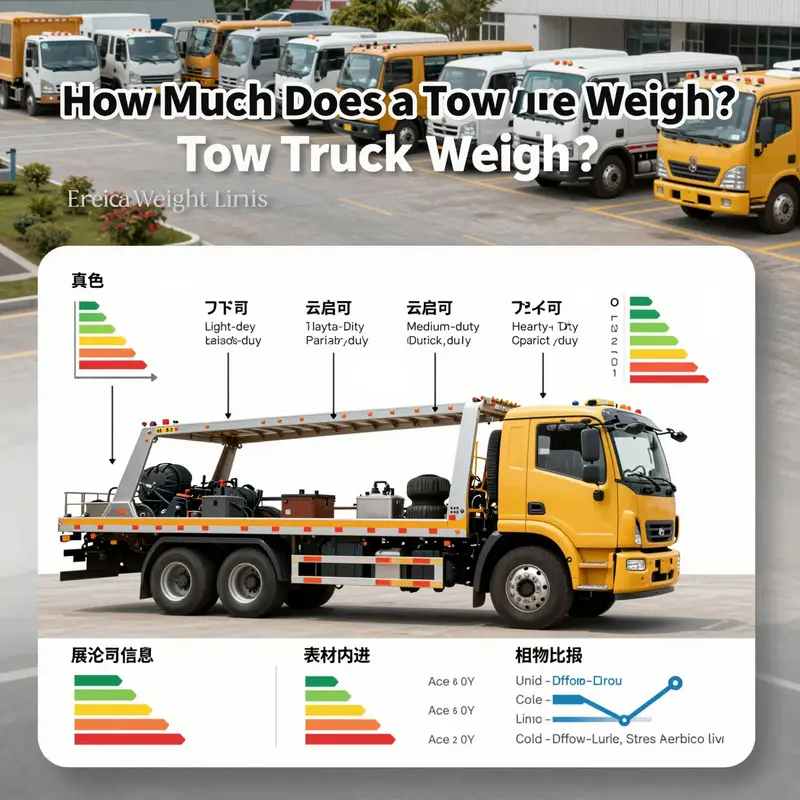
Weight is more than a number on a spec sheet. For tow trucks, it serves as a practical measure that shapes what the truck can recover, where it can operate, and how efficiently it can move through the world of roads, incidents, and fleets. The weight of a tow truck is not a single static value but a spectrum that shifts with design choices, purpose, and the configuration of a vehicle in service. At its core, weight influences towing capacity, maneuverability, fuel economy, and the legal framework that governs what a crew can legally attempt and how far they can reach. A chapter devoted to this topic cannot pretend weight is irrelevant to the task of moving a car from a wreck site or a repossessed asset from a distant location. It is, in fact, the hinge on which many decisions turn, from the size of the job and the equipment carried to the trade-offs a fleet manager must weigh each day.
Tow trucks come in several families, and each family carries a different mass profile that mirrors its intended workload. Flatbed tow trucks, sometimes called rollback units, are commonly used for vehicles with low ground clearance or all-wheel-drive systems that could be damaged by contact with a traditional tow hook. In practice, these flatbeds carry a curb weight that sits in a broad band, generally around 4,500 to 11,300 kg (roughly 10,000 to 25,000 pounds). The bed itself, a hydraulically operated platform, adds to the weight when deployed but is essential for secure transport, because it keeps the vehicle off the ground and prevents contact with sensitive undercarriage components during movement. A lighter flatbed may be nimble enough for urban recoveries, while a heavier flatbed can haul higher-value vehicles or operate with more equipment on board.
Rotator tow trucks represent the other end of the practical weight spectrum. Known for their rotating booms and powerful hydraulics, rotators are designed for complex recoveries where vehicles may be overturned, partially submerged, or situated in awkward angles. The very systems that enable this versatility—heavy-duty booms, multiple hydraulic circuits, and robust chassis—drive up mass. In the field, rotators typically weigh from about 25,000 to 60,000 pounds (11,300 to 27,200 kg). This heft translates into impressive lifting and stabilizing capabilities, but it also means longer setup times, higher fuel consumption, and greater wear on infrastructure and roads. The scale of a rotator reflects its purpose: speed and reach on the highway, and the ability to manage high-stakes, technical recoveries that smaller units cannot safely handle.
Beyond these two archetypes, the literature and practitioner notes converge on a key theme: the weight of a tow truck is highly sensitive to configuration. A given chassis may be light enough to move quickly through city traffic, yet when equipped with a heavy-duty winch, a large bed, and multiple auxiliary tools, its curb weight shifts upward. Conversely, a compact, purpose-built recovery unit may emphasize lightweight design to preserve maneuverability, while offering a tuned set of recovery features that suit its niche. In practice, operators look at weight in terms of both curb weight and gross vehicle weight rating, or GVWR, a figure that caps the total allowable mass of vehicle and payload. GVWR matters because it directly governs what loads a particular truck can tow or recover, and it ties into licensing, insurance, operator training, and route planning. The legal and logistical implications of weight are not abstract; they shape every decision from insurance premiums to the routes a crew can take and the times of day a job is attempted.
Numbers alone can be misleading if not placed in context. Market data often presents a spectrum rather than a single mandate. For example, some industry summaries describe light- to medium-duty flatbeds in the range of roughly 4,500 to 11,300 kilograms, reflecting the variety of chassis, bed lengths, and hydraulic systems available to support different kinds of recoveries. Rotators, by contrast, sit higher in the weight scale due to their complexity, often described in the 11,300 to 27,200 kilogram range. Other sources give different but complementary perspectives, noting that a 5-ton to 8-ton winch tow truck, common in urban recovery and medium-duty tasks, generally falls in the 15,000 to 25,000-pound band (about 7,000 to 11,300 kilograms). A heavier, 40-ton class wrecker is capable of exceeding 60,000 pounds (more than 27,200 kilograms), reflecting industrial-scale recoveries and specialized operations that demand longer setup times and careful handling. The takeaway is not that weights are inconsistent, but that they represent a continuum shaped by design decisions, not a single universal figure. The exact weight of any given tow truck depends on its make, model, and the precise configuration chosen by the operator.
This spectrum has practical consequences. Heavier trucks can deliver greater towing and recovery capacity, especially when equipped with advanced hydraulics, stronger winches, and reinforced frames. They also carry higher purchase prices, often ranging from tens of thousands to hundreds of thousands of dollars, and impose higher maintenance costs. Such trucks demand more robust infrastructure—roads, bridges, and loading areas must be up to the task to avoid damage during towing operations. Operators must also navigate a broader regulatory framework, including GVWR limits, axle load constraints, and licensing requirements that govern who can drive what and where. In practice, fleet managers perform a balancing act: they weigh the expected job mix, typical call volume, urban versus rural coverage, and safety considerations against the cost of ownership and the risk profile of heavier equipment.
The civilian and municipal landscape further informs weight decisions. For urban deployments, smaller and mid-range units often prove more effective due to tighter streets and the need for rapid response. In contrast, highway assistance, heavy wreck removal, or large-vehicle repossession calls tend to favor heavier rotators or heavy-duty wreckers that can operate with fewer preconditions and handle more complex recoveries. In every case, a clear understanding of weight and capacity is essential for planning routes, assigning the right equipment, and ensuring that crews can reach the scene without compromising safety or violating road-use rules. A practical approach for operators is to align the fleet with the most common job types, while keeping a few heavier units available for the exceptions that stretch resources and demand specialized equipment.
For readers who want to connect these concepts to local, real-world service options, consider the availability of nearby providers who can illustrate how weight translates into capability in context. See the DC-focused towing service page for a concrete example of how urban requirements shape fleet composition and response strategies. This kind of local reference helps translate abstract weight figures into the practical realities of emergency response, accident recovery, and everyday road assistance. In the end, knowing the weight of a tow truck is not just about the vehicle itself; it is about understanding how mass interacts with capacity, safety, and the geography of the roads it is built to traverse.
External reference for market context: https://www.towtrucks.com/new-tow-truck-prices-overview-key-features-specifications-and-industrial-applications-explained/
Final thoughts
Understanding how much a tow truck weighs is foundational for business owners who depend on these vehicles for efficient and compliant operations. From the relatively lighter light-duty models designed for small cars to the massive heavy-duty wreckers built for the toughest jobs, weight influences everything from service capability to regulatory adherence and cost management. By grasping the range of weights and their related specifications, business owners can make informed decisions about the right vehicles to match their service demands, optimize fleet functionality, reduce operational risks, and ultimately improve profitability. Weight is not just a number but a vital factor that shapes the success and safety of towing operations.