
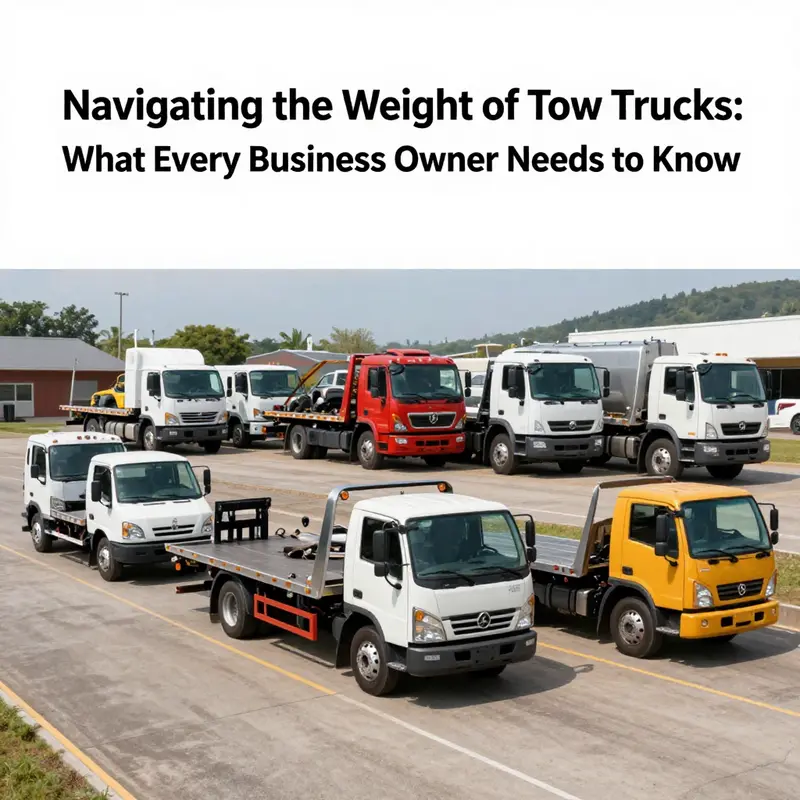
Understanding the weight of tow trucks is crucial for business owners involved in transportation, towing, and roadside assistance. The weight of a tow truck can significantly affect its operational limits, fuel efficiency, and payload capacities, which in turn can impact your bottom line. This article will provide detailed insights into the various categories of tow trucks: light-duty, heavy-duty, and flatbed models. You’ll learn how each category’s weight affects performance and suitability for specific tasks, ensuring that you can make informed decisions for your fleet and business operations.
null
null
Weight on the Road: Decoding How Much Tow Trucks Weigh and Why It Shapes Every Recovery
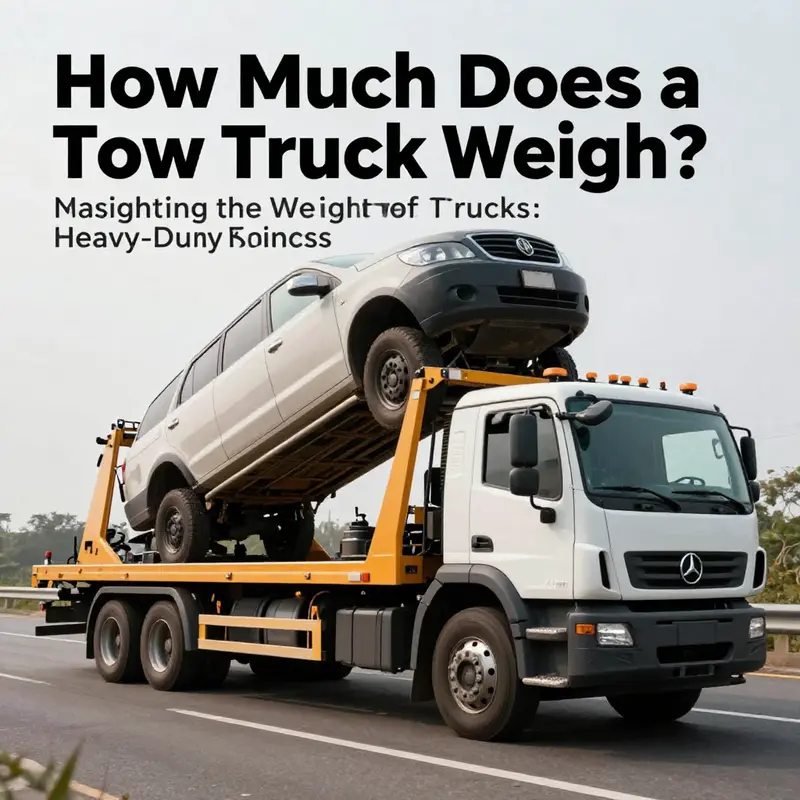
The question of how much a tow truck weighs invites a deeper look than a single number on a spec sheet. Weight is a practical consequence of purpose, design, and the physics of lifting and hauling heavy loads. Tow trucks range from compact, urban-recovery variants to machines large enough to lift and tow tens of tons on busy highways. The weight people talk about most often is the curb weight—the truck’s mass when empty and ready to roll—and the gross vehicle weight, or GVW, which is the maximum safe mass with fuel, crew, equipment, and any payload. Understanding how these weights come to be helps fleets stay within legal limits and drivers manage performance, braking, and tire wear in real-world conditions. It also clarifies why two trucks of the same general size can feel entirely different on the road once their specialized attachments and loads are in play.
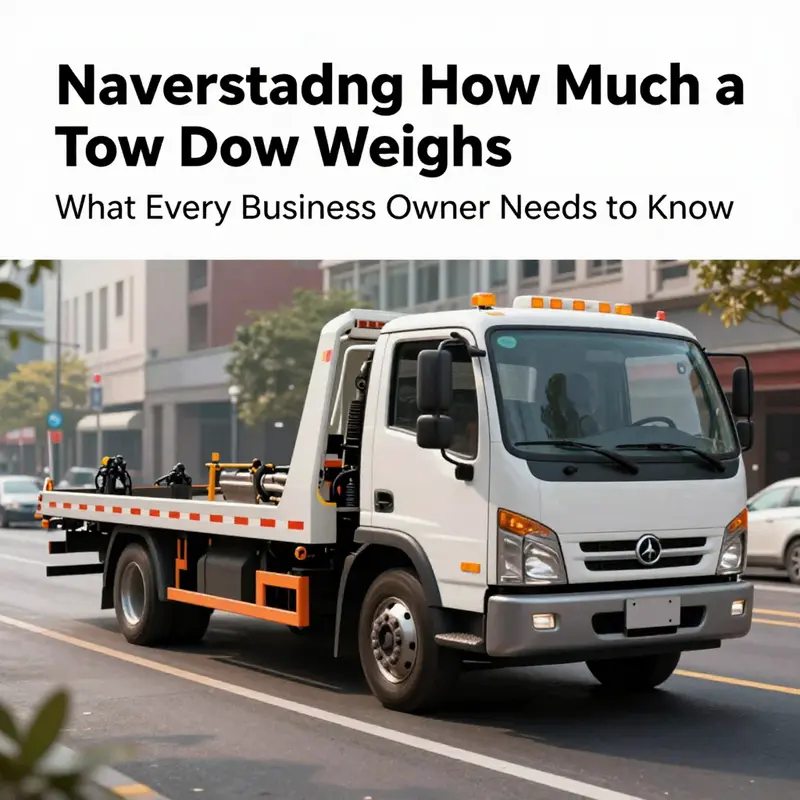
Light-duty tow trucks sit at the lean end of the spectrum. They are built for speed and maneuverability in congested streets and tight spaces. In typical configurations, they begin with a curb weight around 4,800 kilograms and a GVW near 7,800 kilograms. This balance lets them carry a modest payload while preserving a strong power-to-weight ratio ideal for urban recoveries, small-car swaps, and operations in cramped alleys. The chassis is compact, the engine is economical, and the hydraulic systems are sized to handle frequent short lifts without imposing excessive mass that would hinder acceleration or braking. The practical effect is straightforward: these units can slip through traffic, reach incidents quickly, and stop with a margin that keeps city streets relatively safe for other drivers. The weight policy here is less about raw lifting power and more about reliability, agility, and predictable handling under varying urban conditions.
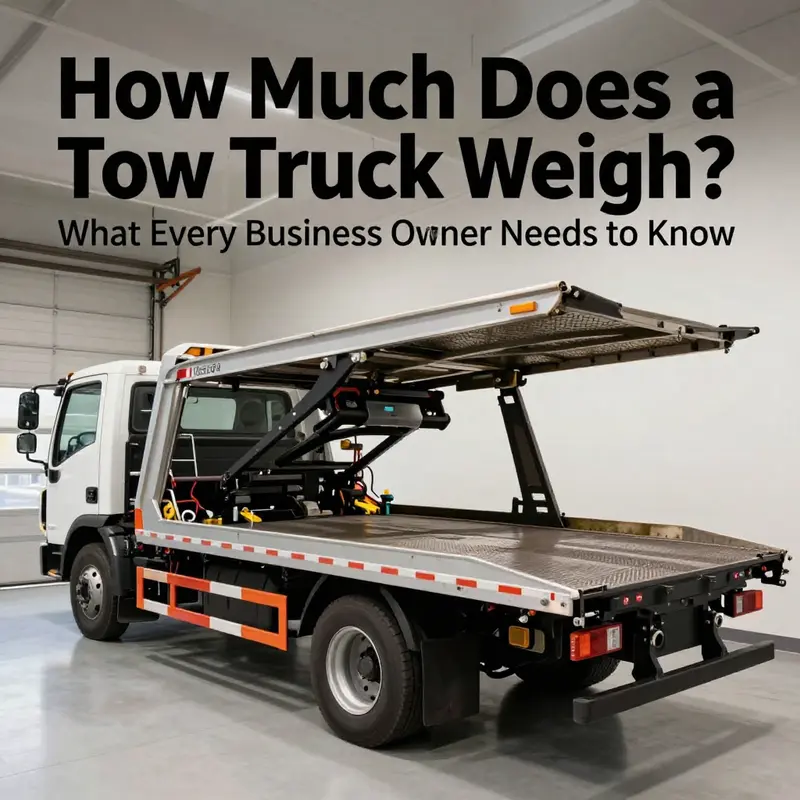
Flatbed or rollback tow trucks introduce a different dimension of weight. The bed and tilting mechanism require substantial structural mass and hydraulics, on top of the base chassis. A typical light-duty flatbed may share a curb weight around 4,800 kilograms with the standard platform used for other light-duty recoveries, but the actual loaded weight climbs quickly as cargo sits on the bed. A common flatbed’s carrying capacity can reach roughly 4,000 kilograms, depending on the model and bed engineering. When a vehicle is loaded onto the bed, the total weight can push past 12,000 kilograms, altering handling characteristics, braking performance, and fuel consumption. This distinction—between the truck’s empty mass and the combined weight of truck, bed, winches, tools, and the vehicle being towed—illustrates why weight management is central to a successful recovery. The bed itself adds not just capacity but structural mass that translates into steadier operation when lifting and securing a vehicle on a slope or uneven pavement. In practice, the difference between a nimble urban unit and a bed-equipped unit is a matter of who is asked to do more with less mass and more precision.
Beyond the light end, heavy-duty tow trucks are designed to handle large vehicles, buses, or equipment across major roadways. These machines may be built to tow 20, 30, 60 tons or more, and the trucks themselves are significantly heavier as a result. The explicit weight of such a heavy-duty wrecker is not always published in a uniform way, but the trend is clear: as lifting capacity rises, the curb weight climbs well past the 10,000-kilogram mark and often into ranges that require additional axles, heavier frames, and more powerful hydraulics. The added mass contributes to stability when lifting heavy loads, but it also demands more from the braking system, steering geometry, and tires. In essence, the weight of these machines is a deliberate trade-off: extra capacity requires more steel, more hydraulics, and more sophisticated control systems, all of which push the empty weight higher and the gross weight higher still when loaded. This heavier class is designed to maximize lift and stabilize the rig under the heaviest recoveries, with a footprint that can span multiple axles and longer wheelbases.
Weight is not a single number but a balance of several factors. The bed length, the number of axles, and the distribution of weight across those axles determine stable operation. A two-axle heavy-duty chassis has different load paths than a tri-axle design used for higher capacities. The bed, the winch, the stabilizers, and the hydraulic pump all contribute mass. These components influence not only the zero-load weight but also how the truck handles turning, braking, and acceleration when carrying a heavy tow. Fleet managers consider axle loads and the vehicle’s GVWR, ensuring that the operator’s workload remains within the vehicle’s intended performance envelope. They also assess service life, tire pressure, and fuel economy when planning routine operations in a busy district or across a highway corridor. The result is a practical framework in which weight, design, and duty cycle align with safety standards and local weight laws. In practice, the heavier the machine, the more attention is paid to route planning, permit management, and the potential need for specialized access roads or staging areas. Some jurisdictions enforce axle-weight limits and GVWR checks at scales; overweight penalties can disrupt operations and escalate costs, reinforcing the need to match vehicle capability to the task.
Weight is the through-line of this chapter because it governs every choice a fleet makes. The light end stays nimble in the urban environment, the flatbed adds workload and structural mass, and the heavy end carries not just weight but responsibility—towings that may involve complex stabilization, high-load lifts, and careful coordination with traffic. The layered design choices—how many axles, how long the bed, how robust the hydraulic system—shape both the empty mass and the mass that follows on every job. In real terms, if you are coordinating a fleet or planning a recovery, you will want to consult the weight specifications of the exact model and consider how you intend to deploy it. Even within the same class, two trucks can differ substantially in their curb weight and GVWR due to differences in chassis, cab configuration, and the precise assortment of attachments and equipment. The numbers provide a baseline, but the real-world weight is a reflection of purpose, geography, and operational needs. For anyone curious about how these principles apply to a city service, you can explore city-specific towing operations at the Washington DC page: tow-truck-service-washington-dc.
External resource: https://www.fotontruck.com/
null
null
Final thoughts
Understanding how much different tow trucks weigh is vital not only for selecting the right vehicle for your needs but also for optimizing your operations. Light-duty models are ideal for nimble urban recovery, while heavy-duty models excel in heavy hauling and challenging environments. Flatbed trucks serve as versatile platforms for transporting various vehicle types. By aligning your towing fleet with the correct models based on their weight and capabilities, business owners can boost efficiency, ensure safety, and ultimately enhance service delivery.