
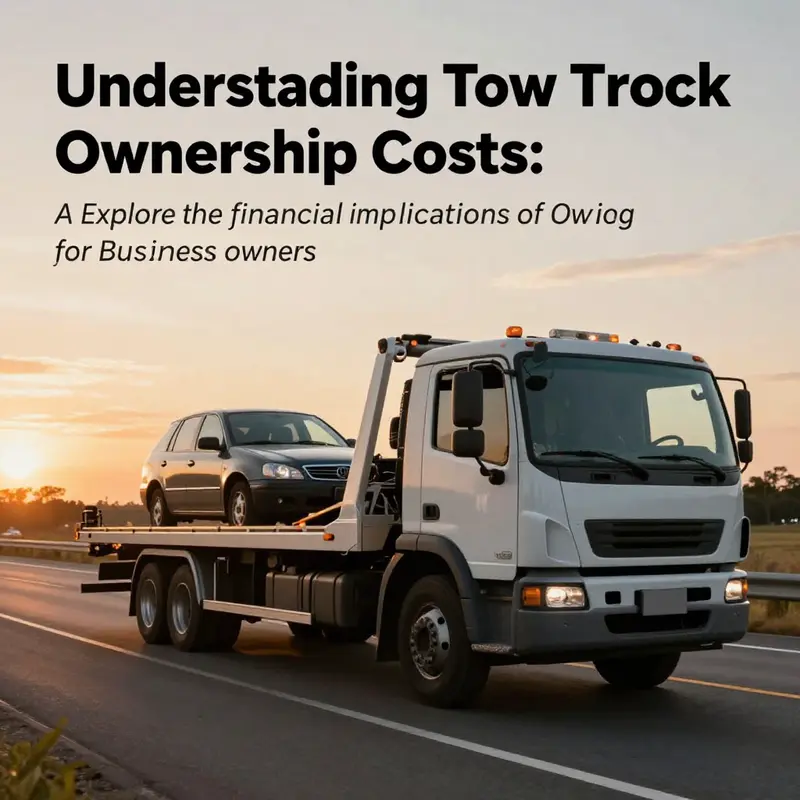
Owning a tow truck involves more than just the initial purchase; it encompasses ongoing expenses and maintenance that impact your bottom line. Understanding these costs is essential for business owners in the towing industry who want to make informed financial decisions. This guide will delve into the initial costs associated with purchasing a tow truck, the ongoing expenses you’ll need to manage, and how to evaluate the total financial impact of owning a tow truck. Equipped with this knowledge, you’ll be better prepared to successfully operate and grow your towing business.
Upfront Investment: The Real Startup Cost of Owning a Tow Truck
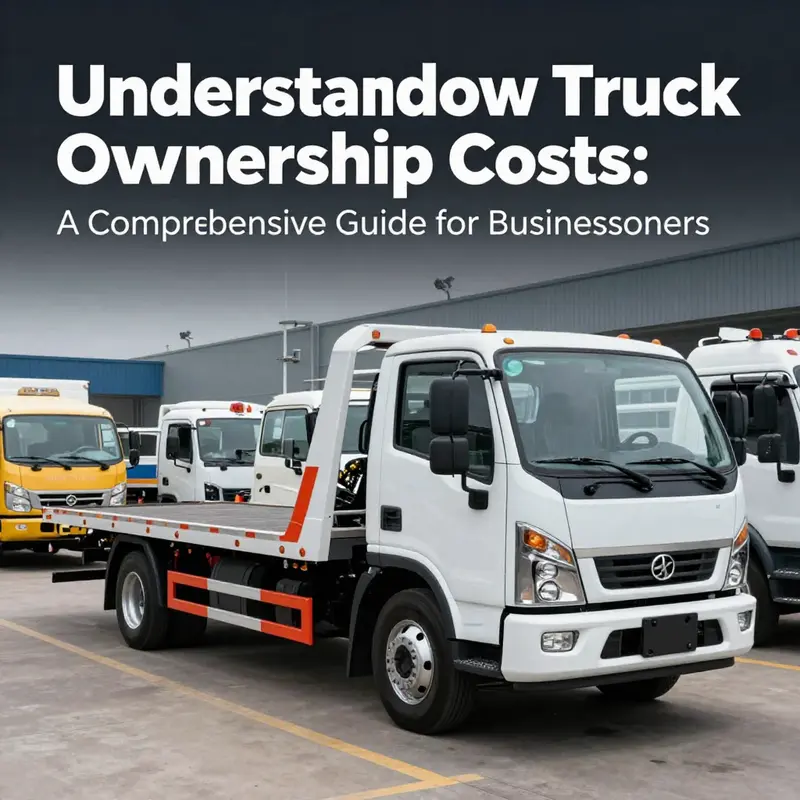
Owning a tow truck begins long before the first call comes in. The upfront investment sets the pace for your operation, shaping not only what you can haul but how efficiently you can work once it’s on the road. The initial price tag is more nuanced than a single sticker price; it encompasses the truck type, the equipment it carries, and the safety and technology that keep a crew moving through busy streets and unpredictable terrain. In practical terms, the most capable machines carry the highest entry costs, while simpler, smaller rigs require less capital but bring tradeoffs in capacity and versatility. Rotator tow trucks—the most advanced and capable class—sit at the high end of the spectrum, commonly priced from roughly $150,000 to $300,000 and beyond when new. These units offer 360-degree rotation, heavy lifting, and the ability to reach overturned or obstructed vehicles in challenging environments. They are indispensable in serious recovery work and emergency scenes, but their price, footprint, fuel draw, and maintenance demands demand careful financial consideration before purchase. On the other side of the spectrum, new flatbed tow trucks present a more moderate entry point. They typically range from about $80,000 to $150,000, depending on size and the equipment installed. The hydraulically operated tilting bed minimizes ground contact, safeguarding sensitive vehicles and reducing the risk of damage during loading. For many operators, the flatbed is an attractive balance—a safer transport option, easier on insured vehicles, and generally friendlier on maintenance compared with heavier, more complex rigs. Yet, even these base prices only tell part of the story. The initial investment also includes the essential equipment and safety gear without which a tow operation cannot begin. Core components such as winsches, towing straps, wheel lifts, and axle pads are more than accessories; they are foundations for safety and efficiency. The industry places a premium on securing vehicles firmly and safely, so every truck must be outfitted with reliable hardware that can withstand daily wear and the unpredictable demands of roadside work. Alongside the physical gear, safety and visibility systems are non-negotiable. Light bars, audible alarms, and communication gear help crews navigate traffic during emergencies and low-visibility conditions. These tools are not merely for compliance; they protect your crew and your cargo, and they improve throughput by reducing the time spent managing unsafe setups. Technology is increasingly integrated into the daily workflow, and most operators include GPS tracking and fleet management software as part of the initial package. These systems monitor routes, fuel usage, maintenance needs, and driver behavior, creating accountability and operational clarity that translates into fewer wasted minutes and bettercustomer service. For many buyers, the equation also includes a growing segment: self-loader tow trucks. These vehicles combine lifting and loading capabilities with automation to a degree, reducing manual labor and increasing throughput in high-volume settings. They come in several configurations, including models capable of handling substantial loads while maintaining maneuverability in urban environments. The upfront cost for self-loaders tends to be higher, reflecting their added capabilities, but the potential labor savings and higher job throughput can justify the premium over time. When weighing upfront costs, it’s important to consider financing options as part of the initial plan. Monthly fleet lease payments and lines of credit represent an ongoing financial layer that affects cash flow and profitability from the outset. A line of credit opened in early 2026, for example, can provide the liquidity needed to acquire the core equipment, set up shop, and cover the ramp-up period before the first substantial revenue stream materializes. In tandem with purchase or lease decisions, licensing, insurance, and regulatory compliance add to the first-year financial picture. Permit fees, vehicle registrations, and liability coverage are essential protections for a mobile operation, and many jurisdictions require additional endorsements for heavy-duty and specialized salvage work. Training costs are another critical piece. Operators must be proficient in rigging loads, operating hydraulics, and handling safety protocols for roadside work. While training adds to the initial outlay, it reduces the risk of accidents, protects you from liability, and ultimately keeps the operation productive. Maintenance planning also begins at startup. New machines come with warranties, but the initial maintenance window—break-in periods, routine inspections, and the cost of wear items—should be anticipated. A miscalculation here can shorten the asset’s life or force unexpected downtime, eroding projected margins. The total up-front cost therefore depends on the chosen configuration, the scale of the fleet, and the strategy for financing. Operators who intend to serve high-demand markets or specialty niches—such as heavy-duty recovery or luxury-vehicle transport—often justify higher upfront spend by predicting faster job turnaround and greater incident acceptance. In contrast, a lean storefront operation with moderate demand might lean toward more affordable, multi-role equipment to minimize risk and preserve capital for growth investments. For readers who want a concrete sense of how these choices play out in practice, consider how local service providers evaluate their setups. A city-oriented approach typically prioritizes quick response times, reliable safety features, and straightforward maintenance plans, which can tilt decisions toward flatbeds or lighter rotator-capable units with robust support networks. For a practical sense of how upfront costs translate to everyday operations in a real city context, see Washington DC towing services. Washington DC towing services. In the end, the upfront investment is not merely a price tag but a blueprint for service capability, market positioning, and potential return on investment. Thoughtful budgeting that accounts for the base truck, essential equipment, safety and tech upgrades, training, licensing, and financing arrangements creates a foundation that can sustain a towing business through today’s congested streets and tomorrow’s uncertainties. For a broader, more detailed exploration of ownership costs beyond the initial purchase, many operators consult comprehensive guides that lay out the long view of maintenance, fuel, insurance, and depreciation, helping to anchor decisions in long-term profitability. External resource: https://www.towingindustry.com/ownership-costs-guide-2026
Beyond the Sticker Price: Navigating the Ongoing Costs of Tow Truck Ownership
When a shop owner signs the purchase papers for a tow truck, the sticker price is only the opening chapter. The real cost story unfolds in the months and years that follow, as routine spending keeps the fleet operating, compliant, and competitive. Ongoing expenses are not merely a line item; they define the profitability and resilience of the business. They shape when a new machine makes sense, whether to upgrade equipment, and how to price services to stay solvent during slow periods or market shocks. For anyone weighing ownership, these recurring costs deserve as much attention as the upfront cost, because they compound quickly if left unmanaged and temper the bottom line when demand rises or falls.
Maintenance and repairs form the backbone of reliable service. Tow trucks endure heavy loads, rough roads, and repeated cycles of lifting and winching. Regular servicing becomes a shield against breakdowns and liability. That means scheduled oil changes, brake inspections, hydraulic system checks, and careful monitoring of wear components such as winches and towing gear. Neglect here is not just a maintenance issue; it’s a safety and liability issue, because a failed component on a roadside recovery can cascade into accidents and expensive claims. The expense is not static; it grows with mileage, duty cycles, and the age of the equipment. A well-structured maintenance program that logs service intervals and preempts wear can dramatically reduce emergency repairs, even if it requires a steady annual investment. For operators who manage multiple units, a centralized maintenance calendar and a reliable parts supply chain are not luxuries but necessities that keep the fleet productive and extend asset life.
Fuel costs flow from the engine’s size and the workday tempo. Tow trucks run long hours, traverse city corridors, and respond to emergencies that can demand quick, fuel-hungry acceleration and sustained idling. Fuel budgets shift with markets and geography, making them among the most unpredictable line items in the books. Operators often mitigate by optimizing routes, combining calls, and choosing powertrains that balance performance with efficiency. The variability of fuel also means that fleet managers must monitor consumption per mile and maintain a small reserve for price spikes, because a few dollars per gallon can tilt monthly profitability in the wrong direction. In practice, this means investing in route planning, telematics, and driver coaching to sustain efficiency without compromising response times.
Insurance and licensing sit at the intersection of risk and regulation. Commercial auto policies for tow operations are comprehensive and costly, reflecting the exposure of lifting injured vehicles, working near traffic, and carrying customer property. Premiums can climb with drivers’ records, incident history, and the geographic scope of service. Beyond insurance, licensing and permits are ongoing obligations: business registrations, state or municipal towing permits, and compliance with hours of operation, vehicle markings, and equipment standards. Renewal cycles matter because lapses invite penalties and service disruptions. A proactive compliance mindset reduces risk and protects margins, even if it requires disciplined record-keeping and timely renewals. When the fleet evolves, the insurance footprint can shift as well, with riders for cargo protection or additional liability tailored to the most common recovery scenarios.
Specialized equipment and safety systems add an enduring layer of expense. Light bars, sirens, radios, diagnostic tools, and mounting hardware must be maintained and updated as standards evolve. These tools are not optional ornaments; they are core to safety, efficiency, and the ability to communicate with dispatch and law enforcement. Upgrades arrive not only to stay compliant but to improve throughput and service quality. Replacing worn-out rope, straps, wedge blocks, wheel lifts, and related components is part of ongoing capex, and the budget should anticipate replacement cycles rather than waiting for a failure. The emphasis on safety means that some costs are non-negotiable, while others can be strategically scheduled around slower demand periods to minimize business disruption. In this space, maintaining a robust inventory of spare parts and a trusted network of service technicians pays dividends in uptime and risk management.
Beyond direct vehicle costs, there are financing arrangements, payroll, and the intangible costs of downtime. If a fleet is financed, monthly payments become a fixed obligation that can squeeze cash flow during lean months. Driver pay and benefits are a major shared expense; skilled operators command wages that reflect the risk and skill required for roadside work. Fuel and maintenance are ongoing, but so is the administrative load: licenses, inspections, and tax compliance all require time and sometimes external help. A robust financial plan recognizes depreciation as a constraint on future asset replacement and builds runway for new equipment, training, and insurance optimizations. Training, too, is an investment that pays off in reduced incident risk and faster, safer recoveries. The most successful owners view their fleet as a rotating asset that must stay fit, not as a one-off purchase that loses value the moment the keys are handed over. They continually refine maintenance intervals, monitor utilization patterns, and adjust staffing in response to demand curves, ensuring the cost of ownership does not outpace revenue.
Local context matters, and the operating environment shapes the cost profile. For operators expanding into different regions, the regulatory environment and labor market influence both staffing needs and permit requirements. In practice, tuning a tow operation involves balancing service levels with cost controls, recognizing that high-margin recoveries can subsidize routine calls only if the overhead stays lean. A practical touchstone is to review a representative service page from nearby markets that outlines dispatch, safety, and compliance expectations; towing service in Washington DC provides a concrete illustration of how service expectations translate into daily expense structures. It’s not about copying a model, but about understanding how regional expectations influence scheduling, staffing, and equipment turnover.
Ultimately, ownership economics hinge on disciplined budgeting rather than heroic spikes in revenue. The chain of recurring costs, from maintenance to licensing to upgrades, determines how quickly an asset becomes profitable and when it must be refreshed. For a broader framework that maps these recurring costs to long-range planning, see this comprehensive guide on tow-truck ownership costs: https://www.towingindustry.com/ownership-costs-guide-2026
Counting the Costs: Understanding the True Price of Owning a Tow Truck
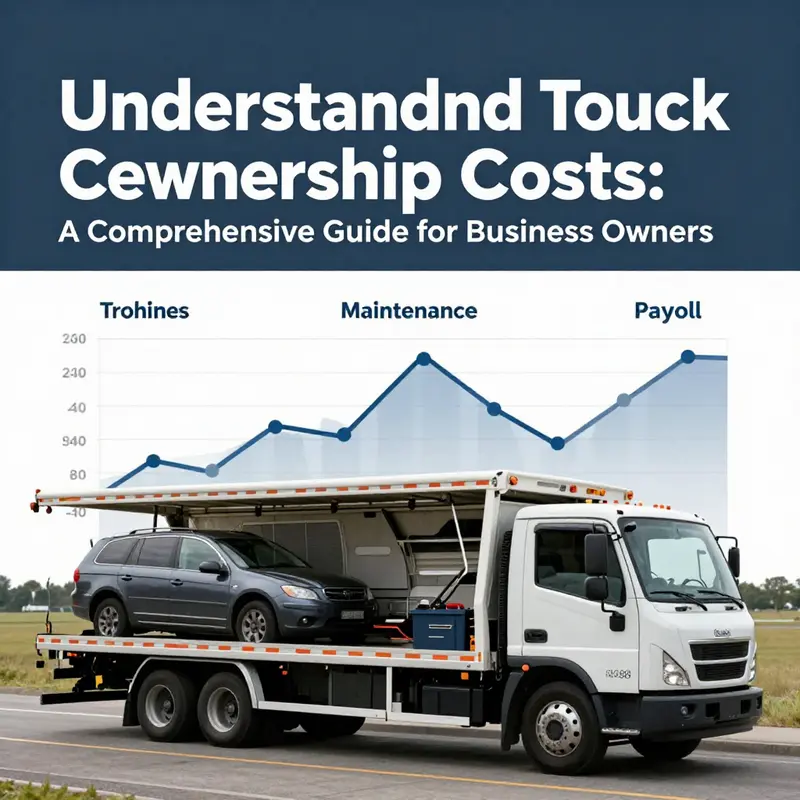
Owning a tow truck is more than writing a price tag on a ledger. It is a long-running financial commitment that starts with the sticker price and continues through a truck’s daily operation, maintenance, and compliance demands. The total cost of ownership hinges on the type of equipment you choose, whether the unit is fresh from the lot or a vetted pre-owned workhorse, and how consistently you can translate uptime into revenue. In practical terms, the upfront investment can swing from modest to monumental, and the ongoing costs will shape your cash flow just as decisively as your tow rates.
From a purchasing standpoint, the spectrum is wide. A standard flatbed tow truck, which relies on a hydraulically tilting bed and a winch to load vehicles with minimal ground contact, typically lands in the range of about $70,000 to $120,000 for a new unit. These machines are valued for their versatility, safer handling of low-clearance or high-value vehicles, and generally simpler maintenance compared with heavier, more specialized equipment. By contrast, the most capable and specialized machines—the rotators with a 360-degree rotating boom designed for overturns, heavy salvage, and difficult terrain—commonly command prices in the realm of $150,000 to $300,000 or more. The additional cost reflects not only the mechanics of a rotating system but also the specialized training, licensing, and service support such a unit requires.
Those purchase-price figures become meaningful only when they are balanced against ongoing ownership costs. A recent, comprehensive field guide published in February 2026 outlines several recurrent expenses that significantly influence profitability. First, there are fleet lease payments. Even when you own the asset, many operators finance or lease portions of their fleet. In this context, a new line of credit or lease might start around $45,000 per year, a figure that scales with the number of units, the credit terms, and the residual value at the end of a term. Next comes the human factor: driver payroll and benefits. The labor costs of skilled operators, dispatchers, and maintenance staff can dwarf other line items, particularly in markets with rising wage pressures or where 24/7 service is the norm.
Fuel consumption is another practical consideration, especially for larger, more powerful trucks whose engines burn more fuel in heavier-duty recoveries and longer hauls. Routine maintenance and repairs accumulate steadily as a truck ages and accumulates mileage. Insurance premiums, which vary by jurisdiction and coverage level, are a significant ongoing line item as well, often increasing with the risk profile of the routes you cover and your accident history. Licensing fees—annual or periodic—keep you compliant with municipal and state regulations and can be easy to overlook in the initial budget but painful in audit if neglected. The guide emphasizes that specialized equipment, such as hydraulic tilting beds or rotator booms, not only impacts upfront price but also drives higher maintenance and repair costs over time.
All of this matters because depreciation is a constant companion in the life of a tow truck. The vehicle’s value declines with age and mileage, which influences your resale prospects and insurance needs. Downtime is another hidden cost: when a vehicle is in the shop for routine maintenance, a breakdown, or a major repair, you lose revenue unless you have a closely matched fleet size and a reliable backup plan. Regulatory compliance, too, carries a price tag—updated safety standards, inspections, and certifications can require either ongoing investment or periodic upgrades to stay legally capable of operating in your serviced markets.
With those realities in mind, how should a prospective owner think about return on investment? The answer is nuanced. The right choice hinges not only on the raw capacity and torque of the equipment but also on reliability, fuel efficiency, and the longevity of the service life. A rotator, for instance, makes sense for a business focused on large-scale accident recovery, emergency response, or operations in terrain where a standard flatbed cannot safely reach. Those advantages come with higher acquisition costs, heavier maintenance demands, and a broader skills gap for operators. In contrast, a mid-range flatbed can deliver a steadier, more predictable cash flow for a shop focused on local convenience towing, roadside assistance, and vehicle transport that preserves value and reduces risk to sensitive vehicles.
Thus, the most prudent path for many owners begins with clear budgeting and staged capacity. Start by matching your purchase choices to the demand profile in your service area. If your market has a dense urban footprint with high-value vehicles and a need for careful transport, a well-maintained flatbed might deliver the best balance of cost, safety, and resale value. If your growth plan targets complex recoveries, out-of-state calls, or access to rougher terrain, a rotator could become a critical differentiator, simplyifying the heavier upfront and ongoing costs by expanding your service envelope. The long-term profitability, of course, rests on uptime, dependable maintenance, spare parts availability, and tight operations management. A disciplined approach to maintenance schedules, proactive parts inventory, and a robust driver training program can reduce downtime and extend service life, multiplying the return on even a mid-range fleet.
For business owners weighing the best starting point, it is worth examining local fleet options and the way neighboring operators balance cost against demand. In practice, evaluating a potential purchase should include a formal, long-range cost-of-ownership analysis. This analysis should compare not only the purchase price but also projected fuel burn, insurance costs, licensing and regulatory fees, maintenance forecasts, and expected downtime. It should also account for depreciation on resale value and the strategic value of service specialization. In other words, the owner must translate machine capabilities into market opportunities and, in turn, translate those opportunities into reliable revenue streams. If you want to explore how these dynamics play out in a real market, you can review local service options such as the Tow Truck Service Washington DC page to see how a compact, city-focused fleet balances pricing, demand, and compliance in a complex regulatory environment. Tow Truck Service Washington DC
Ultimately, the chapter on ownership costs points to a simple truth: there is no one-size-fits-all answer. The most economical path today may be a cautious, phased investment that aligns with proven demand and a conservative maintenance plan. The decision to buy a rotator versus a flatbed is really a decision about the range and velocity of the services you intend to offer—and about the financial discipline you bring to managing a growing fleet. Prospective owners should monitor market data, update their financial models, and consult industry benchmarks to ensure that their capital decisions translate into sustainable profitability over the life of the equipment. For a deeper, data-driven breakdown, see Understanding Tow Truck Ownership Costs – A Complete Guide for Prospective Owners at https://www.towtruckowners.com/ownership-costs-guide-2026.
Final thoughts
Understanding the costs associated with tow truck ownership is vital for any business owner in the towing industry. From the high initial investment for advanced models like rotator tow trucks to ongoing expenses such as fuel, maintenance, and driver salaries, being aware of these financial obligations helps in building a sustainable business model. Evaluating total ownership costs ensures that you can maintain profitability while providing essential services. By diving deep into the financial aspects discussed in this guide, you’ll be in a stronger position to make informed decisions that benefit your business in the long run.