
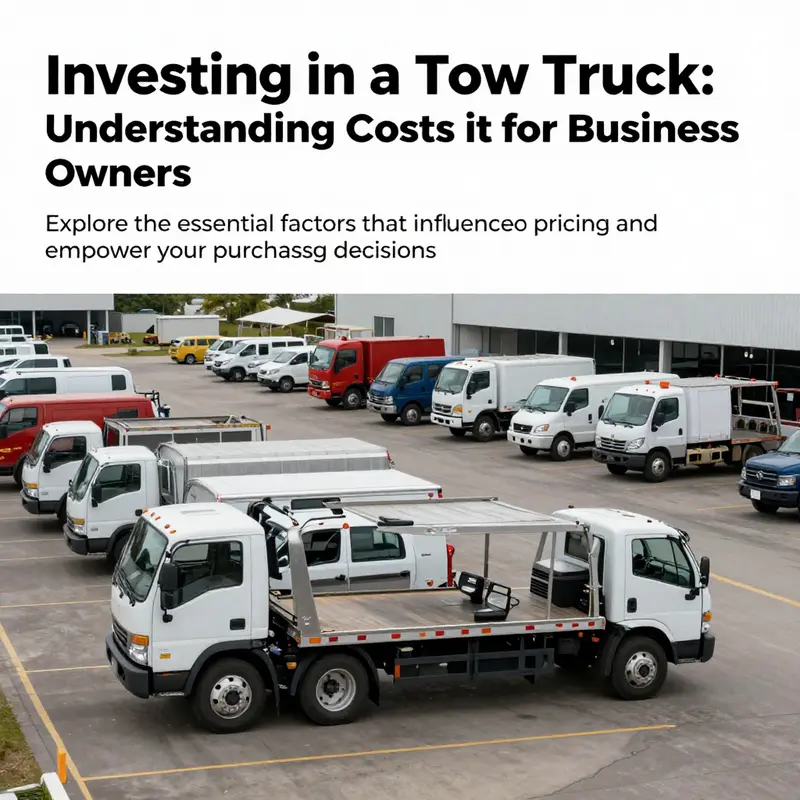
Owning a tow truck can be a critical asset for businesses in the automotive or roadside assistance industry. Understanding the costs involved in purchasing a tow truck is crucial for making informed financial decisions that can significantly impact your operations. This comprehensive analysis will delve into three critical areas: the various types and their price ranges, the specifications and features that influence costs, and the market trends that shape pricing strategies. By examining these components, you will gain a holistic view of how much a tow truck truly costs to buy, enabling you to choose the right model that fits your business needs and budget.
Pricing the Tow: Reading the Landscape of Tow Truck Costs by Type, Capacity, and Customization
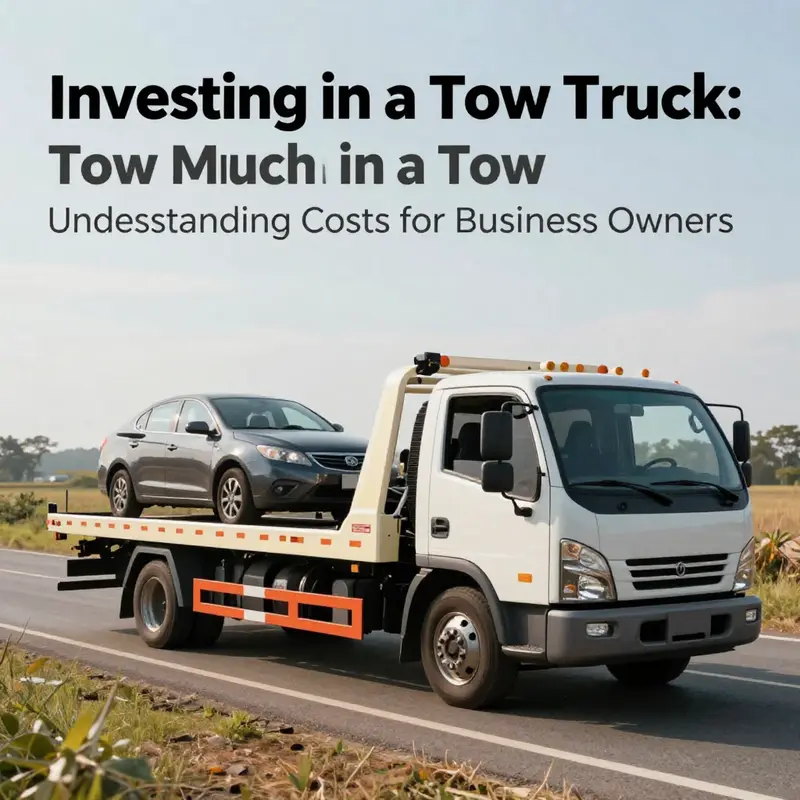
Buying a tow truck is a decision that blends mechanical need with financial strategy. The price tag attached to a recovery vehicle reflects more than a sticker on the grille; it mirrors the work you expect it to perform, the loads it must bear, and the level of maintenance you’re prepared to sustain over the life of the asset. In practical terms, costs vary widely by category, and understanding those ranges helps a buyer align aspirations with budget. The most common places to start are light-duty models, mid-range units, and the heavy-duty machines that dominate large-scale recoveries. Each tier carries its own value proposition, and the balance between upfront price and long-term return is where prudent buyers earn their keep. Light-duty tow trucks, typically in the 2–5 ton class, are designed for standard vehicle recoveries, and their price bands are the most accessible for first-time buyers. In markets where new trucks are the baseline, you’ll often see prices in the neighborhood of roughly fifteen to thirty thousand dollars. These units usually come in wheel-lift or rollback flatbed configurations, with enough reliability to handle everyday incidents, and they offer a favorable starting point for independent operators or small fleets looking to expand without overcommitting capital. The practical advantage is clear: a modest upfront investment can yield steady daily work, with maintenance costs that are predictable when the vehicle sees a typical municipal or roadside workload. Moving up one notch to medium-duty tow trucks, in the five-to-ten-ton range, price ranges broaden significantly. Depending on the features you select—powerful winches, crane arms, or boom systems—the purchasing cost can stretch from under twenty thousand dollars to nearly fifty thousand. The extra lifting capability translates into broader service offerings, enabling you to tackle larger vehicles or commercial fleets with greater efficiency. Yet the diversification comes at a price beyond the sticker: higher initial outlays, specialized training for operators, and the need for better maintenance planning to protect the hydraulics, controls, and structural integrity that such configurations demand. The next tier, heavy-duty wrecker trucks in the ten- to thirty-ton range, represents a shift in both capability and economics. Prices commonly begin around the mid-thirties thousand dollars and can climb to seventy thousand or more, especially for models configured for high-demand tasks like highway recovery, bus or tractor-trailer service, and complex multi-axle operations. These units feature rugged chassis, advanced hydraulics, and often multiple recovery systems designed to stabilize and lift heavy loads in challenging settings. They’re not just bigger; they’re more robust, with enhanced reliability at a price point that reflects the insistence on uptime during peak demand. For buyers whose work includes the most demanding recoveries—heavy trucks, excavators, or oversized equipment—the market also offers high-capacity options that push toward fifty-ton capabilities and beyond. In this space, prices commonly range from the upper forties into the tens of thousands of dollars, with many configurations landing between forty-four thousand and ninety thousand dollars. The variation is driven by chassis choices, the presence of integrated cranes, advanced stabilization features, and the level of customization chosen to fit a particular exposure or fleet management strategy. Such investments are seldom purely cosmetic; they are tied to how a shop plans to deploy the asset, what kind of incidents it will respond to, and the length of the recovery projects it is expected to support. When the discussion turns to flatbed tow trucks—the safer, more protective option for some vehicles—regional markets show a distinct pattern. In some jurisdictions the price spectrum is broad enough to include basic flatbeds that start at a modest level, while specialized multi-vehicle or heavy-duty flatbeds command substantially more. In one regional market, basic flatbeds can begin at the equivalent of a few thousand dollars in local currency, while more sophisticated configurations—such as those designed to capture and transport multiple vehicles or luxury AWD units—rise into higher ranges. For operators who need heavy-duty versatility, flatbeds can be offered with 4–10 ton capabilities and additional equipment, with price points that sit in the mid-range of the overall market or higher, depending on the attendant features. A very different, more specialized category exists for rotator tow trucks, which combine a rotating crane with recovery expertise for complex scenes like rollovers or tight angles. Rotator wreckers sit at the top end of the market, often priced well above standard heavy-duty units. They commonly command six-figure investments, given the precision engineering, control systems, and training required to operate safely and effectively. In sum, price is not a single number but a spectrum that reflects how much recovery power you need, how sophisticated the equipment must be, and how much you plan to customize the truck to fit your typical workload. The decision becomes a balancing act: you weigh upfront cost against the expected revenue you can generate, the downtime you might incur during maintenance, and the long-term costs of parts, tires, hydraulic fluids, and wear. Financing and insurance add layers to the conversation, too, shaping monthly payments and ownership risk over the life of the asset. For buyers contemplating regional service and support, it helps to consider local provider networks and after-sales coverage, as those factors can materially affect total ownership costs. As you refine specifications, an essential step is to examine the actual load profiles you expect to manage, from the average tow to the occasional heavy lift. This helps ensure you don’t overbuy or underbuy, and it guides decisions about whether to pursue new or used options, which can offer meaningful savings or added risk. If you are weighing regional procurement options, you might explore local dealers or marketplaces that cater to industrial equipment. For quick reference on local service frameworks, you can explore resources such as tow truck service in DC. The right choice results from aligning the vehicle’s capabilities with the task mix, maintenance discipline, and fiscal plan that govern your operation. External market context also matters; for broader industry perspectives, one can consult established industrial marketplaces to compare configurations, warranties, and delivery terms. (External resource: https://www.alibaba.com)
Pricing the Power: How Specifications, Chassis, and Features Determine Tow Truck Costs
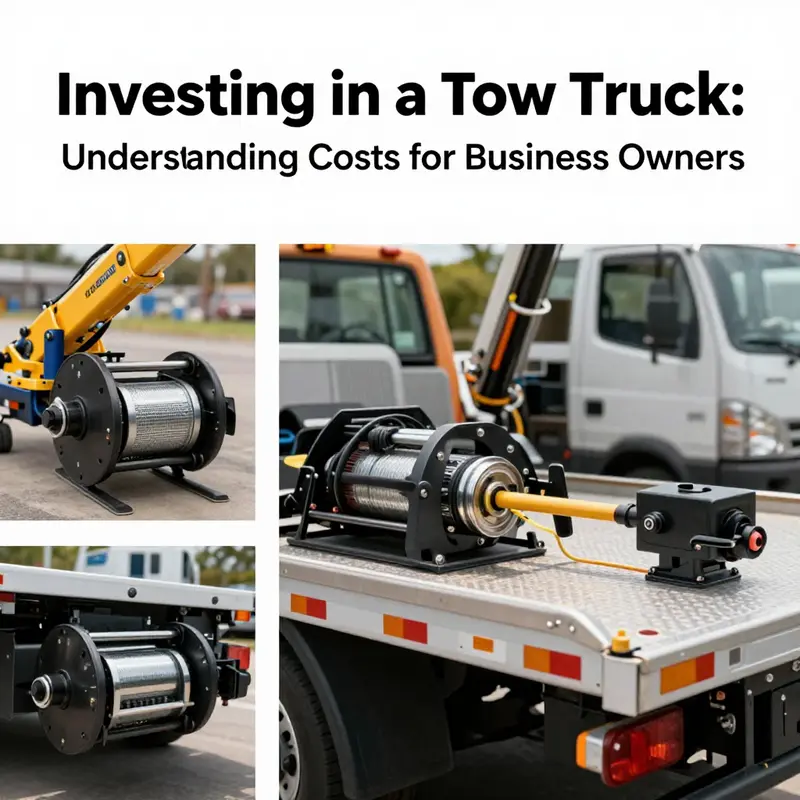
Buying a tow truck is more than choosing a metal box on wheels. It is choosing a recovery system engineered to pull vehicles, recover others, and keep operators safe under demanding conditions. The sticker price is a guide, but the true cost unfolds across a spectrum of specifications, chassis design, and added features that tailor the machine to a shop’s unique needs. Buyers quickly learn that capacity and versatility drive price, and yet a higher price can translate into lower operating costs over time when reliability, maintenance, and downtimes are factored in. From light-duty models that haul cars in urban lots to heavy-duty wreckers that move commercial fleets, the price scales in a way that aligns with the intended work, the training required, and the regulatory environment in which the unit will operate. In simple terms, the more capability you add, the more the price climbs, but the price isn’t merely an upfront expense. It is part of a larger equation that includes insurance, maintenance, spare parts, and the ongoing costs of keeping a crew proficient and compliant on the road. For readers in busy metropolitan areas, this distinction matters more than ever, because city operations demand equipment that can handle tight spaces, frequent calls, and high-value vehicles, all while meeting rigorous safety standards. In Washington DC and similar markets, operators often weigh these variables against real-world service demands to determine the most cost-effective configuration over the life of the truck. In markets like Washington DC, operators weigh these choices against city-specific needs, and a local resource like Towing Service DC can illustrate how equipment translates into daily operations.
The primary levers in price begin with the type of towing mechanism and the chassis design. The spectrum runs from conventional tow trucks to rotators and flatbeds, each with distinct strengths and cost profiles. Conventional tow trucks are versatile and reliable for general recovery and repossession work. They typically offer a mix of boom, winch, and wheel-lift systems, and their pricing generally ranges in the lower six figures to the mid six figures, reflecting a balance between capability and maintenance needs. Rotator tow trucks, with a 360-degree rotating boom, represent the peak of capability for overturns, awkward recoveries, and challenging terrain. They command the highest price, often well into six figures and beyond, because the equipment is complex, the operations require specialized training, and fuel and maintenance demands are higher. Flatbed tow trucks emphasize safety for all vehicle types, from AWDs to low-clearance cars. Their costs can be substantial, driven by hydraulics, durability, and the need to keep a wide range of vehicles intact during loading and transport. While precise price ranges for flatbeds vary by bed length, hydraulic power, and options, they commonly sit at a premium level compared with basic conventional configurations. The choice among these categories is not only about upfront cost but about the alignment of the work plan with the unit’s long-term reliability and the crew’s ability to fulfill calls efficiently.
Beyond the core towing mechanism, the chassis design interacts with weight, maneuverability, and safety to shape total cost. Light- and medium-duty configurations, while simpler, still demand robust fabrication to withstand daily use, but the heavier the chassis and the longer the wheelbase, the more the price climbs. The boom system, winches, and attachment points all contribute to price, and each addition cycles back to maintenance and wear. For example, larger or more powerful winches increase both the initial price and ongoing wear, while stronger booms introduce new maintenance costs and potential training needs. The chassis also determines uptime. A well-engineered frame with corrosion protection and upgraded hydraulics reduces downtime, which in turn lowers the cost of ownership over the life of the truck. For some buyers, this translates into fewer unexpected repairs and more predictable budgeting, a critical consideration for fleets with tight margins.
While the mechanical core drives much of the variation, the added features steadily push the price upward. Safety and visibility enhancements—loud warning systems, bright lighting, and reliable communication capabilities—are not cosmetic. They improve response times, reduce risk, and help operators stay compliant with evolving regulations. Then there are the ancillary items: quality winches, towing straps, axle pads, and a full suite of dollies and adaptors. Each piece increases capability and, consequently, the upfront investment. Yet these features also expand the range of jobs a tow truck can perform, from delicate flatbed transfers to more aggressive recoveries in poor conditions. This is where a buyer’s assessment of operational needs becomes decisive: if a shop handles high-risk recoveries or urban impairment, investing in robust safety gear, high-capacity winches, and precise alignment tools may justify the higher price tag.
A practical approach is to frame the purchase around the work plan rather than the price alone. The cost of ownership rests not only on the purchase price but on how well the truck matches the volume and type of calls, the level of operator training, and the maintenance regime. Training requirements and safety compliance add another layer of cost, especially for more complex platforms like rotators or heavy-duty wreckers. Local regulations, licensing, and the availability of qualified technicians influence the total investment needed to operate legally and efficiently. The geographic context matters as well. Shipping costs, taxes, and after-sales service can swing a deal by several thousand dollars, shaping the overall affordability of a given configuration. Buyers should seek a detailed quote that breaks down the base price, optional features, shipping, taxes, and post-sale service commitments to avoid surprises after the purchase.
In the end, the price tag on a tow truck reflects a carefully balanced equation. The equipment must match the volume and complexity of the work, while training and maintenance keep it reliable. The most cost-effective choice is the configuration that minimizes downtime and maximizes job performance over the truck’s lifetime. To compare options, consider realistic scenarios you will face on the road, the kinds of vehicles you will tow, and the environments you will operate in. This alignment helps ensure that the initial cost translates into predictable, efficient, and safe operations on every call. External resources and industry pricing guides can offer baseline benchmarks, but the best decision comes from a clear picture of your own needs and the way a truck’s specifications translate into real-world performance. For those seeking more current baseline guidance, a practical reference point is available online at the following external resource: https://www.jensentowing.com
Tow Truck Prices in Motion: Navigating Economic Currents and Geographic Realities
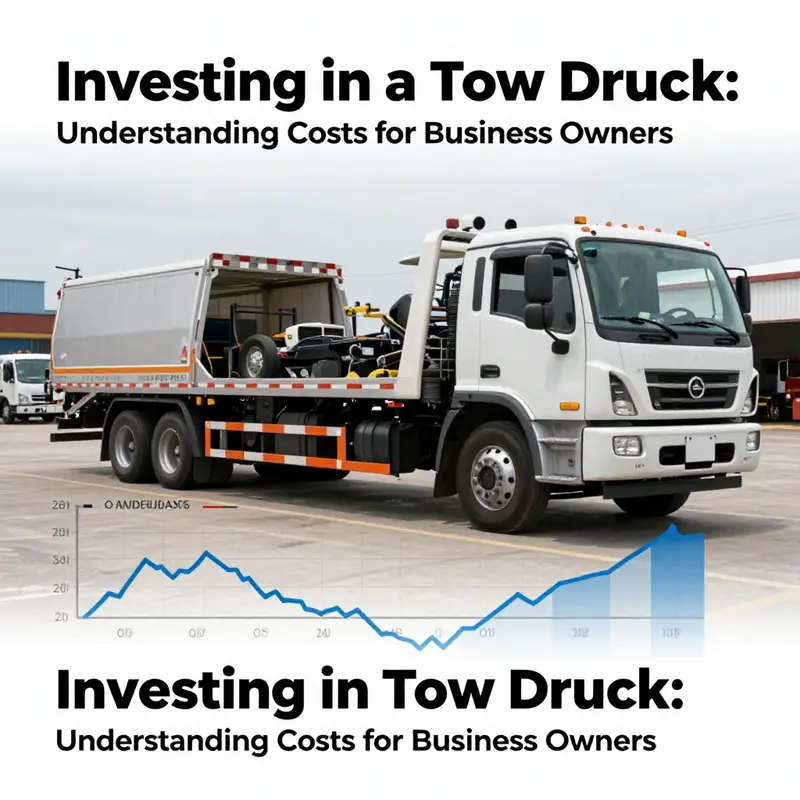
Prices to buy a tow truck do not sit still. They move with the weather of the broader economy and the local geometry of supply and demand.
The sticker price you see is a snapshot, but the true cost of ownership factors in more than horsepower or wheelbase. It reflects macroeconomic currents—inflation, fuel prices, and raw material costs—and the microeconomics of the place where a truck is bought, sold, or traded.
When you map the market, you can see three broad bands tied to capacity: light-duty units for standard recoveries, medium-duty configurations with greater lifting and hoisting capabilities, and heavy-duty wreckers built for the largest loads. Each category carries its own price ceiling and its own value proposition, and the real payment comes from how intensively a truck is used, how competitive the local market is, and how forthcoming dealers are about warranties, service plans, and aftersales support. The practical takeaway is simple: the cost to buy is a function of the machine’s capabilities and the market’s willingness to pay for those capabilities at that moment in time, tempered by regional conditions and the number of competing buyers in the same area. In conversations with buyers, the sense that emerges is not a single price tag but a spectrum shaped by demand, margins, and the friction of place.
Economic forces push the spectrum toward higher numbers even when a buyer is chasing simplicity. Rising fuel prices and inflation have a direct effect on the economics of ownership. They push operators to consider newer, more efficient builds if the upfront cost can be justified by lower operating expenses over the truck’s life. Raw material costs, especially steel, ripple through the price sheets of both new and used trucks. When steel and related components become dearer, the cost of manufacturing rises, and even a modest premium on a new unit can cascade into higher expectations in the used market. The consequence is a shift that can tilt negotiations toward newer models or better-equipped used units, particularly for buyers who plan to stretch mileage and uptime across multiple shifts. The result is a dynamic where the used market has grown increasingly competitive, especially for well-maintained, low-mileage examples. The numbers matter here: the average price range for a used flatbed tow truck often falls in the mid-range, roughly from the mid-thirties to the upper sixties, with premium configurations or exceptionally low mileage pushing beyond that band. In practice, this means buyers may find a bargain if a vehicle has solid maintenance history, but bargains can be scarce in a market that values reliability and uptime as much as the initial price. These considerations help explain why a buyer might pay more upfront for a unit that reduces risk and downtime over the next several years.
Geography, more than most buyers realize, can tilt the balance between a good deal and a costly mistake. In urban centers where towing demand is high, competition among service providers and fleets tends to compress margins and squeeze supply. Dealers and brokers respond with tighter inventories and sharper quotes, sometimes elevating both new and used prices as buyers rush to secure capable equipment in a tight market. In rural or less densely populated regions, the initial sticker price may look more inviting. Yet long-term costs can rise because maintenance networks are thinner, parts availability is uneven, and travel time for service visits adds to downtime and expense. Regulatory environments can magnify these effects as well. Emissions standards and vehicle registration fees differ by state, and in places with stricter rules, buyers may face higher ownership costs from day one. The interplay of these geographic realities means a buyer should assess not just the purchase price but the ecosystem that will keep the truck productive, including the proximity of qualified repair shops and the speed with which parts can be sourced. For a regional lens on how local markets shape the price picture, see tow-truck-service-washington-dc.
In any buying decision, the full lifecycle costs deserve equal weight to the upfront sticker. Insurance, which reflects risk exposure and usage patterns, often shifts with the truck’s capacity and powertrain. Fuel efficiency remains a practical lever, not only for operating budgets but for resale value, since buyers increasingly prize lower lifecycle costs. Maintenance logistics—how readily parts can be ordered, how quickly technicians can diagnose issues, and how often downtime interrupts service—also matters. A 2024 study from a national trucking association highlighted a clear trend: advanced safety features and more fuel-efficient engines command a premium in the used market. Buyers who prioritize these attributes may pay more upfront but can recoup the premium through lower lifecycle costs and better reliability over time. That insight helps refract the market through a pragmatic lens: the best choice aligns capacity with expected workload, respects regional service realities, and balances price with risk. The market supports a range of options, from lean, straightforward builds to highly equipped configurations, each with its own cost profile tailored to different workflows and cash cycles. When considering a purchase, it is not merely a question of what a truck costs now but what it will cost to operate and keep productive in the months and years ahead. As a final note, broader market analysis suggests that buyers should frame their decision within the context of regional dynamics, financing conditions, and the anticipated operational footprint, recognizing that price is a moving target shaped by supply chains, local demand, and policy shifts. External resource: https://www.trucking.com/market-trends-tow-truck-prices-2024
Final thoughts
Navigating the cost of purchasing a tow truck is essential for any business looking to enter the towing industry or expand their existing fleet. By understanding the types of tow trucks, the features that influence their costs, and current market trends, you can make well-informed decisions that enhance your operational efficiency and profitability. Investing in the right equipment not only aids in recovery operations but also paves the way for sustainable business growth. Stay informed, be strategic, and gear your investments towards the future of your business.