
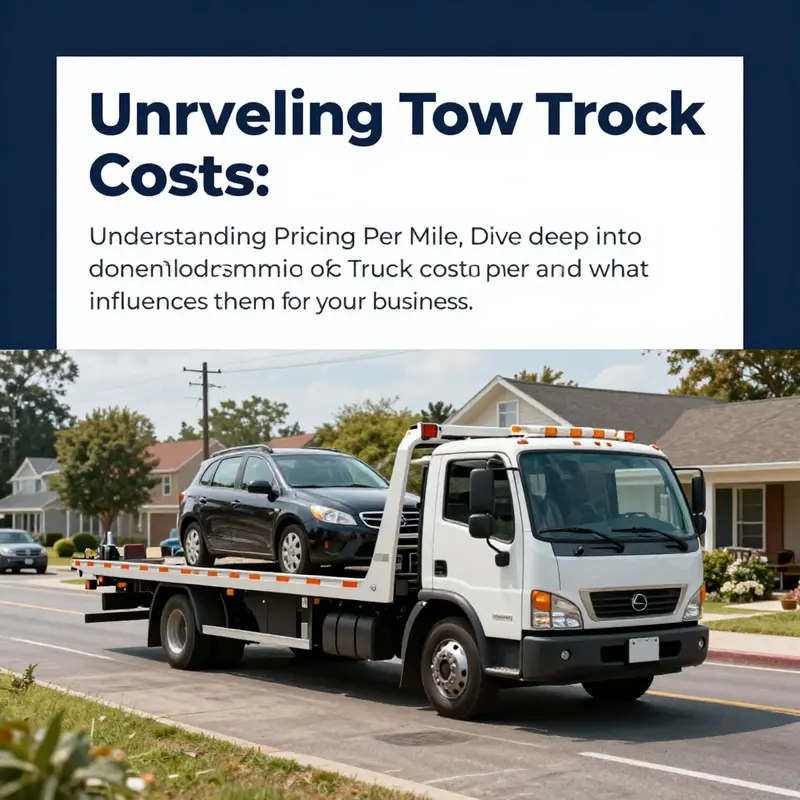
Understanding the cost associated with towing services is crucial for business owners, especially in managing expenses that can arise from vehicle breakdowns or accidents. The cost per mile for tow trucks varies widely based on several factors, including service fees, vehicle type, and geographical location. This article provides an in-depth look at the cost structure of towing services, as well as the key elements that influence towing charges. By the end, you’ll have a clearer perspective on how to prepare for these costs and what to expect when hiring a tow truck.
Tow by the Mile: Decoding the Real Cost Per Mile Behind a Tow Truck
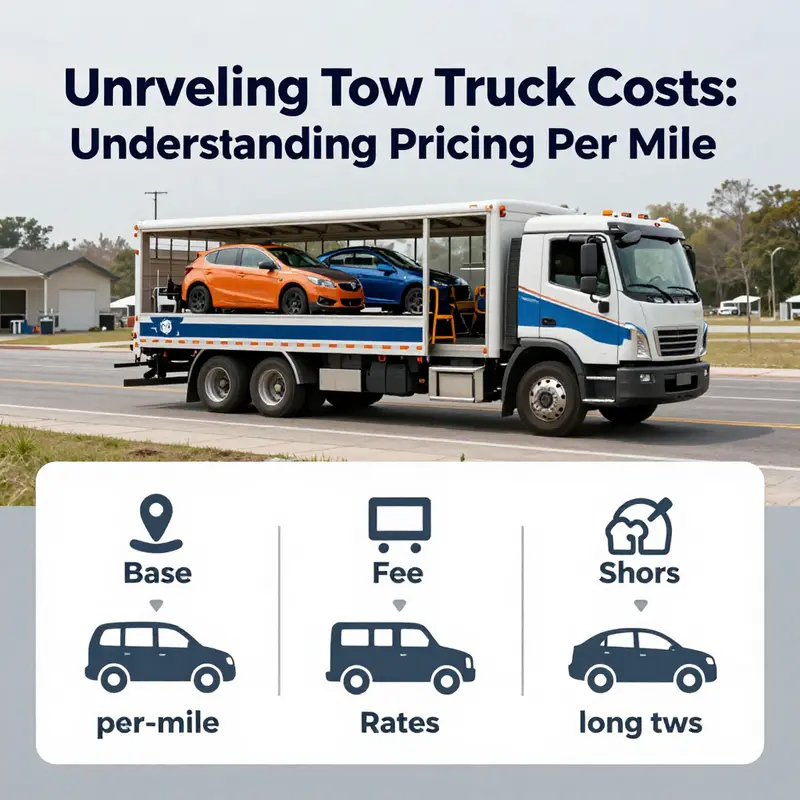
When a roadside emergency hits, the mind often shifts to how much it will cost to get back on the road. Yet the price of a tow is rarely a single figure that sits still. The cost per mile is not fixed; it ebbs and flows with the work of a dispatcher, the weight of the vehicle, the time of day, and the distance to be covered. In practice, most towing outfits structure their pricing as a base fee to initiate the service, then add a per-mile rate to carry the vehicle to its destination. The result can feel like your bill is riding along with your car, a moving target that shifts as the miles roll by. Understanding this cost structure isn’t just academic; it helps people expect, compare, and negotiate without losing their calm when the tow starts to add up. A clear frame of reference makes a stressful moment a little easier to bear and a lot easier to manage.
Two core pricing models dominate the industry, and both revolve around the same practical idea: the tow company must cover its upfront time and equipment, then charge for the work of transporting the vehicle. One model uses a predictable base fee with a per-mile surcharge. The plan is straightforward: you pay a fixed amount to attach, secure, and dispatch the tow, then pay a set rate for each mile towed. The other model adopts a tiered structure, where rates vary by distance brackets. In either case, you should expect a blend of factors that determine the final tally rather than a single flat number. The familiar phrase hook and roll captures the essence of the first approach: a fixed hook fee, followed by mileage charges. The tiered approach, meanwhile, creates distinct bands such as 0–10 miles, 10–25 miles, and so on, with the per-mile price adjusted within each bracket. Each method reflects the same practical goal: to balance the cost of the initial response and the wear, risk, and fuel involved in moving a vehicle.
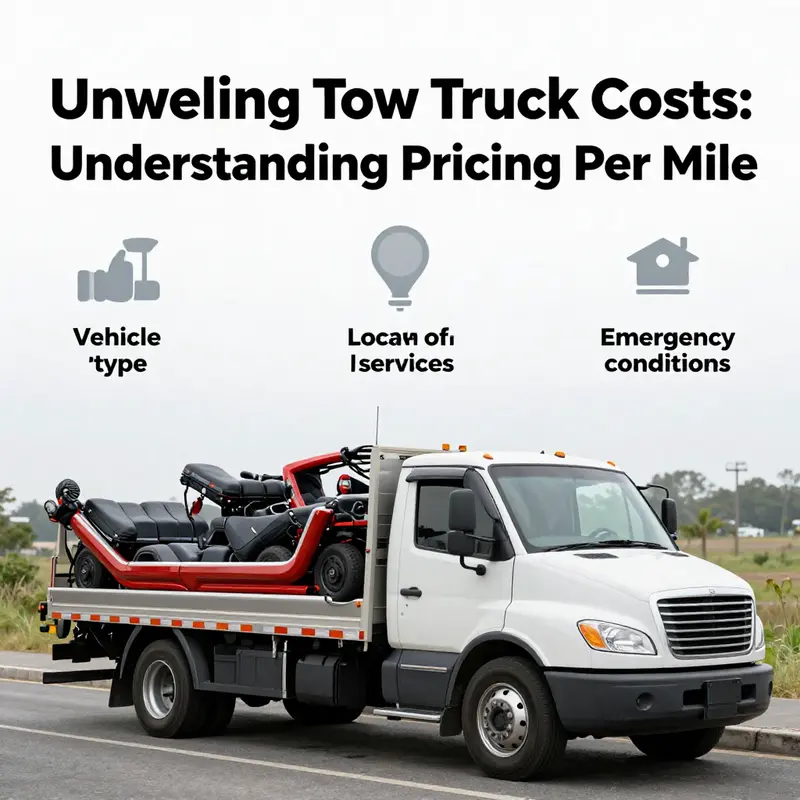
Industry data paints a broad picture of what those miles cost. For the first stretch of a tow, the initial charges can vary widely. The first five miles often fall into a window from about $35 to $125, depending on the company, the vehicle, and the region. Move beyond that, and a longer distance up to 40 miles typically falls in the $125 to $275 range. The farther you go, the more the cost compounds; up to 100 miles can push the total well past $600 in some cases. These brackets are not rigid rules but useful benchmarks that show how quickly costs rise as distance and complexity increase. Heavier vehicles, such as full-size trucks, SUVs, or commercial vans, push those numbers higher because they require larger tow trucks, specialized equipment, and more fuel. Urban areas, with higher operating costs and demand, often carry steeper hourly rates or distance-based surcharges, while rural routes can incur longer drive times that translate into greater mileage charges and even more time-based charges.
To make sense of this, consider two representative scenarios that echo real-world experiences. A short tow of about five miles might carry a base fee around $75, with roughly $3 per mile added on, yielding a total near $90 in many cases if the distance is modest and the vehicle is typical. A longer tow, say 50 miles, could easily surpass $300 as the per-mile charges accumulate over the longer distance, with the base fee still contributing a fixed starting point. The exact numbers vary, but the pattern is clear: the base fee covers the logistics of hooking, dispatch, and the initial mobilization, while the per-mile rate covers fuel, tire wear, maintenance, insurance risk, and the time spent driving the distance. For heavier or more awkward loads, pricing can tilt higher still, even within the same mile count.
Location and timing shape the math as well. Urban corridors are not simply longer in scale; they are more expensive per mile due to higher demand, tighter traffic patterns, and the greater operating costs that come with city service. In many city centers, tow operators contend with more complex parking constraints, tighter access, and the need for additional personnel to ensure safety and compliance, all of which can bump the per-mile figure along with the base. Rural areas tell a different story: longer drives, fewer nearby repair shops, and sometimes longer wait times can translate into higher relative mileage charges when the service finally travels the distance to a destination. The time of day adds another layer. Emergency or after-hours tows command premium pricing as operators cover the costs of scheduling, standby time, and the logistical challenges of responding in off-peak hours.
The price architecture is further complicated by ancillary charges that can creep into your final bill. Labor for winching, extricating the vehicle, or loading into the tow truck, equipment use, and fuel surcharges are common examples. Some providers publish a single all-in per-mile rate, while others itemize components—base fee, per-mile charge, labor, equipment use—so the customer can see exactly where the money goes. It is not unusual to see a separate line for fuel surcharges, especially during periods of volatile fuel prices, or for labor charges in scenarios that require extra hands or specialized rigging. The practical upshot is simple: ask for a detailed, written estimate before the tow begins, and request a line-by-line breakdown that clearly distinguishes the base, the mileage, and any ancillary charges. That transparency reduces the risk of surprise once the vehicle has been loaded and the timer starts counting miles.
For readers navigating this landscape, one practical note is to seek clarity on how the miles are calculated. Some companies charge by the mile only from the point of pickup to the destination, while others include a short “setup” or “attaching” interval in the base fee that effectively covers the cost of hooking the car to the tow vehicle. Still others may apply different rates for different segments of the trip, such as a higher rate for the first five miles and a lower rate thereafter, or a tiered schedule that escalates the price as distance increases. These nuances matter because a tow of identical mile length can end up with different total costs depending on the model the provider uses. A careful, written estimate before any work begins is the best defense against miscalculation.
For readers curious about local patterns, consider how a city or neighborhood’s specific characteristics can influence pricing. If you’re in a dense metropolitan core, you might encounter a higher initial dispatch fee to cover the city’s parking, municipal access restrictions, and the need for specialized equipment to navigate narrow streets or tight loading zones. In suburban or peri-urban areas, the same distance may feel more straightforward, but additional miles to reach a repair shop or impound lot can accumulate quickly. If you’re near major roadways or in a region with frequent severe weather events, the demand for emergency tows can push both base and per-mile costs higher due to standby requirements and the urgency of service.
To translate these dynamics into practical steps, the following approach helps most drivers. Before a tow begins, request a detailed estimate that clearly itemizes the base fee, the per-mile rate, and any possible add-ons. Ask about how the company calculates miles—whether it’s the total distance to the destination or if there is a separate charge for times when the driver is en route but not yet hauling. Inquire about labor charges, equipment use, and any fuel surcharges that might apply if fuel prices spike. If you’re in a larger metro area, asking specifically about local pricing patterns can help you gauge whether a quoted figure aligns with typical city rates.
An important, client-friendly practice is to seek a written estimate and to confirm the price structure in plain language: what is included in the base fee; what constitutes the per-mile charge; are there separate charges for after-hours service; and what extra costs might arise during loading or unloading. The aim is not to micromanage the tow but to prevent a later disagreement when the final bill lands. If possible, compare a couple of estimates to understand where the value lies—some providers may offer faster response times, better equipment, or more transparent billing, which can justify a slightly higher per-mile rate if it results in a quicker, safer, more efficient tow.
For readers who want a point of reference in a familiar context, a nearby reference is the DC area, where service patterns reflect a dense urban fabric and high demand. Local pricing discussions in the district and surrounding counties often emphasize rapid response and careful handling due to traffic patterns and tight parking. If you find yourself in that region, you can explore nearby service pages that describe local operations and capabilities, such as the DC-focused tow service listings, to gain a sense of typical response expectations and regional pricing quirks. tow-truck-washington-dc Outside of the asking and bargaining stage, keep in mind that many customers end up paying for more than distance. The realities of vehicle weight, road type, and the complexity of the tow can push a bill higher or lower than the common brackets, but the overarching framework remains clear: a base represents the cost of mobilization; the miles reflect the resource use and risk of transport; and add-ons cover the operational realities of moving a vehicle safely.
In sum, the per-mile cost of a tow is a function of distance, vehicle characteristics, location, time, and the operational choices of the tow provider. Rather than accepting a single number, think of the bill as a combination of a starting point and a moving target that scales with miles traveled and the work required to complete the move. While the numbers vary regionally and by company, the principle endures: preparedness and transparency minimize surprises, and a written estimate helps ensure that the miles you pay for reflect the journey you actually needed. If you want a deeper dive into industry-wide patterns or want to compare how these costs stack up against other roadside services, the following external resource provides an thorough overview of tow truck costs and related considerations: https://www.allstate.com/insurance/auto/towing-costs
null
null
Final thoughts
Navigating the costs associated with towing services requires an understanding of both the base structure and the influencing factors of pricing. As a business owner, being prepared for these potential costs is essential not only for budgeting but also for ensuring smooth operations when emergencies arise. Always consider these factors and communicate effectively with your towing service provider to gain a transparent understanding of what to expect financially.