
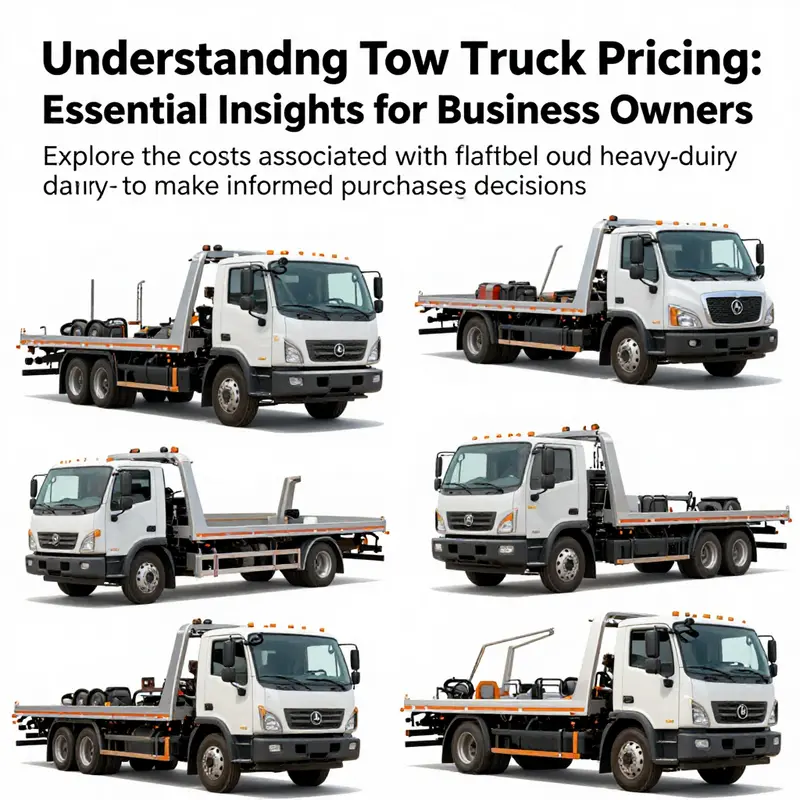
For business owners who rely on towing services, understanding the cost dynamics of tow trucks is crucial. Whether you’re considering investing in a flatbed tow truck for everyday operations or a heavy-duty wrecker for more specialized tasks, the associated costs can vary widely based on several factors. This article aims to dissect these nuances, beginning with flatbed tow trucks, which are among the most common and versatile in the market, and then moving on to heavy-duty options that cater to more demanding towing needs. By the end, you will gain a comprehensive overview of what influences tow truck prices, empowering you to make sound investment decisions.
Rolling Price Tags: Unpacking the Real Cost Spectrum of Flatbed Tow Trucks for Your Fleet
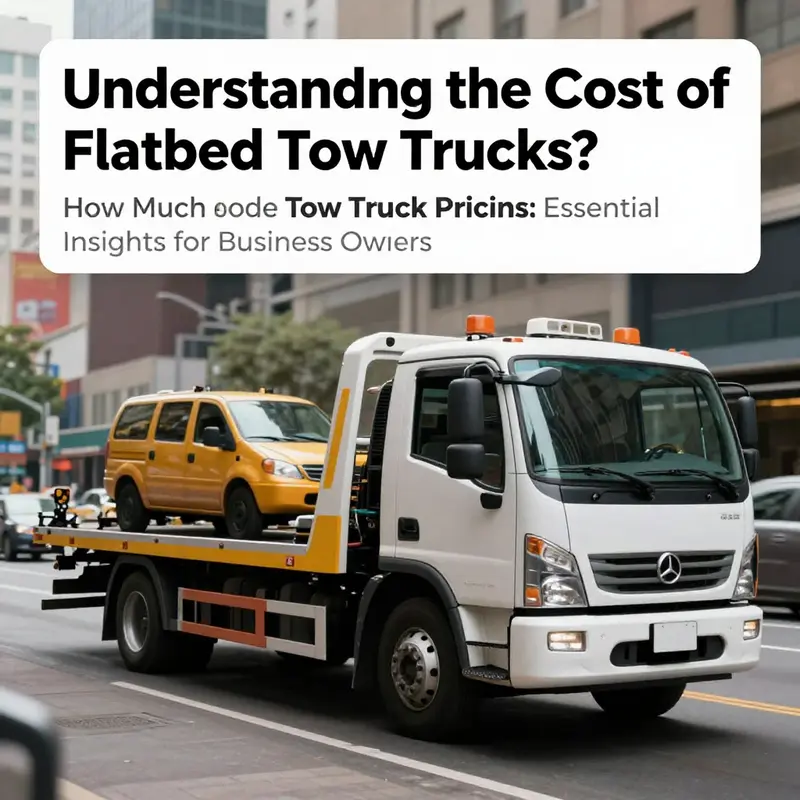
A flatbed tow truck is the quiet workhorse of a towing operation. Its price tag is more than a number on a spec sheet; it signals a long-term commitment to reliability, safety, and the ability to handle a steady stream of calls with minimal risk to vehicle owners. When you examine the cost structure of flatbed units, you move beyond sticker price and into a reckoning with capacity, build quality, and total cost of ownership. The spectrum is wide because the needs of fleets vary as much as the roads they travel. A light-duty flatbed, designed to haul small cars and compact models, sits at the lower end of the market, while specialized, high-capacity rollback configurations command premium prices. Even within those broad strokes, the cost language shifts with entry-level configurations that prioritize basic function and newer, more capable designs that promise greater durability, quicker serviceability, and longer lifespans on the road. The numbers, though, are only one part of the decision. The way a fleet uses a flatbed—how often it operates, the environments it encounters, and the level of service expected—shapes the financial picture as much as the upfront price does.
Beginning with the lighter end of the scale helps set expectations. New, smaller flatbed tow trucks with capacities in the 2- to 4-ton range tend to fall into a range that is approachable for small fleets or independent operators. On the low end, you can find basic models priced around the mid-teens in thousands, and as you move toward higher-performing units, the price can climb toward the upper tens of thousands. Those figures reflect machines built to perform routine transfers, handle common passenger vehicles, and fit into modest budgets. In practice, the total cost of ownership for these lighter units includes regular maintenance, periodic hydraulic service, and standard tires, all of which accumulate quickly as a fleet adds more hours of operation. Buyers often source these units directly from manufacturers abroad, which can influence lead times, spare-part availability, and after-sale support. The key for this category is balance: light-duty units must be inexpensive enough to acquire, but robust enough to endure the recurring duties they are expected to perform.
Crossing into the mid-range, a different set of priorities comes into play. For fleets that expect higher utilization or more demanding road rescue tasks, a new flatbed wrecker with better durability and more versatile bed configurations becomes attractive. In this tier, prices typically land between sixty and ninety thousand dollars per unit. The improvement is not merely a longer bed or stouter winch; it also often includes more sophisticated hydraulic systems, improved corrosion resistance, and better ergonomics for operators who spend long shifts behind the wheel. These are the machines designed to reduce downtime—quicker bed deployment, smoother loading, and more predictable performance across a wider array of vehicles and situations. Even here, the financing and maintenance decisions matter: a longer warranty, favorable financing terms, and a well-planned maintenance program can push the long-term cost of ownership down, even if the upfront price is higher.
For fleets whose needs extend to high-capacity work—flatbeds capable of heavier loads and specialized configurations—the price language shifts again. New units in the high-capacity or rollback category can begin in the mid five-figure range and stretch well beyond six figures depending on payload, reach, stabilizers, and chassis robustness. In many cases, buyers encounter a cost landscape where the raw price reflects an escalation in capability: heavier booms, stronger hydraulics, more extensive safety systems, and the ability to handle challenging recoveries in adverse conditions. A portion of this investment also covers the training and certification required to operate these machines safely and effectively. It is not unusual for seasoned operators to justify the spend by the potential to complete more complex recoveries more quickly, thereby increasing daily throughput and net revenue per hour. It is worth noting that the price signals here can also be an indicator of build quality and longevity; a higher upfront investment can translate into lower maintenance surprises and longer service life, which matters when a fleet must stay ready around the clock.
The market for used equipment adds another dimension to the discussion. A pre-owned unit can offer substantial savings, particularly for fleets testing new service areas or expanding capacity without assuming the risk of a new build. A decade-old flatbed can still deliver reliable performance if it has been well maintained and stored, but buyers should scrutinize structural integrity, hydraulic lines, bed thickness, and the condition of the winch and controls. Conversely, a newer, fully equipped used model can bridge the gap between price and capability, delivering many modern features at a reduced upfront cost. The contrast between new and used is not merely a function of age; it also reflects wear patterns, component wear, and the risk profile for the operator. When evaluating used units, a careful due diligence process—inspection, service history, and a realistic appraisal of upcoming maintenance—becomes essential. In this sense, the decision mirrors the broader strategic choices a towing operation faces: invest in reliability now or allocate capital gradually while balancing risk and growth.
Beyond the sticker price, several factors consistently shape the total cost of ownership. The first is capacity and bed configuration. A longer bed with a robust winch can reduce the time spent on each call, which translates to lower labor cost per tow and higher daily finished-tow counts. Then there is chassis and drivetrain robustness; heavier-duty frames and axles tolerate higher workloads and tougher environments but come at a price premium. Fuel efficiency matters, too, especially in regions with long average tow distances or frequent multi-vehicle incidents. A unit with a more efficient hydraulic system and smaller idling footprint can lower operating costs noticeably over time. Insurance and financing are other big pieces of the equation. Some operators optimize cash flow by pairing a higher-interest loan with a shorter payoff period, but that can increase monthly costs and risk if demand dips. Conversely, lease-to-own or conventional financing arrangements distribute the financial strain but impose long-term commitments and interest costs. Maintenance, parts availability, and the need for trained technicians are ongoing elements that shape the annual cost line. A fleet that maintains a proactive servicing schedule can avoid expensive repair surprises and extend the life of its investment.
When determining how much to spend, fleets should translate these factors into a clear business case. Start with the daily demand: how many tows are expected, what types of vehicles are most common, and what weather or terrain conditions are typical. Then project utilization: how many years the asset will be in service, when major components are due for replacement or overhaul, and what the residual value might be at the end of the expected life. Finally, compare scenarios that weigh upfront price against reliability, downtime, and the ability to capture more work per shift. For regional operators seeking local coverage, it helps to look at nearby markets and understand the typical service mix and rates. See how a local tow-truck service operates in your area, and consider how that service footprint aligns with the capacity and speed you would require from a flatbed unit. Alexandria tow-truck service can serve as a practical reference for how fleet size, response times, and service scope interact with equipment choices in a real-world setting.
For buyers exploring global sourcing, the market offers a broad spectrum of options. The decision to import versus buy domestically hinges on lead times, service support, and the ability to maintain the equipment over years of operation. International marketplaces and manufacturers can provide attractive price points, but import duties, warranty coverage, and parts availability should be weighed carefully. A practical approach is to assess the total landed cost, not just the unit price, and to factor in support arrangements that minimize downtime when components require service or replacement. In this context, the broader lesson remains simple: the cost of a flatbed tow truck is not just a price tag; it is a forecast of how well the vehicle will perform, how often it will be in service, and how effectively it will help your business grow. For buyers who want an external reference to supplier options, a widely available listing demonstrates the kind of range that exists in the market, underscoring why due diligence and clear requirements are essential before committing capital.
External resource reference: https://www.alibaba.com/product-detail/Factory-Price-Rescue-Tow-Flatbed-Wrecker_1600743381882.html
null
null
Final thoughts
Understanding the costs associated with tow trucks, from flatbeds to heavy-duty models, is essential for business owners seeking to invest wisely. As you’ve learned, factors like the type of truck, its capabilities, and the conditions of use significantly influence pricing. Assessing your specific needs and budget can ensure that you choose the right tow vehicle for your operations, enhancing both efficiency and reliability.