
For business owners relying on vehicles for their operations, understanding the costs associated with towing is crucial. Pricing structures can be complex, influenced by various factors including distance, vehicle type, and location. This article clarifies how much tow trucks cost per mile and breaks down the elements that affect these prices. In the following chapters, we’ll explore the cost structures of towing services, the key factors influencing prices, and conduct a regional comparative analysis of towing costs, empowering you to make informed decisions when faced with towing needs.
Miles, Fees, and Real Costs: Demystifying Tow Truck Pricing Mile by Mile
When a breakdown or accident leaves you stranded, the sticker shock isn’t always the mile marker you see on a map. It’s the way tow pricing is built—not just the distance, but the underpinnings that can push a simple mile count into a much larger bill. Tow costs tend to follow a practical structure: a base service fee and a per-mile charge, or occasionally a flat per-mile rate with fewer add-ons. In many shops, the familiar “hook and roll” routine—where a base fee covers dispatch and readiness, and then the truck charges for each mile—maps onto real-world invoices. The base fee often sits in a range of about fifty to a hundred dollars, depending on the company, the time of day, and the local market. From there, the per-mile charge can vary, sometimes sliding into a couple of dollars per mile, sometimes higher depending on vehicle type, weight, or the equipment required to safely move it. An everyday illustration might look like a base of around $50 plus a per-mile rate of about $1.75. A 12-mile tow, under that structure, would come in around $71 before any extras. Some drivers, however, encounter pricing that places the entire burden on per-mile cost alone, with a rate such as $3.50 per mile. In that scenario, the same 12 miles would amount to $42, with no base fee included. This divergence highlights a core truth: the per-mile rate is not a single universal figure. It’s a negotiation between service level, vehicle needs, and the company’s operating realities. The distance you need to cover is only the most obvious factor. The kind of vehicle being towed—whether a compact car, a sedan, a heavy SUV, or a specialty vehicle—can tilt the final cost because heavier or larger wheels, longer hitches, or extra winching equipment may be required. The season, weather, and time of day also exert influence. Emergency tows performed after hours typically carry surcharges to cover the extra labor, staffing, and potential congestion. In crowded urban centers, demand can push prices higher, while rural routes might show different patterns, with some charges tied to the longer distance to reach a repair facility rather than the complexity of the haul itself. A tow near a city may easily surpass the simple distance calculation because of traffic, parking restrictions, or the need to navigate around limited access points. It’s not unusual for the same nominal distance to yield notably different totals from one company to the next, just as the same vehicle may incur different costs from season to season or city to city. Given this variability, the most reliable approach is transparency before service begins: ask for a clear quote that itemizes the base fee, the per-mile rate, and any surcharges or extra services. In practice, that means securing a written estimate that separates dispatch time, after-hours fees, waiting time if the vehicle is not ready promptly, storage charges if your car must sit at a yard, and any special handling costs for SUVs or other heavier frames. The practical takeaway is to anchor expectations to the distance and the known price pieces, not to hope for a fixed per-mile number. To grasp the local landscape, consider looking into nearby providers and their pricing structures. For drivers in metropolitan areas, understanding regional tendencies can illuminate why one quote feels higher than another, even for the same mileage. If you’re navigating a city corridor, you can explore local options such as towing services in Washington, DC to compare how nearby firms approach dispatch fees and mileage charges. This kind of knowledge helps reduce surprise when the bill lands and improves your ability to plan for the unexpected—whether you’re dealing with a sudden highway incident or a weekend breakdown. While distance is the anchor, the final bill is a collage of factors: distance, time, location, vehicle type, and the particular services you require. An informed consumer approach—calling ahead for a detailed breakdown, clarifying what each line item covers, and understanding the potential for after-hours or emergency charges—transforms a potentially stressful moment into a manageable cost conversation. For a broader consumer perspective on how these costs accumulate, refer to an external overview that surveys towing costs across contexts and scenarios. External resource: https://www.allstate.com/insurance/auto/towing-costs.
Understanding Tow Truck Per-Mile Pricing
Tow pricing generally combines a base service fee with a per-mile charge. The base fee often ranges from $50 to $100, with per-mile rates around $1.50 to $2.50 depending on market and vehicle type. A simple 12-mile tow might land around $75 to $120 when the base and mileage are combined. Longer distances push costs higher as fuel, labor, and equipment wear accumulate.
Beyond distance, the type of tow truck matters. Flatbeds tend to be pricier than conventional wreckers due to specialized equipment and careful handling of sensitive vehicles. Time of day and location also influence the bill; emergency or after-hours calls carry a surcharge, and urban areas usually have higher rates than rural ones.
To avoid surprises, request a written estimate that breaks out the base fee, per-mile rate, and any surcharges. Providing the dispatcher with the vehicle type, pickup and destination, and any special access issues helps ensure an accurate quote.
Miles, Markets, and the Cost Quilt: A Regional Perspective on Tow Truck Rates Per Mile
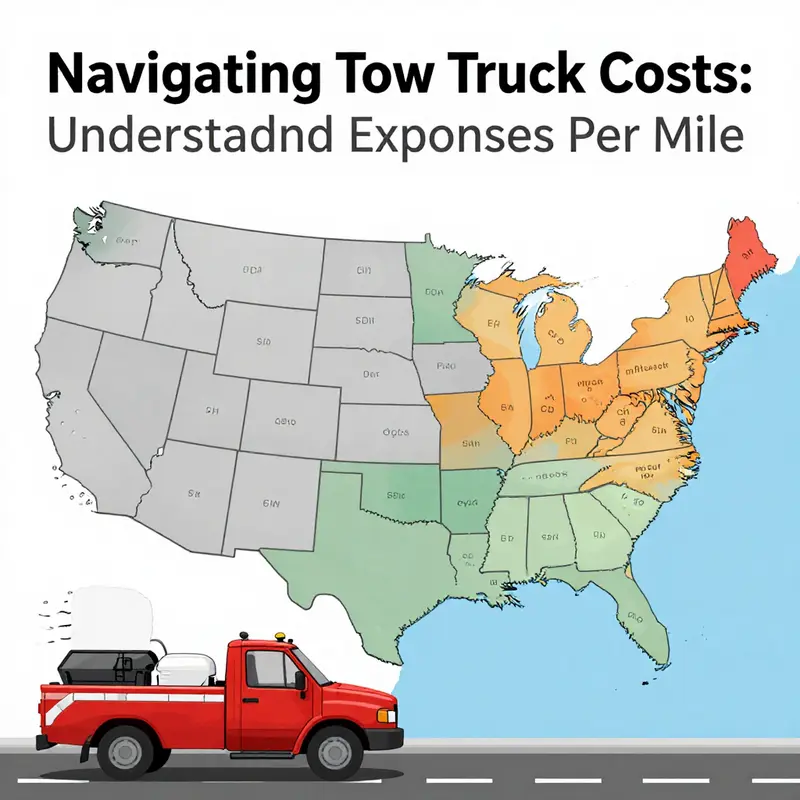
Tow trucks do more than shuttle a car from curb to repair bay; they stitch together a practical promise: someone will respond, lift will be exact, and distance will be priced fairly in the context of where you are and when you need help. The price per mile in towing is not a fixed dial you can simply turn. Instead it unfolds from a base call-out fee and a per-mile charge that shifts with local economics, traffic patterns, and the availability of service providers. In compact urban centers, where fleets cluster and dispatch flows are tight, the same ten miles can feel steeper than in a sparse rural county. In many urban areas, a ten-mile tow often lands around $110, a reflection not just of mileage but of the cost of quick response, specialized equipment, and the higher wages that keep a dense workforce available on short notice.
Regional pricing emerges from the same force that shapes housing costs, groceries, and transit: density, distance, and demand. Rural districts might face fewer nearby providers, but the travel required to reach you can add miles to the ticket in other ways. Long-distance tows—generally those extending beyond 100 miles—can range from $300 to $800, especially when sustained fuel burn, time on the road, and sometimes heavy recovery equipment come into play. These numbers still hinge on what kind of vehicle is being towed and the complexity of the job, but they illustrate how geography can stretch the same service into a very different price bracket.
A national snapshot reveals a landscape where the cost per mile is not uniform and where urban volatility and rural distance meet in a single quote. In states with high population density, such as California or New York, the competition among providers often drives a broader menu of pricing options, yet the demand for rapid arrival keeps the average per-mile figure high. The practical outcome is that a ten-mile tow in an urban setting may revolve around a price that, when broken into per-mile terms, sounds steep, but the total includes the base call-out, the time spent en route in traffic, and the logistics of moving a vehicle carefully through crowded streets.
To understand the structure behind these numbers, many shops operate what is commonly described as a hook-and-roll model: a base service fee paired with a per-mile charge. A typical framework might show a $50 service fee plus around $1.75 per mile, but this is far from universal. In some markets, the base fee sits closer to $100, and the per-mile rate climbs, especially for heavier or specialty vehicles. The apparent paradox—lower base fees paired with higher mile rates in certain places, versus higher base fees with modest mile charges elsewhere—underscores how variable pricing can be even within the same region. The takeaway is simple: the final bill reflects not only distance but a bundle of regional costs, time of day, and equipment needs that can tilt the math in unexpected directions.
Beyond distance, a roster of factors shapes the final figure. Vehicle weight and type matter: towing a heavy SUV or a truck demands more specialized gear and more careful handling, which translates into higher costs. Time of day and urgency are potent multipliers; emergency tows or service at 2 a.m. carry a premium to compensate for logistics, labor, and the challenge of mobilizing crews when demand is high. Urban centers experience higher rates due to congestion, peak hours, and the need to maintain prompt service amid traffic constraints. Rural areas, while sometimes less congested, often incur higher per-mile costs when drivers must traverse longer distances from their base to reach a stranded vehicle, or when extended recoveries require more fuel, additional personnel, or equipment.
For anyone planning a tow, the practical guidance is to obtain a detailed, itemized quote directly from a provider. Ask for the base fee, the per-mile rate, any minimums, and an explicit note about additional charges for nighttime service, heavy vehicles, or long-distance dispatch. Knowing which fees feed into the price helps in evaluating whether the quote aligns with local expectations or signals a particularly urgent circumstance. If you’re seeking a local touchpoint, you can connect with a nearby provider that serves the district and surrounding suburbs, such as a nearby DC-area service, to get a sense of regional norms and turnaround times. towing service in DC.
Ultimately, the story the numbers tell is about geography and service standards: urban markets compress time and raise operating costs, while rural markets stretch miles and multiply fuel and labor considerations. Neither is right or wrong—both reflect the realities of how towing services allocate resources to meet demand. For readers who want a broader national frame, the landscape becomes clearer when viewed alongside external analyses that compare regional pricing and factor-driven pricing models across the country. A comprehensive perspective can be found in national recaps that explore how much a tow costs per mile in various states and contexts, illustrating how small shifts in location can produce meaningful differences in dollars. For a broader national perspective, see the following external resource: Autoblog resource.
Final thoughts
In conclusion, understanding towing costs per mile is essential for business owners to effectively manage operational expenses. By familiarizing yourself with the cost structures, recognizing the factors that influence pricing, and considering regional variations, you can make educated decisions regarding towing services. This knowledge not only assists in budgeting but also helps in negotiating better deals with towing companies when emergencies arise, ensuring minimal disruption to your business operations.