
Understanding the costs associated with tow truck services is critical for business owners, as these figures can significantly impact operational budgets. Whether you find yourself facing unforeseen roadside emergencies or are planning for business fleet needs, it’s essential to understand how much tow trucks charge per mile. This overview will delve into the specifics of towing charges while highlighting key variables that can influence costs. We will first explore the typical rates and fee structures towing companies use, followed by a discussion on the various factors that can affect these rates. Armed with this knowledge, business owners can make informed decisions when selecting towing services.
Tow Truck Mileage Demystified: How Per-Mile Charges Shape Your Tow Bill
When a roadside crisis hits, the immediate worry is safety and getting back on the road. But as the flatbed or wheel-lift hums toward your location, another thought arises: how is the final bill going to be calculated? Tow truck charges per mile are not a single number, and they rarely sit in isolation. Most pricing structures blend a base hook-up or dispatch fee with a variable per-mile charge. That combination is what creates the total, and it explains why two tows that look similar on the map can end up with different final figures. In practice, you’ll usually see a model that starts with a base fee—often in the range of $50 to $100—and then adds a per-mile rate that can swing from roughly $2.50 to $7.00, depending on local market conditions and the specifics of the job. In urban cores, signs of premium pricing appear sooner, while rural routes can push total costs higher simply because the car has farther to travel and the tow truck spends more time on the road. A tangible way to think about it is this: the distance you pay for is not just the miles between point A and B, but the fuel, time, and labor required to deliver your vehicle safely to its destination. The practical effect is straightforward. If the per-mile charge is $3.50 and the base fee is $75, a 30-mile tow comes out to $75 plus 3.5 times 30, which is $105, totaling $180. That calculation may feel clinical, but it mirrors how many reputable providers structure their quotes and helps turn a vague “How much will this tow cost?” into a transparent estimate you can budget against.
Alongside that standard model, the broader industry data shows a typical corridor for average per-mile costs. Many operators fall within the $2.50 to $5.00 per mile range, with some premiums higher in dense urban markets or for specialized services where larger rigs or flatbeds are necessary. The reason for the spread is simple: heavier vehicles, longer stretches, and urgent calls require more equipment, more labor, and more fuel. This is especially true for non-running vehicles that must be hauled on a flatbed rather than towed with a basic hook-and-roll method. When you add in an after-hours call or an emergency, the tally can rise quickly because operators often face limited availability and higher overhead at night or on holidays. The calculus becomes less about a single mile and more about the entire context of the service.
To ground these numbers in everyday decision-making, consider a few representative scenarios. A short 5-mile tow may sit around the base fee alone, particularly if the service is a quick hook-up to move the vehicle a short distance. A longer 50-mile tow, however, can push the total well past $300 once the base is factored in and the per-mile charges accumulate. And when you stretch beyond two hundred miles, the total climbs into a range where many drivers feel the impact of long-distance transport costs, sometimes reaching $400 to $800 or more, depending on the exact mileage and any ancillary fees that may apply. These are not idle numbers; they reflect the way that distance and service type translate into real dollars for callers who often need help in a moment of stress.
The cost picture becomes more nuanced when other factors are layered in. Vehicle size and weight matter because heavier cars, trucks, or commercial vans require heavier equipment, more labor, and sometimes longer tows or more complex rigging. Time of day and urgency can tilt the price upward; emergency towing or after-hours dispatches are commonly charged at premium rates since the provider must allocate scarce resources at off-peak times. Location matters too. In metropolitan areas, you might encounter higher base fees and greater hourly charges due to traffic conditions, parking constraints, and higher living costs factored into wages. Conversely, rural areas often see longer drive times between calls, which amplifies per-mile costs and can produce a higher overall bill simply from the extended travel distance.
Service type also influences per-mile costs. A basic “hook and roll” tow—where the vehicle is simply hooked and hauled to a nearby destination—tends to have a lower per-mile rate than a flatbed tow. Flatbed towing involves more equipment, specialized handling, and sometimes different fuel consumption patterns, all of which can push the miles-price upward. The practical takeaway is that a single-mile figure cannot capture the whole story without considering the broader service package and the specifics of the vehicle being moved.
For anyone facing a possible tow, the best practice is to request a detailed estimate before service begins. A reputable provider will itemize the base fee, the per-mile rate, and any additional fees that could apply, such as storage charges or long-distance transport surcharges. This kind of breakdown makes it possible to compare estimates, budget with confidence, and avoid unwelcome surprises when the tow is completed. If you’re in a local area and want to explore nearby options, a nearby provider can be seen as a convenient reminder of how the market plays out in concrete terms. For a local option, consider Burke towing service in Burke VA, which you can learn about here: Burke towing service in Burke VA.
The broader context from major industry references reinforces this practical approach. The general guidance is to treat towing costs as a mix of a fixed entry price plus distance-based charges, with the total reflecting not only miles but the demands of the job. In other words, miles are important, but they are one part of a larger price equation. When you’re stranded, that equation can feel daunting, but with a clear understanding of the components and a request for a line-by-line quote, you can navigate toward a fair price and a reliable service.
As you prepare for the moment you might need a tow, it helps to anchor your expectations in the most common pricing patterns and to know what questions to ask. What is the base fee? What is the per-mile rate? Are there different rates for hook-and-roll versus flatbed, or for regional vs long-distance tows? Are there after-hours surcharges or storage fees if the vehicle cannot be retrieved immediately? Will you provide a written estimate before dispatch? By collecting this information, you align your choices with a transparent cost structure and gain leverage to negotiate fairly, especially in stressful circumstances.
For further context on how these figures play out in broader consumer experience, external guidance compiled by a leading consumer organization offers a comprehensive overview of typical towing costs and the variables that influence them. This resource complements the practical, on-the-ground math described above and helps drivers calibrate expectations across different regions and service models. External resource: AAA Towing Costs.
Miles That Move You: Understanding What Tow Trucks Charge Per Mile
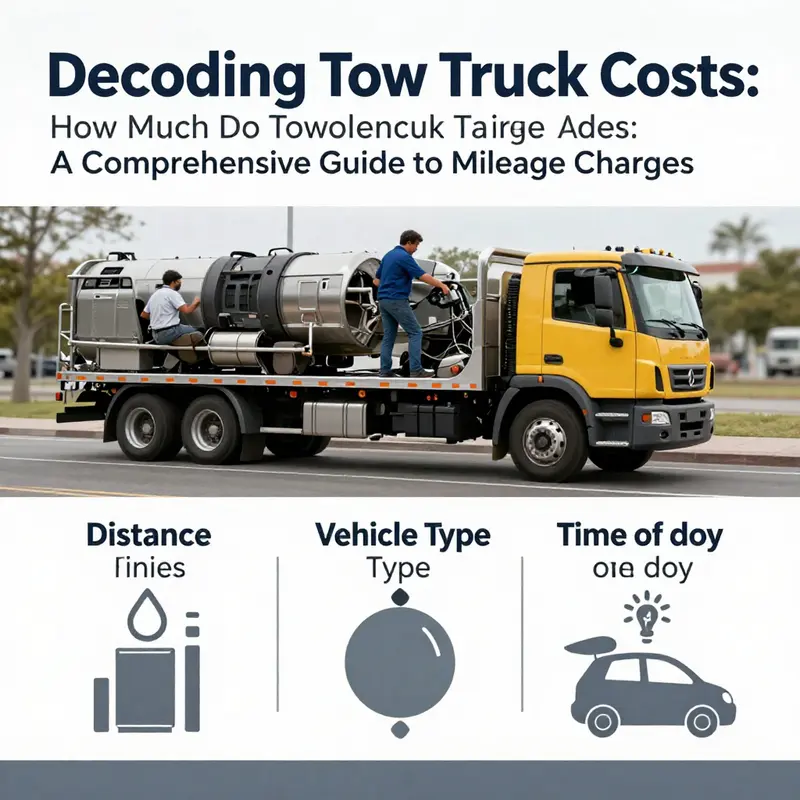
Prices for tow services don’t come with a universal price tag that applies everywhere. The per-mile component you see on an invoice is shaped by a handful of moving parts that can shift from city to rural road, from daytime to the middle of the night, and from one vehicle type to another. What starts as a simple calculation—distance times a rate—often expands into a tapestry of fees that reflects the realities of getting a vehicle from point A to point B while keeping the truck and crew prepared for any challenge along the way. If you map out the typical structure, you’ll see a pattern that isn’t fixed, but is explainable, and that makes sense of the sometimes surprising totals you’ll encounter on a tow bill.
Most common pricing models start with a base fee, also known as a hook-up charge, and then apply a per-mile rate for the distance traveled. In practice, that base fee gives the driver the first logistical push, covering things like dispatch, mobilization, and getting the tow truck prepared with the right equipment. A typical base fee hovers in the neighborhood of fifty to a hundred dollars. The per-mile charge varies more widely, generally landing somewhere between roughly two and seven dollars per mile after the base is accounted for. The combination of these two elements—base and mileage—creates the total for any given tow. For example, a common structure might be a $50 base fee plus $2.50 per mile. Apply that to a 12-mile tow and you’re looking at about $71 before tax or any additional fees, which is a useful shorthand that helps people plan ahead. Yet even this straightforward example glosses over the real-world quirks you’ll encounter.
Distance is usually the single biggest driver of cost, and the way a company prices that distance can differ. A short tow of a few miles can still end up pricey if the base fee is high or if the vehicle requires more labor per mile due to weight or complexity. Conversely, longer tows may feel more economical on a per-mile basis because the base fee is spread over more miles. Rural areas tend to have higher total costs per mile when long trips to repair shops or impound lots are involved, simply because the journey itself is longer and sometimes requires specialized equipment. Urban services, while potentially closer to you, often contend with traffic, parking constraints, and higher labor rates, which can push the overall cost up even if the distance is shorter.
Vehicle type matters, too. Heavier vehicles—full-size pickups, SUVs, or commercial vans—require larger tow rigs and more fuel, not to mention the extra risk management and specialized attachments. That translates into higher per-mile costs and, in some cases, higher base fees. Lighter cars, sedans and compact vehicles, typically cost less to tow because they demand less equipment and fewer personnel. The incentive to price by weight is common: a heavier load isn’t just more miles to drive, it’s more wear and tear on the equipment and more careful routing to avoid damage.
Time of day introduces a different kind of premium. Emergency and late-night tows are notorious for their surge pricing, a reflection of the priority given to after-hours calls and the willingness to staff for those hours. The same distance can feel significantly more expensive if it falls in the middle of the night or during a weekend emergency, when the market is more strained and the crew has to be ready to respond immediately.
Location matters in a concrete way. In cities with higher operating costs and denser traffic, base fees and per-mile rates tend to be higher than in rural regions where the physical distance to travel is a more dominant factor. The local regulatory environment and insurance requirements can also shape how much a company is able to quote up front without compromising service quality. The particular kind of service you need further influences the price. A simple one-vehicle tow from roadside to a nearby shop is priced differently than a complex accident recovery, multi-vehicle tow, or a winching job out of a ditch where more equipment and manpower are required.
In addition to the basic base and mileage charges, there are several add-ons that can appear on the final bill. Toll transits, fuel surcharges, and dispatch fees are common components that some companies fold into the final price, while others list them as line items. Optional services—such as winching, extra labor beyond the standard hook-up, or difficult recoveries—add complexity and cost. It’s not unusual for a long, involved tow to accrue a handful of these extra charges, especially if the scene requires careful handling, extra equipment, or a longer on-site presence to ensure safety and prevent damage to the vehicle or surroundings.
What does this mean for you as a consumer trying to estimate a cost before saying yes to service? It means you should expect a price that reflects not just the miles but the entire package of requirements—distance, weight, time, location, and service type. The most reliable way to avoid surprises is to request a detailed estimate before the tow takes place. Ask for a written quote that itemizes the base fee, per-mile charges, and any additional fees that may apply, including tolls or fuel surcharges. If you’re in an area where pricing can swing widely, consider calling a couple of nearby providers to compare quotes and to understand how each company structures its rates. An informed consumer makes smoother decisions when the numbers are laid bare, and it’s reasonable to ask for a specific breakdown rather than a single lump sum.
For a practical frame of reference, many people use a simple mental model: base fee plus a rate per mile, and then a check against possible add-ons. If you’re evaluating a 30-mile tow with a $50 base fee and a $2.50 per-mile charge, the base math would bring you to about $125. Add-ons—tolls or a winching job, for example—could nudge that total higher. If the distance stretches to 40 miles, using the same structure, you’re looking at around $150 before extras, a number that starts to reflect the scale of the journey and the resources the tow company must marshal. Different regions and companies will present different base-fee plus per-mile configurations, and some providers may offer flat-rate tows for shorter distances. The variability isn’t a sign of poor pricing practices; it’s a predictable outcome of the way the industry must balance reliability, equipment, and labor costs with the realities of the road.
When you’re preparing for a tow, it helps to place your local context within a broader national picture. General trends suggest that the decision you face is not simply “how many miles?” but “what else is included?”—and that the most critical step is obtaining a clear, written estimate that covers all potential fees. In the broader landscape, national guidance and trends can be consulted to understand averages and swings you might encounter in your region. For real-time, area-specific information, you can review cost trends from trusted industry resources such as The Zebra, which aggregates data to offer an understanding of typical towing costs across the country. For local context, you can check a nearby provider’s page such as towing service Washington DC.
In sum, the price you pay per mile for tow services is rarely a stand-alone figure. It rises and falls with the total package of service. Knowing the base fee, the per-mile rate, and the likelihood of add-ons gives you a realistic framework for budgeting and decision-making. It also helps you ask the right questions when a dispatcher calls, so you can confirm what you’re paying for and how any extra costs are calculated. As with many services, a transparent quote and a clear explanation of what’s included lead to better outcomes for everyone on the road. External insights on broader trends can complement local quotes, helping you gauge whether a quote is fair for the time of day, distance, and vehicle involved. For a broader sense of pricing dynamics, see the external reference above.
External resource: https://www.thezebra.com/insurance/towing-cost/
Final thoughts
In summary, charges associated with tow trucks can vary widely based on numerous factors, including base fees, per-mile rates, and specific circumstances related to the tow itself. Understanding how much tow trucks charge per mile is crucial for effective budgeting and planning, especially for business owners. By being informed about the various influencing factors, owners can better assess the options available, ensuring they are prepared for emergencies while keeping costs manageable. Ultimately, knowledge of these costs empowers business owners to engage more effectively with service providers.