
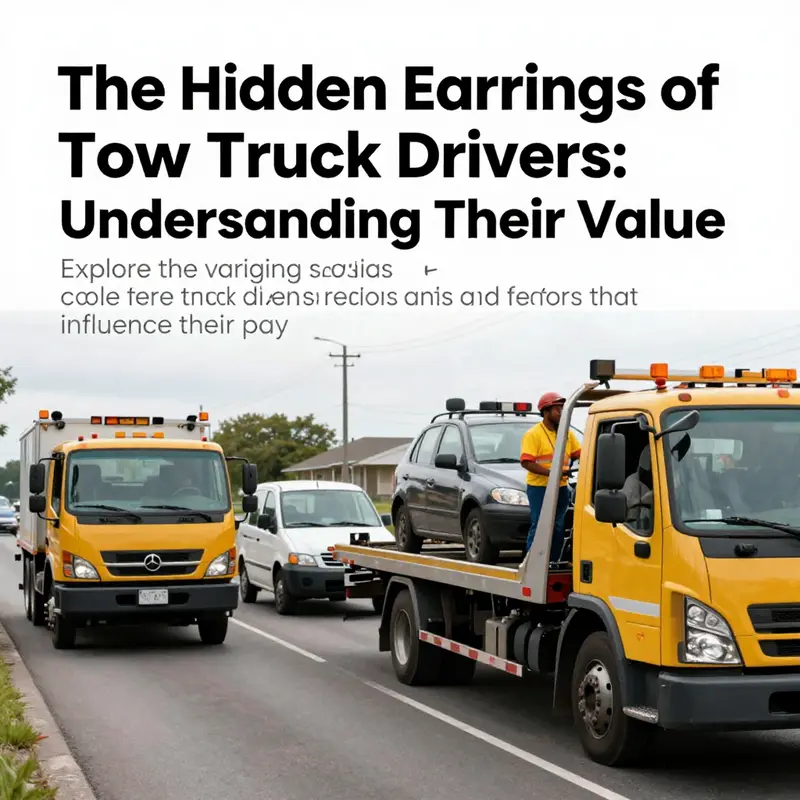
Understanding the earnings of tow truck drivers is essential for business owners seeking to navigate the towing industry. Amid growing demand for roadside assistance and towing services, knowledge of salary ranges can inform hiring practices, budgeting, and competitive positioning. This article explores the salaries of tow truck drivers in Canada and the United States, dives into regional variations, and identifies key factors influencing pay based on experience and location. Each chapter will deepen your understanding of how to attract and retain skilled drivers, thereby enhancing your business operations.
Regional Pay on the Move: What Canadian Tow Truck Drivers Earn Across Provinces and Cities
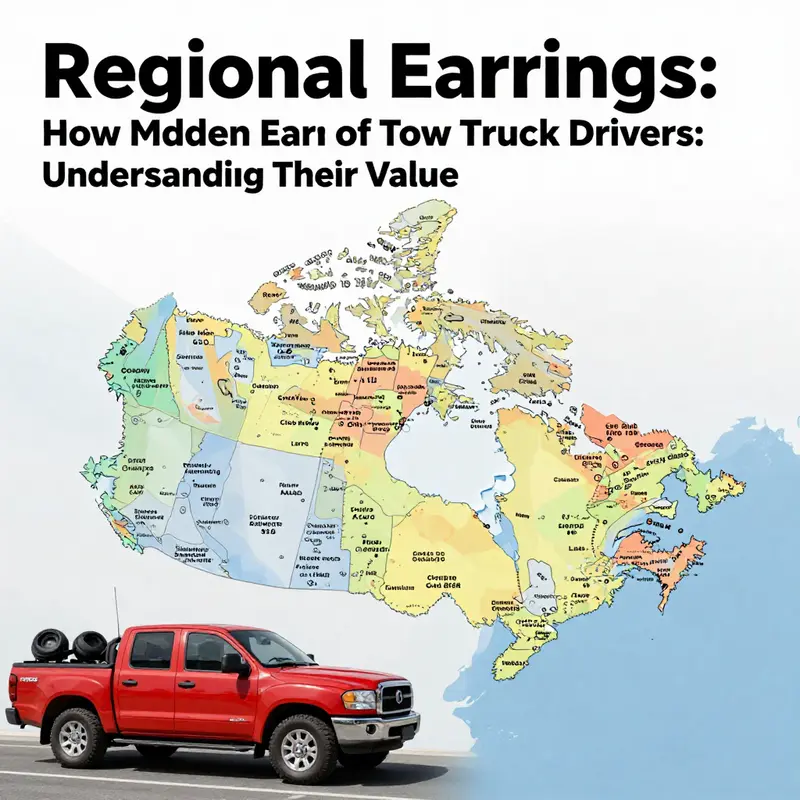
Pay for tow truck drivers in Canada varies with geography, demand, and the kind of work. In a country as large as Canada, the difference between earning in coastal cities and northern towns can be noticeable. The national snapshot sits around the mid-teens per hour, with the widely cited figure near $17.75 per hour based on salaries reported as of December 2025. That provides a useful benchmark, but it should be read as a starting point rather than a guaranteed floor, since actual wages depend on how and where the work is performed and whether it is paid hourly, salary, or per-call, with overtime and on-call premiums affecting earnings. When converted to annual terms, the research suggests around $101,000 per year in many cases, though actual totals vary with hours and shifts.
The regional story is instructive. In British Columbia, base pay roughly aligns with the national average (about $17.85 per hour), but there are pockets where pay climbs due to local demand in urban corridors. Ontario shows a similarly varied landscape; the private sector often competes for drivers with faster response times, which can lift hourly compensation in cities with dense traffic. Alberta tends to sit a touch below the national mean, with typical rates around $16.01 per hour, reflecting wage pressure in resource economies and the number of towing firms.
But averages hide the opportunities in specific municipalities. In Thunder Bay, Ontario, the hourly wage can sit higher (around $26.53), while Ottawa often hovers above the median near $25.19 per hour. These city-specific figures illustrate how a driver’s paycheck can swing based on location, independent of the province-wide average. Public-sector tow jobs in some regions can offer steadier hours and benefits, sometimes at a lower hourly rate but with added stability and pension or health coverage. For example, regional services in Ontario may report weekly pay levels that translate into tens of thousands of dollars annually.
When we widen to city postings, the income landscape becomes even more varied. Some postings in Surrey, British Columbia, have appeared at as high as $39.50 per hour, reflecting localized demand and premium for reliability in dense suburban networks. In Alberta’s resource regions, high-end postings can exist as well, such as Fort McMurray where a Class 3 tow driver can command $40–$45 per hour due to the demanding work environment.
Industry commentary often points to higher-pay pockets as signals of local demand. Chestermere, Alberta, and Whitby, Ontario show examples of compensation above baseline rates, underscoring the importance of employer type, shifts, and incident-driven demand in shaping pay levels. For instance, Whitby postings may accompany annual salaries that, when converted to hourly terms, outpace base rates for drivers taking on full-time shifts or covering peak demand periods.
Taken together, Canada’s earnings picture sits alongside a cross-border context that highlights differences with nearby markets. Across the United States, the average hourly wage for tow truck drivers sits around $21, while annual earnings often approach roughly $42,000. Canada’s figures, when measured in annual terms, can equate or exceed those totals in markets with heavy incident traffic, long winters, or large fleets requiring around-the-clock staffing. The takeaway for a prospective driver is to evaluate the whole package: hours, shift regularity, and the value of benefits, along with overtime or on-call premiums.
For someone evaluating where to start or move, the emphasis is on balance. A higher hourly rate in a busy city may come with more onerous shifts, while steadier, quieter markets can offer predictable schedules and gradual pay growth as experience accrues. The best choice depends on a balance of immediate income and long-term career stability, as well as any union, municipal contracts, or company policies that shape compensation tiers.
As a practical guide, the essential considerations are the province and city, the type of employer (private fleets versus public-sector operations), and the typical shift structure. The Canadian market rewards experience, reliability, and the ability to handle a range of roadside scenarios, so the national average provides a baseline but the regional stories—such as Richmond’s premium or Thunder Bay’s elevated rate—are the key guidance points for what tow truck drivers can expect in Canada.
External reference: Indeed’s salary data for tow truck drivers supply a broad context for regional variation and the overall wage landscape. See https://www.indeed.com/career/tow-truck-driver/salaries for additional context and updated figures.
Tow Truck Pay in the United States: An In-Depth Look at Earning Potential, Pathways, and Industry Realities
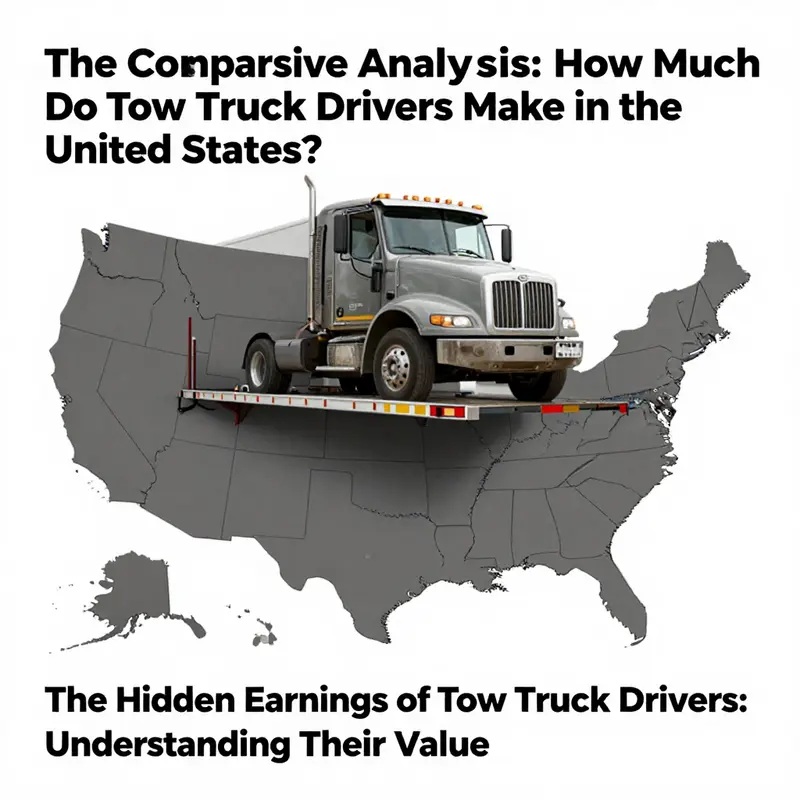
Wages for tow truck drivers in the United States map a broad landscape. They reflect not only the skill and experience of the driver but also the demands of the job, the market where the work happens, and the kind of towing performed. Across the country, drivers encounter a spectrum from entry-level roadside assistance to highly specialized, heavy‑duty operations that move and recover large commercial vehicles. The numbers tell a story of a profession with meaningful earning potential, especially for those who lean into the right niches and the right markets. As of early 2026, industry reporting places the general US average annual salary for tow truck drivers at about $52,210, with an average hourly wage near $21.23. Those figures are tempered by real-world conditions: where you work, what you tow, and how much overtime you’re able or willing to take. In other words, pay isn’t fixed; it’s earned through a blend of market timing, skill, and the ability to meet peak demand when it most matters. Within that frame, a noteworthy tier exists for heavy‑duty towing. Drivers who specialize in semi-trucks or other large commercial vehicles can reach roughly $80,000 annually in many situations. This higher end is less about a single city and more about the complexity of the job, the longer callouts, and the need for specialized equipment and training. It’s the kind of niche where experience compounds with the right client base and a willingness to handle extended shifts, weekend coverage, and high-stakes recoveries. The broader salary range, however, remains wide. February 2026 reports show total compensation for tow truck drivers spanning from about $24,812 to as much as $223,303 per year. The average of around $52,210 sits in the middle of a field where one good year can significantly outpace the next. Entry-level positions typically start around $40,853 per year, a figure that reflects the learning curve, the need to build a reputation, and the occasional standstill in markets with a flatter demand curve. It’s not unusual for top operators at large firms or in high-demand regions to earn well beyond the average, especially when overtime, on-call premiums, and emergency callouts are factored in. The hourly side of the equation repeats this diversity. While the national average hovers around $21.23 per hour, the actual experience on a given shift can vary widely. A driver working for a major transportation firm might bring in roughly $1,424 per week, a figure that many interpret as a strong indicator of high-demand periods, significant overtime, or both. The math behind this weekly estimate can be tricky; it may assume generous overtime, weekend premiums, or a role that includes dispatch duties, all of which can tip the weekly total upward relative to a standard 40-hour week. Market demand is a powerful driver of these numbers. In recent years, shortages of qualified drivers across the broader logistics sector have spilled into the towing world. Employers have responded with higher wages, signing bonuses, and more robust benefits packages to draw talent into private fleets, roadside service networks, and specialized recovery outfits. This competition for skilled workers helps explain why some companies publish pay well above the median figures and why the best opportunities in heavy-duty towing—especially in infrastructure-heavy regions or near major industrial corridors—tend to pay more. It’s not merely about the location as a city; it’s about the type of work and the tempo of operations. A metropolitan area with dense traffic, frequent accident scenes, and a year-round demand for roadside recovery can sustain higher pay, while more rural zones with fewer emergency callouts might offer more modest compensation. Within this context, the role of geographic variation becomes clear. Urban and coastal markets, ports, and transit corridors often pull wages upward, while interior or economically slower regions can trend lower, though exceptions exist when specialized services are scarce. Even within the same metropolitan area, pay can swing substantially depending on the employer, the fleet size, and whether the job emphasizes on-road assistance or off-road recovery and heavy-duty towing. The type of towing also matters. A driver who handles tire changes, lockouts, jump starts, and light roadside service may see a different pay trajectory than someone who is responsible for recoveries involving large tractor-trailers, buses, or construction equipment. The latter requires broader skill sets, additional certifications, and more demanding safety protocols. This combination of factors helps explain why a single national figure can never capture the full story. It is equally important to recognize the career pathways that can raise a driver’s earnings. Experience matters, but so do training and certification. A driver who expands into heavy‑duty operations, acquires specialized equipment operation skills, and builds a reputation for reliable, safe recoveries can move into roles that command premium rates. Over time, some professionals transition into supervisory or dispatch roles, or even own and operate small towing businesses, where income can reflect not just hourly earnings but the margins of running a service, managing crew rotations, and handling the business’s growth. The comparison with other regions and even other countries casts additional light on the economics of tow work. In Canada, for example, the national average hourly wage for tow truck drivers is around $17.75, with certain cities markedly above that baseline. This contrast highlights how local market dynamics—labor demand, cost of living, and regulatory environments—shape pay. Within the United States, the takeaway remains that earning potential is robust when drivers pursue specialized niches, work in high-demand markets, and commit to continuous improvement in safety and efficiency. The figure of $80,000 for heavy-duty specialists is not merely fluff; it represents a real ceiling in a field that is increasingly oriented toward skilled, mission-critical operations. It’s also a reminder that the most lucrative opportunities are often tied to the willingness to be on-call during nonstandard hours, to handle the most challenging recoveries, and to partner with fleets that rely on rapid, professional service to keep critical transportation networks moving. For readers who want a practical sense of locations and opportunities, the Washington, DC corridor offers a case in point. In many contexts, the DC area demonstrates how a major urban center with continuous traffic incidents, dense logistics activity, and a strong private towing presence can sustain higher pay scales. Within a chapter like this, the aim is not to promise a universal salary, but to map the spectrum of possibility and to illuminate how drivers can align their skills with the needs of the market. The broader insight is clear: earnings in tow work are highly contingent on specialization, market dynamics, and a driver’s proactive career development. By building experience, pursuing heavy‑duty capabilities, and selecting employers who value rapid, safe recoveries, a tow truck operator can reach the upper tiers of compensation while enjoying the stability that comes from consistent demand and a robust service culture. For those who want to explore local opportunities further, a practical starting point is to examine regional listings and company pages that emphasize emergency response, 24/7 service, and fleet partnerships. See how some markets reward quick response times and technical prowess, and use those insights to plan a career path that leverages both skill and timing. External resources offer broader benchmarks to compare against the internal picture painted here. For a wider context on salary benchmarks, you can consult Indeed’s salaries page. https://www.indeed.com/career/tow-truck-driver/salaries
null

null
Final thoughts
Tow truck drivers play a crucial role in ensuring safety and mobility on the roads, yet their salaries vary widely based on numerous factors. By understanding regional earnings and what influences pay, business owners can develop competitive compensation packages that attract skilled professionals. The insights shared in this article underline the importance of recognizing the value of tow truck drivers in your operational structure. Prioritizing fair compensation not only enhances your workforce stability but also fosters better service delivery in the challenging towing industry.