
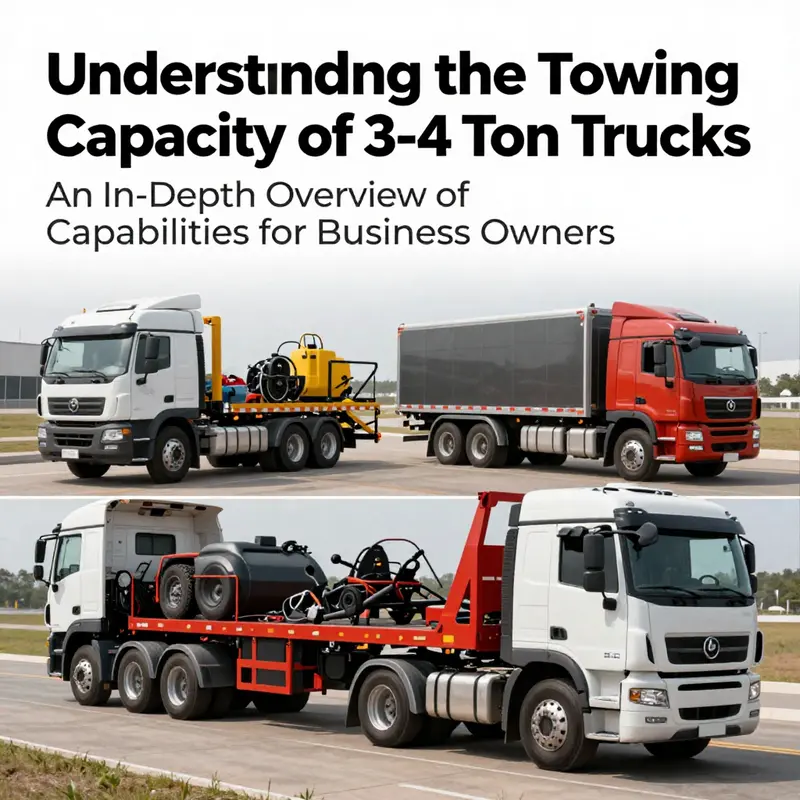
Choosing the right truck for your business needs requires understanding the towing capacity of available vehicles. For business owners, especially those in sectors requiring frequent transport of goods or equipment, the towing capacity of 3-4 ton trucks is a critical factor. This article delves into how much these trucks can tow, highlighting the variations in capacities based on make, model, and intended use. We will explore how specifications can differ in urban logistics versus heavy-duty off-road scenarios, providing valuable insights to help you make informed decisions for your fleet.
Tow Limits Unveiled: How Much a 3–4 Ton Truck Can Tow Across Configurations
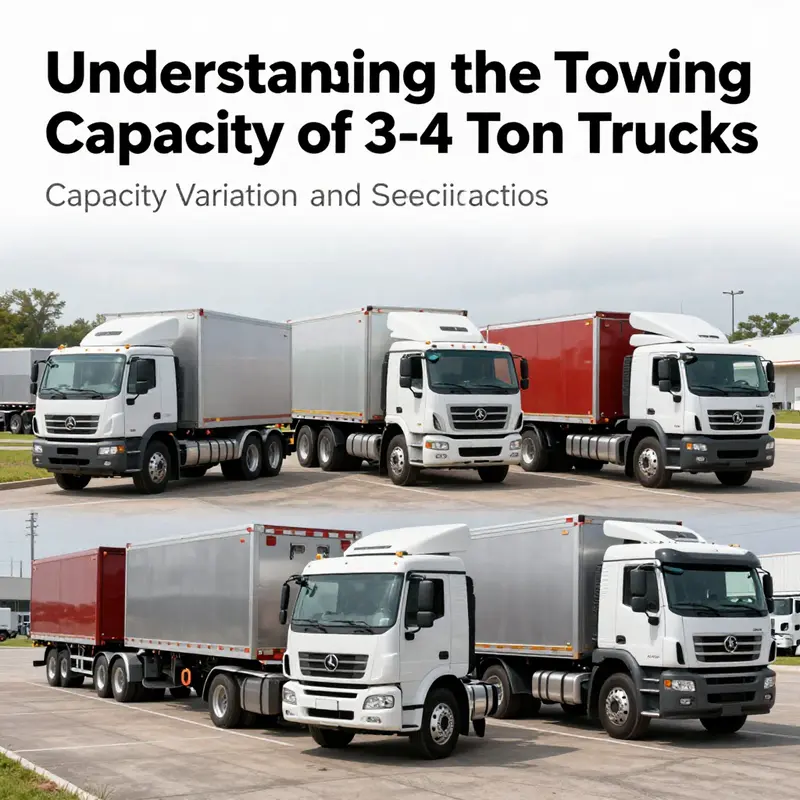
A 3–4 ton truck sits at a meaningful crossroads in the hauling world. It isn’t a light-duty partner designed for city errands, yet it isn’t a full-on heavy-duty rig built to move mountains every day either. Instead, it represents a class where payloads and tow loads meet, and a single number rarely tells the whole story. To understand how much a truck in this weight range can tow, you have to look beyond the simple equation of horsepower and torque. You have to consider how the vehicle is built: its gross vehicle weight rating (GVWR), the exact chassis design, the drivetrain configuration, the presence or absence of a factory tow package, and the way weight is distributed between the truck and the trailer. In practice, towing capacity in this class typically falls within a broad range, and that range shrinks or expands based on the details of each configuration. Between roughly seven and a half thousand pounds and ten thousand pounds is a common corridor for mid-duty work trucks that are tagged as 3/4-ton or 1-ton equivalents in broader classifications. This spectrum mirrors the fact that many models in this niche are engineered for robust hauling but with different goals in mind: some emphasize urban delivery efficiency, others emphasize rugged terrain or heavy-duty recovery tasks. The distinctions matter because a 4×2 urban work truck and a 4×4 off-road recovery vehicle can look parallel on a spec sheet yet perform quite differently when towing a trailer through a mountain pass or along a wet, winding back road.
To appreciate the practical boundaries, it helps to ground the discussion in a few fundamental numbers about these trucks. The GVWR, which defines the maximum permissible weight of the vehicle when fully loaded, generally sits in a range that begins just over fourteen thousand pounds and can extend to twenty-six thousand pounds. That number matters because it sets the overall ceiling for everything the vehicle can bear on land, including the combination of truck weight, payload, and trailer weight. But the amount you can legally tow is not the entire GVWR; rather, it is what remains after accounting for the truck’s own curb weight and its payload. In a simplified way, this is how it’s calculated: take the GVWR, subtract the curb weight and any payload; the remainder is the potential towing capacity, assuming the engine and drivetrain can support it and the trailer is properly equipped. A concrete example—one often cited in the field—illustrates the idea: a truck with a GVWR of twenty thousand pounds and a curb weight of ten thousand pounds has an available payload of three thousand pounds. Subtract those from the GVWR, and the remaining margin suggests a towing capacity around seven thousand pounds in that particular configuration. In the real world, the numbers shift with terrain, trailer design, and how the vehicle is maintained, but the principle remains: the more the truck weighs on its own, and the more payload it carries, the less headroom there is for towing a trailer.
Within this framework, the concept of a “factory tow package” emerges as a pivotal factor. Tow packages are not mere marketing add-ons; they are engineered enhancements that affect how a vehicle handles a trailer. A heavy-duty transmission, upgraded brakes, and reinforced cooling systems are integrated into the drivetrain and chassis to keep temperatures in check and to maintain control when a trailer is behind the truck. Without these enhancements, a model might be capable of towing a certain weight in theory, yet circumstances such as high heat, long grades, or sustained highway speeds could push it toward limits that compromise safety and reliability. In contrast, a vehicle equipped with a proper tow package, a robust suspension, and appropriate hitching hardware is more likely to realize the upper end of its rated capacity in everyday conditions. The practical upshot is clear: the exact towing figure is inseparable from the configuration, the equipment, and the intended use.
For many readers, the temptation to anchor on a single maximum figure is strong. Yet the narrative of a 3–4 ton truck’s towing capability is more nuanced. Trucks in this weight class are commonly designed to haul a range that starts around seven and a half thousand pounds and can push toward ten thousand pounds, provided several boxes are checked: the trailer has proper braking, the hitch and wiring are rated for the load, the trailer weight is distributed to prevent excessive tongue load, and the tow vehicle’s cooling and transmission systems can cope with the demand. The weather and terrain also play a large role. A straight highway pull on a cool day is very different from a long grade through mountains on a hot afternoon with the trailer fully loaded and a crosswind pushing at the side. The 4×4 variants—meant to deliver traction on slick surfaces, sand, gravel, or uneven terrain—offer an advantage in stability and control when towing in challenging conditions. Yet the trade-off can be a modest reduction in maximum trailer weight if the added weight of the drivetrain and chassis hardware is not offset by a corresponding increase in the vehicle’s wheelbase, braking capacity, or suspension strength. In other words, four-by-four traction is a friend for traction and control, not a universal amplifier for outright towing capacity.
A useful section of this conversation concerns how to interpret GVWR and its cousin, GCWR, in real-world planning. The GVWR, as mentioned, is a ceiling for the vehicle’s weight including everything on board, but the GCWR, or gross combined weight rating, is the limit that governs the entire vehicle-trailer system. For any given configuration, the GCWR ensures that the engine, transmission, frame, and suspension can handle the combined load of vehicle plus trailer. When planning a tow, the driver must ensure that the combined weight does not surpass the GCWR. This is where weight distribution becomes critical. If the trailer’s tongue is too heavy, or if the trailer saps more energy from the truck than anticipated, you may approach the GCWR without exceeding the GVWR, which can still pose handling and braking challenges. Conversely, if the tongue weight is too light, the trailer can fishtail or rinse through braking more aggressively, reducing control and safety. The practical implication is that the precise towing number is never a single, isolated figure; it’s a function of the vehicle’s weight, the trailer’s weight, how the weight is distributed, and the conditions under which the tow is performed.
The conversation around capacity is also a story about the kind of work the truck was designed to do. Some vehicles in this class serve as urban delivery workhorses, built for short trips with frequent stops and starts. Others are built for the realities of rural roads, construction sites, or recovery operations, where the trailer might be heavy and the terrain unforgiving. In a factory-informed view, the trucks in this tier are often built with a reinforced frame, heavy-duty springs, and cooling systems that can tolerate extended periods at higher engine loads. This does not guarantee an endless stream of towing power, but it does explain why a vehicle in this weight category can sustain work over longer intervals without overheating or overheating.
For readers who want to translate this information into a practical plan, the path is straightforward but exacting. Start with the vehicle’s official specifications, focusing on GVWR, GCWR, and the manufacturer’s stated towing rating for the chosen configuration. Then verify the trailer’s weight, including the cargo it carries, and calculate the tongue weight to ensure proper distribution. It’s wise to consider the trailer’s braking capacity and electrical system to ensure safe operation. If the trailer is large or heavy, double-check that the vehicle’s brakes, cooling system, and transmission are rated for extended duty and that the hitch, hitch ball, and wiring are correct for the load. In many cases, a professional assessment—collected from a dealership or a qualified towing expert—can save time and headaches by confirming that a given truck can safely haul a certain trailer through the typical routes it will encounter.
This is also a good moment to acknowledge the everyday realities of owning and using a mid-duty truck. The practical experience of towing with a 3–4 ton vehicle often reveals that real-world performance diverges from laboratory ratings. Factors like tire condition, ballast in the trailer, the aerodynamic profile of the load, and even the height of a trailer’s center of gravity contribute to the way the tow feels in practice. A stable setup with even weight distribution is easier to manage; a poorly balanced load tends to compound braking distances, steering effort, and the risk of trailer sway. The aim, always, is to align the truck’s capabilities with the task at hand while maintaining a margin of safety that recognizes the unpredictable nature of road and weather.
In the broader ecosystem of information and services that surround towing, it is helpful to remember that the journey does not end with a number on a spec sheet. If you find yourself needing a tow or recovery in the course of daily work, a professional towing service—a resource that specializes in vehicle recovery and weight management—can be a crucial partner. For readers working in regions where a certain DC area service is prominent, a practical option to consider is a local operator known for prompt response and careful handling of light to medium-duty tows. You can learn more about such services here: towing service in DC. This kind of support is especially valuable when you’re balancing the demands of a tight schedule with the safety realities of towing a heavier load down congested streets or along twisting rural lanes.
The bottom line is simple, even if its implications are nuanced. A 3–4 ton truck can tow a meaningful amount of weight—often in the range of seven and a half to ten thousand pounds under standard, properly configured conditions. The exact figure hinges on several variables: the precise GVWR and GCWR for the truck, the vehicle’s curb weight and payload, whether the factory tow package is installed, and the terrain and climate in which the tow occurs. A balanced trailer with proper brakes, good weight distribution, and appropriate hitch hardware makes a substantial difference. In the end, plan for the conservative end of the range to ensure safety when you’re on the road, especially when you’re dealing with long distances, steep grades, or variable weather. And when you’re in doubt or facing a particularly heavy load, consult the manufacturer’s specifications and towing guides for the exact model and configuration you own or operate. These sources, along with the experience of seasoned professionals, provide the clearest path to determining what your specific truck can safely tow in the real world.
For readers seeking additional sources to inform their planning, the official, model-specific guidance from manufacturers remains the gold standard. These guides provide detailed data that reflects the exact trim, engine, drivetrain, and optional equipment installed on a vehicle. They account for how a particular configuration behaves when towing over time, including notes on braking, cooling, transmission care, and the implications of towing at ranges that push both efficiency and safety. In practice, the most reliable approach is to compare the numbers across several reputable configurations that match your intended setup, then test within those boundaries while maintaining a respectful margin of safety. By approaching capacity as a system, not a single number, drivers can navigate the realities of the road with confidence and reduce the risk that comes with underestimating the load behind them.
External reference: https://www.ford.com/trucks/f-series/f-450/
Tow-Ready Realities: Real-World Capacities of 3–4 Ton Trucks Across Jobs and Terrains
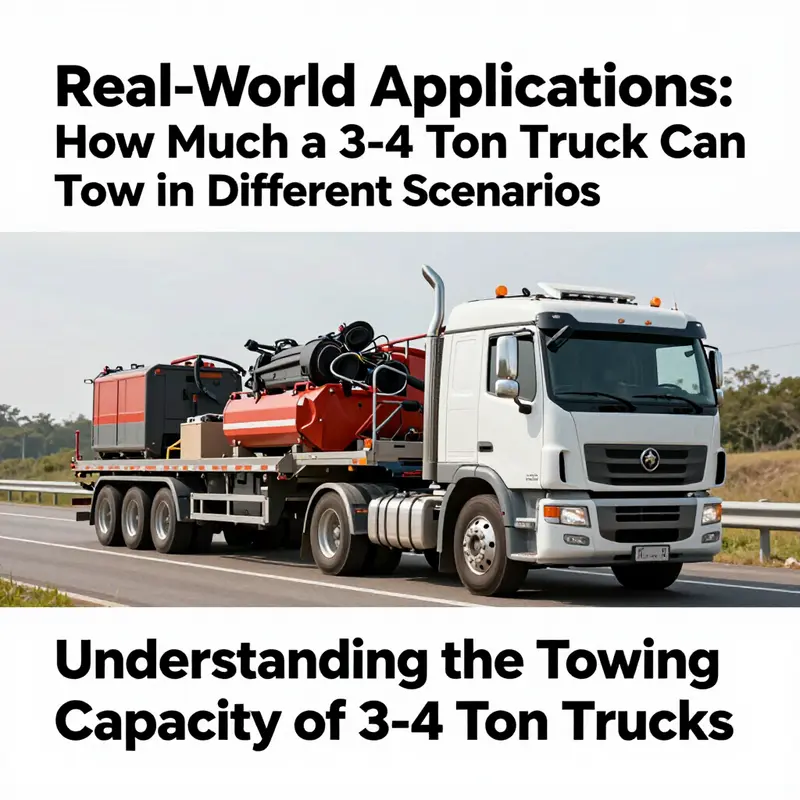
When people ask how much a 3–4 ton truck can tow, they are often looking for a single, definitive number. The truth is richer and more complex. A 3–4 ton classification covers a broad family of medium–duty work trucks whose primary purpose ranges from urban delivery to dedicated recovery tasks. The towing capacity visible on a spec sheet is not a universal ceiling; it is a guideline that shifts with the vehicle’s configuration, its intended use, and the equipment mounted on it. The gross vehicle weight rating, or GVWR, places these trucks in a midweight category that enables substantial towing while still retaining maneuverability and efficiency. Across this range, the GVWR typically sits between roughly 14,000 and 26,000 pounds, a spectrum that admits a wide variety of powertrains, axles, and chassis reinforcements. Within that spectrum, the actual towing capacity can be as modest as a few thousand pounds for simple, city-oriented configurations and can climb toward double digits in thousands of pounds when the vehicle is purpose-built for heavier tasks and is equipped with the right hardware, including reinforced frames, winches, and securement systems.
A crucial distinction often gets overlooked in casual conversation: the numbers reported for towing are not only about the engine’s raw pulling power. They reflect how the entire system behaves under load. Torque, which is the engine’s rotational force, plays a central role in moving a load, especially when the vehicle is starting from a standstill on an incline or when the trailer is heavily loaded. But torque must be translated through the drivetrain, the transmission, the differential ratios, and finally the hitch and tires. The bedrock of towing safety is a blend of capacity, stability, and control, not a single figure. Because a 3–4 ton truck is built to carry substantial payloads as well as tow, manufacturers delineate limits for both ends of the spectrum: how much weight the truck can haul in its bed or on its payload deck, and how much weight it can safely pull behind it. When those two limits converge, the result is a towing number that must be interpreted with care.
In routine towing situations, most 3–4 ton flatbed or heavy‑duty utility trucks operate within a broad yet practical window. They can haul or tow loads in the vicinity of 3,000 to 4,000 kilograms (roughly 6,600 to 8,800 pounds) when configured for mobility and rapid response. This range reflects standard, non‑specialized duty where the vehicle remains compact enough to maneuver in urban zones, along narrow streets, and around parking structures while maintaining predictable handling and braking performance. Yet there are outliers. When a truck is purpose-built for recovery or material transport, when it carries additional reinforcement, winch capability, and a robust, tilting or sliding bed, the towing envelope can extend beyond that standard band. In practice, certain heavy‑duty variants with specialized equipment can reach toward 10,000 pounds (about 4,500 kilograms) or more. It is important to emphasize that such upper limits belong to versions that are optimized for recovery work or industrial tasks, and they come with specific requirements in terms of braking capacity, load securement, and operator training. In other words, the figure you see on a brochure rarely tells the whole story without the context of the truck’s exact build, the configuration of the hitch, and the load’s characteristics.
What matters most in translating a number into safe real‑world performance is understanding how the truck is equipped. Drivetrain layout makes a meaningful difference. A 4×2 configuration, typical for city‑driven models, emphasizes efficiency and payload capacity but sacrifices some traction in adverse conditions. A 4×4 version, designed for rough terrain or adverse weather, brings superior traction and stability on slippery surfaces, yet it also adds weight and a slight reduction in the theoretical tow rating because those added components consume energy and alter weight distribution. Those tradeoffs are not abstract. They influence how quickly you can accelerate with a trailer, how you manage braking on descent, and how the load behaves during cornering. The presence of a robust winch and an integrated securement system can multiply practical capabilities, especially when the scenario involves uneven ground, limited access, or vehicles that require careful, low‑angle loading to protect undercarriages. Flatbed configurations with tilting and sliding beds deliver additional safety and efficiency by reducing the need to winch the vehicle to a vertical load or to drag it over a harsh incline. In recovery or urban service fleets, these design choices translate into meaningful differences in the daily outer limits of what can be towed safely and consistently.
Real‑world reporting from the field reinforces the idea that context governs capability. A typical three‑to‑four‑ton work truck en route on a municipal assignment, a roadside assistance call, or a light construction site may be expected to tow or haul within the 3,000–4,000 kilogram zone. This translates into a practical limit that allows for the safe loading of standard passenger cars, light‑dized delivery vans, or small trucks with moderate payloads. It also means that operators can perform tasks such as repositioning disabled vehicles with care, transporting vehicles that have low ground clearance without scraping the undercarriage, and doing so with a chain of securement and a winch to manage any unexpectedly shifting weight. The tilting or sliding bed feature plays a significant role here, because it lowers the approach angle and reduces the risk of damage during the loading phase. For professionals, the ability to place a vehicle on a bed with a gentle incline can be the difference between a successful operation and a costly, time‑consuming recovery job.
The broader utility of the 3–4 ton category becomes even more apparent when we widen the lens to include specialized applications. On construction sites or in industrial logistics, these vehicles may be fitted with custom bodies or attachments such as a crane or hydraulic lift. In those cases, the same platform that tows heavy loads may be repurposed to lift or place equipment and materials at height. This kind of versatility, while not strictly towing in the narrow sense, illustrates why a three to four ton frame is considered a versatile asset rather than a single‑function device. In several regional markets, operators favor ready‑to‑go solutions that enable immediate deployment without the delays of bespoke customization, a trend that is especially evident in the context of what are described as fitted body trucks. These configurations are designed to respond quickly to mining, agriculture, municipal needs, and other demanding use cases by delivering a dependable, emergency‑ready platform that can move from recovery to material handling with minimal downtime.
Of course, all these observations assume the truck is in good condition and that its systems are functioning properly. The real‑world performance is a function of road conditions, vehicle maintenance, and operator skill. A road with a steep grade, strong crosswinds, or a soft shoulder introduces variables that push a truck toward its practical limits, even if the underlying rating remains technically within the stated range. A truck that has not had its brakes inspected, its tires rotated, or its winch serviced may not achieve the numbers indicated in the manufacturer’s documentation. These are not theoretical concerns: they are the practical safeguards that ensure a heavy vehicle can perform. This is why professional operators insist on rigorous adherence to weight distribution guidelines, adherence to securement protocols, and training that covers signaling, brake management, and safe loading angles. In the end, the best way to interpret a 3–4 ton truck’s towing capacity is to view it as a spectrum anchored by the vehicle’s design and reinforced by the operator’s capability and the environment in which the work occurs.
For readers who are thinking about a real world purchase or fleet upgrade, the takeaway is clear. Start with the manufacturer’s specifications for each model variant and read them in the context of your typical tasks. If your needs include regular movement of heavier light commercial vehicles or frequent operations on uneven ground, you will want to investigate versions with reinforced frames, better securement options, and enhanced traction. If your work is predominantly urban and the terrain is predictable, a 4×2 configuration with a tilting bed might provide the most efficient balance between capacity and maneuverability. And if your operations include recovery work in challenging conditions, you may find that a 4×4 layout combined with an integrated winch and a robust loading mechanism is the key to expanding what the truck can handle on a given day. The distinction between the theoretical maximum and the practical daily limit is where the true value of a 3–4 ton platform emerges: a capable, adaptable tool that can serve as a towing workhorse, a recovery partner, and a light‑construction ally all in one.
Within this broad landscape, a practical route to clarity involves paying attention to the details that accompany any stated capacity. Does the figure assume a flat road, or does it account for a trailer with an axle load bias? Is the load evenly distributed to prevent boom and tongue weight issues? Are the brakes sized to handle the combined weight and dynamic load during downhill deceleration? Is the hitch rated to the same standard as the vehicle’s drivetrain and braking system? Answers to these questions are rarely found in a single line of marketing prose. They require consulting the technical data sheet or the official documentation from the manufacturer for the exact variant you are considering. In many fleets, the decision to tow within a specific limit is also governed by local laws and industry standards that regulate trailer braking requirements, lighting, and load securement. These requirements, while sometimes tedious, are essential to maintaining safety and protecting both people and property during towing operations.
For those who want a tangible point of reference in their daily work, a practical note about industry practice helps. In urban and municipal contexts, professionals often rely on flexible, ready‑to‑use fleets that can adapt to the day’s tasks. The ability to move from rescue to transport with minimal downtime becomes a strategic advantage. Where speed and reliability matter, the capacity to tow up to a defined limit while keeping risk under control is a crucial capability. In this light, the 3–4 ton category is not merely about power. It is about balance, control, and the disciplined application of the right tool to the right job. A well‑matched vehicle can move a compromised car off a busy street, deliver a skid of materials to a loading dock, or transfer a damaged truck to a safe yard, all while preserving the integrity of the vehicles involved and the safety of the operators.
In sum, the practical towing capacity of a 3–4 ton truck sits in a dynamic range shaped by design, configuration, and purpose. A standard heavy‑duty unit might safely tow or haul 6,600 to 8,800 pounds in everyday service, with higher ends accessible when the vehicle is specially equipped for recovery or heavy material handling. The upper limits are not a universal guarantee but a reflection of what is possible under the most favorable conditions and with the right infrastructure. The real world is rarely those ideal conditions, which is why operator training, proper load securement, and adherence to manufacturer guidelines remain the most effective tools for turning a rated capacity into safe, reliable performance. For readers seeking more context on the real‑world performance of medium‑duty trucks in construction and material handling, the peer‑reviewed case study literature provides a broader picture of how these vehicles behave under diverse operating environments. For a deeper dive, see the external source listed at the end of this chapter.
If you want to translate this understanding into actionable choices, consider the following practical cue: when assessing a potential vehicle for towing tasks, begin with its documented towing capacity and then analyze the specific components you will rely on—the hitch rating, the braking system, the winch capacity, and the bed or deck’s load distribution. Visualize a typical load you expect to move, and imagine the route and environment where you will operate. Do not rely on the assumption that because a vehicle is labeled 3–4 ton, it will handle every load within that range with equal ease. The most reliable path is to confirm the exact model variant, confirm the equipment installed, and review the manufacturer’s data sheet for the precise towing figure under conditions that mirror your real world. This approach protects your equipment, reduces downtime, and improves safety for operators and bystanders alike. For a local, practical perspective on service and support in a specific area, you may consult a nearby towing service such as Arlington towing service. Their on‑the‑ground experience with different configurations provides real insight into how the numbers play out in daily operations. And for a broader, evidence‑based perspective on real world performance across varied environments, the following external reference offers a rigorous examination of medium‑duty truck capabilities: External research source.
Final thoughts
A thorough understanding of the towing capacity of 3-4 ton trucks is vital for business owners who depend on these vehicles for logistics and transport. By acknowledging the various factors that influence towing capabilities—such as make, model, and intended use—owners can select the best options for their specific needs. Considering both the technical specifications and real-world applications ensures that businesses can optimize their operations and meet their transportation requirements efficiently.