
Understanding the timeline involved in tow truck services is crucial for any business owner who relies on vehicles for daily operations. Delays caused by towing can disrupt schedules, impact service delivery, and ultimately affect customer satisfaction. This article dissects the various factors that influence how long a tow truck takes to respond, complete the towing process, and deliver your vehicle to its final destination. By examining average response times, the intricacies of the towing process, and total time estimates, business owners can better manage their expectations and ensure their operations run smoothly.
Reading the Clock on the Road: How Tow Truck Timelines Bend with Location, Weather, and Distance
When you need help on the roadside, the clock starts ticking the moment you place the call, but the minutes that follow rarely land in a single, predictable block. The rhythm of a tow truck’s arrival and the time it takes to complete the service is shaped by a cluster of real-world factors rather than a simple stopwatch. The broad guidance you see in general summaries is useful, yet in practice the window can tighten or widen with each mile driven, each gust of wind, and each shift in demand. In urban areas, where fleets are dense and roads are optimized for quick response, the arrival may hover around a tight cadence during normal hours. In sprawling rural landscapes, even a well-organized dispatcher can be stymied by long travel distances and limited nearby units. The result is a spectrum rather than a fixed time, a pattern that depends as much on geography as on the moment you call for help. The best way to understand this spectrum is to map the path from request to recovery, not just the final number on a screen or a mouthful of anticipated minutes. In cities, the clock often starts with a brisk tempo, while on country roads the clock may seem to stretch in slower, more deliberate ticks as the nearest available vehicle works its way toward you. This variability is why many providers emphasize transparency in dispatch and why real-time updates have become a standard feature for modern roadside assistance. The goal is not to promise a one-size-fits-all interval but to deliver a realistic, actionable frame that a caller can rely on for planning and safety. For readers who want a concrete sense of how this plays out in a busy corridor, a local page focused on Washington DC area services can offer a practical snapshot: towing-service-washington-dc.
From there, the numbers you hear about arrival times begin to make more sense. The average response time in the United States is commonly discussed in the range of minutes rather than hours, yet the actual figure depends on where you are. In dense urban zones, it can be as fast as ten to fifteen minutes during regular operating hours when demand is steady and fleets can respond quickly. In more remote regions, even a well-staffed network may see the response stretch beyond an hour, especially when weather or road conditions slow travel or when multiple incidents compete for the same scarce resources. The variability isn’t just about distance; it is also about timing. Weekdays, weekday mornings, and evenings tend to bring heavier traffic and more incidents, which can push response times upward even in cities with abundant service options. Weather adds a second layer of complexity. Snow, heavy rain, fog, or ice can slow both the tow truck and the vehicle securing process. Roads that become impassable or hazardous force dispatchers to re-route or re-prioritize calls, which may lengthen the wait. In the background, the availability of nearby tow trucks is a dynamic, real-time constraint. If several calls arrive simultaneously or if a major incident ties up multiple units, the nearest unit you were counting on may already be allocated elsewhere, and you’ll wait longer while a different crew makes its way to you. The type of tow matters too. A simple jump-start, a flat-tire fix, or a tow onto a flatbed can all begin with similar dispatch times but diverge quickly once the technician arrives on scene. A minor roadside fix may be complete in minutes, while a complex recoveries after an accident—where vehicles are damaged, or the terrain is tricky—can require careful rigging and extra equipment, lengthening both response and on-site time.
Once the tow truck arrives, the actual loading and transport can add another layer to the timeline. A straightforward roadside issue might take as little as 15 to 30 minutes on-site, enough to secure the vehicle, connect the charging system or jump the battery, and load the car onto a flatbed or winch it into place. But when the situation involves an accident, rollovers, or a vehicle stuck in mud or snow, the operation may demand more time and specialized equipment. Even after the vehicle is secured, the total picture depends on the distance to the repair shop or storage yard and the traffic on the route to reach the destination. Longer transports can stretch the overall timeline by hours, not just minutes, and this is where planning and communication become essential for everyone involved. In recent years, real-time tracking and estimated arrival times have grown common across many providers, offering a clearer line of sight for customers waiting for help. These digital tools leverage GPS data and dispatch algorithms to present ongoing updates, helping people calibrate their plans as the situation evolves. The practical takeaway is simple: expect a range rather than a single fixed moment, and use the live updates to plan your next steps rather than as a fixed promise. For those curious about how this plays out in a specific urban area, a DC-focused page can illuminate the practicalities of local response times and service availability. In all cases, the overarching message remains consistent: the clock starts with the call, but the journey from dispatch to delivery is a variable clock driven by place, time, weather, and the evolving needs of the moment. For further context on official guidance and standards, see the external resource at AAA Roadside Assistance FAQ: https://www.aaa.com/roadside-assistance/faq#tow-truck-response-times
null
null
Estimating Total Time for Tow Truck Services: From Call to Destination
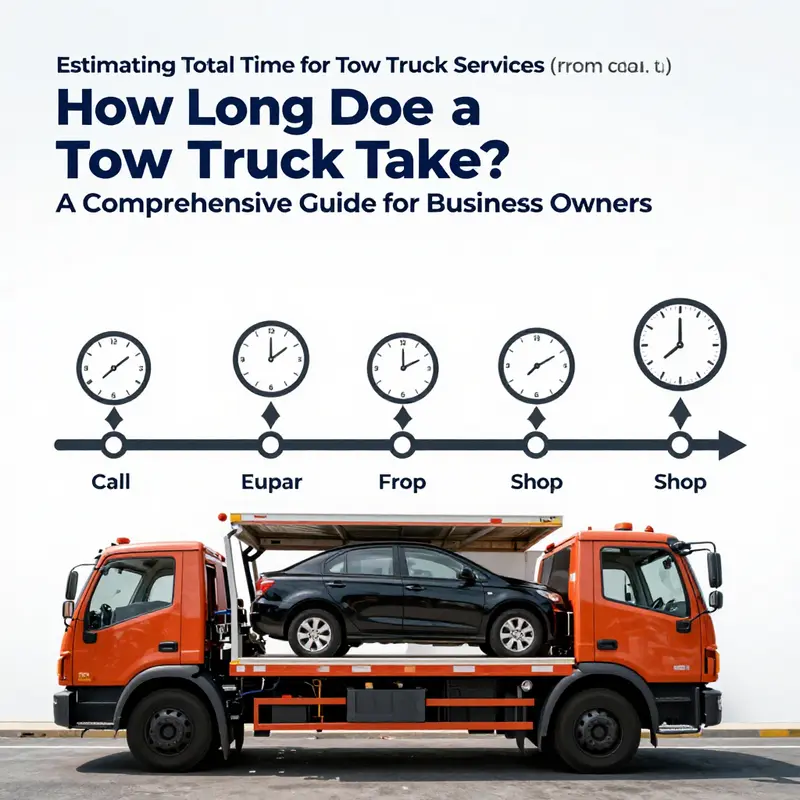
When you place a tow request, you’re not simply awaiting a ride. You’re watching a chain of events unfold that can stretch across minutes and hours, shaped by where you are, the weather, traffic, and the availability of nearby trucks. The simplest way to frame the timeline is to divide it into three stages: response time, arrival and on-site work, and transit to the final destination. Each stage contains variables that can either tighten or loosen the clock, and understanding them helps you plan with less stress when a breakdown or collision upends your day.
In urban areas, response time is the headline metric. Reputable towing services often advertise a response window of roughly 15 to 30 minutes. Yet those figures come with a caveat: they assume roads that aren’t clogged, call volumes that aren’t overwhelming, and trucks that aren’t already dispatched to another emergency. Even with a promised window, peak hours, weather, or a sparse fleet in a busy zone can stretch that initial wait. The experience in a dense city center can feel instant, and then suddenly the clock seems to stall as the nearest available truck navigates a maze of traffic.
When the tow truck arrives, the on-site phase begins. This phase covers assessment, securing the vehicle, and preparing it for transport. Simple scenarios—like a flat tire or a minor mechanical hiccup—often require less time, perhaps 10 to 20 minutes. More complex cases demand more care and equipment. A vehicle that is damaged, stuck, or requires specialized gear such as a wheel-lift or a boom can extend the on-site portion. In some regions, operators use integrated wheel-lift and winch systems to handle difficult recoveries safely, which can add setup time but reduce risk during loading. The key point is that the on-site interval is highly variable and dictated by the vehicle’s condition, location, and the necessary safety checks.
The final stage is transit to the destination—whether that’s a repair shop, an impound lot, or another secure location. Transit time scales with distance and traffic. In a city, even a short trip can take longer than expected if congestion lingers. In rural areas, longer distances may offset traffic delays but introduce variability through road conditions and route changes. Here, the weather plays a stronger role; rain, snow, or ice can slow even a routine tow. If the vehicle is being moved over a long distance, the journey may stretch the overall timeline by hours, not minutes, especially when you consider stops, inspections, or necessary safety checks along the way.
From first call to final destination, a realistic total time for tow services can span from about 30 minutes to more than two hours. This range captures urban response and on-site variability as well as the endurance of longer transports. It’s common for a shorter, nearby tow to finish quickly, only to be followed by delays once the vehicle reaches the shop or storage yard due to additional paperwork or parking constraints. For longer, cross-city or cross-regional tows, the clock can push beyond that two-hour mark, depending on routes, weather, and the rhythm of the towing network at that moment.
Customers can speed up the process with proactive steps. Providing precise location details, access instructions, and a brief description of the vehicle’s condition helps responders prepare the right equipment before arrival. If possible, share the parking location, gate codes, and any hazards the driver should anticipate. During the wait, stay in contact with the dispatch to confirm ETA and any potential delays caused by traffic or weather. Real-time tracking tools offered by many providers add a layer of transparency, letting you visualize the truck’s approach and adjust plans accordingly. In a local context, an example of a nearby option can be explored through a DC-focused service page such as the DC towing service DC towing service, which illustrates how local providers communicate ETA and manage on-site logistics for urban customers.
The overall picture emphasizes a practical rule of thumb: plan for the middle ground rather than the best-case scenario. If you are stranded on a highway shoulder in a busy city, expect the response time to be at the higher end of the advertised range, with on-site and transport times adding their own layers of delay. If you are in a rural area, you may face longer waits before assistance arrives, but the actual tow may proceed more swiftly once the truck reaches you. The most reliable strategy is to request a clear ETA and acknowledge that the clock can shift with the weather, traffic, or the availability of equipment. This approach makes the situation less stressful and helps ensure you and your vehicle end up where you need to be, with as little unnecessary delay as possible.
External resource: https://www.towingindustry.org/industry-resources/tow-truck-response-times
Final thoughts
Navigating the complexities of towing services is essential for business owners. By understanding the average response times, the specifics of the towing process, and the total estimated time from call to vehicle delivery, you can make informed decisions and plan your operations more effectively. Remember, the quicker your vehicle can get back on the road, the less disruption to your business. Stay proactive by establishing a reliable towing service partnership to mitigate delays and maintain operational continuity.