
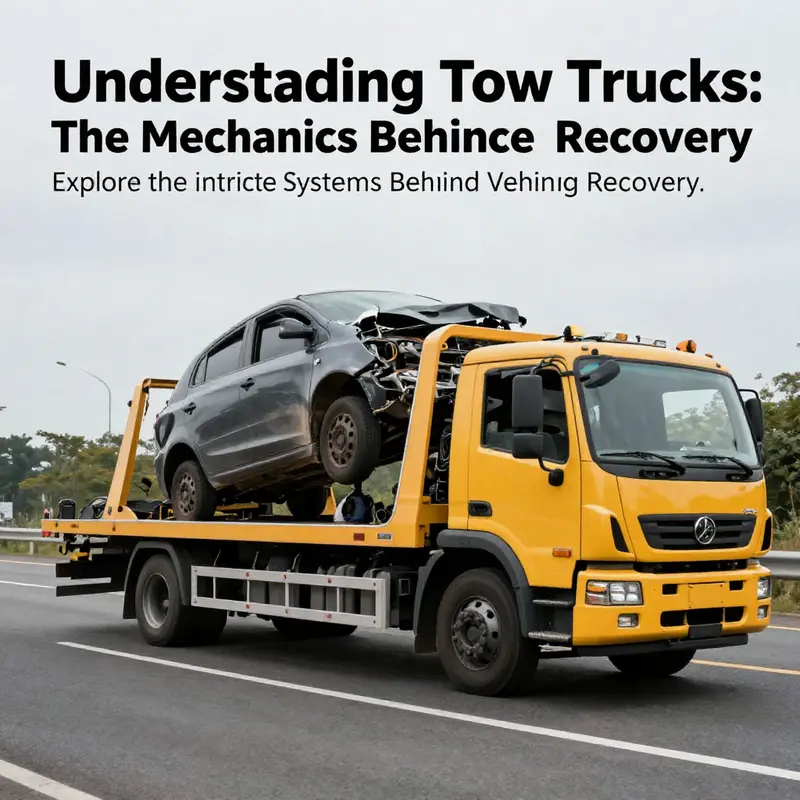
Tow trucks are indispensable tools in roadside assistance and vehicle recovery, designed to respond swiftly in emergencies. Business owners must understand how these vehicles operate to make informed decisions about their use and maintenance. This article delves into the intricate mechanisms and hydraulic systems of tow trucks, detailing how they lift and secure vehicles, as well as the power behind these operations. Each chapter provides insights that are critical for any business relying on towing services.
Lifting, Securing, and Transporting: The Three Acts Behind Tow Truck Recovery
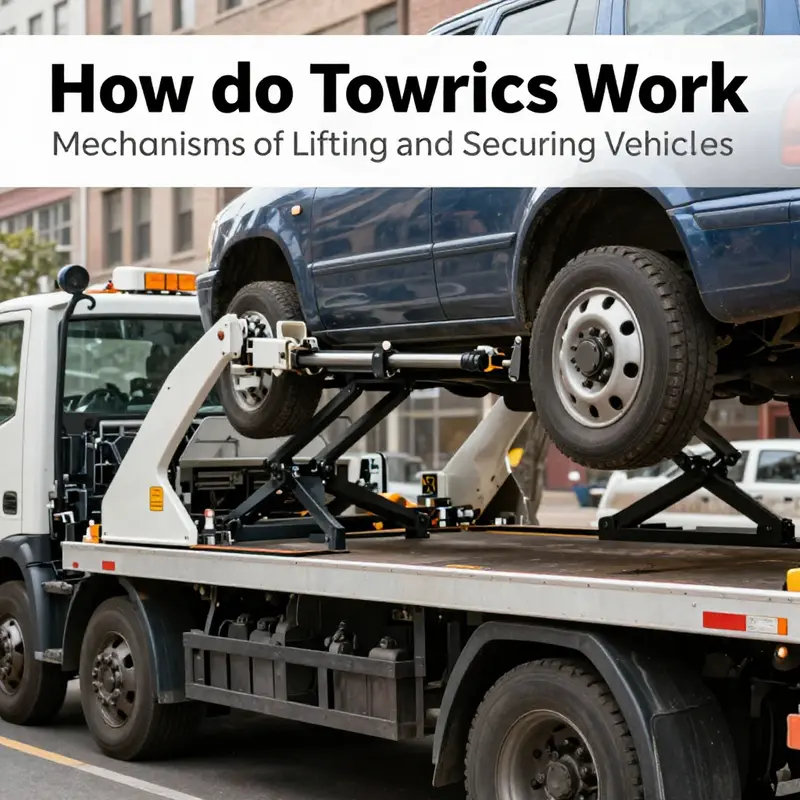
Tow trucks are built around three core tasks that repeat across styles and scales: lifting, securing, and transporting. The lifting mechanism is typically a hydraulic crane or boom that extends, articulates, and sometimes rotates to place the vehicle precisely. A rotator adds 360 degree control to reach around obstacles, while a winch provides controlled pulling when a vehicle must be pulled clear of a hazard. The hydraulic system powers these components and is managed by a human operator who modulates pressure and flow for smooth, safe movement. The securing phase follows the lift. Once the vehicle is off the ground, straps, chains, and clamps are anchored to lifting points on the vehicle to restrain it during transit. Modern tow trucks often incorporate load sensors that monitor tension, anti rollback devices to prevent movement on slopes, and cradles or dollies for delicate recoveries. The transformation from lift to secure to transport is guided by the vehicle type and the truck configuration, with flatbed, wheel lift, and rotator designs offering different balances of speed, safety, and chassis protection. Transportation completes the cycle: the secured load is moved to its destination, with stabilizers deployed and the deck or bed designed to minimize contact with the vehicle. Across designs, the operator’s judgment, training, and teamwork with spotters or safety crews are essential to manage traffic, terrain, and weight distribution. As technology advances, manufacturers add ergonomic cabs, improved control interfaces, and more robust hydraulic systems to improve reliability, reduce cycle times, and enhance safety on roads, industrial sites, and during roadside recoveries.
Hydraulics in Motion: The Quiet Power Behind Tow Trucks
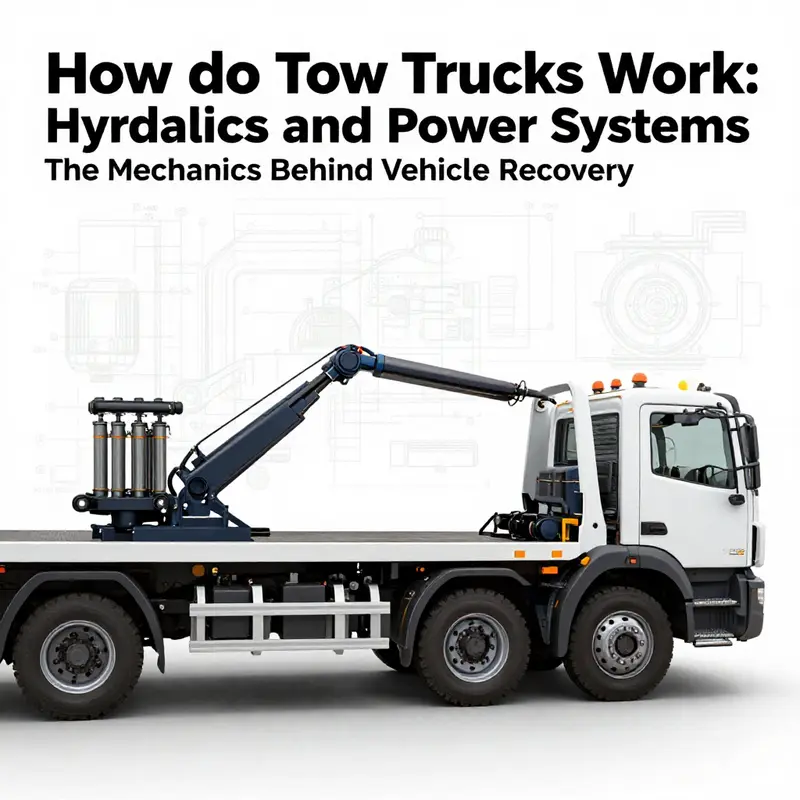
Tow trucks rely on hydraulic systems to convert engine power into controlled motion. A hydraulic pump pressurizes fluid that flows through valves to actuators such as cylinders and motors. The result is smooth lifting, tilting, or pulling with force that scales with demand. The core advantage is energy transfer through incompressible fluid, which yields predictable response and safe control under load.
Different tow truck styles use different hydraulic configurations. Flatbed trucks tilt and slide the bed to load a vehicle; wheel-lift units use hydraulic arms to cradle and lift wheels; rotators add a swiveling boom for repositioning a vehicle mid recovery. Integrated systems combine functions in a single chassis.
Control systems combine mechanical valves, electronic sensors, and operator interfaces. Modern rigs monitor pressure and temperature to prevent overload. The operator’s hands at the controls translate input into precise hydraulic movement. Robust components and sealed circuits help resist wear and leaks in tough environments.
Power management connects the hydraulic system to the truck’s engine and drive train. The pump may be fixed or variable displacement, adapting to load demands. A larger engine can sustain lifting tasks longer, especially during roadside recoveries or multi-vehicle operations.
Reliability comes from the simplicity of hydraulic paths and the durability of components. Fewer moving parts mean fewer failure points, while careful maintenance keeps the system ready for action. However, hydraulic setups require attention to fluid quality, temperature, and occasional calibration of valve packs.
In real world use, hydraulics enable exact positioning as needed, from lifting a car off the ground to lowering it neatly onto a transport bed. The system’s power and finesse reduce manual effort and improve safety on busy streets and uneven terrain. For readers seeking deeper detail, there are many technical resources on hydraulic circuits for tow trucks that describe pump types, valve configurations, and service practices.
Final thoughts
Tow trucks operate on a fascinating blend of mechanical and hydraulic technologies that enable them to lift, transport, and recover vehicles safely. Understanding these systems not only enhances the efficiency of towing operations but also equips business owners with the knowledge to make better choices for their towing needs. As the towing industry adapts to new technologies and challenges, staying informed is key to maximizing service quality and safety.