
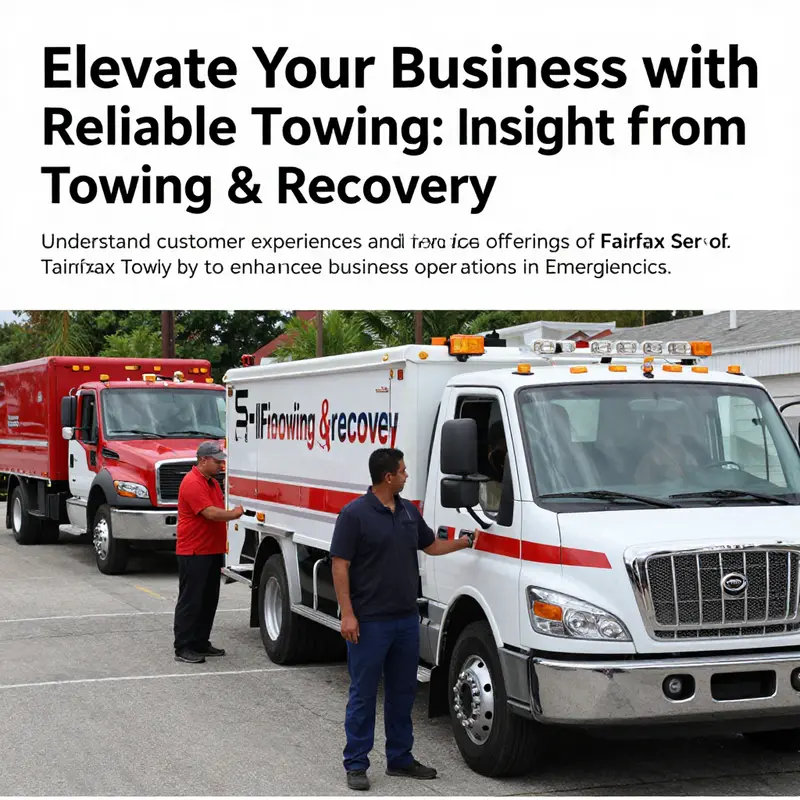
For business owners, knowing whom to call during roadside emergencies is not just a matter of convenience; it can impact productivity and safety. In Northern Virginia, Fairfax Towing & Recovery stands out as a provider of towing and roadside assistance. By examining customer experiences and the range of services offered, businesses can make informed decisions when choosing a towing partner. This article will delve into insightful customer feedback and explore the variety of services provided by Fairfax Towing & Recovery — ensuring you’re equipped to handle any roadside situation effectively.
Beyond the Tow: Navigating Customer Experience, Frontline Care, and Management in Fairfax Towing & Recovery
When a car breaks down on a northern Virginia road, the moment of truth often comes not when the vehicle finally moves again, but in the hours that follow the call for help. Fairfax Towing & Recovery sits at the center of that frayed braid of urgency, logistics, and human touch. Based in Fairfax, Virginia, the company casts a wide net across the greater Northern Virginia area, positioning itself as a lifesaver for drivers who find themselves stranded, immobile, or facing the uncertain aftermath of an accident. The services it offers—vehicle towing, emergency road service, lockout assistance, and accident recovery—are staples of the roadside industry. The practical facets are clear enough: a dispatcher on the line, a driver en route, a tow truck arriving at a precise location, and a load transferred or a door opened. What remains more elusive is the quality and consistency of the experience that unfolds between those moments—the rapport built in a high-stress exchange, the reliability of timing, the clarity of communication, and the sense that the company has a coherent plan behind the scenes rather than a patchwork of improvisation on busy days.
The map and the number tell their own part of the story. A MapQuest listing anchors Fairfax Towing & Recovery in a physical place at 22031, Fairfax, VA, with a contact line at (703) 273-1104. Their website offers the option of online scheduling, a feature that can soften the tension that accompanies a roadside emergency by granting a degree of control to the customer. Yet, as with many small-to-mid-sized service providers in a bustling metro area, the real work happens in the field, where a driver meets a stranded motorist under pressure, and the consumer’s experience hinges on a fragment of time that can swing from relief to frustration in a heartbeat.
What emerges from the mixed reviews is a nuanced, almost telling snapshot of the company’s identity. On one hand, there are moments that feel almost exemplary—a driver who embodies what customers often hope for when they pick up the phone in a crisis. A February 2026 Yelp review sang praises for the company’s “amazing customer service,” highlighting how the driver’s demeanor transformed a typically unpleasant situation into something more manageable. The reviewer described the driver as “so great,” a reminder that the human element—the attitude, the attentiveness, the small gestures of reassurance—can have outsized effects. In these recollections, the twilight of the breakdown brightens into a humane, responsive encounter. The driver’s conduct becomes a kind of riposte to the person who answers the call, a demonstration that competence and compassion can coexist in the same moment.
Yet the other side of the ledger tells a different, equally important story. Insights from Indeed reveal concerns about internal management that ripple through customer interactions. A review from an employee indicated, starkly, “No good management for the customer service skill,” suggesting that the mechanism behind the scenes—dispatch decisions, training pipelines, quality control—may not be aligning consistently with the quality delivered at the curb. This kind of critique points to a structural challenge: when leadership falters in building a unified standard, the frontline can still deliver moments of excellence, but those moments may become exceptions rather than the rule. In practical terms, a crew member might show up with the right attitude and the right tools, only to be constrained by dispatch timing, a crowded schedule, or unclear expectations relayed from management. The friction between a talented driver’s capability and a dispatch system that isn’t fully coherent creates a service impression that can swing markedly from visit to visit.
The tension between frontline strength and organizational alignment is not unique to Fairfax Towing & Recovery. It’s a persistent theme in the road-service sector, where the time-to-arrival metric, the communications cadence, and the perceived reliability of a provider shape the way customers talk about a company long after the tow is completed. In a region as densely traveled as Northern Virginia, these variables are not mere administrative concerns; they are determinants of safety and consumer trust. If a driver arrives late, the customer’s sense of security erodes, even if the repair or bailout was performed flawlessly. If the dispatcher provides a realistic ETA and then updates the customer when plans shift, the trust quotient rises, even when the weather or traffic complicates the job. The best operators in this space recognize that customer experience is a chain anchored in three links: timely response, transparent communication, and competent service delivery.
The real-world implication of these dynamics becomes clearer when one traces the arc of a typical call. A motorist dials the number after a breakdown or lockout. The dispatcher gathers essential details—location, vehicle type, nature of the problem, desired outcome—and assigns a driver with the appropriate equipment. If the scheduling window is tight, a well-informed dispatcher will offer an ETA window, confirm any potential delays, and maintain contact with the customer as the driver nears. The driver, arriving with professional demeanor and clear instructions, becomes the face of the company at the moment the customer most needs reassurance. The contrast between the driver’s conduct and the dispatcher’s performance then becomes a microcosm of the business’s deeper health. A standout driver can soften the sting of a slower dispatch, while a well-run dispatch system can elevate a decent driver’s performance into a dependable, repeatable experience for many customers.
To understand Fairfax Towing & Recovery in a broader context, it helps to visualize the company as a local lifeline that relies on a network of human relationships and practical systems. The local aspect matters: in Fairfax and the wider Northern Virginia corridor, the density of automobiles and the complexity of traffic patterns create a steady demand for reliable roadside assistance. That demand is not just about moving cars from one place to another; it’s about reducing risk for drivers who may be stranded in unfamiliar neighborhoods, anxious about the next steps, or concerned about the safety of their vehicle and belongings. The ability of a towing company to translate technical capability into a trustworthy customer journey, therefore, rests on a delicate balance. It requires the fleet to be well-maintained and ready, the dispatch team to be well-coordinated, and the front-line drivers to be empowered to perform with empathy and expertise.
The testimonials, both positive and critical, illuminate how a single encounter can go right and how another can feel inconsistent. The positive cases—like the Yelp account praising the “amazing customer service” and the driver’s demeanor—signal that Fairfax Towing & Recovery can deliver a level of care that makes the experience less adversarial and more collaborative. In those moments, the driver’s actions can counterbalance the stress of being stranded, turning a problem into a solvable episode. It is not simply about transporting a vehicle; it is about restoring a sense of control for a customer who has just watched a tire fail or a lock fail at a moment of vulnerability. The personal dimension matters because it touches not only the immediate outcome but also the customer’s willingness to rely on the company again in the future.
At the same time, the concerns raised about management point to a reality that many service businesses confront: the risk that good frontline execution cannot compensate indefinitely for systemic gaps. If management struggles to harmonize dispatch logistics, training standards, and feedback loops, the consistency that customers crave will remain elusive. Inconsistent service can lead to a cycle where one customer experiences outstanding care, while another encounters an avoidable delay, miscommunication, or confusion about what to expect next. The clear implication for Fairfax Towing & Recovery—and for similar operations in the region—is that sustaining excellence requires more than heroic individual performances. It requires a robust, learning-oriented operational framework that translates the best frontline behavior into repeatable processes.
So what does it take to move from episodic excellence to dependable consistency? The heart of the answer lies in three interlocking practices. First, a transparent scheduling and ETA protocol that keeps customers informed even when plans change. Real-time updates, proactive notifications, and honest timelines can transform the customer’s anxiety into a sense of partnership with the company. Second, a strong training ecosystem that aligns customer-service skills with technical competence. Training should elevate not only the mechanics of towing and roadside work but also the soft skills that shape each encounter—empathy, patience, and clear explanations about what will happen next. Third, a feedback-enabled culture where frontline staff can share insights from the field and management can act on them quickly. A driver who encounters a recurring obstacle—whether it’s a particular location, a type of service, or a recurring issue with a certain dispatch protocol—should have a clear channel to escalate and influence the process. When these elements coalesce, the variance that currently characterizes the Fairfax experience can begin to shrink, allowing a broader base of customers to encounter the same high standard rather than isolated high-water marks.
In the broader arc of Fairfax Towing & Recovery’s story, there is also a practical invitation for readers who want to explore local service options more deeply. For residents and drivers in Fairfax who want to gauge how regional providers present themselves beyond a single incident or a single review, there is value in exploring localized coverage and service area details. A resource that compiles and contrasts these local footprints can illuminate how consistent a service provider’s reach and reliability feel across neighborhoods, whether near the town center, the suburban corridors, or the busy arterial routes that thread through Northern Virginia. The takeaway is not to seek a flawless operation but to seek a company that actively works to reduce the potholes between promise and delivery. In that spirit, the Fairfax-specific information page offers readers a broader sense of what a local towing provider’s regional footprint can mean for response times, technician availability, and the likelihood of a positive customer experience on any given call. Such a page can be a useful complement to a reader’s firsthand impression from a particular encounter and can help set realistic expectations about what the company can achieve in a busy market.
In sum, Fairfax Towing & Recovery exists at the intersection of immediate need and long-term reliability. Its strength—drivers who can deliver warmth, competence, and reassurance in the moment—shows what is possible when a person on the ground translates training into human connection. Its challenge—the organizational gaps that can disrupt otherwise steady performance—highlights the ongoing work required to turn episodic success into consistent outcomes. The chapter of the company’s story that remains unwritten is the one where management learns to codify and scale the best frontline practices, ensuring that every call—from a lockout at a quiet cul-de-sac to a towing request after an accident—unfolds with a predictable, respectful cadence. For readers who depend on these services, that future matters. It means fewer moments of frustration, more frequent referrals to neighbors and friends who praise the same driver’s courtesy, and a return to a sense that, in a city as complex as ours, there is a dependable human bridge between a vehicle in need and a way back onto the road.
For readers curious to see how local coverage approaches the broader landscape of regional towing, the Fairfax-specific page linked here provides a practical entry point into service area expectations and scheduling dynamics: towing in Fairfax. This resource can help readers compare service footprints and gauge whether a given provider’s dispatch practices align with the level of reliability they value most. The path to improved consistency may be incremental, but the destination—where drivers, dispatchers, and managers operate in concert to deliver a steady, trustworthy experience—is worth pursuing for both the customer and the company alike.
In the end, the Fairfax narrative is not just about moving cars from one place to another. It is about the quality of the moment when help arrives, the dignity afforded to someone in a stressful situation, and the quiet confidence that the next call will be handled with a well-orchestrated blend of expertise and empathy. It is about a service that can be as much about mentoring its people as about meeting its deadlines. It is about a local business learning to scale its strengths while staying true to the human core that makes a tow not simply a service, but a promise kept when you need it most.
What Fairfax Towing & Recovery Actually Does: Services, Reach, and What to Expect
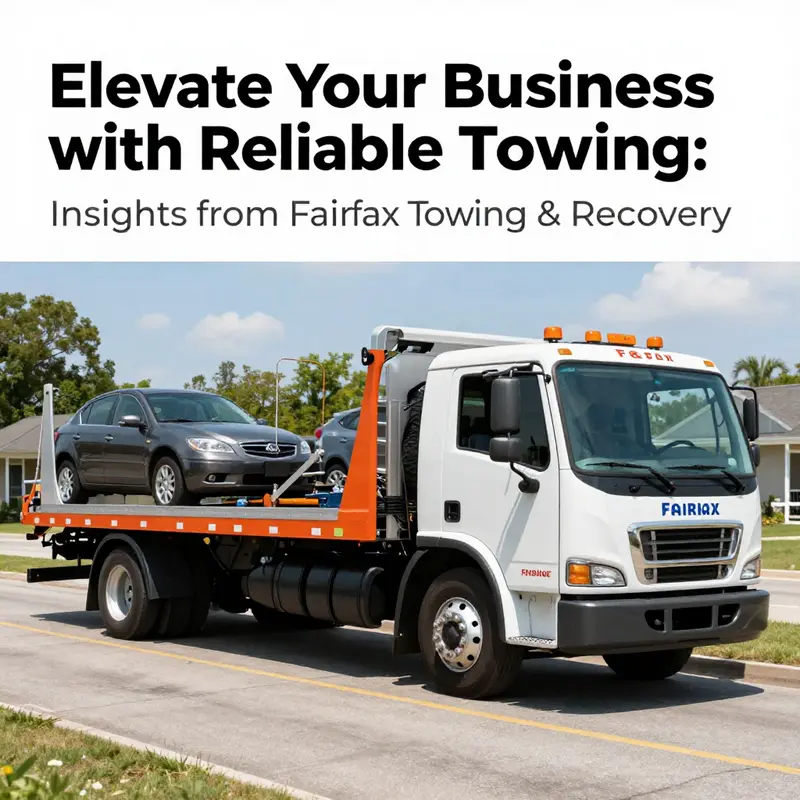
Fairfax Towing & Recovery packages a broad set of capabilities into a single local operation, offering help the moment a driver is stranded, involved in an incident, or stuck where they can’t continue. Their services span basic roadside assistance through complex recovery work. That range matters because the needs of Northern Virginia drivers change by the minute: a flat tire on a quiet neighborhood street, a battery failure in rush‑hour traffic, a crash on an expressway, or a vehicle lodged off the paved shoulder all require different methods, tools, and experience. This chapter describes those offerings in practical terms and explains what customers can expect when they call.
At the core of the company’s work is emergency roadside assistance. This is the service people first picture when they think about towing. Technicians respond to breakdowns and perform fast, targeted fixes that get vehicles back on the road when possible. Common tasks include changing a flat tire, jump‑starting a dead battery, and performing simple on‑site diagnostics when a car won’t start. Lockout assistance is part of this suite too. When keys are locked inside, trained technicians use specialized tools to access the cabin without damaging the vehicle. Those quick interventions are designed to restore mobility or, if a repair is not possible immediately, to secure and tow the vehicle safely.
Auto towing services are next in the continuum—when a vehicle cannot be driven. Fairfax Towing & Recovery tows cars from private property, public streets, and accident scenes. Their towing capability covers routine transport to a repair facility, relocation after a breakdown, or removal when police or property managers request a tow. Towing is not one-size-fits-all. Technicians choose the proper method—flatbed, wheel‑lift, or integrated lift—based on the vehicle type, its condition, and the destination. That choice protects vehicles during transit and reduces the chance of additional damage to drivetrains, suspensions, or bodywork.
Vehicle recovery deepens the service set into specialized technical work. Recovery operations involve extracting vehicles from ditches, embankments, construction sites, and other difficult terrain. These jobs often require winches, rigging straps, and a careful plan to prevent secondary damage. The team assesses the scene for stability and risk, then executes a recovery sequence that secures the vehicle and the recovery crew. That work differs from a standard tow because it combines mechanical leverage, anchoring, and sometimes multi‑vehicle coordination. Safe recovery demands experience; it also requires awareness of environmental factors such as mud, steep grades, and obstacles that complicate extraction.
A critical operational promise is availability. Fairfax Towing & Recovery advertises round‑the‑clock service. Accidents and breakdowns don’t keep business hours, so 24/7 coverage is essential for community trust. Continuous operation also means technicians need reliable dispatching systems and a fleet ready for immediate deployment. Realistically, availability matters only if response times are reasonable. Customers have reported variability in arrival windows, with some scheduled calls taking longer than expected. That variability can stem from traffic conditions, concurrent emergency assignments, and the distance between jobs. When time is sensitive, a direct phone call to (703) 273‑1104 is the fastest way to get a status update or request immediate dispatch.
Payment convenience is part of the service experience. Accepting credit cards eases roadside transactions and eliminates the need for cash at the scene. For people managing a stressful situation—injury, damage, or traffic exposure—being able to complete a transaction quickly and securely reduces friction. When arranging a tow or recovery, it’s smart to confirm payment options at the start of the call to avoid surprises on arrival.
Coverage area and location influence how the business serves drivers. Stationed in Fairfax, operations typically extend across the greater Northern Virginia region. That local focus helps technicians become familiar with common trouble spots, traffic patterns, and local regulations that affect towing and recovery. Familiarity with the area speeds routing and improves the accuracy of arrival estimates. For readers looking for more context about towing in the city, a dedicated page on towing in Fairfax provides practical guidance and complementary services.
Expectations and communication matter as much as technical skill. When you call, provide precise location details, a description of the vehicle and its condition, and any safety concerns at the scene. Those details help dispatch prioritize equipment and crew size. If the vehicle is in a hazardous location—near an active lane of traffic or on an embankment—let dispatch know so they can coordinate any necessary safety measures or request additional crew. Clear information at the outset shortens on‑scene time and reduces the risk of complications.
Service quality also depends on crew training and equipment maintenance. Effective roadside assistance and recovery rely on technicians who know safe rigging practices and vehicle handling. Equipment such as winches, tow vehicles, and stabilization gear must be inspected and serviced regularly. A responsible company invests in routine maintenance and continuing training. That investment shows up in faster recoveries, fewer on‑scene delays, and safer outcomes for drivers and crews.
Another operational reality is coordination with other responders. Accident recovery often involves police, fire, and insurance representatives. The towing provider must work smoothly with those parties to clear scenes efficiently and preserve evidence when necessary. That cooperation prevents additional hazards and speeds the process of getting traffic moving again. Drivers involved in collisions should expect a short coordination period for roadside documentation before a tow can proceed.
Special cases require special planning. Heavy vehicles, motorcycles, and all‑wheel‑drive models rarely respond to the same handling as standard passenger cars. Motorcycles need precise loading and securement to prevent tipping. Three‑wheel or low‑clearance vehicles may demand a flatbed. Vehicles with aftermarket modifications or damaged frames may require customized lifting points or transport methods. Discuss these specifics when you call so the right truck and accessories arrive.
Turnaround times and service windows deserve realistic framing. While the company aims for prompt response, delays sometimes occur. Traffic congestion during rush hours, emergency call volumes, and weather events can extend wait times. If you face long delays, ask dispatch for a status update and an estimated arrival time. If an earlier arrival is critical, be prepared to ask whether a different provider in the region has availability. Transparency from dispatch is key: accurate expectations reduce stress and help customers make informed choices.
Safety is non‑negotiable. On arrival, technicians typically secure the scene, mark the area as needed, and use personal protective equipment. Customers should maintain a safe distance from the operation and follow technician instructions. If a vehicle is in a precarious position, step away to a safe location and avoid standing between vehicles or close to traffic lanes. These simple precautions protect people while the crew completes its work.
For routine towing or simple roadside fixes, customers can often request transport to a preferred repair shop. For accident scenes, insurance companies sometimes designate a tow destination. Confirm the drop‑off point with dispatch before the tow begins to avoid confusion. When in doubt, ask the technician to document the vehicle’s condition and destination; that documentation helps with subsequent claims or disputes.
Equipment choices also shape cost and service decisions. Flatbeds protect vehicles with significant undercarriage issues or salvage needs, but they may cost more than basic wheel‑lift tows. Recovery operations carry additional charges due to specialized equipment and labor. Ask for a clear estimate when possible, and request an explanation of charges before authorizing work. While roadside situations can be stressful, a brief conversation about pricing up front prevents surprises.
Finally, consider creating a simple checklist for emergency calls. Keep the company phone number—(703) 273‑1104—in your phone. Note vehicle details, preferred repair shops, and any important medical or legal documents. If you travel frequently through Northern Virginia, store a trusted towing contact that understands local roads. A prepared driver enjoys faster, smoother service and fewer headaches when trouble occurs.
Fairfax Towing & Recovery’s blend of emergency roadside assistance, towing, specialized recovery, and 24/7 availability meets the range of challenges drivers face. The company’s local focus, payment flexibility, and operational capabilities make it a practical choice for many drivers in the area. Still, response times may vary. The best outcomes come from clear communication at the time of the call, realistic expectations, and knowledge of what each service entails. For more localized information on towing options, see towing in Fairfax.
Source: https://www.mapquest.com/direc…/fairfax-towing-recovery-3176-draper-drive-fairfax-va-22031
Final thoughts
Selecting a reliable towing and roadside assistance partner can profoundly influence your business’s operational efficiency and safety. Customers have shared their experiences with Fairfax Towing & Recovery, offering valuable insights into their reliability, response times, and overall service satisfaction. By understanding both the customer feedback and the diverse services available, business owners are better positioned to make informed decisions that enhance both safety and efficiency during emergencies. Fairfax Towing & Recovery’s commitment to quality service can support your business’s goals while ensuring peace of mind on the road.