
Tipping culture can be nuanced and often varies by industry. For business owners who rely on AAA for roadside assistance, understanding the tipping norms associated with tow truck drivers is essential. This article will explore both the expectations around tipping these drivers and the quality of service that may warrant a tip. By dissecting these topics, business owners will be better equipped to make informed decisions that align with their values and the experiences of their employees.
Tow, Tip, or Trust: Understanding When to Tip AAA Tow Drivers and What It Signals About Service Etiquette
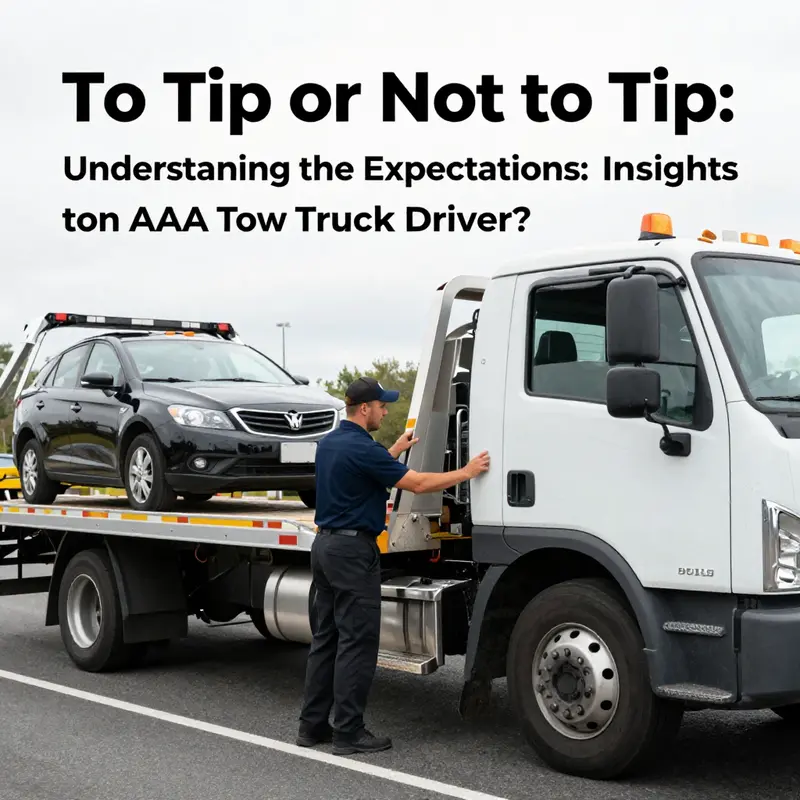
The road has a way of turning ordinary moments into high-stakes stress. A stalled engine, a flat tire in a busy corridor, or a battery that won’t coax a single click from the starter can throw your day into a tight loop of worry. In those moments, you reach for help, and if you’re a member of a nationwide roadside network, that help often arrives in the form of a tow truck rolling up to the scene. The question that can creep in as you unzip the hood or tighten a scarf around a cold steering wheel is not just whether help will come, but whether you should tip the person who arrives to assist. The instinct to tip is tied to a broader tradition of showing gratitude for good service, yet the practical reality of AAA roadside assistance is a bit different from, say, a busy restaurant or a buzzing rideshare pick-up. AAA is membership-based, and the service you’re paying for is embedded in your annual or monthly plan. The tow is a service fee, calculated by distance, vehicle type, and urgency, not a gratuity. In that sense, tipping is generally not expected or required because the cost you pay through your membership covers the work the driver does. This is not a moral absolution for all situations, but a straightforward reflection of how the service is structured: a professional, paid response rather than a tip-driven encounter. Yet as with many etiquette questions, the nuance comes from context, personal preference, and the human element at the roadside.
What makes tipping feel complicated in this space is the possibility that something goes unexpectedly well. A driver may not only tow your car but also calm a tense moment, explain what’s happening in clear language, or assist with tasks that would otherwise fall to you in a vulnerable situation. In those moments, a small gesture—a few dollars tucked into an envelope or handed directly to the driver—can feel like an appropriate token of appreciation. The research on tipping etiquette for transportation suggests a flexible approach: tipping is optional, and any amount should reflect the level of service and your own comfort. A general range discussed in reputable guidance is roughly five to twenty dollars, with five dollars being a common minimum when the service stands out, and twenty dollars reserved for exceptional efforts or challenging circumstances. The emphasis is on discretion, fairness, and appropriateness for the moment, not on a rigid rulebook. For the reader, this means you may opt out of tipping altogether, or you may choose to show gratitude if the driver went truly beyond the call of duty. The important point is that tipping is not a requirement and should not be expected in the same way it is in some other service industries. If you’re in doubt, err on the side of generosity in a way that feels sincere and measured rather than ceremonial or transactional.
For readers navigating a specific locale, there is value in recognizing how tipping norms can shift with geography and culture. A driver who has to manage a busy corridor of highway breakdowns in a dense urban area may encounter more frequent emergencies and perhaps a higher level of pressure than a rural responder. In those contexts, drivers often appreciate a moment of courtesy and appreciation, especially if you feel their handling of the situation reduced risk and added clarity during a tough moment. Yet even in such contexts, the core principle remains the same: tipping is optional, and you should only do so if the service felt above and beyond what you expected from a professional roadside response.
If you want to anchor your approach in practical steps, imagine the moment as you would any professional service encounter that unfolds on the side of the road. The driver arrives, introduces themselves, and explains what they can do and what they cannot. They may secure the vehicle, tow it to a nearby shop, or guide you through the next steps for getting back on the road. You assess their communication, efficiency, safety-mindedness, and willingness to answer questions without trying to rush you through decisions. If the driver makes the process clearer, keeps you safe, keeps the conversation calm, and demonstrates patience in what is often a high-stress situation, these are the moments that often justify a tip. If, on the other hand, the service feels rushed, unclear, or unsafe, tipping would not be the kind of gesture that rights the balance; it would be more appropriate to file a courteous complaint or praise the driver’s supervisor for areas that need improvement. In this sense, the decision to tip is, at its core, a small measure of personal judgment about the quality of care you received and the respect you felt during a precarious moment.
For readers who want a concrete point of reference beyond the general guidance, consider the idea that tipping is a form of optional reinforcement—an expression of thanks when the experience is notably positive or when a driver goes beyond what’s required. If the driver helps you with tasks outside the routine, such as spending extra time to explain the mechanics of your vehicle’s issue, offering to stay with you until a tow is arranged at a safe location, or coordinating with a service center to minimize your downtime, a modest tip can feel appropriate. The suggested range—roughly five to twenty dollars—captures a broad spectrum of generosity without pushing into overt compensation for basic service. Some people prefer a smaller gesture, others a larger one, and many simply choose to say thank you with a brief compliment or a written note that highlights the driver’s professionalism. The important thing is that the gesture is voluntary and proportionate, not transactional or demanded.
The practical question, then, becomes how to execute a tip in a way that maintains the dignity of everyone involved and avoids awkwardness. If you carry cash, a discreet handoff is usually best: a small amount folded in a note or a spare bill in a wallet pocket that you can present with a brief, sincere expression of gratitude, like, “Thanks for getting us out of a tough spot.” If you prefer not to carry cash, or if the situation has you thinking about card transactions, you might ask, politely, whether the driver accepts tips on a card payment. Some roadside professionals do, but others do not, either for policy reasons or because the service is prepaid through your membership. In those moments, the choice to tip may simply be the way you express appreciation verbally, or a thank-you note to the dispatcher who coordinated your service. The point is not to press for a tip but to offer one when it feels earned and appropriate.
To acknowledge the broader ecosystem around towing and recovery, a quick reference point in your decision-making can be a sense of how you’ve seen tipping handled in similar service experiences. Consider how tips work in other transportation-related contexts, and how the norms are shifting as people increasingly evaluate service with an eye toward fairness and transparency. A comprehensive, up-to-date perspective on tipping etiquette in transportation notes that while tipping remains common in many fields, it is not universally expected in professional services where fees are pre-determined or included. This is particularly true for AAA, where the membership structure is designed to simplify the financial side of roadside assistance and to emphasize reliability and rapid response over gratuities. Still, the human factor—how well the driver communicates, how safety is prioritized, and how effectively the situation is resolved—can transform a routine tow into a moment that feels worthy of a small show of appreciation.
For readers seeking practical guidance beyond the immediate episode, it can help to consult a local resource that aligns with your region’s service landscape. If you’re near the nation’s capital or the surrounding metropolitan area, for example, you can explore local pages that discuss towing services in nearby communities and how those services handle customer interactions. A DC-focused resource on towing service options can be a useful companion piece for understanding the service network, coverage, and typical practices in the area. In this chapter, the emphasis remains on your own judgment and on the driver’s conduct in the moment, with the understanding that subscription-based roadside assistance is designed to minimize friction and maximize safety.
For readers who want to see how tipping etiquette feeds into broader service norms, it can be insightful to compare with other transportation-related interactions. A recent discussion in reputable outlets highlights how gratuities can reflect a balance between service quality and personal preference, while also noting that some services are structured so that tipping is neither expected nor necessary. The takeaway is not to force a tipping decision but to allow it to emerge naturally from a trustworthy, respectful, and well-executed service encounter. With that frame, you are better equipped to respond in a way that aligns with your values, your budget, and the moment’s needs. If you want to explore a practical, local reference to a Washington, DC-focused towing service, consider this resource for context and coverage: towing service in Washington, DC.
In the end, the guidance is straightforward: you do not need to tip AAA tow truck drivers. Your membership covers the service provided. A tip is optional and should be reserved for moments when the driver performs beyond the basic expectations of roadside assistance. The choice is yours, carried out with courtesy and moderation, leaving room for gratitude to be expressed in whatever form feels most sincere at the moment. And if you decide to show thanks, a thoughtful compliment to the driver’s professionalism, a quick note to the dispatcher, or a sincere verbal acknowledgment can carry as much weight as a monetary gesture. The road will always deliver its surprises, but with a careful approach to tipping that matches the service you received, you can maintain dignity, respect, and practical clarity for all parties involved.
External perspective can also broaden your understanding of tipping norms in other transport scenarios. For a broader context on tipping etiquette across transportation, see this external resource: https://www.forbes.com/sites/forbestechcouncil/2026/02/16/should-you-tip-amazon-delivery-drivers-and-what-etiquette-applies-now/.
Quiet Gratitude, Clear Policy: Understanding When to Tip a AAA Tow Truck Driver

On the side of the road, when a tow truck arrives in response to a sudden breakdown, the moment can feel both intimate and transactional. You want to get safely where you’re going, and you want the situation to end with as little friction as possible. In that tense context, you may ask a straightforward question: should I tip the AAA tow truck driver? The short answer, grounded in policy and practice, is that tipping is not required or expected. AAA operates on a membership model, where roadside assistance is included as part of the plan you pay for. The tow you receive through that membership is not billed as a separate service per se at the moment of dispatch in a way that invites a standard tip. The driver you encounter is usually an employee of a company contracted by AAA, not an independent operator. That relationship matters because it standardizes compensation and shifts the emphasis away from tipping as a routine payment for service rendered. In practical terms, you are not paying the driver to perform a single act you believe must be compensated directly; you are invoking a broader service network with established pricing through your membership.
Yet life on the roadside is rarely so tidy. The same logic that says tipping isn’t required allows for a nuanced human response. If the driver goes above and beyond in a way that feels meaningful—keeping you calm in a storm, patiently guiding you through a difficult situation, or handling a tricky maneuver with a level of care that goes beyond the basics—many people choose to express their appreciation with a small gesture. The amounts people consider range, but a commonly cited range is a modest five to ten dollars. Some may stretch to five to twenty in contexts where the service was exceptionally thorough or when unusual challenges surrounded the tow. The key point is that this is optional and situational, not a blanket obligation. It also isn’t a substitute for proper payment of the standard service fees; in most cases, the member’s plan covers the cost of the tow, and tipping does not replace a legitimate payment for the service delivered.
This distinction between policy and practice matters for several reasons. First, it acknowledges the realities of pay in a safety-critical profession. Tow drivers work long hours in unpredictable conditions, sometimes facing hazardous weather, shifting traffic patterns, or high-pressure situations that require rapid decision-making. Their compensation is designed to reflect risk and responsibility, and a tipping culture could blur the lines of what is fair remuneration and what is expressive gratitude. Second, it clarifies expectations so that you don’t arrive at an awkward moment of wanting to acknowledge good service with a tip you hadn’t planned to give. When you understand that tipping is optional and contextual, you can make a choice that aligns with your values and the quality of the encounter rather than with a perceived social obligation.
If you do decide to tip, the form of appreciation matters as much as the amount. A cash tip handed directly to the driver is the most immediate form, but many people find that a polite word of thanks delivered in the moment can have its own value. A calm, sincere expression—such as, “I appreciate how you handled that,” or “Thank you for staying safe and being patient”—acknowledges the human effort behind the service without implying that the driver’s job is to be tipped to earn basic performance. Beyond cash, you can also choose to recognize the service through formal channels. A positive note in the official feedback system or a favorable online review can have longer-term value for the driver and for the contracting company, reinforcing that exceptional conduct is noticed and appreciated. In some cases, if the company offers a structured method to leave feedback after the service, following that channel helps ensure your experience is captured accurately and transparently. This approach aligns with the broader principle that gratitude can be expressed through multiple avenues, not just a cash exchange.
From a consumer’s perspective, the decision to tip also depends on context. Consider the weather and the time of day: a driver who endures icy roads, heavy traffic, or a difficult location to perform the tow may earn a heightened sense of appreciation for their extra effort. If the service required extra tasks—locating a difficult access point, giving you additional guidance about next steps, helping you arrange a temporary shelter or safe place to wait—these factors can inform whether a small tip is appropriate. Conversely, if the encounter is routine, the road is smooth, and there are no unusual complications, tipping may feel out of place because the service has already been accounted for within your membership. In other words, the decision isn’t a rigid rule but an adaptive practice that reflects the quality of service and personal values rather than a blanket expectation.
The question of tipping also invites a comparison with other professionals who work on a different economic model. Delivery drivers, rideshare drivers, or technicians who operate under independent contractor arrangements might frequently expect tips as part of their livelihood. Tow truck work under AAA’s umbrella is different because the price you pay for help is pegged to a membership plan rather than a per-visit fee. This structural difference matters because it reframes the tip as a discretionary gesture rather than a compensation mechanism tied to the cost of the tow. It also clarifies that tipping should not be viewed as a workaround for perceived underpayment or as a substitute for appropriate payment when a nonstandard fee applies. In other words, you’re not shortchanging the driver by not tipping; you’re choosing whether to honor exceptional service with a small token of gratitude, while the base service was already covered by your plan.
For readers who want a practical touchstone as they navigate this issue, consider how you would describe the experience if you were preparing a quick note for the dispatcher or the contractor’s supervisor. If the driver’s conduct or skill impressed you, your written praise can be a meaningful form of recognition. A concise description of what stood out—calm communication, safety-first mindset, or proactive assistance—helps organizations identify what customers value in real-world roadside support. These remarks can influence training decisions and service standards, which ultimately benefits all members who rely on the same network. If you choose to leave feedback through the official channels after the tow, you’ll be participating in a system that values service quality in a way that complements any discretionary cash gesture you might consider.
It’s also worth acknowledging how guidance about tipping might vary by location and by the policies of the contracted service partners within the AAA network. Some drivers may welcome a tip more than others, depending on local norms, the specific company they work for, or the conditions under which the tow occurred. If you’re in a region where tipping is culturally common for roadside assistance, you might feel a stronger inclination to offer a small thank-you. If you’re in a place where tipping is less common in professional services, you may choose to forego cash and instead rely on a heartfelt thanks or a formal compliment. In all cases, the underlying principle remains consistent: tipping should be a voluntary expression of appreciation for service that stands out, not a transactional obligation.
For readers in particular geographic areas, it can be helpful to understand how the tipping question translates into practical decisions about who is paying for the tow. In many locales, the driver’s wages and benefits are designed to reflect the risk and responsibility of the job, which means there is less pressure to rely on tips to supplement income. The membership structure of AAA further reinforces this dynamic by separating the act of obtaining roadside assistance from the immediate compensation flow to the driver. When you combine these factors—the membership-based pricing, the contracted employment model, and the discretionary nature of tipping—you get a clearer framework for deciding whether to tip and, if you do tip, how to calibrate the amount and the method.
For those who want a concrete reference to the policy while you’re making a split-second decision on the roadside, it’s useful to view the official guidance that AAA provides on tipping tow truck drivers. The organization addresses whether tipping is appropriate and under what circumstances it might be considered a thoughtful gesture rather than an obligation. This official stance helps align expectations, especially for new members or first-time users who are trying to interpret the social norms around roadside assistance in a modern, service-driven context. If you’d like to see the exact wording from the source, you can consult AAA’s FAQ for towing services and tipping practices. In my experience, this official guidance is precise and up-to-date, reflecting the norms of today rather than relying on outdated customs.
For readers seeking more localized examples or specific service routes, you could explore the DC area or nearby cities to see how providers within the same network describe their practices and policies. If you’re curious about nearby options in the Washington, DC area, you can review a representative provider’s overview of towing services in this region: Washington DC towing services. While this link points to a local service page, it serves as a practical reference for how professional towing teams communicate their offerings and standards in a bustling metropolitan environment. The emphasis remains consistent: tipping is optional and situational, while the quality of the service and the clarity of policy information help guide your choice.
Ultimately, the way you handle tipping after a AAA tow truck visit should reflect a balance between policy and personal judgment. If the driver demonstrated exceptional care, safety-first conduct, and clear communication under pressure, a small tip can be a sincere sign of appreciation. If the service felt routine, or the fees and coverage were fully aligned with your membership, you may choose to abstain. Either way, expressing gratitude through respectful words or through official feedback channels preserves the dignity of both the customer and the driver, while maintaining the integrity of the service network that keeps motorists moving when they most need help.
External reference: For the official stance on tipping tow truck drivers, see AAA’s guidance here: https://www.aaa.com/faq/towing-services/should-i-tip-a-tow-truck-driver
Final thoughts
Understanding the tipping practices associated with AAA tow truck drivers is crucial for business owners who may call upon their services. While tipping is generally not expected due to the membership-based nature of AAA services, recognizing exceptional service can enhance customer relations. Business owners can guide their teams in navigating these interactions, fostering a culture of appreciation while maintaining consistency with industry standards.