
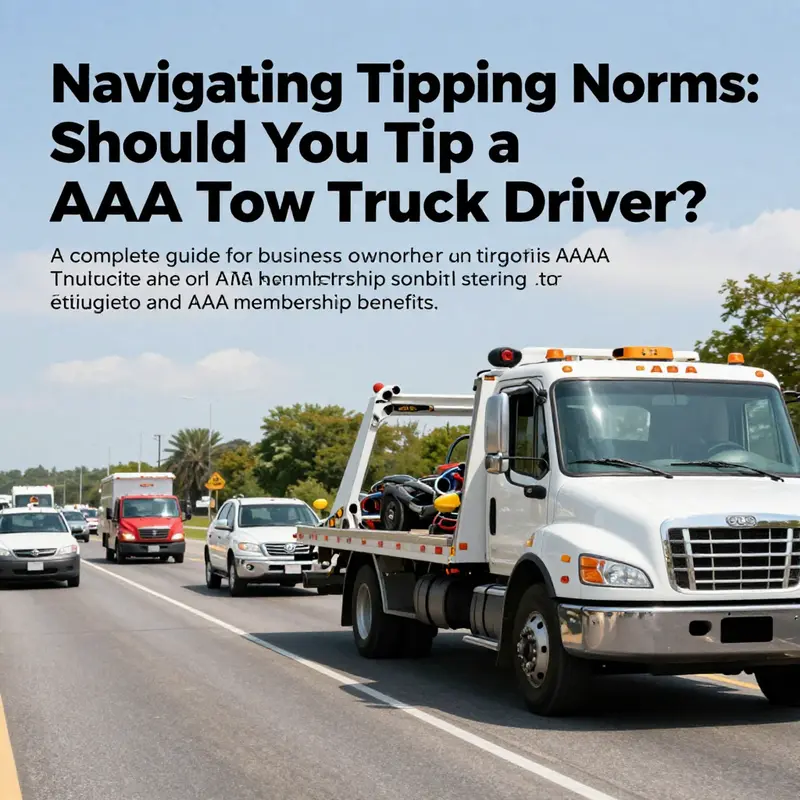
Tipping practices can often confuse service recipients, especially in professional contexts like roadside assistance. For business owners who regularly utilize AAA (American Automobile Association) services, understanding whether to tip a tow truck driver is crucial. This discourse not only sheds light on the role of expected gratuities in such scenarios but also highlights the distinct nature of AAA services, which are rooted in membership benefits rather than the traditional service fee system. This examination will unfold in two detailed chapters, first exploring tipping practices specifically relating to AAA tow truck drivers, and then contrasting membership benefits with general tipping etiquette in AAA services, ultimately guiding business owners toward informed decisions in their interactions with these professionals.
Roadside Etiquette Revisited: Why Tipping AAA Tow Truck Drivers Isn’t Usually Expected
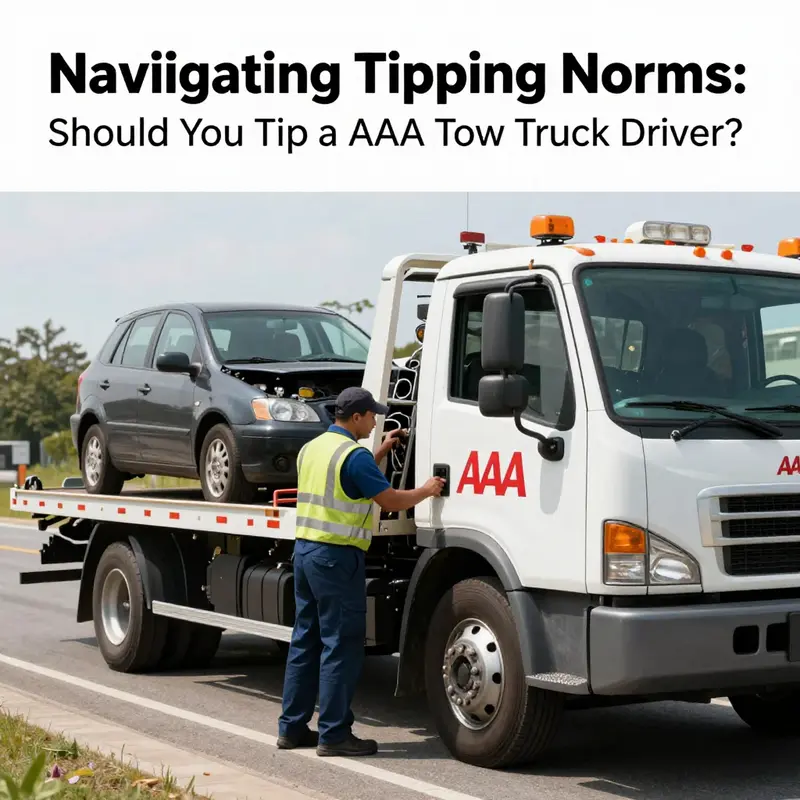
When a vehicle conks out on a quiet stretch or a busy highway, a tow truck’s presence can feel like a lifeline. The moment you realize you’re not going to solve the problem on your own, a mixture of relief and stress washes over you. In those minutes, the human touch matters as much as the mechanical one. The tow operator arrives with equipment, a calm explanation of what will happen next, and a plan that translates a potentially chaotic scenario into something orderly. In that context, the question of tipping often arises. It’s a natural impulse—an instinct to acknowledge someone who has just made a stressful situation more manageable. Yet when the driver is part of a AAA roadside assistance response, the etiquette around gratuities shifts in important ways. The norm for tipping in the world of AAA tow dispatch is not the same as in other service sectors, and understanding why helps keep the interaction straightforward and respectful for everyone involved.
AAA’s roadside assistance model is built on the idea that help is a benefit of membership, not a separate on-the-spot transaction. Members pay a yearly or monthly fee that covers a range of services, including towing up to certain miles, lockout assistance, battery service, fuel delivery, and more. Because the service is embedded in the membership, the monetary dynamic at the roadside is different. The driver’s compensation comes from the company’s operating budget, not from individual tip jars on the curb. This distinction matters. It means that a tip is neither expected nor necessary in most circumstances. The billing logic behind this arrangement is intended to simplify the customer experience and maintain a consistent standard of service independent of the momentary emotions a roadside incident can provoke.
For many drivers, the policy is straightforward: gratitude is welcome, but a monetary tip is not required. In fact, tipping a AAA tow truck driver can introduce ambiguity, both for the customer and for the organization’s payroll and policy framework. The driver’s compensation is designed to reflect professional, reliable service delivered within the scope of the membership benefits. A tip, even given with the best of intentions, can appear as overlap with compensation or as a personal gratuity that sits outside the established protocol. When a company’s backbone is to offer predictable, annualized benefits, tipping can unintentionally complicate the simple math of what the service costs and what is expected from a member.
That said, a moment of appreciation is neither unfounded nor inappropriate. The research on tipping practices makes a clear distinction: tipping is generally not expected or customary for AAA tow truck drivers. However, the way a customer expresses gratitude can carry real value. A handwritten thank-you note, for instance, helps the driver feel seen and respected without altering the formal compensation structure. A positive online review or feedback directed at the driver or the AAA branch reinforces the quality of service and signals to the organization that the experience met or exceeded expectations. In an industry where rider and rider’s family are likely to remember the moment long after the truck departs, those gestures can leave a lasting impression without crossing policy lines. If you feel that the service was exceptional, framing your appreciation in these non-monetary terms is a prudent, policy-aligned way to recognize a job well done.
To the extent that the situation includes regional differences in practice, it’s worth noting that the AAA model is consistent across many markets in the United States. The drivers are typically trained professionals who perform a defined set of tasks as part of their role. They manage roadside hazards, secure vehicles for towing, ensure the scene is safe for everyone nearby, and provide clear instructions about what happens next. This combination of technical skill and on-scene communication is often where people feel compelled to offer something more tangible. But the policy framework behind AAA’s roadside service is designed to keep the experience simple and consistent for members, which means that the gratuity expectation remains low or non-existent.
In practical terms, that means your best move is to approach the moment with a clear understanding of the policy and with a plan for how you want to show appreciation if you choose to do so. If you want to do more than say thank you, consider a well-phrased compliment to the dispatcher who arranged the service, and consider leaving a positive review that highlights the driver’s professionalism, punctuality, and communicative clarity. These channels preserve the integrity of the policy while still letting you acknowledge the value you received. Moreover, expressing appreciation in a public or semi-public forum can help future members feel more confident about cost expectations and service quality, which in turn supports the overall health of the service ecosystem.
The nuance becomes more tangible when you widen the lens beyond AAA to the broader towing landscape. Independent tow operators or companies that are not part of a membership program may operate under a different set of norms. In some contexts, tipping is more common as a straightforward form of reward for speed, courtesy, or the handling of a difficult situation. The absence of a tipping expectation in the AAA framework doesn’t automatically translate to universal guidance for every tow scenario. If you encounter a non-AAA operator who provides exceptional service, tipping may be more customary or accepted based on local practice. The key is to read the situation, consider the organization’s policies, and act in a way that remains respectful to both the worker and the company’s guidelines.
For readers who want to anchor their decisions in practical steps, the path is simple enough. When the AAA driver completes the service and leaves the scene, the most reliable action is to reflect on the quality of the experience and choose a channel that preserves the policy’s integrity. A sincere, private note of thanks to the driver—if you have a way to do so—can be meaningful. A public, constructive online review that focuses on specific aspects of the service, such as timeliness, safety, and clear explanations, offers enduring value. If you’re unsure, you can always opt for addressing your compliment to the AAA office or the local branch that dispatched the vehicle. The goal is to express gratitude in a way that aligns with policy and makes the driver feel respected rather than singled out in a transactional sense.
To illustrate how a reader might weave these threads together in a real-world moment: imagine you’re stranded with a flat tire, and the tow crew arrives within a reasonable window, assessing the situation calmly, explaining the steps to take, and handling the vehicle with care. Your instinct might be to reach for a tip box or a few extra dollars as a token of thanks. Instead, you can say, “Thank you for getting me out of a tense situation and for explaining everything so clearly.” If you still want to do something beyond words, you could compose a short note to the dispatcher praising the driver’s professionalism or leave a positive review that speaks to the service quality. That kind of feedback travels through the proper channels and signals to the company that the human elements—the reliability, the communication, the patience—matter. The result is a gesture that preserves the intended financial structure of the service while still acknowledging the driver’s effort.
For those open to exploring local resources that sit alongside the policy conversation, a practical next step is to engage with nearby towing services in your area when you’re planning for future contingencies. If you’re curious about a local option near your next journey, you can explore a nearby provider’s offerings and reputation through local pages like this: DC towing service. This link provides context on the kinds of services you might encounter in a metropolitan area and how local providers present themselves to customers in times of need. DC towing service.
As with any policy discussion, there is value in clarifying expectations ahead of time. If you’re a member of AAA, you know the benefits, the coverage levels, and the ways in which roadside assistance operates under the umbrella of your membership. If you’re not yet a member but rely on this kind of service occasionally, the policy framework still matters, because it shapes how you interact with the provider at the moment of need. The calm and predictable nature of AAA’s approach is designed to minimize the ambiguity that tips can introduce. It also reinforces a professional standard—one where the driver’s compensation covers the basic service and your gratitude, expressed in non-monetary ways, becomes a shared tradition that respects both the worker and the policy.
In the end, the question isn’t only about a dollar amount or a ritual of giving. It’s about aligning your response with the framework that governs the service you received. It’s about acknowledging that a roadside rescue, delivered within a membership model, is designed to be straightforward, fair, and consistently available. It’s about recognizing the human effort—the skills, the safety concerns addressed, the clear explanations given in the moment of stress—and choosing a response that preserves the integrity of the system while still conveying appreciation. And if you want to keep the conversation moving beyond this particular incident, the next step is to consider how you might share your experience with others, either through a thoughtful note to the company or a well-placed online review that emphasizes the driver’s professional conduct and the clarity of the guidance you received.
To sustain the thread of this topic across the broader article, it’s important to recall that tipping practices are not a universal rule. The AAA framework sets expectations that reduce ambiguity and foster trust. If you’re wondering how this approach compares to other roadside scenarios, you’ll find that the path toward gracious acknowledgement remains the same, whether you’re interacting with a staffed service or a free-standing operator. It’s about service quality, safety, and transparent communication—the lasting impressions that shape your willingness to call on roadside help again in the future.
External resources can add context for readers seeking an overarching policy reference. For authoritative insights into how these practices are framed by AAA themselves, visit the organization’s official site. It provides a window into the policy structure, member benefits, and typical procedures that govern roadside assistance across markets. The clarity of that information can help readers make informed decisions about when and how to show appreciation in a way that aligns with professional standards and organizational guidelines.
External reference: https://www.aaa.com
null
null
Final thoughts
In conclusion, while the subject of tipping a AAA tow truck driver may initially seem ambiguous, a closer examination reveals that these drivers are typically compensated through their employment with AAA and thus, tipping is not customary. Business owners should rely on expressing appreciation through thank-you notes or positive feedback instead. Understanding the membership model of AAA further clarifies that the services rendered by their tow truck drivers are embedded in the membership fees, eliminating the expectation of tips. This understanding equips business owners with the knowledge to navigate similar situations in a professional manner, maintaining the integrity of their business operations while respecting service providers.