
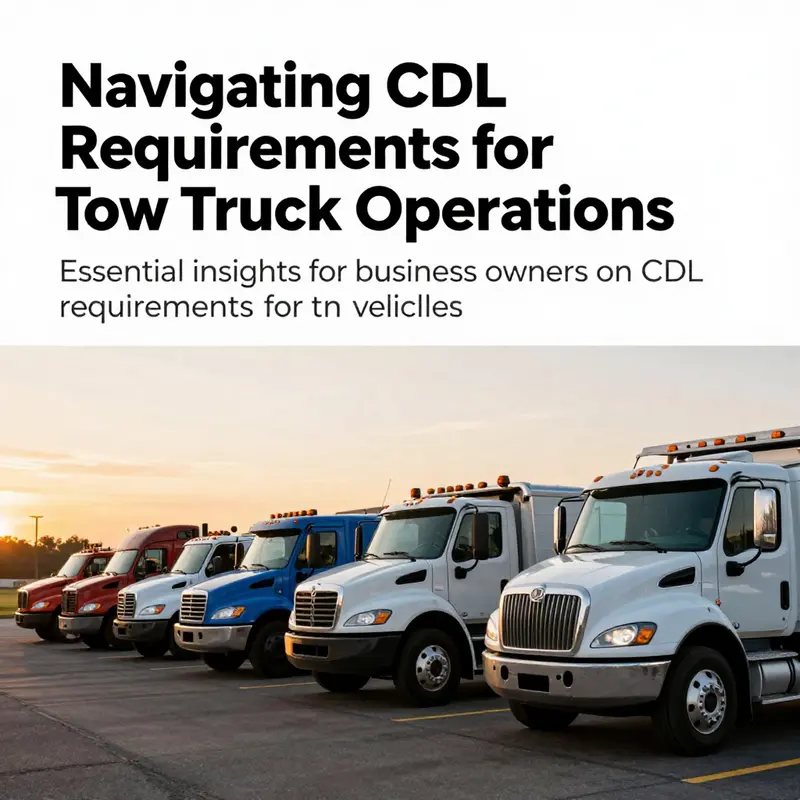
As a business owner in the towing industry, understanding the regulatory landscape regarding Commercial Driver’s Licenses (CDLs) is crucial for operations. The requirements surrounding CDLs can significantly impact your business operations, from compliance and insurance to hiring qualified drivers. This article unpacks the specifics of CDL requirements related to tow trucks, guiding you through the fundamental aspects of when a CDL is necessary, based on vehicle weight and the nature of towing operations. Each chapter will delve into key elements that will provide clarity on maintaining adherence to legal standards while positioning your enterprise for success in the towing sector.
Weight Thresholds, Commercial Use, and CDL Realities: Do You Need a CDL to Drive a Tow Truck?
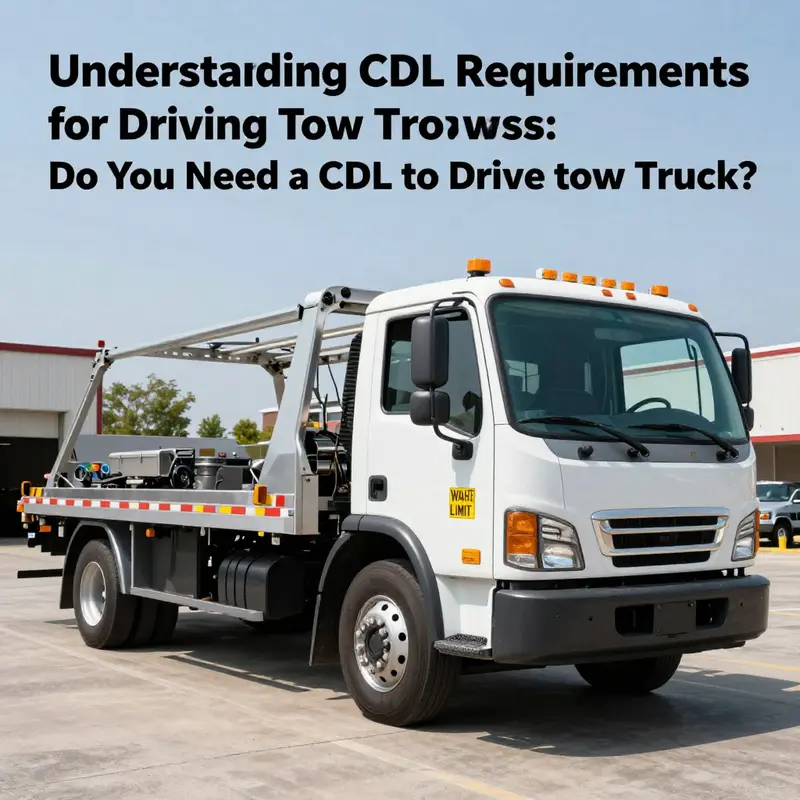
Do you need a Commercial Driver’s License to drive a tow truck? The short answer is that it depends, but the longer and more precise answer lies in weight and usage. In the United States, licensing decisions hinge on a simple but consequential threshold: the vehicle’s weight and how it’s employed. The federal framework provides a baseline, but the real world is layered with state variations that can tilt the balance one way or the other. As a result, two operators with seemingly identical tow trucks can find themselves in different licensing situations simply because they operate in different states or under different business models. The nuance is not merely bureaucratic. It shapes who can legally drive a tow truck, what kind of training is expected, and how insurance coverage is structured for the business and its customers. When you look at the landscape without the jargon, the principle becomes clear: heavier equipment and commercial activity magnify the need for formal credentials, while lighter, non-commercial use sits closer to a standard driver’s license. Yet even this straightforward message is tempered by real-world exceptions and a patchwork of state rules that reward careful compliance over quick shortcuts. This is why a careful, location-aware approach is essential for anyone who plans to drive, recover, or relocate vehicles as part of a tow operation.
The weight criterion is the most visible line in the sand. If the tow truck itself carries a Gross Vehicle Weight Rating (GVWR) above 26,000 pounds, a CDL is generally required to operate that vehicle. The logic behind this rule is practical: heavier trucks demand greater braking capability, more robust steering controls, and a broader margin for safety when moving other vehicles. The responsibility increases when the vehicle is used to tow, recover, or transport other vehicles for hire, because the potential for load shifts, incidents, and on-scene hazards grows with weight. For many operators, this is a straightforward calculation: check the GVWR plate on the truck, and if it shows more than 26,000 pounds, plan for a CDL before completing any commercial tasks. If the weight remains under the threshold, the door to non-commercial use is open, provided that the operation does not cross into the realm of compensated towing or other commercial activity. In that case, a standard license might be permissible, but you should confirm with the state DMV as soon as possible to avoid a last-minute licensing scramble during a roadside call or an insurance audit.
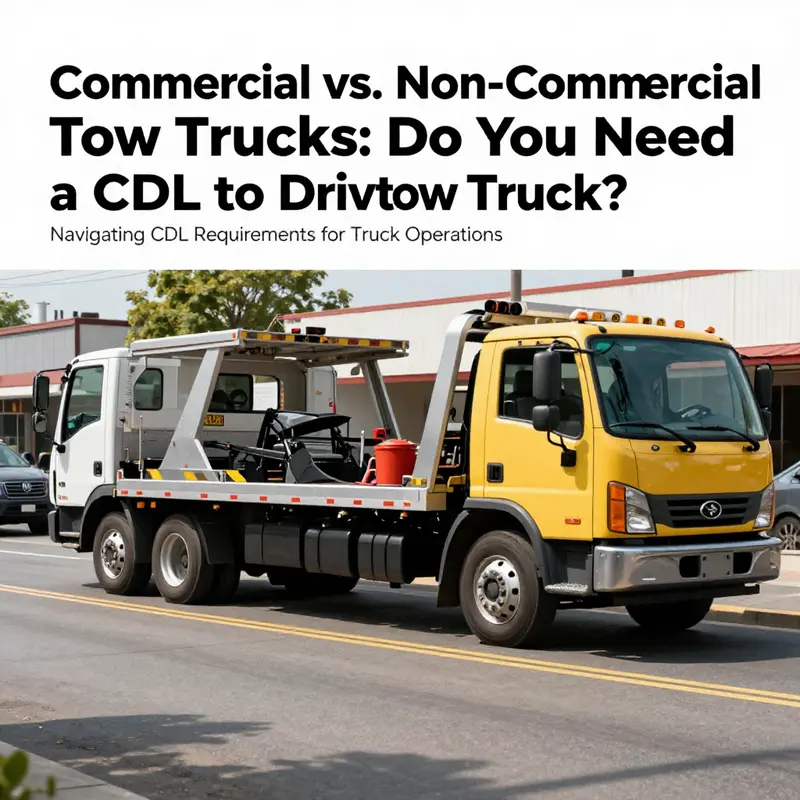
But weight alone does not tell the full story. The other dimension is how you use the vehicle. The moment towing becomes a commercial enterprise—whether you operate as an independent contractor, work for a fleet, or provide towing services for hire—the licensing expectations tend to tighten. Even if the tow truck weighs under the 26,000-pound mark, the business context can trigger CDL requirements depending on state interpretation. Some scenarios involve moving multiple vehicles for fee-based work, coordinating recoveries, or performing long-haul repositioning of a towed vehicle. In practice, this means the border between a hobbyist tow job and a regulated commercial operation can shift with the particulars of a given day’s assignment. The safeguard here is not simply regulatory compliance; it is the alignment of licensing with safety training, driving discipline, and professional responsibility. When a vehicle is used in a commercial capacity, regulators expect a higher standard of operator readiness, including the ability to manage heavier loads, understand vehicle dynamics during towing, and respond to on-scene risks with appropriate restraint and signaling procedures. In short, if revenue is involved, the likelihood increases that a CDL will be required or at least strongly recommended to cover the operation’s typical scenario.
State-by-state nuance is the final layer of complexity. Some states permit light tow trucks to operate under a standard license when used non-commercially, while others apply the CDL standard more broadly to any vehicle designed to tow, regardless of weight, if the operator is actively providing towing services. The result is that the same machine can trigger different licensing paths simply by crossing a state line or by changing the job description for a given contract. This complexity is why many operators and fleets adopt a conservative licensing posture: they maintain CDL eligibility to ensure they can perform a wider range of tasks without interrupting service or reconfiguring credentials mid-career. The practical impact is clear for anyone planning a towing business, especially one that spans multiple jurisdictions or that grows to include larger or more frequent recoveries. Training, medical certifications, and endorsements may accompany a CDL and can influence insurance terms, fleet safety programs, and the eligibility criteria for drivers who handle heavy or awkward loads, especially in congested urban environments or during night operations.
For anyone trying to figure out the licensing in a specific case, a sensible starting point is to confirm the vehicle’s GVWR and, if relevant, the vehicle being towed’s weight. If the GVWR is at or below 26,000 pounds, and the operation is clearly non-commercial, a standard license may suffice. If the GVWR crosses the threshold, plan for at least a Class B CDL, and consider whether an Class A CDL or additional endorsements might be needed if the job involves a combination vehicle or heavier towed loads. Beyond weight, the business structure matters: if you are hired by a company to perform towing on a regular basis, or if your work involves transporting vehicles for hire, the employer’s requirements will typically reflect the safest, most durable licensing path for the intended duties. A key takeaway is that legality and practicality converge most reliably when the operator understands both the weight of the equipment and the nature of its use, and when the licensing aligns with the specific job profile rather than a generic assumption about tow trucks.
In the field, many drivers instinctively gravitate toward the CDL path because it signals preparedness and reduces friction with insurers, law enforcement, and clients who expect a professional standard of operation. A CDL can also broaden job opportunities within the towing industry, enabling work on heavier equipment, more complex recoveries, and longer-range transports, which in turn contributes to a more resilient career trajectory. The correlation between licensing and safety training is not merely bureaucratic; it is the foundation for handling heavier tow configurations, managing on-scene risks, and maintaining the vehicle’s equipment to the rigorous standards that safety-minded customers demand. For local context, you can explore the Tow Truck Service Washington DC page. Tow Truck Service Washington DC.
Ultimately, the question remains situational yet grounded in a clear logic: do you need a CDL to drive a tow truck? The direct answer is that weight and use drive the decision. If the tow truck weighs more than 26,000 pounds, or if you routinely tow vehicles in a commercial setting, a CDL is typically required or at least strongly advisable. If the vehicle stays light and the operation remains strictly non-commercial, a standard license might be sufficient, provided you verify local rules. The safest approach is to treat the 26,000-pound threshold as a baseline rather than an absolute rule and to weigh the task at hand—the typical load, the frequency of towing, and the geographic scope. Rules evolve, enforcement varies by locale, and the line between private and commercial work can blur in the heat of a roadside incident. For those building a career in towing, staying informed about current state standards and updating credentials as the operation grows is not a luxury but a practical safeguard. To help with local regulatory interpretations, you can reference the Washington DC area context via the internal page noted above. For a broader, practical pathway to CDL eligibility, consult a reliable industry guide that outlines training, testing, and licensing steps. External resource: Indeed’s guide to becoming a tow truck driver.
null
null
Final thoughts
For business owners in the towing sector, understanding whether a CDL is required for operating tow trucks is not merely a matter of legality—it is integral to the operational framework and success of your enterprise. The differences between commercial and non-commercial towing vehicles can dictate the types of licenses your drivers need. By staying informed about these regulations, you ensure compliance, enhance safety, and position your towing business for sustainable growth. As your business ventures into the towing operation realm, always seek out the latest information from your local DMV and industry experts to navigate complexities effectively.