
Understanding if a Commercial Driver’s License (CDL) is necessary for driving a tow truck is crucial for business owners in the towing industry. As regulations can vary based on vehicle weight and state laws, this article will delve into two primary considerations that influence the need for a CDL. First, we will explore the weight thresholds that determine licensing requirements, followed by an overview of how state regulations can further shape these needs. By dissecting these factors, tow truck operators can ensure compliance and avoid potential liabilities.
Weighing the Threshold: How Vehicle Weight Determines the CDL Question for Tow Trucks
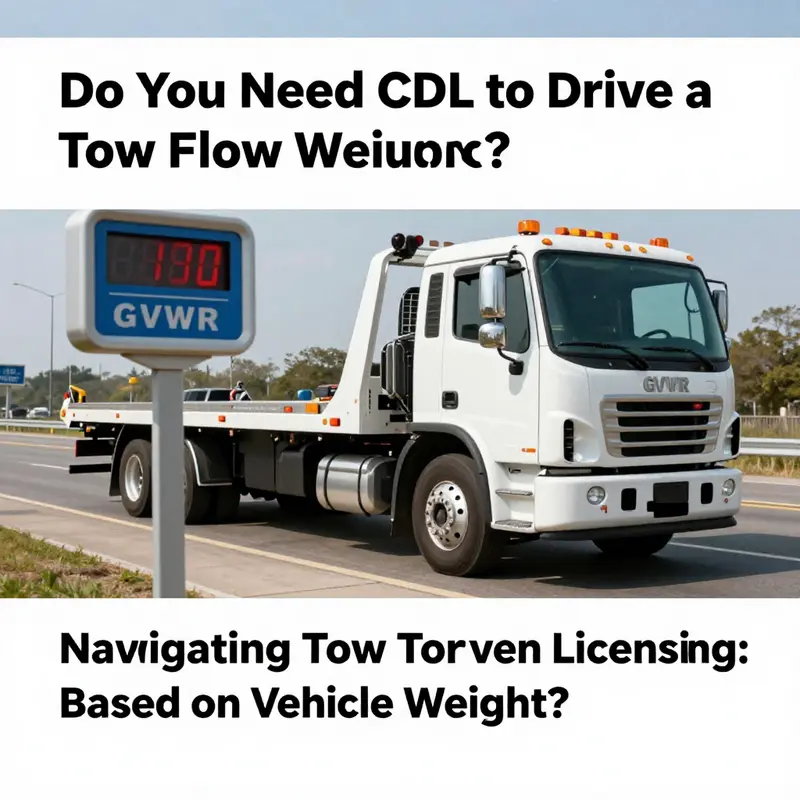
When people ask whether a CDL is required to drive a tow truck, the answer almost always starts with weight. Weight does not just determine what a vehicle can do; it governs who may legally drive it on public roads, how it must be operated, and what endorsements or credentials might be required. Tow trucks come in a spectrum from lighter, light-duty rollback units to heavy-duty rotators that can lift, tow, and transport sizable commercial vehicles. The common thread across this spectrum is a simple, weight-based rule: the higher the Gross Vehicle Weight Rating, or GVWR, the more likely a Commercial Driver’s License will be necessary. In the United States, the baseline is clear: if the GVWR is 26,001 pounds or more, a CDL is generally required. This threshold is set to reflect the greater responsibility, complexity, and safety considerations involved in operating heavier commercial equipment on busy roadways. The rule, however, is not a blunt instrument; it interacts with the type of towing operation, the configuration of the tow vehicle, and the specific duties the operator performs. The result can feel nuanced, even to seasoned operators who spend their days moving vehicles and navigating the lanes of a metro area. The FMCSA, the federal agency that oversees commercial motor vehicle operations, frames the issue around GVWR first and foremost. A tow truck that carries a GVWR at or above 26,001 pounds triggers the CDL requirement in most cases, regardless of whether the vehicle is used for private recovery or as part of a professional service. On the surface, this is a straightforward rule, but it unfolds into a broader set of considerations when you look at how the tow truck is configured and what it is tasked with doing.
The practical implication of that 26,001-pound line is that many heavy-duty tow trucks—those that recover large trucks, buses, or other heavy equipment—fall into a category where a CDL is not just advisable, but legally required. A tow truck designed to lift, move, and transport a large fleet asset typically sits well above the 26,000-pound mark, and such units are commonly operated as part of a business with an obligation to meet CDL standards. In this context, the vehicle weight is not merely a technical specification; it is a public-safety threshold that informs licensing, training, and regulatory compliance. It is worth noting that the threshold applies whether the tow truck is used for private purposes or as part of a commercial enterprise. The underlying principle is that heavier vehicles, by virtue of their mass and the complexity of operations, demand drivers who have demonstrated a higher level of competency and training.
But weight is not the only factor. The kind of towing operation matters as well. If the tow truck is used to transport vehicles that are themselves commercial—in other words, moving trucks or buses in the course of a business—this will typically intensify the regulatory requirements. The employment context matters because commercial activity elevates safety and regulatory oversight. Even if the tow truck itself might appear to be a modest weight vehicle in some configurations, the weight-to-tow/load dynamic and the purpose of transport can push the operation into CDL territory. Conversely, a lighter-duty tow truck used solely for private, non-commercial recovery on roads with minimal exposure to heavy traffic and organized operations may operate under a standard license in some states. The divide is not a single line but a continuum shaped by weight, use, and jurisdiction.
State regulations, too, color this picture. While FMCSA sets the baseline rules for interstate commerce and standardization, state Departments of Motor Vehicles (DMVs) retain the authority to add or refine requirements. Some states might require a CDL even for lighter tow trucks when used commercially, while others adhere more strictly to the federal GVWR threshold. This means a practitioner who hauls vehicles in and out of state, or who operates a tow business across county lines, must verify both the federal baseline and the specific state rules where operation occurs. A careful approach is to consult the local DMV and, if needed, to obtain guidance from a licensed CDL instructor or a compliance advisor who can navigate the subtle differences among jurisdictions. In essence, weight sets the baseline, and state nuance fills in the details.
To understand the distinction more concretely, consider how the CDL classes map onto vehicle configurations. In the simplest terms, a Class B CDL is typically required for a single vehicle with a GVWR over 26,001 pounds. If the tow truck operates as a straight vehicle and is designed to tow other heavy equipment within the same conventional frame, it usually falls under Class B. When the operation involves a combination vehicle—meaning the tow truck itself pulls another vehicle whose GVWR is substantial—the rules can move toward Class A. A Class A CDL covers combination vehicles with a GVWR of 26,001 pounds or more, where the towed unit exceeds 10,000 pounds in weight. In practical terms, a heavy-duty rotator that lifts and tows heavy trucks might necessitate a Class A license if the combination pushes the gross weight into that higher category. The precise class for a given tow setup depends on the GVWR of the vehicle, the GVWR of the towed unit, and the configuration of the towing apparatus.
Endorsements add another layer of specificity. A driver who handles hazardous materials, or who transports a larger number of passengers, will require corresponding endorsements on their CDL. Specifically, a HazMat endorsement is required for certain hazardous materials, and a Passenger endorsement is needed when the operation involves transporting 16 or more passengers, including the driver. These endorsements can be added to Class A, Class B, or Class C licenses, depending on the vehicle and operation. In towing contexts, HazMat endorsements might be essential if the operator is moving hazardous materials as part of the business or the tow operation. The Passenger endorsement becomes relevant if the tow operation crosses into passenger transport in any capacity, such as a tow truck used to shuttle crews or equipment in group settings. While these endorsements do not automatically recalibrate whether a CDL is required, they expand the operator’s credential to cover the full scope of the business’s activities.
The practical takeaway is straightforward yet nuanced: if you are driving a tow truck for work and the vehicle’s GVWR sits at or above 26,000 pounds, you should anticipate that a CDL will be required. If the configuration involves a combination with a heavier towed unit, or if you are moving vehicles that fall into the heavy, commercial category on a regular basis, the likelihood grows that Class A is the correct designation. If the operation involves heavier loads, or movement of hazardous materials or a larger group of passengers, relevant endorsements will apply to your CDL. In contrast, lighter, non-commercial use of a tow truck under 26,000 pounds may fall under a standard driver’s license in some states, though this is not universal and should be confirmed with the local DMV. Any decision about licensing should be grounded in a careful review of the vehicle’s GVWR, the towing configuration, and the intended use on public roads.
For those contemplating or already operating a tow business, a practical step is to check with the local DMV for the exact requirements, including the appropriate CDL class and any endorsements. DMV guidelines can differ by state even as the federal baseline remains constant. Understanding the precise license type you need helps plan for training, testing, medical certification, and the investment in time and resources required to stay compliant. It also orients a business toward safer operations, because a well-trained, properly licensed driver is better equipped to handle the challenges of heavy towing, recoveries in congested areas, and the unexpected events that can arise on the road.
Within this broader landscape, it is helpful to see how real-world operators navigate the regulatory terrain. For instance, regional towing services in major urban centers often publish service information that reflects the practical realities of CDL requirements. A relevant reference point is a Washington, DC-based towing service that provides a view into how local operations present their capabilities and limitations. Their informational page on services illustrates how a CDL mindset guides staffing, equipment choices, and the scope of recoveries in dense urban environments. The anchor text for this resource is visible here: towing service Washington DC. This example highlights how operators align licensing, training, and service offerings to meet client needs while staying within regulatory boundaries.
As a part of responsible practice, prospective drivers and owners should also consult federal resources for the technical definitions of GVWR and related weight classifications. The FMCSA maintains a comprehensive set of guidelines on vehicle weights and dimensions, including the GVWR framework. These official materials lay out the baseline standards that many states mirror while also clarifying where state additions may occur. For a deeper dive into the federal standard, refer to the FMCSA GVWR guidelines at the following external resource: https://www.fmcsa.dot.gov/vehicle-weights-and-dimensions/gross-vehicle-weight-rating-gvwr. This external reference anchors the discussion in the agency’s formal definitions and helps explain why the 26,001-pound threshold exists and how it translates into licensing requirements across the country.
In the end, the question is not simply about the number on the vehicle plate. It is about safety, accountability, and the recognition that heavier weights carry greater responsibilities on the road. The CDL framework exists to ensure that drivers who operate heavier tow trucks—especially those that perform complex recoveries, transport other vehicles, or work in busy urban corridors—are equipped with the training, medical fitness, and driving skills needed to manage those duties. The rule is designed to protect the driver, passengers, other motorists, and the equipment itself. If your tow operation sits near the 26,001-pound line, or if you foresee a trajectory that includes heavy tows, multiple stops, and potentially hazardous situations, investing in the appropriate CDL and endorsements is not merely a formality; it is a prudent business decision grounded in safety and compliance.
Ultimately, the weight-based question should lead to a practical, state-specific confirmation. Before purchasing a unit, before scheduling training, and before dispatching crews, verify with the local DMV whether the operation requires a CDL, and if so, which class and endorsements apply. The investment pays off in fewer regulatory surprises, safer operations, and greater confidence in meeting the demands of heavy towing in a modern transportation landscape.
Weight, Regulation, and Responsibility: Decoding CDL Needs for Tow Trucks Across States
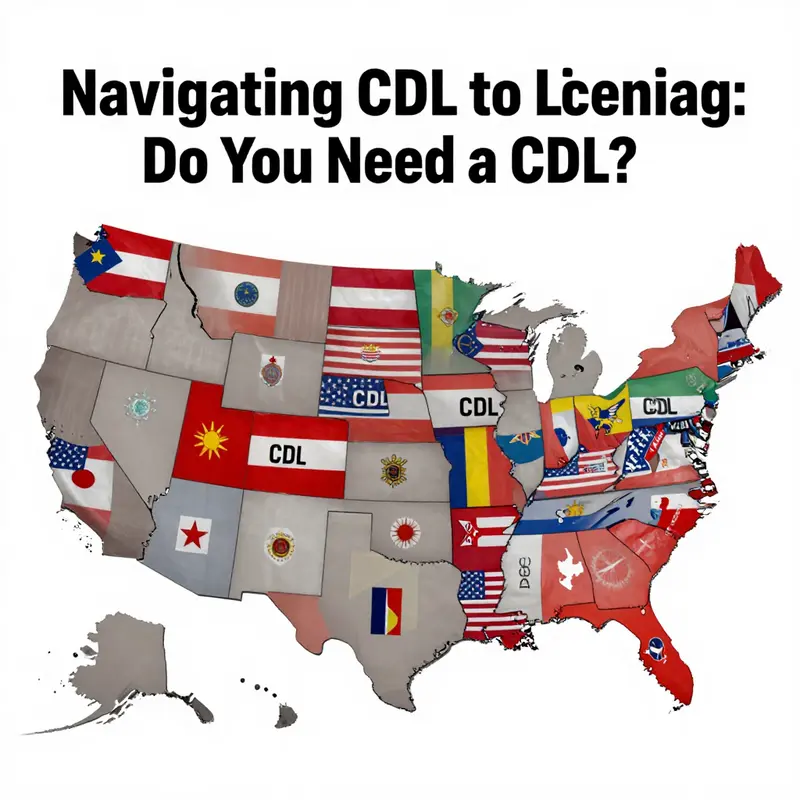
When you picture a tow truck heading out after a crash or a breakdown, the image often centers on quick response, nimble maneuvering, and the skill to secure a vehicle that isn’t rolling on its own. But beneath the surface of every recovery job lies a set of licensing rules that can make or break a career in towing. At the heart of those rules is the Commercial Driver’s License, or CDL, a credential that many operators need when the machine they control is heavy enough to demand more training, more accountability, and moreproof of capability. The question, as a result, isn’t simply whether you can drive a tow truck with a regular license. It hinges on weight, purpose, and the regulatory landscape that varies from one state to the next. This nuanced terrain invites a careful, weight-centered reading of how CDL requirements apply to tow trucks in everyday practice and in business contexts alike. The simplest answer is often the most precise one: if the tow truck or the load it’s intended to haul pushes you over certain thresholds, a CDL becomes the practical minimum standard of qualification. If not, there may still be state-specific caveats that shape what license you need. The practical takeaway is straightforward in concept, though its applications are anything but uniform: the heavier the vehicle or combination, the more likely a CDL, and in many cases, a Class A combination license may be necessary when the payload or the type of tow demands it. The weight-based rule is not merely a bureaucratic hoop; it reflects the safety and skill demands that come with operating heavy machinery on public roads, especially when that machinery is used to move other heavy vehicles, potentially in challenging or hazardous circumstances.
GVWR, or Gross Vehicle Weight Rating, is the key metric that most people encounter first. In the United States, a CDL is typically required for any vehicle with a GVWR of 26,001 pounds or more. Tow trucks used for heavy-duty recoveries—think of those designed to salvage or tow large commercial vehicles or buses—often exceed this threshold, making a CDL not just useful but legally necessary. In practical terms, that means a tow operator who drives a heavier chassis, particularly one that operates as part of a business and routinely hauls other heavy vehicles, will almost certainly need a CDL to stay compliant and to perform the job legally. The underlying logic is protection: heavier vehicles demand greater control, longer stopping distances, broader maneuvering considerations, and the capacity to manage more complex loads and potential hazardous situations. As a result, a CDL signals that the driver has undergone specialized testing, training, and know-how that a standard license cannot guarantee.
But weight is not the sole gatekeeper. The way a tow job is structured can push the licensing requirement in another direction. If the tow truck is being used to transport vehicles that themselves qualify as “commercial”—for example, trucks, buses, or other heavy machinery—then the operation often crosses into CDL territory. The logic here is straightforward: the act of moving another commercial vehicle elevates the risk profile of the operation, and licensing systems reflect that by requiring drivers who can manage the combination of vehicle and payload to hold the appropriate credential. State regulations recognize that towing is not a neutral act; it is a task with safety, insurance, and public-safety implications that can change depending on how the work is organized. In many jurisdictions, that means the employer’s business activities also matter. If the towing operation functions as a commercial transportation service, a CDL becomes more likely, and sometimes mandatory, even when the tow truck itself might not exceed 26,000 pounds when solo. The practical implication for a prospective tow operator is clear: understand not just the weight of the tow truck, but the weight and nature of what is being towed, and the business context in which the operation occurs.
State regulations introduce a further layer of complexity. Federal guidelines provide a baseline, but states can add criteria. Some states require a CDL even for lighter tow trucks when they are used in commerce or as part of a business that transports vehicles. Others adopt the stricter standard based on the combination’s GCWR, or gross combination weight rating, which accounts for both the tow vehicle and the towed unit. In short, a tow operator who wants to stay ahead of the curve should not rely on a one-size-fits-all rule. A careful, location-specific check with the state DMV is essential, because the line between a standard license and a CDL can shift depending on where you operate and how you operate.
California offers a telling example of how these thresholds can vary by state. In that state, the rule tends to the practical standard that if you are towing a vehicle that exceeds a weight threshold—often cited as around 10,000 pounds—you are required to hold a CDL. This is a reflection of the fact that towing heavy loads introduces additional variables, from braking performance to highway maneuverability, which state authorities have decided require the higher level of training and oversight that a CDL provides. It’s also notable that beyond the towed weight, the classification of the tow truck itself can influence licensing. If the tow vehicle is categorized as a commercial motor vehicle due to its size or the purpose for which it’s used, a CDL is typically necessary regardless of the exact weight of the towed vehicle. The California framework, while serving as a model of diligence, is still a reminder that state lines—and the definitions they adopt—shape the licensing requirements in substantial and practical ways.
The California example also serves as a reminder of the importance of up-to-date, region-specific guidance. Rules evolve as transportation authorities adjust definitions, thresholds, and endorsements. For someone planning to work as a tow operator, that means a two-step due diligence: first, confirm the current rules with the state DMV, and second, seek out reliable, current commentary or guidance that explains how those rules apply to your planned operations. In some cases, a practical resource can be a state-focused career guide or a professional guidance article that translates regulatory language into actionable steps. For California readers, for instance, practical guidance has been compiled to outline how to align one’s licensing path with the state’s expectations for tow-truck operations, including the practical milestones needed to qualify for a CDL and to operate legally within the state’s framework.
The upshot for a would-be tow-truck operator is both clear and nuanced. If your work involves towing a vehicle or multiple vehicles that, in combination with your tow truck, cross the 26,001-pound threshold, or if the vehicle being towed is itself a heavy commercial vehicle, you should anticipate needing a CDL. If you operate a lighter-duty tow truck that remains under the weight cutoffs and your work remains within non-commercial or small-business contexts with modest tows, a standard driver’s license might suffice—but even here, state rules can vary. A practical approach is to treat the DMV as the authoritative source and to seek clarity on whether the towed vehicle’s weight, the tow truck’s weight, the nature of the operation, or the business context triggers CDL requirements.
For those weighing the decision to pursue CDL training, the benefits extend beyond compliance. A CDL often includes the opportunity to demonstrate a higher level of driving proficiency, a more thorough understanding of road safety, and a credential that can open doors to more varied work within the towing industry. It’s not merely a legal shield; it is a signal to clients and partners that the operator has met elevated standards for operating heavy vehicles, securing loads, and navigating complex road situations. The personal, professional, and financial considerations cohere when the weight and purpose of the work align with CDL eligibility: you gain not only compliance and credibility but also the potential to expand service offerings and geographic reach. The decision, then, is not only about whether a license is legally mandatory in your state, but about the broader trajectory of your towing career and the degree to which you want to invest in training that enhances safety and reliability on every call.
When mapping out a licensing path, it helps to frame the journey around a simple reality: licenses are earned through a combination of testing, training, and practical experience. The DMV typically requires a knowledge test, a skills test, and medical certification to obtain a CDL. The specific steps—including endorsements that may be relevant to towing tasks beyond basic operation—vary by state, reinforcing the core message that the licensing landscape is not static. It shifts with the kind of work you intend to do and the kind of vehicles you intend to move. Given that complexity, a responsible operator will seek current guidance, verify the exact weight thresholds for their gear, and consult with their state’s licensing authority before investing time and resources into a particular licensing track.
In the interest of practical navigation, consider the following approach as you plan your pathway. First, determine the GVWR of the tow truck you will drive, and identify the heaviest towed vehicle you anticipate moving. If either figure pushes you toward or beyond 26,001 pounds, prepare for a CDL discussion with the DMV. Second, map out the typical operations you plan to perform—whether you will recover large commercial vehicles, move buses, or regularly tow multiple vehicles in a commercial setting. This context helps determine whether a Class A combination license may be required or if, in your state, a standard CDL with relevant endorsements will suffice. Third, investigate state-specific nuances. Some states impose CDL requirements for the towing vehicle itself, regardless of the towed load, especially when the operation occurs within a commercial framework. Others apply the threshold more to the combination’s GCWR rather than the tow vehicle’s alone. Finally, consult reputable, up-to-date resources that translate regulatory language into actionable steps. California, in particular, has published guidance that illustrates how thresholds can manifest in everyday practice and why a heavier payload or a commercial intent often prompts CDL considerations. For a broader view that anchors these distinctions in practical, step-by-step guidance, a recent overview of the California approach can be helpful to understand how rules translate into the licensing journey.
As you prepare to pursue licensing or to assess whether your current credentials meet the needs of your operation, it’s useful to anchor your thinking in a single, central principle: the weight and the use case dictate the licensing path. A heavier tow truck or a heavier towed load tends to pull you toward CDL requirements, particularly when the operation is commercial in nature. Lighter, non-commercial operations may fall under standard licensing, but state differences abound. The best course is to verify with your local DMV, review any state guidance on towing and commercial vehicle operation, and consider whether the added credential will serve your business goals, safety standards, and professional credibility. Ultimately, the decision to pursue a CDL for tow-truck work is not just a compliance choice; it is a strategic one that aligns your capabilities with the realities of the road, the demands of the job, and the expectations of clients and regulators alike.
For readers seeking a concrete example of how one state frames these questions and for a broader, practical sense of the steps involved, see the guide referenced in this chapter for California specifics, which distills the licensing path into actionable steps and timelines. And when planning your next move in tow-truck licensing, consider connecting with a local operator’s network and reviewing local job postings to understand how often CDL credentials are requested or required in your area. If you’re in the Alexandria region and want to explore local service options while you map your licensing plan, you can explore towing service in Alexandria VA.
External resource for further reading: For California-specific guidance on becoming a tow-truck operator and the licensing steps involved, see this external resource: How To Become a Tow Truck Driver in California in 3 Steps.
Final thoughts
The requirements for driving a tow truck can significantly impact your business’s operations and compliance status. In summary, if you are operating a tow truck with a gross vehicle weight rating exceeding 26,000 pounds, obtaining a CDL is generally necessary. Additionally, factors such as state regulations can further complicate this requirement. Therefore, it’s paramount to be aware of both weight classifications and local laws to ensure adherence and avoid penalties. Taking the time to understand these requirements not only safeguards your operation but also instills trust among your clients.