
For business owners in the towing industry, understanding the requirements for a Commercial Driver’s License (CDL) is crucial. The necessity of a CDL can significantly impact the operations and compliance of your tow truck services. The thresholds dictated by federal regulations, alongside individual state laws, form a complex landscape that all operators must navigate. In the following chapters, we will delve into the nuances of CDL requirements for tow trucks, examine variations among states, and underscore the vital role of CDLs in ensuring safety and compliance within your operations.
When a Tow Truck Becomes a Commercial Vehicle: Do You Need a CDL to Tow?
The question that often lands on the desk of a shop owner, a dispatcher, or a roadside technician is deceptively simple: do you need a CDL to drive a tow truck? The blunt answer is usually yes, but the reason is layered. In practice, the rules hinge on weight — the gross combination weight rating (GCWR) of the tow truck and whatever it is towing — and on how a given state implements federal guidelines. If the combined weight crests 26,001 pounds, a CDL becomes a baseline requirement. But even when the tow truck itself is lighter, towing a heavy vehicle can push the total over the threshold, and then a CDL is still required. Weight is not just a number; it is a doorway to regulated operation, and behind that doorway lurk endorsements, testing, and state-by-state nuances that can make the difference between a lawful roadside assist and a lapse that could complicate insurance, licensing, and liability.
FMCSA rules describe a commercial motor vehicle as any vehicle with a GVWR of 26,001 pounds or more, or a vehicle designed to transport 16 or more passengers, including the driver. By that standard, most tow trucks fit into the commercial category, and the clock starts ticking on CDL requirements as soon as you roll onto the road with the equipment and the task at hand. The practical implication is straightforward: to operate a tow truck legally in most circumstances, the driver needs at least a Class B CDL. This is especially true for heavier tow units that routinely carry or tow loads that tip the scale past the 26k mark. Although some flatbeds and wreckers may seem like exceptions, the weight realities tend to align with the need for a serious license.
Beyond the weight threshold, the specifics of use matter a great deal. If a tow truck is deployed to transport hazardous materials, or if the operation requires moving more than 15 passengers, additional endorsements become necessary. These endorsements are not mere add-ons; they reflect the risk profile of the operation and the responsibility placed on the operator. The end result is that a CDL with the appropriate endorsements — such as a “T” endorsement for towing — becomes the practical gatekeeper for safe, compliant tow-truck work. For operators in states with stricter interpretations, even vehicles below the federal weight threshold can trigger licensing requirements if the commercial use, the service environment, or the cargo introduces additional risks or regulatory obligations.
The process to obtain or upgrade a CDL is consistently structured, though the specifics vary by state. A typical pathway begins with a written knowledge test that covers the rules of the road, vehicle inspection, and basic safety. This is followed by a skills performance test that includes a pre-trip inspection, basic control skills, and an on-road driving evaluation. Medical qualifications and a background check often accompany the licensing process, ensuring that the operator meets the health standards and the trustworthiness demanded by commercial work. Some states also require specialized training for tow-truck operators, reflecting the specialized skills needed to handle vehicles under recovery, immobilization, or heavy towing situations. This training emphasizes not just driving, but trailer handling, winching operations, and the deliberate use of safety equipment in a high-stakes, often roadside environment.
Because state requirements can diverge, the best practice is to consult the local DMV or a state licensing authority for the most current rules. The federal framework provides the backbone, but the day-to-day reality on the ground is shaped by state-level decisions. In practice, this means that a tow-truck operator who travels across state lines may need to hold multiple endorsements or adjust portions of their license to remain compliant in each jurisdiction. The cumulative effect is that CDL knowledge is not merely a credential; it is an ongoing, location-specific body of knowledge that governs how and where a tow truck can operate.
The regulatory landscape also intersects with workplace expectations and liability concerns. Companies that dispatch tow trucks frequently prioritize CDL holders, not only to meet legal obligations but to align with insurer requirements and client expectations for safety and reliability. The endorsement landscape matters here as well; a “T” endorsement broadens the scope of permissible towing operations and is commonly expected for professional tow-truck work. In practice, possessing the CDL and endorsements unlocks a broader range of assignments, from on-highway recovery to more intricate light- and medium-duty towing tasks, while also signaling to clients and regulators that the operator understands the safety checks, vehicle configurations, and procedural discipline needed in serious roadside work.
For readers in specific urban corridors, practical guidance can be found in state- and city-specific resources that translate the federal framework into local practice. For DC-area operations and other metropolitan environments where corridors are tight and intensity is high, confirming the local licensing expectations through a dedicated page is prudent. See for example tow-truck-washington-dc for a snapshot of how local providers frame licensing, endorsements, and training in that jurisdiction. This kind of local reference complements the broader federal overview by clarifying how real-world operations adapt to street-level constraints and regulatory expectations. In parallel, professional development for tow-truck operators increasingly includes formal courses on incident scene safety, customer relations in stressful situations, and documentation practices that protect both the operator and the company in the event of disputes or audits.
In the end, the question is less about a single license and more about the regulatory ecosystem that governs heavy road service. The GCWR threshold creates a clear line, but the public safety rationale behind CDL requirements extends further. A tow truck is not merely a vehicle designed to haul; it is a complex tool used in dynamic, sometimes dangerous modes of operation. The operator must be prepared to perform meticulous inspections, respond to changing conditions, and manage risks that range from traffic and weather to securement and communication with distressed motorists. The CDL framework, with its tests, medical prerequisites, and endorsements, is designed to ensure that those entrusted with such responsibilities have demonstrated the competence and discipline needed for safety and reliability on the road. For anyone weighing a career in tow-truck work or expanding a fleet’s capabilities, the CDL calculus is a foundational map that helps chart the path forward, balancing regulatory compliance with practical work demands.
External resource: https://www.fmcsa.dot.gov/vehicle-operations/commercial-driver-safety-information/cdl-information
State Patchwork: How CDL Rules for Tow Trucks Vary Across the United States
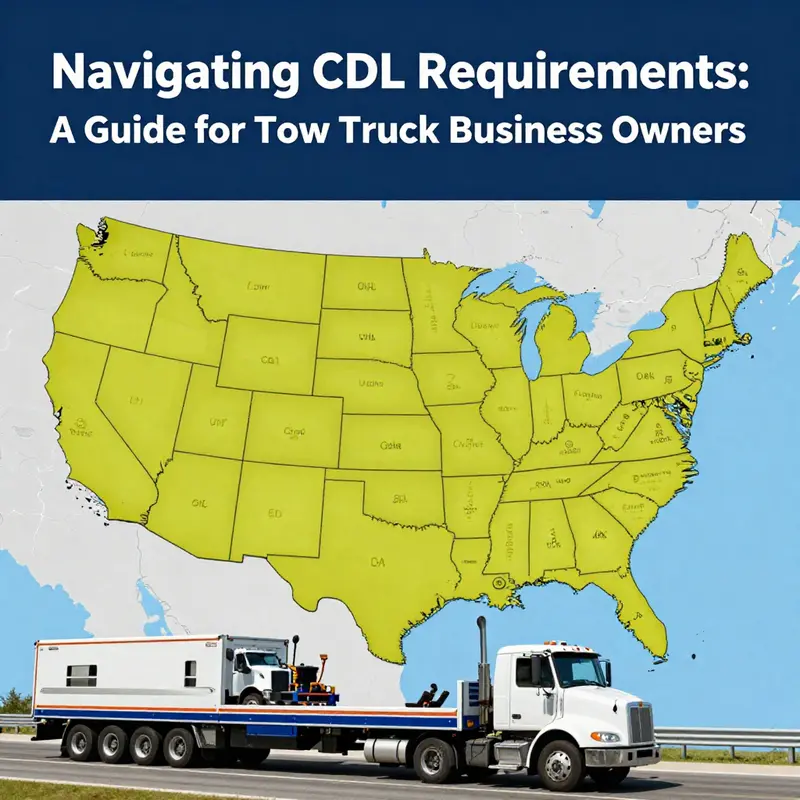
Tow trucks operate in a landscape that changes from state to state, yet a single question threads through every dispatcher’s planning: do I need a CDL to drive this tow vehicle and the load it carries? The short answer is often yes, but the long answer is almost always more nuanced. Federal rules provide a baseline, but the final requirement is sculpted by state definitions of vehicle classifications, weight thresholds, and the exact nature of the towing work being performed. For operators who move between jurisdictions or work near state borders, this patchwork is not merely academic. It translates into licensing, training, and the ability to respond quickly and safely to roadside calls without stumbling over a licensing trap in a new town or county. The core metric that repeatedly surfaces is weight, but it is weight interpreted through a state lens, not a universal yardstick. In practice, the regulator looks at the combined weight rating of the tow truck and the vehicle being towed, what is known as the gross combined weight rating, or GCWR. If that GCWR climbs above 26,001 pounds, a CDL is typically in play. But there is no single automatic rule that applies everywhere. Some states also consider the GVWR of the tow truck itself and how the load is connected or secured on the road. In some cases, the same truck that would not require a CDL in one state could need a license in another if it routinely pulls heavier vehicles or conducts business in a way that triggers commercial vehicle classifications. This is not a matter of declarations on a form only; it is a matter of how the state enforces safety on the ground, how its fleets operate, and how it treats towing as a critical public service with attendant risk. The most practical implication for drivers and fleet managers is that a routine cross-state dispatch can demand a different credential mix than a single-state operation. It pays to build a licensing map that accounts for the GCWR of your heaviest towed load, the towed vehicle types you encounter most, and the specific duties your team performs, whether emergency response, accident scene recovery, or scheduled fleet maintenance tow work. The complexity is not limited to weight alone. Many states distinguish between non-emergency towing and emergency towing services. In emergency contexts, public safety agencies may deploy specialized crews and equipment under different licensing schemes, sometimes with exemptions or streamlined endorsements. Other states require stricter licensing regimes for any tow that involves heavy loads or specialized recovery equipment, reflecting the added risk of tow operation in traffic, at night, or in inclement weather. Because these rules shift with policy changes, it is essential to consult the official DMV or licensing authority in your state for the most current guidance. The distinction matters when a driver builds a career around heavy towing or when a small fleet pivots between light and heavy duty configurations. In practice, many operators hedge against surprises by documenting the exact weight ratings on each truck and on the towed vehicle, then cross-checking those numbers against state publications. They also track whether their operations fall under emergency response exemptions, and they maintain a clear chain of training and endorsements. The operational consequences extend beyond licensing. Insurance requirements, driver qualification files, maintenance schedules, and even the permitted equipment types can hinge on whether the vehicle is subject to CDL rules. For a typical tow firm, this means a disciplined approach to weight documentation, a clear understanding of when a CDL with a T endorsement is necessary, and a proactive plan to manage cross-jurisdictional work without gaps in coverage or accountability. An Arlington operator, for example, often benefits from local guidance that reflects how state rules intersect with municipal expectations. It is worth noting that the specifics of any given site can influence licensing needs. For readers exploring the question in depth, consider how a local shop or dispatcher frames compliance day to day; this practical lens helps connect weight numbers to real life calls and dispatch decisions. Arlington tow-truck services serves as a touchstone for the everyday realities of licensing in a dense traffic corridor, illustrating how weight, end endorsements, and local practice converge in routine operations. The core takeaway is that CDL requirements are not universal; they are earned by matching your fleet’s weight profile with your state’s licensing framework and your operational reality. When a dispatcher maps routes, the team should ask: what is the GCWR for this pairing, do we require a CDL or a T endorsement for this type of tow, and are there any emergency or hazardous materials considerations that could alter the licensing path? The answer is seldom a single yes or no but a calibrated mix of rules, tested procedures, and ongoing compliance that travels with the crew on every call. The testing and credentialing landscape reinforces this approach. Obtaining a CDL with a T endorsement involves passing both a written exam and a skills test, which includes a pre-trip inspection, basic control skills, and an on-road drive. The exact format and the range of endorsements available differ by state, but the underlying objective remains constant: ensure the driver can handle the physics of towing heavy loads, manage securement, and respond safely to dynamic traffic situations. That foundation supports the broader goal of protecting motorists, responders, and tow crew members alike. In short, the state-by-state variation is not a barrier to service; it is a framework that makes safe towing under diverse conditions possible. To stay compliant, operators should routinely consult their state DMV resources, confirm the precise GCWR thresholds that apply to their trucks and towed loads, and be prepared to carry multiple endorsements if their work straddles borders or shifts among non-emergency and emergency tasks. The reality is that a CDL decision is rarely a one-time event; it is an ongoing alignment of equipment, service type, and jurisdictional rules that keeps a tow fleet ready to roll when every mile counts. External resource: California-specific licensing information can be found at the California DMV Tow Truck Licensing page: https://dmv.ca.gov/portal/vehicle-licenses-and-registration/tow-truck-licensing/
Weight, Law, and Responsibility: How a CDL Shapes Tow Truck Operations and Road Safety
Tow trucks sit at a tricky crossroads of urgency and engineering. They arrive at the scenes where speed and skill matter most, yet their very presence on congested roads demands a disciplined approach to safety and compliance. The question of whether a Commercial Driver’s License (CDL) is required to drive a tow truck is not a simple yes-or-no, but a function of weight, equipment, and jurisdiction. What starts as a practical consideration—can I legally operate this vehicle?—quickly expands into a broader discussion about professional competence, public safety, and the accountability that keeps every road user safer. In the United States, the federal framework, reinforced by state adaptations, makes the CDL the gatekeeper for the heaviest and most capable tow trucks. A common touchstone is the Gross Combination Weight Rating (GCWR), a measure of how much weight the combination of tow truck and towed vehicle can legally exert on the road. If that figure surpasses 26,001 pounds, a CDL is typically required. But even when the tow truck itself is below that threshold, the math can still push the license into the foreground if the towed vehicle pushes the total over the limit. The result is a deceptively simple rule with wide-ranging consequences: licensing, safety training, and the responsibilities that come with operating a vehicle that carries people, wreckage, and sometimes hazardous loads through busy traffic. The real-world implication is clear. Tow trucks are not ordinary service vehicles; they are mobile platforms for lifting, securing, and transporting vehicles that cannot move themselves. Their gear—winches, wheel-lifts, chains, and binding straps—requires precise handling and a level of control that ordinary drivers do not routinely practice. The CDL process, therefore, functions as a structured guarantee that the operator has demonstrated both theoretical knowledge and practical competence. The training pathway emphasizes a blend of classroom instruction and hands-on skill development. Before a driver even sits behind the wheel of a tow truck with a passenger or a towed vehicle, they must prove their knowledge through a written examination and demonstrate on the road that they can perform a pre-trip inspection, manage basic control skills, and conduct an on-road drive safely. The “T” endorsement—the tolling badge for towing—signals a specific competency in handling the unique dynamics of towing scenarios. This endorsement is not merely ceremonial; it reflects a curated set of capabilities designed to reduce risk at an inherently high‑risk job. In practice, that training translates into better weight management, improved load security, and more reliable restraint methods. A well-trained operator understands how to distribute weight to avoid dangerous shifts, how to use tie-downs and chains correctly, and how to navigate curves and slopes with minimal risk of rollover or loss of control. The emphasis on load security is not optional ornamentation; it directly affects the safety of other road users. The long arm of safety extends beyond the driver. CDL compliance encompasses hours-of-service rules, vehicle maintenance standards, and systematic inspections that help prevent fatigue, equipment failure, and avoidable incidents. Agencies like the FMCSA regulate these elements to ensure accountability and consistency across the industry. The outcome is a more predictable traffic environment, where emergency responses can unfold with reduced risk to responders, motorists, and the towed lot of vehicles. The penalties for operating without a valid CDL in appropriate circumstances are severe: fines, license suspension, and potential criminal charges if an accident occurs. The consequences ripple outward, affecting insurance, company reputation, and the ability to continue operating in a safe and compliant manner. For tow truck operators and their employers, there is a practical upside to licensing beyond legal obligation. CDL-holding drivers are seen as lower risk by insurers, which can translate into more favorable rates for the company and greater confidence from customers who rely on timely, safe service. The credibility that comes with a licensed driver reinforces a company’s commitment to safety and professional standards. The journey to obtaining a CDL with a towing endorsement is neither quick nor arbitrary. It involves selecting a qualifying training program, passing a written test that covers federal and state trucking rules, and completing a comprehensive skills test that includes a pre-trip inspection, basic vehicle control, and on-road performance. The process is designed to verify that the operator can respond to the variability of tow work—from narrow streets and tight parking lots to the unpredictable demand of roadside emergencies. To put the local dimension in perspective, many operators working in metropolitan areas coordinate with trusted service providers and platforms that reflect their adherence to safe, compliant practice. For readers seeking a local frame, consider exploring the DC towing service page to understand how a community-focused operator communicates safety standards and service reliability in a dense urban setting. DC towing service. This kind of local resource illustrates how the CDL requirement translates into everyday practice, from pre-trip routines to incident response on crowded avenues. Beyond the regulatory text, the CDL acts as a signal: a commitment to professional development, ongoing training, and adherence to rigorous safety protocols. It is a foundational element that aligns the operator’s duties with the expectations of the public and the regulations that govern commercial transportation. The administrative framework around CDL—registrations, endorsements, and record-keeping—serves to keep the industry accountable. It creates an auditable trail that can be reviewed after incidents, inspections, or audits, reinforcing the idea that tow work is professional work, performed by people who have earned their credentials and the respect that follows. For those who manage tow operations, that credibility carries tangible benefits. It simplifies hiring, supports smoother insurance negotiations, and fosters a culture of continuous improvement. It also helps ensure that crews are prepared not only to move a vehicle from point A to point B but to do so with the sensitivity that comes from understanding the road’s risks and the responsibilities of sharing it with others. The CDL landscape continues to evolve, with states sometimes implementing stricter rules for commercial towing operations or clarifying where the thresholds apply. The essential truth remains: the combination of weight, towed loads, and the vehicle’s purpose defines the licensing path. In many conditions, that path leads straight to a CDL with a T endorsement, signaling a baseline of competency, safety, and accountability. For readers seeking official guidance, the Federal Motor Carrier Safety Administration (FMCSA) provides a centralized resource on CDL requirements, including those specific to tow truck operations and safety compliance. Ultimately, the chapter’s throughline is clear. Tow trucks command space, dimension, and risk on public roads. A CDL does more than unlock a license to operate; it unlocks a framework for professional practice that protects drivers, passengers, other motorists, and the vehicles being recovered or transported. In that sense, safety and compliance are not afterthoughts but the core of what it means to work with one of the most capable class of vehicles on the highway. This is the converging point where law, training, and real-world practice meet. The result is an operating standard that not only keeps the wheels turning but keeps people safer on every mile of the journey. For a broader grasp of official standards and enforcement, visit the FMCSA CDL Requirements page to confirm current rules and endorsements.
Final thoughts
Grasping the complexity of CDL requirements is indispensable for your towing business. Each chapter has unraveled significant aspects, from the national requirements to the local variations that can influence your operations. The necessity of a CDL goes beyond legal compliance; it assures safety for both your employees and customers, fostering a reliable towing service. By prioritizing the proper licensing, you not only adhere to the law but also build trust in your service offerings. Stay informed, compliant, and focused on safety to ensure the success of your towing venture.