
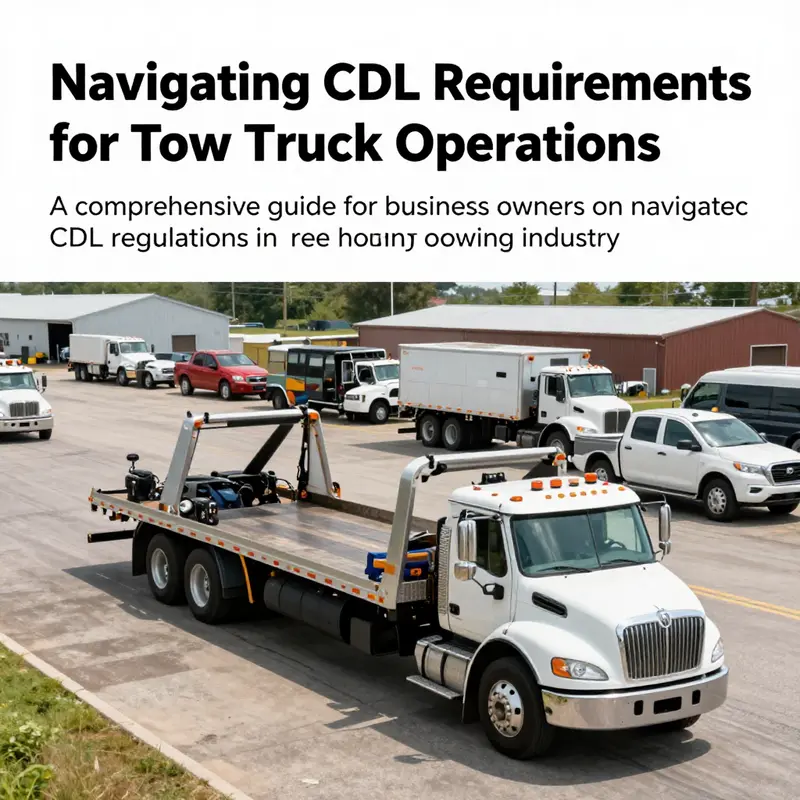
For business owners in the towing industry, understanding the nuances of Commercial Driver’s License (CDL) requirements is essential. This knowledge not only ensures compliance with federal and state laws but also enhances operational efficiency and safety. As tow trucks vary in size and purpose, so too do the regulations surrounding their operation. This article will delve into three key areas: the specific CDL requirements applicable to tow trucks, the variations in regulations across different states, and the distinction between commercial and non-commercial use of tow trucks. Equipped with this information, business owners can make informed decisions that align with legal standards while effectively managing their towing operations.
The Weight of the Road: Demystifying CDL Requirements for Tow Trucks
Tow trucks loom large on the road, not just in physical presence but in the regulatory landscape that governs who may drive them and under what conditions. The short answer is often yes: a Commercial Driver’s License (CDL) is usually required to operate a tow truck. But the nuance matters. The vehicle’s size, weight, the possible towed load, and the purpose of towing all shape the official rulebook. In the United States, the federal framework is set by the FMCSA, the Federal Motor Carrier Safety Administration, which enforces standards for commercial motor vehicles across state lines. The USDOT oversees these rules at the national level, but states retain a ballet of additional rules and exemptions. For a tow operator, that means understanding not just the letter of the law, but how it applies to the specific truck, the weight it carries, and the service it provides on any given day.
Most of the conversation centers on a simple threshold: the Gross Vehicle Weight Rating, or GVWR. If a tow truck’s GVWR hits 26,001 pounds or more, or if the vehicle is designed to transport more than 15 passengers including the driver, a CDL is typically required. This rule mirrors the FMCSA’s intent to regulate larger, heavier vehicles and those that could pose greater risk if misused on busy roads. The threshold can feel like a blunt instrument, but it is chosen because heavier combinations demand more complex knowledge of braking, turning, tire management, and load securement. When a tow truck is used for commercial purposes, such as towing for hire, the CDL requirement is even more likely to come into play, reinforcing the expectation that professionals handling heavy or high-stakes operations bring formal training to the task.
Within this framework, CDL classifications matter a great deal. For the majority of standard tow trucks, a Class B CDL becomes the default path. A Class B license covers any single vehicle with a GVWR of 26,001 pounds or more and, notably, allows the operator to drive a combination of vehicles where the towed vehicle weighs under 10,000 pounds. The nuance here matters in how operators arrange their fleet and arrange their tows. If the towing operation involves heavier combinations—where the total weight of the tow vehicle plus what it tows exceeds 26,000 pounds—the driver could move into Class A territory, which governs combinations with a gross combination weight rating of 26,001 pounds or more. This distinction is not a casual one; it changes driver training, testing, and the scope of responsibilities behind the wheel.
But the classifications are only part of the picture. Endorsements add layers of complexity that can be critical in niche towing scenarios. A tow truck operator who transports hazardous materials or passengers will face additional endorsement requirements. Hazmat endorsements, in particular, are tightly regulated and not a default expectation for most towing tasks. Yet in certain specialized towing operations—such as moving hazardous material-laden vehicles from the scene of an incident or transporting people in the tow fleet—these endorsements become a necessary hurdle to pass. The emphasis remains on safety and proper credentialing, ensuring that drivers who confront unusual loads or risky environments do so with heightened training and awareness.
State regulations further color the landscape. While federal rules set the baseline, each state’s DMV or equivalent agency can impose its own twists, exemptions, or additional endorsements. A tow operator may be legally compliant in one state yet require a different license class, different endorsements, or even alternate testing in another. The practical upshot is that operators must verify requirements before crossing state lines or initiating equipment changes. A driver who primarily operates within a single state may still encounter nuanced rules that a quick call to the local DMV can clarify. The best practice is to treat CDL compliance as a dynamic, ongoing process rather than a one-time formality. Regular checks of licensing status, vehicle weight changes, and load characteristics help prevent costly mistakes on the road.
The reality of towing work also intersects with what counts as a commercial operation. If a tow truck is employed as part of a business—towing for hire, roadside assistance fleets, or municipal contracts—the CDL expectation tends to firm up. In contrast, private, noncommercial use or a scenario where a owner-operator handles occasional personal tows may offer more flexibility, though it still trails the line of weight and capacity impact. Beyond licensing, drivers must adhere to hours-of-service rules, pre-trip inspections, and safe load-securement practices. These requirements are designed to reduce fatigue and mechanical failure, and they underscore the broader philosophy of professional towing: heavy vehicles demand a disciplined, safety-first approach to every job.
The practical implications for operators are broad. A tow business that relies on older, heavier trucks may face capital planning decisions rooted in CDL considerations. Upgrading to a heavier Class A or B vehicle could be warranted if the fleet expands or if more complex tows become routine. Training pathways become essential, as does ongoing education about changes in federal and state rules. In addition to the license itself, drivers should cultivate a robust understanding of vehicle dynamics, weight distribution, and securement methods. The aim is not only to comply with the law but to execute every tow with predictability and safety, protecting technicians, the public, and the vehicles and cargo involved.
From a day-to-day perspective, knowing when to pursue a Class A versus a Class B CDL can prevent missteps that delay calls or complicate insurance coverage. For instance, a tow operator who frequently handles combinations that push past 26,000 pounds should plan for Class A credentials and the associated endorsement requirements. Conversely, if the operation rarely exceeds single-vehicle GVWR thresholds, a Class B license may suffice, provided the operator remains attentive to the weight of the towed load and any applicable endorsements. The distinction matters not just for legality, but for the scope of operations: certain bookings, certain routes, and certain customers may demand the assurance of a Class A or the specific endorsements that accompany it.
The best way to stay current is to engage with reliable, locally relevant resources. Regulations evolve, and states occasionally refine rules to reflect new vehicle technologies, safety research, or road-use patterns. In many communities, regional towing associations and industry groups offer guidance, training opportunities, and updates that help operators navigate both the CDL framework and the practical realities of daily work. In fact, a concrete illustration of the local phase of this landscape can be seen with dedicated service providers who operate in specific metropolitan areas. For example, local tow services in Washington, DC, can serve as a practical reference point for how the CDL framework translates into real-world practice on busy urban streets. tow-truck-service-washington-dc provides a window into the type of operations that require careful licensing, training, and adherence to safety protocols in a dense traffic environment. This kind of local example helps connect the abstract regulatory thresholds to the concrete demands of daily towing.
Ultimately, the CDL question for tow trucks comes down to a mix of vehicle weight, intended use, and the regulatory patchwork at the state and federal levels. The goal is straightforward: license the driver for the task, equip the vehicle appropriately, and ensure every operation is conducted with professional discipline and public safety in mind. The law recognizes that heavier, more capable towing equipment can contribute significantly to road safety when operated by well-trained professionals. It also recognizes that a mismatch between vehicle capability and driver credentials can create avoidable risk. By maintaining an up-to-date understanding of GVWR thresholds, GCWR calculations, and the appropriate endorsements, tow operators can protect their teams, satisfy clients, and keep roads safer for everyone.
For readers seeking deeper, official details on CDL classifications and the precise language behind tow-truck credentials, consult the following external resource: DMV Tow Truck CDL Requirements. This reference provides a thorough overview of state-by-state variations, exemptions, and the endorsements that may apply to specific towing scenarios, complementing the broader federal framework described here.
Weight, Work, and Warnings: Navigating State-By-State CDL Rules for Tow Trucks
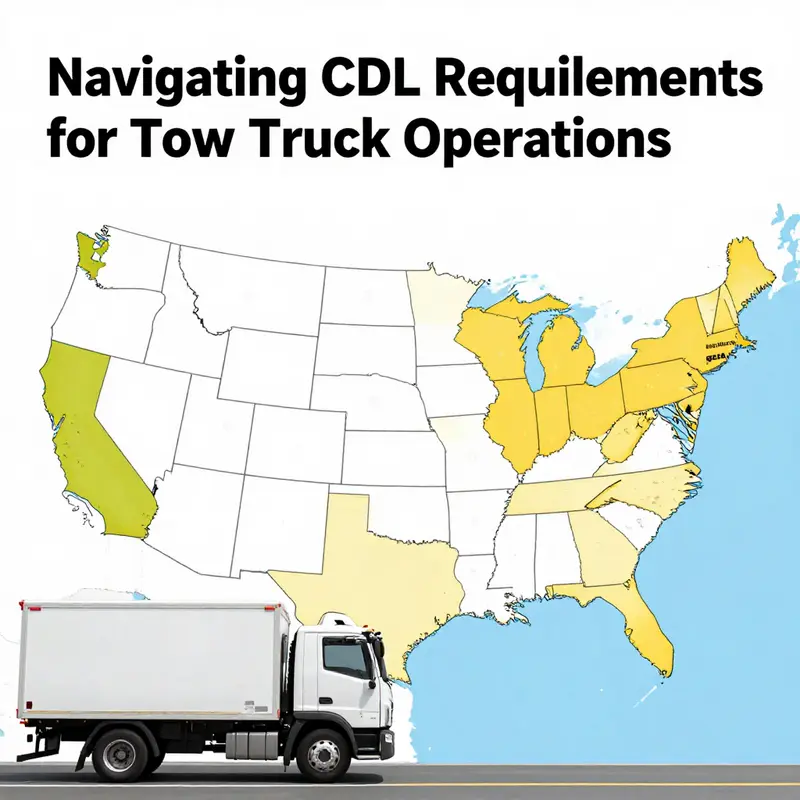
Tow trucks sit at a curious crossroads of road safety and regulatory detail. They are not ordinary vehicles, yet they move through a patchwork of rules that differs from one state to the next. When someone asks, do you need a CDL to drive a tow truck, the straightforward answer often hinges on three intertwined factors: the vehicle’s weight, how the vehicle is used, and where the operation takes place. At the federal level, the baseline comes from the Federal Motor Carrier Safety Administration, which defines commercial motor vehicles and sets general thresholds. If a tow truck has a gross vehicle weight rating of more than 26,001 pounds, or if it is designed to transport more than 15 passengers, including the driver, it typically falls under CDL requirements. These federal markers establish the floor, but they are not the ceiling. States retain the authority to expand or tighten the rules, and many do exactly that, interpreting CMV status through their own lenses and tailoring exemptions to regional needs and industry practices. In practical terms, this means a tow operator might operate under a CDL in one state and not in another, even if the same vehicle is involved, simply because the local DMV applies a different threshold or interpretation of what constitutes a commercial operation. The core idea remains simple: the heavier the vehicle and the more it is used for commercial purposes, the more likely a CDL is required. Still, the lines are not always clean, and the consequences of misinterpreting them can be costly, from license suspensions to fines and heightened liability in accident scenarios. Understanding this nuance begins with a clear grasp of how CMVs are defined and how weight interacts with the commercial-use standard in your locale.
Across the country, weight classifications provide a common starting point, but the picture soon diverges. Some states rely strictly on the GVWR or GCWR to decide whether a CDL is necessary. In these jurisdictions, a tow truck that remains below the critical weight threshold, with no other complicating factors, may be free of a CDL as long as it operates within intrastate commerce and does not engage in interstate transport. Other states take a broader approach. California and New York, for example, tend to classify many tow trucks as CMVs for commercial purposes even when the vehicle’s weight is on the lighter side. In such states, the operational reality—whether a tow truck is used to perform towing services for hire—can trigger CDL requirements regardless of weight. The result is a more expansive safety net, one that reflects a policy choice to regulate commercial recovery work more stringently in urban and dense suburban environments where road interactions with the public are more complex and frequent.
Equally important are the exceptions and endorsements that states often build into their CDL frameworks. Some jurisdictions offer endorsements that tailor the license to the peculiar duties of tow truck operation. A state may grant a specific endorsement that allows a driver to operate a tow truck under defined conditions without insisting on the full spectrum of CDL classifications. Other states may provide exemptions based on the vehicle’s use, the driver’s training, or the geographic scope of operation. The variability means that a driver who crosses a state line may find their licensing requirements shift mid-career, which underscores the need for ongoing, proactive compliance checks rather than a one-time licensing event. In practice, this means operators should routinely verify their status with the local DMV and look for any endorsements that might apply to tow work, especially if the fleet includes lighter recovery units or vehicles used within intrastate commerce that are engaged in commercial towing.
The practical implications for a tow operator are twofold. First is the necessity of precise record-keeping. Since many CDL determinations hinge on vehicle weight, it pays to maintain up-to-date GVWR and GCWR data for every unit in the fleet, along with a clear log of the intended and actual routes. If a unit routinely crosses state lines or operates in neighboring jurisdictions, those weight thresholds should be re-evaluated in the context of the destination state’s rules. Second is the value of proactive communication with licensing authorities. A conversation with a DMV specialist can reveal how a particular tow truck class will be treated under the state’s definition of CMV, whether an endorsement is available or advisable, and what documentation might be required to prove compliance in case of audits or roadside stops. The goal is not simply to avoid penalties but to align licensing with the safety and reliability that customers expect from a towing operation operating on public roads every day.
For operators in metropolitan areas or regions with densely regulated road networks, the state-by-state differences can exert a pronounced effect on staffing, scheduling, and fleet composition. A tow company that serves multiple jurisdictions may choose to standardize its license acquisition strategy around the most stringent regulations among its operating states. This approach reduces liability and simplifies cross-border dispatch, though it may involve greater upfront investment in CDL training and endorsements across the fleet. Conversely, a smaller operation that confines its work to a specific state might optimize differently, taking advantage of any intrastate exemptions or lighter-weight classifications that a particular jurisdiction allows. In all cases, the central lesson is that the CDL requirement for tow trucks is not a static checkbox; it is a dynamic set of conditions that reflects how weight, use, and geography intersect to shape risk and responsibility on the road.
As a practical step, operators should consult the state’s DMV resources for the most accurate guidance. The DMV pages will spell out licensing classifications, applicable weight thresholds, and any exemptions or endorsements that govern towing work. In parallel, industry safety resources from the federal level can provide a standardized frame of reference. In this context, a trusted external benchmark is the National Highway Traffic Safety Administration (NHTSA), which maintains comprehensive information about state-level CDL regulations and related safety practices. For a clear, state-tailored picture, begin with the DMV and cross-check with FMCSA and NHTSA guidance to ensure you’re operating within both your jurisdiction and the broader federal framework. If you operate in or near the District of Columbia, you may also find local guidance that speaks directly to the nuances of urban towing and the city’s regulatory expectations. For local service considerations, see Towing Service Washington DC.
With this layered understanding, tow truck operators can approach licensing as a core part of operational safety rather than a bureaucratic hurdle. The goal is to align the license type with the vehicle’s capabilities and the actual routes and services the business provides. By accounting for weight, usage, and geographic scope, fleets can reduce compliance risk and improve safety outcomes for drivers, customers, and the motoring public. In short, you do not want a CDL to be a reactionary choice after a roadside incident; you want it to be a deliberate, policy-driven decision guided by the weight of the machine, the nature of the job, and the laws of the land you operate in. For those wrestling with the question in a particular state, start with the DMV, verify with FMCSA, and consult safety resources to understand how the rules apply to your specific equipment and operations. This proactive approach not only protects the business but also contributes to safer roads for everyone who shares them.
External Resource: For a broader, federal perspective on CDL requirements and exemptions, the National Highway Traffic Safety Administration (NHTSA) provides authoritative state-by-state guidance and safety data. NHTSA Website
null
null
Final thoughts
In conclusion, understanding the CDL requirements for tow trucks is vital for business owners in the towing industry. Not only does it ensure compliance with various regulations, but it also supports safer and more efficient operations. By being aware of the specific requirements tied to vehicle weight, state variations, and the differences between commercial and non-commercial use, business owners can navigate the complexities of towing regulations with confidence. Staying informed and proactive about these aspects will ultimately contribute to the success and credibility of your towing business.