
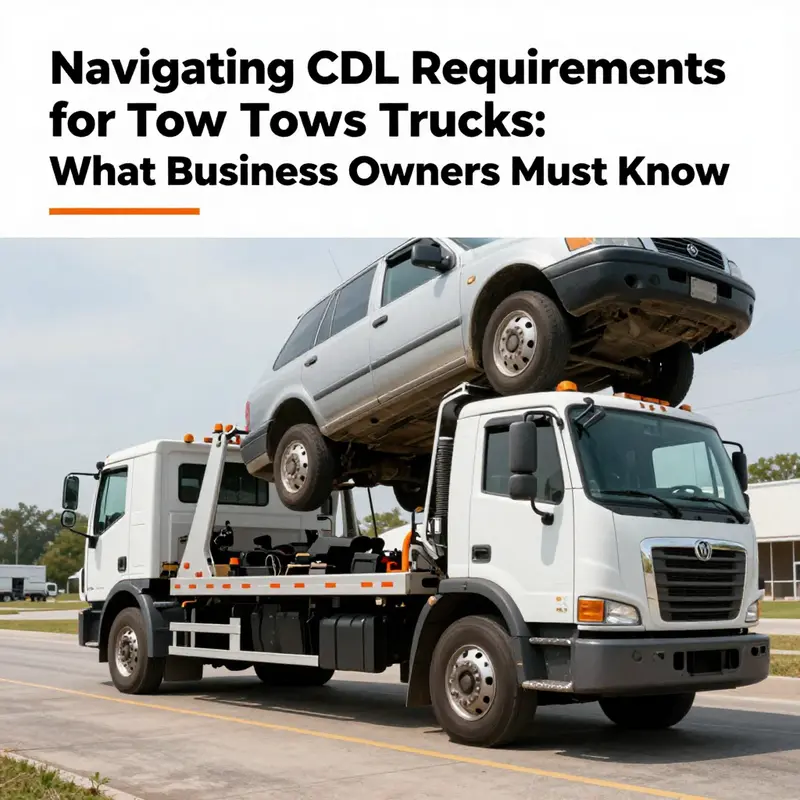
For business owners operating in the towing industry, understanding Commercial Driver’s License (CDL) requirements is crucial for compliance and safety. Tow trucks come in various sizes and are used for different purposes, which makes the licensing rules not just important, but also quite intricate. This article will explore the essential aspects of CDL requirements for towing operations in two informative chapters. The first chapter will cover the fundamental federal CDL requirements that tow truck operators must be aware of, focusing on weight limits and vehicle classifications. The second chapter will highlight how state-specific regulations can affect CDL requirements, guiding business owners on best practices for staying compliant regardless of their location.
Clear Roads Ahead: Navigating CDL Rules for Tow Trucks and the Weight That Matters
Tow trucks operate at the intersection of urgency and safety. They must move stalled vehicles without creating new hazards, and that expectation is matched by licensing rules that aim to keep heavy equipment and vulnerable road users out of harm’s way. At the heart of these rules is a weight threshold that determines when a driver needs a Commercial Driver’s License, or CDL. Federal guidance sets a baseline: if the tow truck itself weighs more than 26,000 pounds gross vehicle weight rating (GVWR), or if it is used to tow a vehicle that exceeds that same threshold, a CDL is generally required. This threshold is familiar in most commercial towing operations and shapes the job prospects, training paths, and daily routines of anyone who intends to drive a heavier tow truck. Yet the story does not end there. State regulations add nuance, and the exact license class and endorsements depend on how the vehicle is used, what it hauls, and where the operation takes place. For a practical grasp, it helps to imagine the spectrum—from small, light-duty wreckers that can move a car or small van, to heavy wreckers and rollback trucks that lift and tow multi-ton vehicles across highways and interstates. In the end, the license you need is determined not only by the weight of the tow truck, but also by the weight of the towed vehicle and the specifics of the towing operation. \n\nThe weight threshold is more than a number on a page; it translates into real requirements for training, testing, and medical fitness. If a tow truck crosses the 26,000-pound GVWR boundary, the operator is typically steered toward a CDL path. This is especially true when the operation involves transporting heavy vehicles or when the job spans state lines. The same rule often applies if the tow truck is used to haul a vehicle that itself weighs more than 26,000 pounds. In those cases, a CDL is not optional but a regulatory necessity designed to ensure that the driver has the skills to manage a large, potentially unstable vehicle combination on busy roads. The federal framework remains the backbone, but states implement it with subtle variations, adding local endorsements, age requirements, and medical standards that reflect regional traffic patterns and enforcement priorities. \n\nWithin this framework, the endorsements a driver carries matter as much as the license class itself. For tow trucks, many operators seek the endorsement that explicitly covers towing operations, sometimes labeled as a T endorsement or described as a specialized endorsement for towing vehicles. This endorsement signals that the driver has training on the controls and safety considerations specific to towing and the management of combination vehicles. The presence of a T endorsement, while not universal in every state, frequently accompanies CDL situations where a heavy tow vehicle is used to connect with and move another heavy vehicle. It is not merely about handling a heavier rig; it is about understanding the physics of towing, the dynamics of a coupled system, and the extra stopping distance, axle load distribution, and maneuvering challenges that come with a tow job. \n\nA driver aiming for a CDL must navigate a sequence of steps that blend knowledge, skill, and health. The prerequisites commonly include meeting an age minimum—often 21 for interstate driving—holding a valid state license, maintaining a clean driving record, passing a background check, and completing a drug screening. These steps lay the groundwork for more formal CDL training, which typically combines classroom instruction with a practical, hands-on component. The knowledge portion covers traffic laws, safety regulations, and the specifics of vehicle inspection, while the skills test validates the driver’s ability to control the vehicle, perform safe maneuvers, and manage the towing process under realistic conditions. A medical examination, commonly required under federal rules, ensures the driver is physically fit to operate a large vehicle. In many programs, the medical card is a prerequisite for taking the skills test, and it remains a requirement for continued operation in interstate service. \n\nThe process does not end with passing tests. Training programs offered by vocational schools and CDL-focused institutions often place students behind the wheel of actual tow trucks, exposing them to the nuances of roadside work. Trainees learn how to connect a tow rig to a disabled vehicle, assess weight distribution, secure loads, and navigate tight spaces in urban environments. They practice braking techniques that minimize sway, practice proper signaling and communication with dispatch, and develop a disciplined approach to incident scene safety. The lessons extend to pre-trip inspections, where a driver must identify brake wear, tire condition, lighting, and hitch connections. These are not mere formalities; they are critical habits that reduce on-road risk for the driver, other motorists, and any stranded passengers. \n\nAnother layer of complexity comes from the fact that licensing rules vary by state. The federal baseline provides consistency, but state DMVs interpret weight thresholds, endorsements, medical requirements, and even the minimum age differently. A tow operator who intends to work across state lines may find that what is permissible in one state requires additional licensing or different endorsements in another. This is why the manual approach—checking with the local DMV or the state equivalent licensing authority—remains essential. A proactive operator will review the state’s CDL classes, the permissible vehicle configurations, and any state-specific testing or training requirements. The FMCSA maintains the federal frame, yet the practical, day-to-day licensing picture lives in state offices and on state-approved testing grounds. \n\nFor those contemplating a career or business in towing, there is a practical, operational dimension to understanding CDL rules. A driver who lacks a CDL or the correct endorsements will limit the scope of work a business can pursue. Heavy-duty towing often requires couriers, fleets, and contracts that demand licensed personnel who can legally operate the equipment on major routes and during peak traffic. A company owner, in turn, bears responsibility for ensuring that every driver in the fleet meets licensing requirements, maintains medical certificates, and adheres to the endorsements that reflect the nature of each assignment. The right combination of license class and endorsements can unlock a broader set of contracts and give a towing business the flexibility to serve emergency roadside needs, accident recoveries, and long-distance towing with confidence. \n\nIn practice, a driver’s path toward a CDL is shaped by the towing operations they intend to perform. If a tow truck is under the 26,000-pound threshold and the operation involves only local, nonhazardous tasks, some jurisdictions may allow operation without a CDL. However, many operators still pursue CDL training because it expands job opportunities and translates into greater safety and professional credibility. In contrast, heavy wreckers, rovers, and carrier trucks that routinely haul other vehicles or operate across state lines almost always require a CDL. The decision is rarely about a single ride but about the broader picture of what the business does, where it operates, and how the fleet plans to respond to emergencies at all hours. \n\nFor those working in or near major metro areas, the practical implications of these licensing rules can be felt in how a company staffs its fleet, how it schedules maintenance, and how it communicates with dispatch. A well-credentialed fleet, with drivers holding the appropriate CDL and endorsements, projects reliability and compliance to customers who depend on timely, safe service. It also helps build trust with law enforcement and regulatory inspectors who routinely verify driver credentials at roadblocks or incident scenes. In the end, the license is not just a badge of legality; it is a tool that helps manage risk, protect workers, and keep traffic moving during the most stressful roadside moments. \n\nAs operators seek clarity, one can turn to official resources for precise, up-to-date requirements. The California DMV CDL Handbook, for example, provides a comprehensive overview of CDL classes and endorsements and highlights how weight, vehicle type, and intended operations interact with licensing rules. While it is specific to one state, the handbook offers a clear framework that helps readers understand the logic behind CDL requirements and the kinds of testing and medical standards that may apply elsewhere as well. For a broader reference, many readers will also find it useful to consult their own state’s DMV or the FMCSA materials that summarize federal requirements and explain how state rules align with or diverge from federal expectations. \n\nIf you are assessing whether a particular tow truck operation requires a CDL, start with the weight of the tow vehicle and the weight of any towed vehicle. Confirm the GVWR of the tow truck and the gross combined weight when towing. Then identify whether your operation involves transporting hazardous materials or carrying passengers, as those factors introduce additional endorsements and standards. Finally, check the local or state-specific rules, because the threshold and endorsement requirements can shift from one jurisdiction to another. In this sense, licensing becomes a practical mirror of the job you intend to do: the heavier, riskier, or more interstate the work, the more likely a CDL and endorsements will be nonnegotiable. \n\nFor readers seeking a concise illustration of how these rules translate into local practice, consider exploring a nearby service that operates in the DC area. Their site provides real-world context about how CDL requirements intersect with daily towing work in a busy city environment: tow-truck-service-washington-dc. This kind of local example helps bridge the gap between federal thresholds and street-level operations, showing how licensing affects dispatch decisions, driver training timelines, and the kind of equipment a company can legally deploy. \n\nIn sum, the question of whether you need a CDL for a tow truck is not a single, universal answer. It hinges on weight, usage, and jurisdiction. The general rule is that a tow truck weighing over 26,000 pounds, or a vehicle that tows another vehicle over that limit, will typically require a CDL and an appropriate endorsement. The precise class of license, the endorsements needed, the age requirement, and the medical standards all hinge on where you operate and what you haul. The most reliable path to certainty is to consult your state’s DMV or licensing authority and to review the FMCSA guidelines for federal alignment. \n\nExternal resource for further official details: https://www.dmv.ca.gov/portal/dmv/detail/pubs/handbooks/cdl_handbook
Weight, Rules, and Roadways: How State Regulations Shape CDL Needs for Tow Trucks
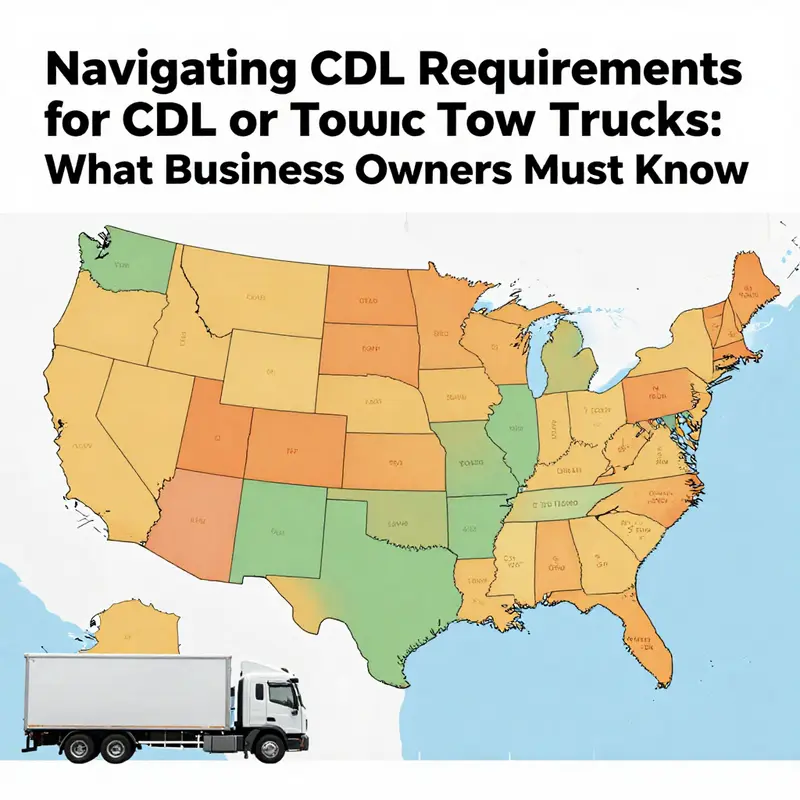
Tow trucks sit at a critical junction between everyday road service and high-stakes heavy hauling. Their work spans roadside rescues, stranded motorists, and complex recoveries after accidents. With that responsibility comes a key question that often stirs confusion: do you need a Commercial Driver’s License (CDL) to operate a tow truck? The answer isn’t a simple yes or no. It hinges on the vehicle’s weight and the nature of the towing operation, all filtered through the lens of state rules that govern commercial vehicle operation. Federal guidance provides a weight-based baseline, but the precise requirement is ultimately determined at the state level, with common threads and important nuances that can swing the license decision for different operators and different jobs. In practical terms, a tow truck’s need for a CDL is most clearly tied to the gross weight involved in the operation, either due to the tow truck’s own weight or the weight of the combination when towing another vehicle.
At the heart of the matter is a straightforward threshold that mirrors broader commercial vehicle rules: if the gross combination weight rating (GCWR) of the tow truck and the vehicle it is towing exceeds 26,000 pounds, a CDL is typically required. This standard aligns with how many states view commercial towing operations. If the tow truck itself weighs more than 26,000 pounds, or if it is dispatched to tow a vehicle that pushes the combined weight past that 26,000-pound line, the license pathway changes from ordinary driver’s licensing to the commercial tier. Yet the line isn’t drawn in exactly the same place everywhere, and the ways in which weight interacts with the job description—whether the work involves transporting hazardous materials, carrying passengers, or performing certain types of recovery—can add further layers of CDL requirements, endorsements, and operator responsibilities.
The practical implication is that every tow operation should start with a careful weight assessment. For a small, light-duty tow truck that stays under the threshold, a standard driver’s license may suffice for intrastate, non-commercial tasks in many jurisdictions. But as soon as a job pushes toward heavier tows or involves any form of restricted materials or passenger transport, the CDL landscape shifts. In addition to the basic weight calculation, some states require specific endorsements for certain cargo types or passenger transport. Others treat particular towing-related activities as requiring separate credentials or additional operator qualifications. The result is a landscape that rewards due diligence and a proactive approach: operators should verify the local requirements before pulling onto a street in a given jurisdiction, even if their vehicle appears to be within a non-commercial weight range.
To illustrate how these rules play out in a real-world context, consider a state like North Carolina, where the state’s rules for intrastate transport are shaped by both weight criteria and broader federal standards. In North Carolina, the CDL requirements for tow truck operations align with the same GCWR-based logic that governs many other states. If the gross combination weight rating of the tow truck and the vehicle it tows exceeds 26,000 pounds, a CDL is generally mandated. Beyond weight, there are caveats for transporting hazardous materials or passengers, where the CDL framework becomes more involved, potentially requiring additional endorsements or different licensing pathways. The regionally specific guidance is clear: operators should consult the North Carolina Department of Transportation (NCDOT) for the most accurate and up-to-date guidelines tailored to their particular operation. For those seeking the official, current directive, the North Carolina Division of Motor Vehicles (DMV) site and related NCDOT pages offer the definitive references.
This state-level nuance isn’t unique to North Carolina. Across the country, many jurisdictions implement a similar threshold while layering in their own clarifications. A company operating in a border area or running between states will often encounter the need to secure commercial credentials even when a single job, on paper, seems to fall within a non-commercial category. The reason for this precaution is twofold. First, weight calculations can be deceptively dynamic; a tow truck configured for heavier loads or a change in the towed vehicle’s weight can push a routine job into CDL territory. Second, the regulatory environment can change with local ordinances, municipal codes, or county rules that further define when a commercial license is necessary for towing operations conducted within those jurisdictions.
From a practical standpoint, the decision tree for an operator often starts with a sober weight audit. Does the GCWR exceed 26,000 pounds when the tow truck is connected to the towed vehicle? If yes, the door to CDL eligibility opens. If not, the operator should still verify local status, because some state laws impose CDL requirements based on vehicle classification that diverges from the GCWR calculation. In addition, if the operation involves transporting hazardous materials or passengers, the CDL landscape shifts again, inviting additional endorsements or alternative licensing pathways. An operator may find themselves needing at least a Class B CDL, or possibly a Class A, depending on the exact configuration of the tow vehicle, the weight of the towed vehicle, and the duties involved in the job.
The overarching counsel for operators is straightforward: consult the licensing authority that governs your operation’s location and the vehicle’s weight profile. In practice, many tow operators begin by reviewing state-issued guidance or speaking with a licensing officer to confirm whether their particular vehicle and operation qualify as a CDL mission. The results can vary by state and by operation, making a proactive check a prudent step rather than a risky gamble. When in doubt, it is often beneficial to prepare for CDL requirements because this reduces the risk of running afoul of inspections, compliance checks, or enforcement actions that could disrupt a business’s flow and reputation.
The explainable logic behind these requirements does not merely protect the public; it also clarifies the operator’s responsibilities. Holding a CDL isn’t simply about proving you can drive a heavy vehicle. It demonstrates that the driver has been tested on essential competencies—vehicle inspection, safe loading and securing procedures, proper braking and handling of heavy loads, and the ability to respond to emergencies on the road. Tow work frequently involves challenging maneuvers, tight spaces, uneven loads, and the risk of shifting cargo. A CDL-backed operator is expected to bring a disciplined approach to pre-trip inspections, continuous monitoring of load stability, and compliance with hours-of-service rules that ensure fatigue-free driving over long or irregular shifts. In short, the CDL embodies both a credential and a mindset—one that prioritizes safety, predictability, and accountability for everyone on the road.
Within this framework, some operators find value in looking beyond the bare minimum. Even when a particular tow job might not require a CDL by weight alone, pursuing CDL readiness can open doors to work that spans state lines or involves fleet contracts that favor or require licensed operators. For example, in many markets, operators who anticipate cross-border or cross-state work will pursue CDL credentials or endorsements to ensure they can legally take on a wider range of assignments. This can provide practical flexibility and resilience in a competitive industry where clients are attracted to fleets that can confidently handle diverse scenarios—from routine light-tows to complex recoveries involving heavier combinations.
For those who want a closer, more practical sense of how these rules translate into everyday decisions, the idea of an internal benchmark can be helpful. When evaluating a potential job, begin with the vehicle’s weight. If the combined GCWR remains at or below 26,000 pounds, a standard license might suffice for intrastate operations in many jurisdictions, provided no hazardous materials or passenger duties are involved. If the GCWR crosses that threshold, a CDL becomes a looming possibility, and you should seek formal guidance from the relevant state authority. And even if your current job does not demand a CDL today, documenting the weight profiles of your equipment, the typical towed loads, and the intended service area can be valuable. It creates a roadmap for whether you should pursue licensing now or plan for a future transition if your business expands or changes in scope.
The North Carolina example, and the broader state-to-state variability it represents, also highlights an important practical detail for operators who are building or expanding a towing business. The decision about CDL requirements should be integrated into business planning, including equipment selection, driver recruitment, and insurance considerations. A fleet that includes larger, heavier tow trucks is more likely to encounter CDL requirements than one composed of lighter units. Insurance underwriters and clients often expect a driver with a CDL when the operation involves heavier combinations, which can affect pricing, coverage, and competitiveness in bid situations. Even in markets where a smaller tow truck has an exemption from CDL requirements for certain intrastate tasks, the credibility and marketability of a CDL-certified operator can be a strategic asset when pursuing larger or more complex contracts.
Another important dimension is the ongoing nature of regulatory frameworks. States periodically update their rules as technologies evolve and as safety and highway performance concerns shift. A vehicle that qualifies for a CDL today might face a different threshold tomorrow if state rules are amended or if new endorsements are introduced. For operators, this means adopting a mindset of ongoing compliance rather than a one-time licensing decision. Regular checks with the state DMV or transportation authority, annual or biannual fleet compliance reviews, and proactive training updates for drivers can help ensure that a towing operation remains eligible for the contracts and routes it aims to serve. In this sense, CDL readiness is not merely a regulatory hurdle to clear; it is a strategic capability that supports broader organizational goals—safety, reliability, and the ability to serve a wider geography with confidence.
As the regulatory landscape continues to evolve, many operators find it useful to navigate these questions with a blend of practical insight and official guidance. The weight-based approach provides a clear initial screen, while state-specific nuances—such as hazardous materials or passenger transport considerations—demand careful attention to the exact language in state codes and the preferences of local licensing authorities. The North Carolina guidance, with its emphasis on GCWR and the roles of NCDOT and the NC DMV, serves as a representative example of how a state frames the conversation around CDL requirements for tow truck operations. Operators should use this model as a starting point, not a conclusion, and should always verify current rules for their own operation. In some cases, even a single change in the vehicle configuration, the load, or the service area can tilt the decision toward or away from CDL necessity.
For readers who want to explore related perspectives or case studies, there is value in examining how these considerations play out across different markets. The broader theme remains consistent: weight thresholds, coupled with the specific operational duties, determine CDL needs. And while the core principle is straightforward, the practical path to compliance demands thoughtful planning, ongoing education, and a readiness to align with state-specific regulations as your business grows. If you operate in or near a market where a broader range of services is common and cross-jurisdictional work is a real possibility, you may find it beneficial to reference broader industry guidance and local regulations that speak directly to the realities of tow-truck work. For a glimpse into how a broader service region approaches related needs, you can explore related content on a neighboring market’s service page, such as DC towing service.
Ultimately, the question of whether you need a CDL to operate a tow truck hinges on precise weight calculations, the nature of the job, and the regulatory environment you operate within. The weight threshold of 26,000 pounds acts as a foundational rule, while state-adapted nuances determine the exact licensing path and endorsements. The North Carolina example illustrates the flow: determine GCWR, assess whether hazardous materials or passengers are involved, consult the state’s DMV guidance, and prepare for the possibility of a CDL or specific endorsements if the operation crosses weight or duties into a commercial category. By grounding the decision in weight and purpose, operators can craft a licensing plan that is robust, compliant, and adaptable to changing regulatory conditions. The ultimate aim is to ensure safety on the road, reliability in service delivery, and a licensing posture that supports growth rather than constrains it.
External resources provide authoritative confirmation of the state-specific framework and offer the most up-to-date requirements. For official guidance, refer to the North Carolina Department of Transportation and DMV resources at https://www.ncdot.gov/dmv/.
Final thoughts
Navigating CDL requirements for tow trucks is vital for business owners in the towing industry to ensure legal compliance and operational efficiency. Federal guidelines set a baseline depending on vehicle weights, while state-specific regulations can impose further rules, complicating the licensing landscape. Staying informed about both federal and state laws regarding CDL requirements helps in avoiding legal pitfalls and ensuring safer towing operations. As you assess your towing business needs, keeping abreast of these requirements is not just a matter of compliance but a key component in securing your business’s reputation and longevity.