
In the context of towing services, the question of whether to tip tow truck drivers is often met with confusion. Many business owners may wonder if it’s customary or even appropriate to offer gratuity to these professionals. In this article, we will explore the reasons why tipping is generally discouraged for tow truck drivers, how service charges are structured, and when, if at all, it might be suitable to provide a token of appreciation. Each chapter will provide insight into best practices that align with industry standards and elevate the customer experience.
null
null
Tow Truck Fees Unpacked: What Gets Billed and Why Gratitude Usually Doesn’t Include a Tip
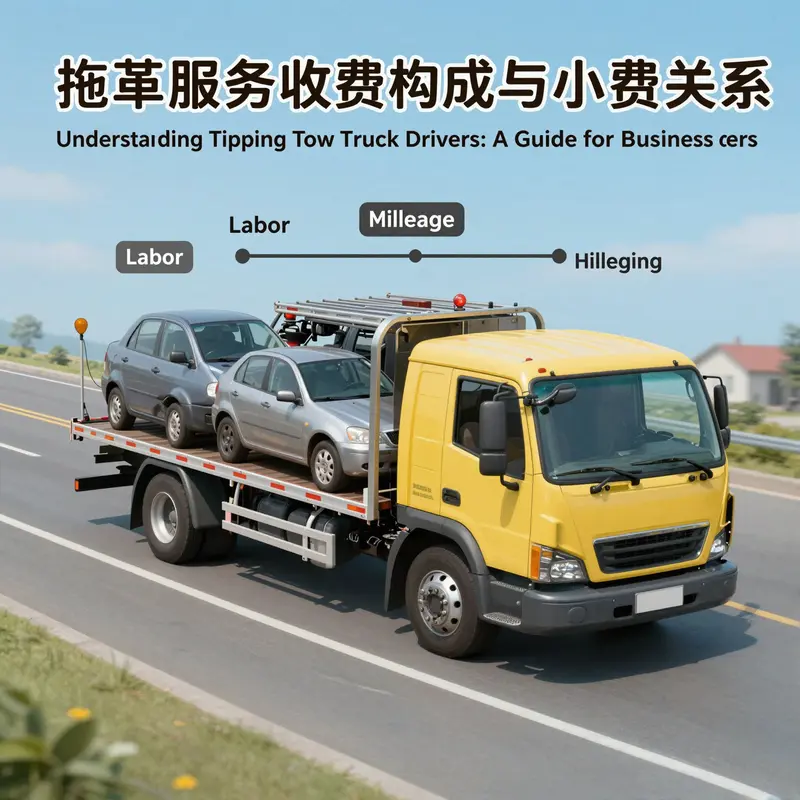
When you’re stranded on the shoulder or stuck in a parking lot, the question of tipping often rises faster than the next exit sign. Yet the pricing behind tow services is constructed to be transparent and reliable, not a field where gratuities steer the bill. Understanding what a tow actually costs helps you see why tipping is not a standard expectation and how to guard against surprises in the final charges. In most legitimate towing arrangements, the price is a bundle of specific line items, each reflecting a practical need—distance, equipment, and the skill set of the driver—rather than a discretionary reward for “extra” effort.
The core charges begin with the base dispatch fee. This lump sum covers the moment the service is mobilized: the costs of getting a driver en route, the fuel that powers the tow truck to your location, and the administrative handling that makes a rescue possible. The dispatch fee exists whether the tow is short or long, and it serves as the foundation of the day’s work. From region to region, this base amount can swing quite a bit, influenced by local operating costs and market competition. The next substantial component is the mileage fee. You are charged for the actual distance the vehicle travels from the pickup point to the destination, and the per-kilometer rate varies with geography. In metropolitan corridors near major highways, the mileage charge tends to be higher to reflect congestion, road fees, and longer labor hours, whereas more rural routes may show a comparatively modest per-kilometer rate.
Vehicle type fees reflect another essential reality of tow work: different vehicles demand different equipment, handling, and safety precautions. A small car is relatively straightforward to tow; a mid-sized SUV requires more robust gear, and a large truck or van can entail even larger multi-axle dollies, heavier winches, and extra personnel. The end result is a tiered pricing structure that rewards crews for the extra complexity and risk involved. The fourth major bucket—additional service fees—captures the real-time realities of roadside assistance. If a crane is necessary to lift a vehicle, the fee scales with the crane’s capacity, the time needed, and the difficulty of the operation. After-hours work, such as nighttime towing or service during holidays and severe weather, is typically priced at a premium as a recognition of heightened labor costs and logistical challenges. Other add-ons can include fees for special vehicle handling, hazardous materials considerations, or the need for secondary transport to a repair shop. There may also be incidentals like empty-travel time back to base, or the cost of staging a tow at a remote location—the point is that these line items are specified in the service agreement and are justified by the work performed.
In this framework, tipping sits outside the formal pricing schedule. In legitimate operations, gratuities are neither a required nor a standard practice. Some people worry that tipping could blur the line between a fair price and added pressure on the driver, while others worry that any “tip” might be misinterpreted as a euphemism for inflated charges. The industry consensus is clear: tipping is not an official part of the price, and it should not be sought or expected by drivers as a condition of service. The risk of misperception is real—what one caller perceives as a tip might in another instance be a disguised surcharge or an ambiguous “special charge.” This is why most operators emphasize transparent pricing and clear, itemized receipts.
A wider regulatory and market backdrop reinforces the idea that fees should be transparent, predictable, and publicly posted or contractually disclosed. In some regions, authorities have moved toward price transparency campaigns and government-guided pricing for certain roadside services to curb opportunistic charges. These moves underscore a broader principle: the consumer should be able to review a breakdown of charges before agreeing to service, rather than paying a single all-inclusive amount after the car has been hooked up. The practical upshot for the driver and the customer is a mutual clarity: you can review the bill, ask for clarifications, and compare quotes from reputable providers before choosing a service. If you’re ever unsure about a charge, request a line-item breakdown and an estimate before the work begins.
For those navigating an imminent tow in a city area, it helps to know where to look for transparent options. For a local example of a service page that emphasizes clarity and accessibility, you can explore a reputable provider’s DC-area towing service pages, which illustrate how a transparent scope of work and pricing is presented in practice. See the towing service in DC for a concrete reference to how regional operators present fees and services in a straightforward format.
Beyond clear pricing, the best way to show appreciation after a successful rescue is to pay the agreed charges promptly, keep the receipt, and share your positive experience through official channels like a company website or a public review. If a driver goes above and beyond—such as coordinating with your insurance or arranging a safe alternative route—your gratitude can be expressed in those formal channels or, if you truly feel compelled, a symbolic gesture that does not confuse the billing with gratuity. In the end, the aim is fairness, transparency, and a service that respects both the customer’s budget and the worker’s professional effort.
External resource: https://www.ftc.gov/news-events/press-releases/2020/05/consumers-need-know-how-hiring-service-professionals
Special-Case Tipping Etiquette for Tow Truck Drivers: When Gratitude Meets Industry Standards
When you’re stranded and a tow truck arrives, the urge to show appreciation with a tip can feel natural. Yet across many parts of the towing industry, tipping is not considered the norm. The services you receive—recovery, towing, road assistance—are priced in advance according to distance, vehicle type, and urgency. Those fees are designed to cover not only the transport but also the driver’s training, experience, and the operational costs of running a legitimate service. Because the charge is already calibrated to the task, tipping the driver is generally unnecessary and, in some contexts, discouraged. It’s not merely a matter of etiquette; it’s about fairness and the smooth functioning of the service ecosystem. If every customer adds their own gratuity, there can be an uneven playing field where some drivers receive more than others, and where the perception of preferential treatment becomes a talking point that distorts the integrity of the process.
That concern about fairness is not theoretical. When a driver’s invoice reflects a standard fee, a gift of cash could unintentionally complicate accounting for the company or create confusion during insurance claims and later disputes. If a tip is perceived as trying to influence a claim outcome or the handling of a case, it could blur lines that should remain clear between service performance, accountability, and compensation. For these reasons, most professionals advocate sticking to the published rates and handling the payment through official channels. It also helps prevent any awkward moments with other customers who, under the same circumstances, may not be offered or expected to tip.
Despite this, there are exceptional moments where a gesture of gratitude may be appropriate, though it should be rare and discreet. In extreme cases—such as a driver who, under dangerous weather or hazardous conditions, goes beyond the call of duty to secure your safety, protect the scene, or provide critical, time-sensitive assistance—some people choose to offer a small sum as a personal thank-you. If you decide to take this route, keep the amount modest, make the gesture voluntary, and avoid pressuring others to follow suit. The emphasis should be on appreciation, not a routine expectation or a coercive practice that wrongfully suggests a higher level of service is guaranteed by money.
If you want to express gratitude without tipping, several practical avenues exist that align with both industry norms and common sense. Ensure that you have paid all outstanding fees promptly and in full. In many cases, the most meaningful acknowledgments come after the fact: a concise, courteous note to the driver’s company or a public positive review on the provider’s official platform can recognize the driver’s professionalism without disrupting billing or insurance processes. A well-placed review can travel further than a single cash gesture; it also helps the company acknowledge the driver’s exemplary performance and encourages others to maintain high standards. For drivers who operate within an organized network, a rider’s feedback through the proper corporate channels often carries more weight than a tip delivered at the scene. If you want to connect the dots between service quality and local practice, you can look at how providers position their offerings in major markets such as Washington, DC. A quick glance at Washington, DC towing services illustrates how established companies present their rates, scope of work, and customer feedback channels, underscoring the value of transparent pricing and professional conduct on both sides of the transaction.
Beyond these avenues, consider how you express your thanks to others who contributed to a safe outcome. If the incident involved coordinating with insurance adjusters, a dispatcher, or a roadside assistance platform, a sincere note of praise for the entire team can reinforce good service. In the end, the goal is to acknowledge the driver’s skill and courage without creating misunderstandings about how compensation should work in the broader system. The most prudent path remains straightforward: pay what you owe, rely on official channels for feedback, and reserve tipping for truly extraordinary situations where actions go far beyond ordinary expectations. For readers who want to explore nearby service options, a reference to local providers can be helpful. See Washington, DC towing services for a sense of how professional standards and customer communications are maintained in a major market: Washington, DC towing services.
In any discussion of tipping, it helps to anchor expectations in the larger framework of service pricing that governs these operations. Publicly available guidelines and official pricing notices are designed to ensure fairness and consistency for all customers. This approach reduces confusion and protects both customers and drivers from ambiguous practices that could lead to disputes later on. For those who want a concrete external reference on pricing standards that shape how these services are offered and billed, consider consulting authoritative sources that outline road-support fees and related charges. External pricing guidance can illuminate why tipping is not part of the standard practice and how the system aims to balance efficiency, safety, and equity in roadside assistance. For further reading on formal pricing guidelines, see the official notice from the relevant municipal authority: https://www.shdpc.gov.cn/xxgk/zcfg/gzdt/202503/t20250315_147896.html.
Final thoughts
In summary, while tipping tow truck drivers is generally not recommended due to established service fee structures, there are exceptions where a small gratuity may be suitable. Business owners should focus on promoting positive relationships by ensuring that payments are made, leaving commendations for exceptional service, and maintaining respectful interactions. Ultimately, clear communication and recognition of hard work foster goodwill both for businesses and their customers.