
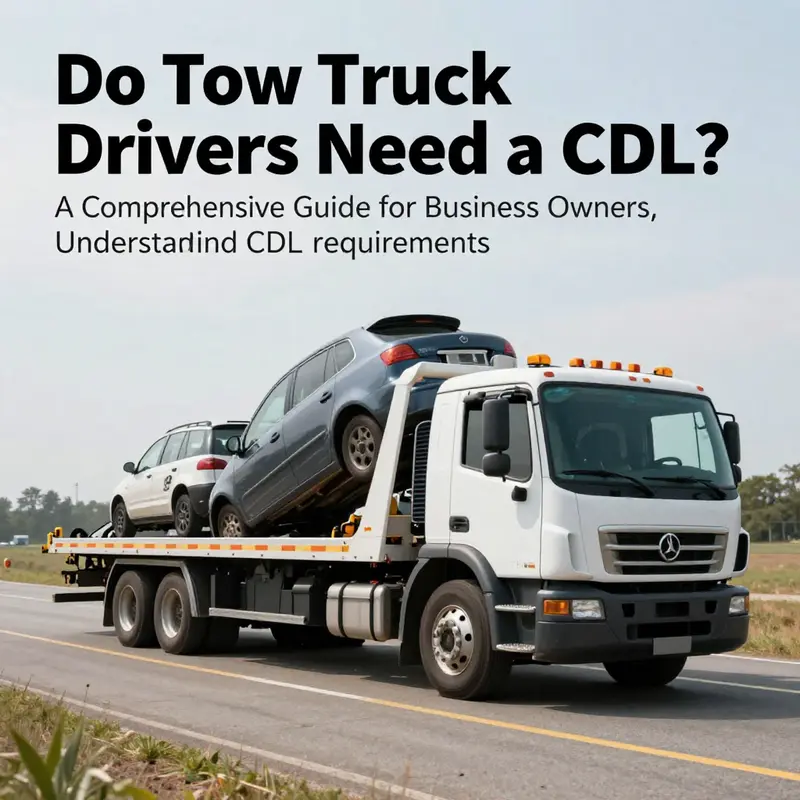
Navigating the complexities of towing operations requires more than just a reliable truck; understanding licensing requirements is crucial. For business owners operating tow truck services, knowing whether drivers need a Commercial Driver’s License (CDL) can shape operational decisions. This article explores the factors influencing CDL requirements, including vehicle type and size, weight regulations, and the licensing process itself. By the end, you’ll be equipped with clarity on how to ensure compliance and enhance your business’s capabilities.
Weight on the Road: How Vehicle Size, Type, and Regulation Shape CDL Needs for Tow-Truck Operators
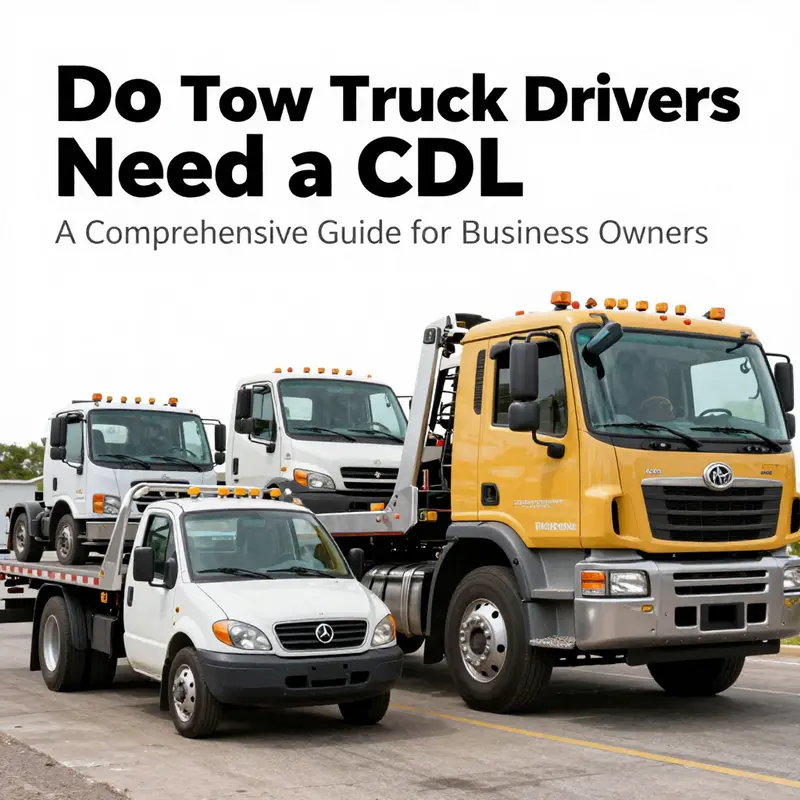
Tow trucks come in a spectrum of sizes and capabilities, and so do the rules that govern who may drive them. The central question—do tow truck drivers need a Commercial Driver’s License (CDL)?—does not have a one-size-fits-all answer. It hinges on the vehicle the operator runs and how that vehicle is used. At the heart of the regulation is weight. In the world of commercial trucking, the key figures are the gross vehicle weight rating (GVWR) of the towed or tow vehicle and the gross combination weight rating (GCWR) of the tow rig when it pulls a load. If the combination of the tow vehicle and the load pushes past certain federal thresholds, a CDL becomes a necessity. This is not just about long-haul truck driving; it flows into the emergency and roadside recovery work that is the lifeblood of towing services. For many operators, this means a decision matrix that blends weight, purpose, and safety.
In practical terms, the threshold is clear enough in many places: if the GCWR of the tow vehicle exceeds 26,000 pounds and the towed vehicle has a GVWR over 10,000 pounds, a Class A CDL is required. This is the scenario for larger, heavier tow trucks that are designed to move sizeable vehicles or even multiple vehicles in a single operation. A Class A CDL opens doors—larger wreckers, heavy-duty flatbeds, and more complex recovery assignments become part of the daily job. It also aligns with the increased training, permissible operation, and insurance considerations that accompany higher-risk work. In short, the heavier the job, the more likely the license type will shift toward the larger end of the CDL spectrum. The rules are designed to ensure that operators have the depth of knowledge to handle the extra mass, the dynamics of controlled stops, and the risks that come with heavy towing.
The chapter’s more nuanced sides come into play when GCWR sits at or below 26,000 pounds. In that zone, a CDL is not automatically ruled in or out. States can interpret federal guidelines differently, and some circumstances may still trigger CDL requirements. For example, even if the combined weight is under the 26k GCWR threshold, a tow vehicle might be designed to carry more than 15 passengers, including the driver. In such cases, passenger-carrying capabilities can mandate CDL eligibility. Similarly, if the operation involves transporting hazardous materials in quantities that require placards or specific handling, a CDL can become a legal necessity regardless of the raw weight. These caveats underscore a practical truth: the law cares about safety and accountability, not just numbers on a spec sheet. For tow operators, that means understanding the exact wording of state regulations and how they map to federal guidelines.
State interpretation matters, and this matters for a worker deciding whether to pursue CDL training now or wait until it’s clearly necessary for the kind of work they want to do. In several states, authorities emphasize that heavy towing and recovery work falls under CDL rules precisely because the job entails moving large, unwieldy loads and operating specialized equipment like heavy winches and multi-vehicle flatbeds. By requiring a CDL in those contexts, the state helps ensure operators meet rigorous driving standards, possess the skills to avoid runaway tangles, and have the discipline to conduct thorough inspections before a tow. That discipline is not decorative; it translates into safer roads and fewer incidents during high-stakes recoveries, where every choice—speed, angle, braking, and load distribution—plays a pivotal role.
For those already in the field or eyeing a move into heavier recovery work, the practical path toward a CDL is well-worn but not trivial. The process typically begins with education through a professional driving program, followed by a written knowledge test and a road skills test. A medical examination is required to verify fitness to drive, and language aptitude assessments ensure the driver can comprehend safety regulations and communicate effectively on the scene. Once earned, the CDL must be renewed every two years, with periodic physicals that monitor vision, hearing, and other health indicators. Many programs also include components that address the specific demands of towing—secure load practices, trailer connections, brake tests, and the handling of equipment like winches and stabilizers. The added credential is not simply a stamp of legality; it signals a higher level of proficiency and a commitment to professional standards when every second counts on the highway or at a roadside recovery.
The impact on career trajectory is not trivial. A CDL can expand the range of employment opportunities from small-scale roadside assistance to larger, regional towing operations that handle heavy-duty roadrunner recoveries, fleet maintenance logistically tied to multiple jurisdictions, and even specialized emergency response scenarios. The credibility that comes with a Class A CDL can translate into better job security, higher earning potential, and doors to employers who prioritize trained operators who can safely manage oversized loads. Yet, this path also demands ongoing investment: training costs, time off the road for schooling, periodic re-testing, and a readiness to adhere to stricter safety protocols. For some, the draw of increased responsibility and compensation outweighs the cost and effort. For others, the day-to-day demands of lighter-duty towing and smaller vehicles remain the practical fit. Both routes reflect a broader truth about the profession: the decision to pursue a CDL is as much about the kind of work you want to do as it is about regulatory compliance.
The information landscape around CDL requirements for tow operators also intersects with how communities think about road safety and traffic management. Tow trucks, especially those engaged in urgent recoveries, must operate with precision under pressure. The equipment they use—tow rigs, flatbeds, winches, and multiple offload points—can change how a mass is managed on a curb, a shoulder, or a highway lane. Training that accompanies a CDL emphasizes not just the mechanical skills but the judgment needed to safeguard the scene, the passengers in other vehicles, and the motorists navigating the surrounding traffic. In practice, a driver who carries a CDL is trained to see beyond the immediate tow and to foresee the chain of consequences that an ill-timed maneuver could trigger. This kind of readiness is the undercurrent of professional responsibility in the towing field.
For readers considering their own path, the conversation converges on one pragmatic takeaway: if you anticipate operating heavy tow trucks, multiple-vehicle tows, or equipment that moves hazardous or high-value loads, a CDL is not merely advisable—it is a regulatory imperative in many jurisdictions. If you are currently working with lighter equipment and a smaller footprint, you might stay under the threshold in some states, but the line is not permanent. Changes in the weight of the equipment, the nature of towed loads, or shifts in state policy can redraw the boundary. In other words, stay informed, and plan for the possibility that your career could evolve into heavier, more complex operations where a CDL proves foundational to safety, legality, and opportunity. For anyone navigating these choices, one local resource for service, coverage, and guidance is the availability of nearby tow-truck services that understand the local regulatory climate and the practical realities of heavy towing. For example, a reputable local provider can be a source of insight about what additional training and licensing would mean in your area and how it aligns with your longer-term plans for growth in the industry.
If you want to see how these concepts translate on the ground, you can explore practical examples of tow-truck service in Alexandria and surrounding areas, which illustrate how operators balance licensing, safety, and service demands on busy urban streets. Tow operators in these communities often emphasize that preparation, compliance, and ongoing training are as central to daily operations as the tools used on any given call. Links to local service pages can provide a sense of the real-world expectations and the professional standards that accompany heavier towing work. For deeper details on regulatory thresholds and how they apply in your state, you can consult official guidance and industry resources. External resources, such as state transportation guidelines, offer concrete criteria and examples that help drivers map their current capabilities to the licensing required for future opportunities. External reference: https://www.ncdot.gov/travel/permits/trailer-towing
Weight, Wheels, and Warnings: CDL Considerations for Tow Truck Operators
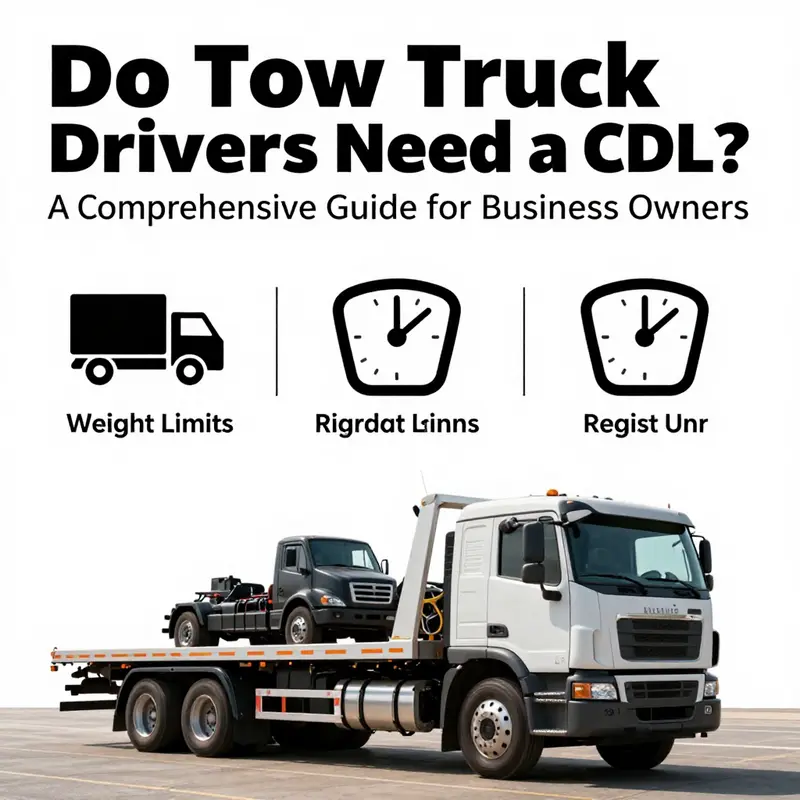
This chapter explains when a Commercial Driver’s License (CDL) may be required for tow truck operators. It covers the federal rules that hinge on vehicle weight and towed load, as well as how state regulations can add or modify requirements. The discussion includes practical guidelines for common tow scenarios, how to determine the correct CDL class and endorsements, and how licensing affects career opportunities and compliance. It also outlines steps for obtaining a CDL, including testing, medical requirements, and renewal. Readers will gain a framework for assessing when a CDL is needed for different towing operations and how to plan training and licensing accordingly.
Gearing Up for the Road: How CDL Rules Shape Tow Truck Careers and the Work That Moves Them
Tow trucks come in a spectrum of sizes and configurations, and the question of whether the driver needs a Commercial Driver’s License (CDL) sits at the intersection of vehicle weight, specialized equipment, and the kind of work the fleet tackles. For operators who move light-duty cars with compact recovery units, a CDL may not be required. But as fleets grow and the equipment becomes heavier or more complex, a CDL often transitions from a formality to a practical necessity. In the United States, the key threshold is weight: vehicles with a gross vehicle weight rating (GVWR) above 26,000 pounds typically require a CDL. That threshold is a federal guideline, though states administer and enforce specific rules, and a tow truck company’s insurance and risk tolerance can also influence hiring standards. The office on the other end of the leash—whether it’s a small mom-and-pop tow service or a mid-sized operation with multiple trucks—depends on the job the driver will perform and the equipment the truck carries. A Class B CDL is commonly associated with standard tow trucks, while a Class A CDL may be necessary when the machine operates at higher weights or with more specialized towing gear, such as heavy flatbeds or combinations that involve tractor-trailer dynamics for recovery operations. The practical takeaway is simple: the bigger and more capable the truck, the more likely the driver will need a CDL to legally and efficiently perform the work.
The process to obtain a CDL mirrors, in broad strokes, the path for any professional driver, but it includes elements tailored to the demanding tasks of towing and recovery. Prospective CDL holders begin with a written knowledge test that surveys traffic laws, safe driving practices, and the specifics of operating heavy vehicles. The next phase is the skills test, which is not merely about steering a big rig; it encompasses three critical components: a pre-trip inspection to verify that the vehicle’s safety systems are sound, a basic control skills test to demonstrate mastery of the truck’s handling under controlled maneuvers, and an on-road driving assessment that places the driver in real traffic scenarios. A successful CDL candidate must also meet medical and language requirements, with periodic physical exams every few years to ensure that vision, hearing, and general health are adequate to handle the responsibilities of a heavy vehicle behind the wheel. Drug testing is another typical requirement, reflecting the safety emphasis that governs commercial driving nationwide. Renewal is a practical consideration too; CDLs are not one-and-done credentials. They must be renewed, often every two years, with periodic physicals and documentation updates to keep the license current.
This framework, however, does not imply uniformity across the entire country. State-by-state variations exist, and drivers must verify the specifics with their local Department of Motor Vehicles. Some states have more stringent interpretations of what constitutes a “tow truck” eligible for a CDL, while others may allow certain medium-duty trucks to operate with non-CDL licenses in particular circumstances. Because fleets vary—some emphasize rapid response in urban corridors, others handle long-haul or heavy-duty recovery—employers may set their own CDL expectations even where the state’s rules would allow a non-CDL operator to perform limited tasks. It is common for a shop to require a CDL if the vehicle routinely hauls multiple other vehicles, if it uses winches and heavy hydraulics, or if it operates in environments where maximum payload and braking demands are high. When a driver holds a CDL, the job door widens considerably: more vehicle types, more routes, and, often, higher compensation tied to the broader scope of work.
The practical implications of CDL requirements ripple beyond license acquisition. For several operators, the decision to pursue a CDL aligns with a broader career trajectory. A smaller shop may thrive on a lean roster, with drivers splitting duties across light-to-medium towing and roadside assistance. But as the fleet expands—adding heavier wreckers, heavy-duty tow trucks, and specialized recovery equipment—the reliability and safety margin of the operation increasingly depend on trained CDL drivers who can manage the complexities of heavier machines. In this sense, the CDL becomes both a credential and a bridge to more stable employment, a broader range of service calls, and a potential path to supervision, training, or fleet management roles. The shift is not purely about higher pay, although compensation often reflects the added responsibilities and the additional safety training required. It is about uptime: the ability to respond to critical incidents quickly and safely, with a vehicle that can handle the weight of the task and the geography of the job site, from congested urban streets to remote highways.
For those navigating this decision, a few practical considerations help frame the choice. First, assess the typical work profile. If your fleet regularly deploys standard wreckers that haul a single vehicle and stay within moderate weight limits, a non-CDL license might suffice. If, on the other hand, your operators routinely handle heavy-duty recovery, multi-vehicle moves, or fleets that operate in states with stricter weight classifications, pursuing a CDL is a strategic investment. Second is the training path. Enrolling in a professional driving program tailored for CDL candidates accelerates readiness, but aspiring CDL holders should also plan for the required time and financial commitment. Third is ongoing compliance. A CDL demands not just the knowledge and skill tests but adherence to medical standards, periodic renewals, and a rigorous personal safety discipline. The extra layer of oversight—medical checks, drug screening, and regulatory compliance—works to elevate the safety profile of heavy towing operations and reduces the risk exposure for both drivers and the companies that employ them.
An additional piece of the landscape is the regional ecosystem around towing services. In densely populated metro areas, the demand for rapid recovery often favors operators who can deploy heavier equipment on demand, which in turn reinforces CDL prerequisites. In more limited, neighborhood-focused markets, lighter recovery work may continue with non-CDL drivers who are skilled at handling smaller units and a broad spectrum of roadside tasks. The decision to pursue a CDL, therefore, becomes a strategic choice: it anchors a career in a subset of high-demand work or keeps doorways open in a smaller, simpler operation.
If a reader is considering how this ties into local opportunities, a glance at a nearby market page can illuminate practical realities. For example, our Arlington-area towing pages illustrate a range of services that sometimes straddle the line between light and heavy recovery, underscoring why CDL considerations might arise for a driver aiming to expand their scope. Arlington tow truck services provide a window into how local fleets balance licensing, equipment, and service commitments. This kind of local context helps prospective drivers map out the steps they might take to position themselves for larger rigs or more diverse assignments—whether that means pursuing a Class B for everyday heaviness with a reliable high-capacity unit, or aiming for a Class A path that unlocks the most demanding towing configurations.
Ultimately, whether to pursue a CDL as a tow-truck driver is not a single decision but a calculation that weighs the weight and configuration of the equipment you operate, the markets you serve, and the career horizon you envision. The core rules—written knowledge, practical driving skills, medical clearance, and periodic renewals—provide a dependable framework. The real shift comes from recognizing how much broader the opportunity becomes when the truck you drive can handle heavier loads, more complex setups, and the full spectrum of towing challenges that modern fleets confront every day. And as fleets grow, the CDL often shifts from an optional credential to a practical necessity that keeps drivers employable, insured, and ready to meet the demands of safer, more efficient road rescue and recovery.
For authoritative federal guidance and state-by-state nuances, consult the U.S. Department of Transportation. It remains the essential reference for the official rules and the evolving landscape of commercial driving requirements, including those that apply to tow truck operators. https://www.transportation.gov
Final thoughts
Tow truck operations necessitate careful consideration of licensing requirements. It’s essential for business owners to remain informed about whether tow truck drivers need a CDL based on vehicle size, weight regulations, and the licensing process. Ensuring compliance not only mitigates legal risks but also enhances the professional standing of your towing service. Armed with this knowledge, you can better navigate the regulations that affect your operations, ultimately contributing to business growth and driver safety.