
Understanding whether to tip a tow truck driver can perplex many business owners. As towing services play a vital role in emergency situations, recognizing the tipping norms within this industry is essential for fostering positive relationships and ensuring quality service. This article delves into the various aspects of towing service tipping—starting with an overview of standard practices, followed by the specific factors influencing the decision to tip, and concluding with real-world scenarios where a tip may be appreciated. By gaining a comprehensive grasp of these elements, business owners can make informed choices that respect industry expectations while also showing appreciation for exceptional service.
Tow Truck Etiquette: Navigating When to Tip, How Much, and What It Signals
The headlights spill across the highway shoulder as the scene unfolds: a stranded driver, a ladder of cables and a tow truck hum that feels louder in the tense quiet after an incident. In that moment, a simple question can surface amid the stress: should I tip the tow truck driver? The short answer is that tipping isn’t universally expected in towing, and most standard services are already compensated through the company’s fee or the terms of an insurance claim. Yet the decision isn’t a bureaucratic formality; it’s a small moment of human connection that hinges on the level of service, the circumstances, and the local customs that color everyday acts of courtesy. If you want to anchor your choice in a practical sense, recognize that the driver is typically paid by the company, not by tips alone. The job is work for which the driver is compensated, and tipping is optional rather than obligatory. That said, there are moments when a gesture of gratitude feels natural, when the service exceeds the expected boundary of a routine tow, and when the driver’s actions transform a stressful situation into something smoother and safer. In those moments, a tip can become a meaningful acknowledgment of care rather than a transaction. If you’re wondering what counts as “going above and beyond,” picture a driver who arrives quickly in an emergency, helps with minor vehicle issues beyond towing, or stays calm and courteous when conditions are adverse—rain, wind, or the ticking clock of a schedule. A simple explanation offered with care can make a tough moment less difficult, and a tip, when given, should reflect genuine appreciation rather than a sense of obligation. For many people, the tipping range that feels appropriate hovers between modest and thoughtful. General guidance points to a small tip, often in the realm of five to twenty dollars, shaped by the specifics of the encounter. A common, clearer line cited by various industry observers is that ten to twenty dollars is a reasonable gesture when service is particularly helpful or when the driver has spent extra effort beyond the call of duty. It’s not a fixed rule, though; circumstances and personal preference play substantial roles. If you happen to be dealing with a tow through an auto insurance provider, a roadside assistance program, or a rental car company, don’t feel compelled to tip. These programs often bundle the service into your overall coverage, and tipping is typically unnecessary. To put this into a local frame, consider how tipping norms vary by region. Some communities are accustomed to tipping in service industries, while others treat it as less customary for routine transport services. If you want a closer look at how a local provider frames the service and expectations, you can explore a page that discusses the scope and standards of a towing service in Washington, DC. This resource helps anchor your understanding of how professionals position themselves in a busy urban environment and what customers commonly encounter when they seek help on a roadside. For context, you can read more about the broader expectations and practices in this area at the linked page on Washington, DC towing services. towing service in Washington, DC. The purpose of such a reference is not to mandate a tip, but to illustrate how professional standards and local norms shape a reasonable approach to gratitude when the service is delivered under pressure and with care. In the end, the decision to tip should flow from your assessment of the service received and the extraordinary elements of the interaction. If the driver arrived promptly, explained what they were doing, helped with paperwork, and maintained a positive, respectful demeanor during a stressful moment, a modest tip can serve as a tangible thank-you. If, however, the visit was routine, devoid of special assistance, or the service was included in a broader program, tipping remains optional. The underlying principle is simple: expresses of gratitude should feel appropriate to the effort, not compulsory as a line item on a bill. As you weigh the options, remember that the act of tipping is as much about communication as it is about money. It signals appreciation for reliable, considerate service and reinforces the human bond that can ease the anxiety of a roadside crisis. The most meaningful tips are those that reflect the genuine impact of the driver’s actions, not a scripted expectation. External resources can offer broader context about tipping trends in the industry and how customers balance gratitude with standard compensation. For further reading on industry standards and customer expectations regarding tipping tow truck drivers, you can refer to this reputable news article: https://www.nytimes.com/2023/07/15/business/tow-truck-driver-tips.html.
Do I Tip Tow Truck Driver? Reading the Signals of Service, Circumstance, and Courtesy
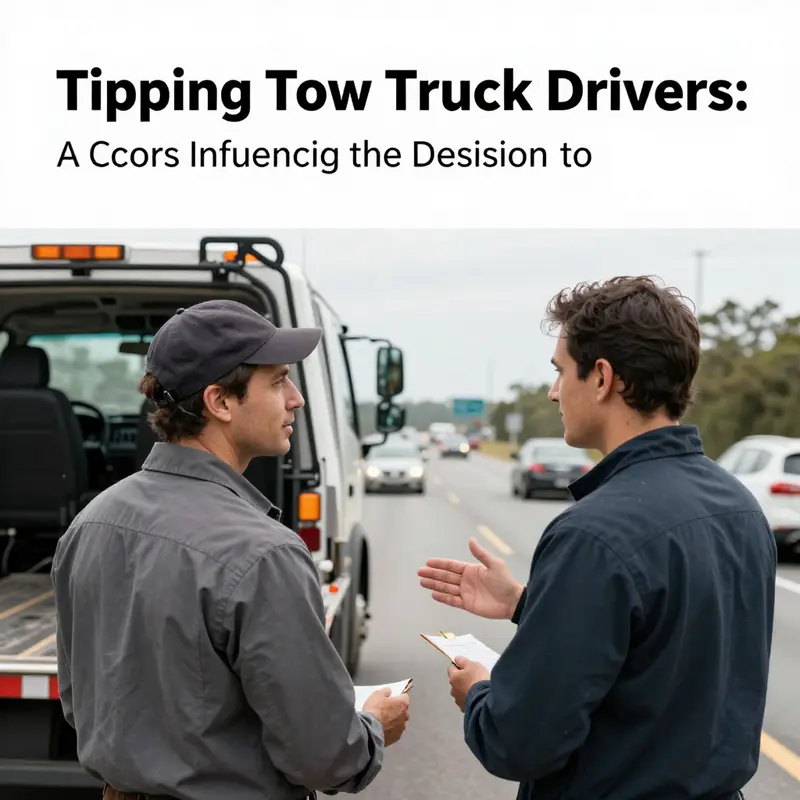
When you find yourself standing beside a stalled car or after a strange pull to the side of the road, the question often isn’t simply whether to tip a tow truck driver. It’s about reading the moment, the service provided, and the customary practices that vary by place and situation. The broad reality is straightforward: tow services are usually paid through the towing company’s fee, either via your private arrangement or through an insurance claim or roadside assistance plan. In those cases, tipping is not expected. Yet the human element matters. If a driver goes beyond the basics—navigating a tight spot in bad weather, explaining what’s happening, helping with paperwork, or offering practical, calm guidance—many people choose to show appreciation with a small gratuity. A gesture in the range of a few dollars to a modest amount can feel meaningful when it reflects genuine relief and respect for the effort involved.
Perhaps the simplest way to frame the decision is to weigh two dimensions: the nature of the service and the driver’s level of professionalism. On the first axis, private services paid out of pocket tend to invite more leeway for gratuity. When a service is arranged through an insurance company, a roadside club, or a rental-car program, tipping is generally unnecessary because the terms and compensation are already built into the arrangement. Your local customs also matter. Tipping norms for towing vary across regions, so a quick mental check of what friends or locals in the area do can be a practical guide. The second axis centers on the driver’s conduct: was the driver courteous, patient, and helpful in a stressful moment? Did they stay with you long enough to answer questions, arrange payment, or discuss the next steps after the tow? If the answer is yes, the likelihood that a tip would be welcome increases, even if not expected.
The level of difficulty encountered during the tow is another real factor. A driver who retrieves a vehicle from a remote location, at night, in snow, or in a restricted or hazardous area often earns gratitude beyond the standard fee. In such cases, a tip can be a tangible acknowledgment of the extra time, risk, or effort involved. Conversely, if a driver completes a straightforward tow with a neutral demeanor and no notable extras, a tip may feel unnecessary. This doesn’t mean you are ungrateful; rather, it reflects a balanced view of what tipping is for: an expression of appreciation for exceptional service, not a mandatory add-on to a transaction.
Guidelines, when you want them, can be helpful without becoming rigid rules. A common, flexible guideline is to consider a tip of 10% to 15% of the total service charge if the driver provided exceptional care or went beyond the call of duty. If the service was competent but routine, a smaller gesture—say a few dollars—can still be appropriate, especially if you feel the driver helped you quickly and clearly. If the work involved significant difficulty or the driver contributed to your safety by staying with you during a stressful wait, a tip toward the higher end of that range may be warranted. In all cases, the tip is donations of thanks, not fees to cover basic service. Cash is often preferred by drivers because it goes straight to them, but if you’re paying by card or through a dispatcher, you can ask whether it’s possible to add a gratuity to the payment and handle it with discretion and respect.
If your service comes through an auto club or insurance provider, the simplest approach is to assume tipping isn’t expected and focus on the professional service instead. The driver’s attitude, accuracy, and efficiency in getting you back on the road matter a great deal, and those qualities deserve recognition in the moment, even if a monetary tip isn’t part of the protocol.
For local nuances and broader context, it can be helpful to explore nearby resources about tow services in your area. For those in the Washington, DC area seeking a local option, a dependable reference to a nearby provider can be found through a dedicated Washington, DC towing service. This kind of local directory information can be a practical guide to understanding how tipping norms might align with regional expectations while you navigate the practical realities of a roadside emergency.
Ultimately, the decision to tip a tow truck driver is a personal one, influenced by the service’s contract structure, local customs, and the driver’s conduct. Gratitude should be the guiding light. When you’re genuinely appreciative, a small tip delivered with courtesy can reinforce a positive experience—without turning a predictable service into an obligation. And should you want to learn more about broader towing practices and expectations, consider consulting reliable resources on towing tips and what to know from established organizations.
External resource: https://www.aaa.com/automotive/towing-tips-and-what-to-know
Internal link to a local provider for context: Washington, DC towing service
Do I Tip Tow Truck Driver? Reading Situational Service Scenarios Where Gratitude Is Warranted
Tipping a tow truck driver sits at the crossroads of courtesy and practicality. In a world where most services are priced to cover labor, fuel, and overhead, tipping is rarely mandatory in standard towing jobs. The industry tends to compensate workers through the company fee and wages, not through customer add-ons. Yet the social script around roadside help has room for generosity when the service exceeds expectations. The decision to tip should rest on three grounded ideas: the quality of handling, the complexity of the situation, and the clarity of communication. When those elements align, a modest gesture can express appreciation without creating a new norm or pressuring others to chase higher prices on the side of the road. A thoughtful tip can acknowledge the driver’s effort, risk, and the calm professionalism they bring to a moment of stress and uncertainty.
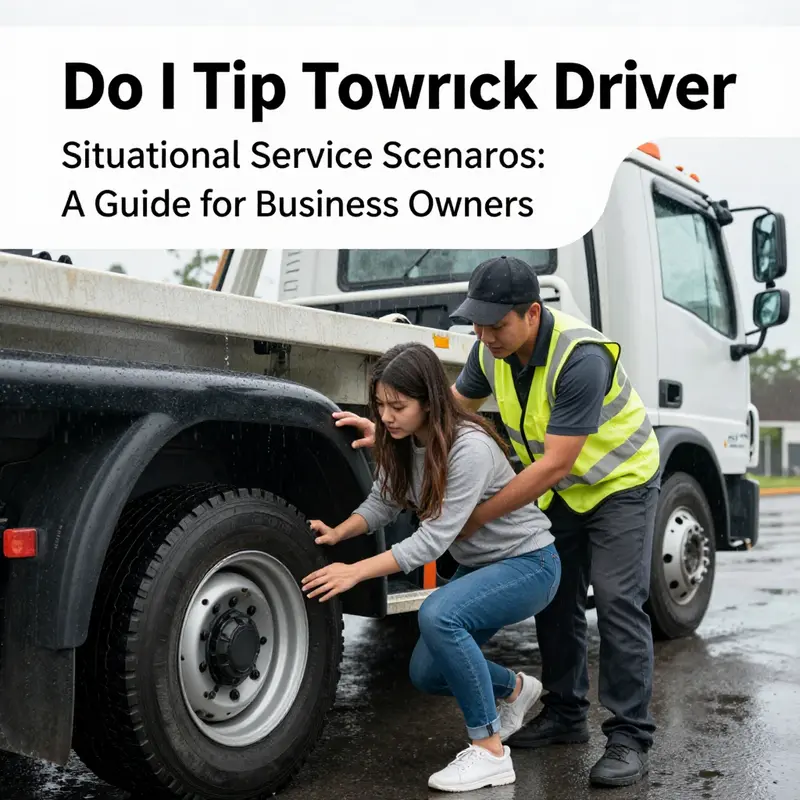
Consider a scene many drivers know well: you’re stranded on a cold, rainy night, your vehicle stalling in a dimly lit stretch. The tow truck arrives promptly, the driver evaluates the safest path to move the car, and you watch as traffic moves by in a blur of headlights. If the driver also helps contact your insurer, explains the paperwork, or offers options for a rental car, that extra mile of service often deserves recognition. In such adverse conditions, a tip in the range of twenty to fifty dollars reflects the added exertion, the responsibility shouldered on slippery pavement, and the extra time spent coordinating next steps. The amount is not a price tag on kindness, but a tangible token that the effort did not go unnoticed. To connect this sense of regional practice with a concrete example, many readers find value in exploring local service pages, such as the Washington DC tow truck service page, which illustrates how helpers describe coverage and approach in urgent roadside calls. https://acex-towing.com/tow-truck-service-washington-dc/.
In other moments, a driver may offer services beyond the basic tow. Jump-starting a battery, unlocking a stubborn door, or maintaining clear, ongoing communication while the situation unfolds can transform a frightening incident into a manageable one. These instances call for a smaller, but still meaningful, tip—roughly ten to twenty dollars. The driver’s patience, the way they break down options, and the effort they invest in reducing your confusion all count toward a meaningful acknowledgment. It is easy to overemphasize the monetary value and forget the sentiment behind the gesture: a visible appreciation for someone who has taken control of a chaotic moment.
There are also moments when the encounter feels routine—perhaps a standard tow from a parking lot with no surprises. In those cases, tipping is less expected, and some drivers themselves may discourage it as unnecessary. Still, if the driver goes above and beyond with courtesy, steady guidance, or calm problem-solving under pressure, a tip remains a thoughtful recognition. The gesture should never feel like a new obligation, but rather a discretionary expression of gratitude for service well delivered under tough conditions. It helps to approach tipping as a flexible tool rather than a rigid rule, one that adapts to the realities of the roadside and the unique needs of the moment.
Finally, it is worth noting the practical realities that shape tipping decisions. If you access tow services through an auto insurer, a roadside assistance plan, or a rental car program, the service is frequently included at no extra cost. In those circumstances, tipping is typically not necessary, and it can inadvertently blur the boundary between a included benefit and a voluntary thank-you. If you are unsure, a quick check with the provider or a review of the service terms can save confusion later on. The guiding principle remains: tipping should reflect the level of service received, not the mere fact of having a tow. In the end, a discretionary amount—adjusted to the scenario, the region, and your personal sense of fairness—can sustain a culture of professional, compassionate roadside help without disrupting established pay structures. For readers seeking a broader sense of tipping practices in towing, see the external resource linked below.
External resource: https://www.consumerreports.org/cars/towing-services-tips-when-to-tip-a-tow-truck-driver/
Final thoughts
In conclusion, while tipping a tow truck driver is not a strict requirement, understanding the norms and nuances of the practice can greatly enhance your relationships with service providers. Business owners should consider the quality of service received, the specific circumstances surrounding the tow, and their personal feelings of gratitude when deciding whether or not to tip. Exceptional service in challenging situations can warrant a small gesture of appreciation, and by being aware of these guidelines, you can foster goodwill and ensure that you receive the best possible assistance in the future.