
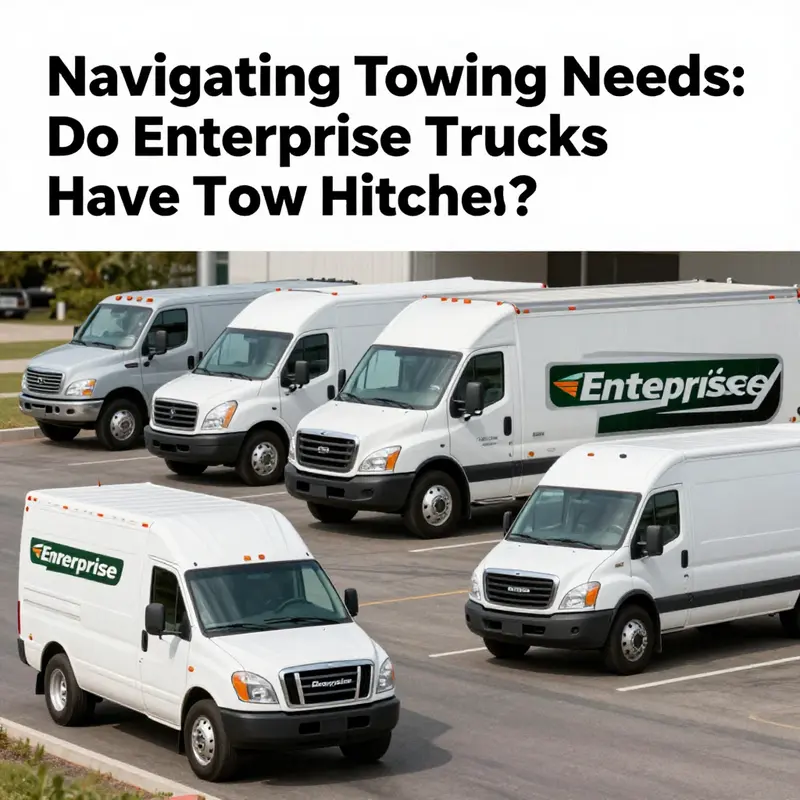
For business owners needing vehicles to handle heavy loads or towing, understanding the specifics of rental truck options is crucial. This guide addresses the question, Do Enterprise trucks have tow hitches? By exploring standard models versus heavy-duty options, factors that affect hitch availability, and Enterprise’s rental policies, you will be equipped with the information necessary to make informed decisions for your towing needs.
Tow-Ready on Demand: Navigating Enterprise Truck Rentals for Real-World Towing Needs
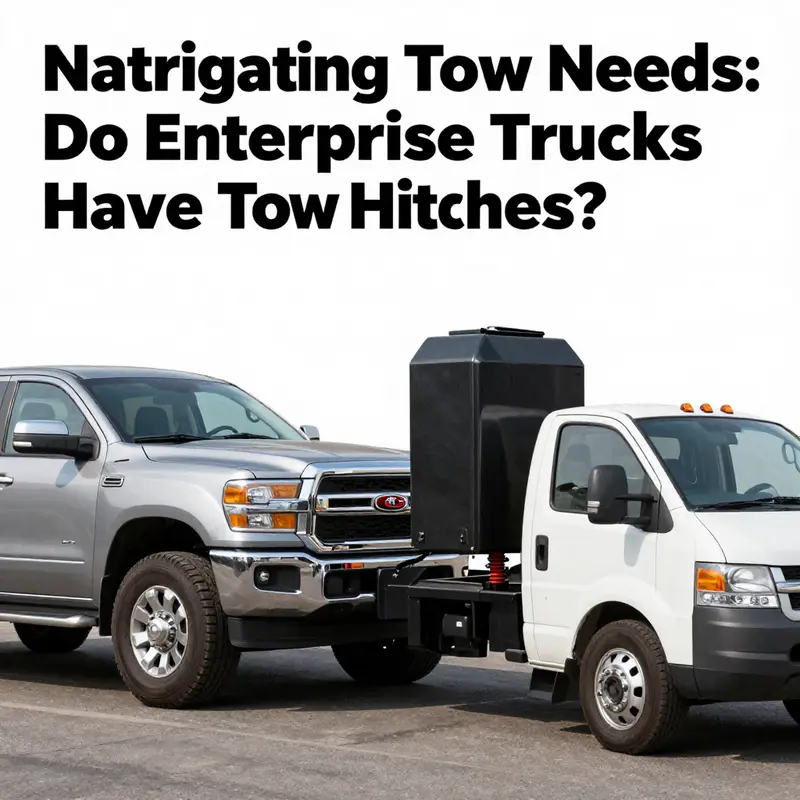
Renters often imagine that any pickup from a major rental agency can pull a trailer. In practice, Enterprise keeps standard rental trucks focused on passenger and cargo transport, and the hitch is not a given. Most standard Enterprise rental pickups do not come with hitch receivers, and towing with those vehicles is typically prohibited. This policy reflects the design priorities and liability standards that govern everyday fleets: safety, maintenance, and predictable handling are prioritized over capability that could complicate insurance or satisfy a specific worksite requirement.
Enterprise does offer heavy-duty pickup options through its Truck Rental division. These heavy-duty models are intended for work tasks that involve towing and are more likely to feature a hitch receiver. However, hitch availability is not universal. It depends on the exact truck model, the branch, and current stock. A hitch might be included by default in some locations, while others may require you to request it as an add-on, or it might not be offered at all if the truck you need does not have the necessary rear hardware.
To avoid surprises, contact the local branch at the time of booking to confirm towing capability and hitch availability. The rental agreement and the vehicle’s owner’s manual will outline any weight limits and restrictions. For example, the towing capacity and weight ratings are tied to the vehicle, the hitch, the braking system, and the trailer’s own characteristics. Even when a hitch is present, you should verify that the entire combination falls within the vehicle’s GCWR (gross combined weight rating) and aligns with local regulations. Some locations may insist on additional safety features, such as brake controllers or lighting adapters, which could be required by policy or the law.
Insurance and liability considerations are equally important. Towing can complicate coverage, and some contracts prohibit towing certain trailers or impose extra terms. If towing is restricted by the rental agreement, the renter should refrain from towing; attempting to tow anyway can void insurance and violate the lease. On the other hand, for legitimate projects, a heavy-duty rental can be a practical solution. It is worth weighing the benefits of a truck designed for heavier loads against the responsibilities of operating and securing a trailer on public roads.
Even with the right equipment, towing is a specialized activity that benefits from proper planning and awareness of local rules, road weight restrictions, and trailer handling practices. If you discover that towing is not feasible with the rental, you still have options. You can hire a professional towing service, transport equipment by other means, or use a rental truck in a non-towing configuration for moving items. For readers in the DC area seeking hands-on support beyond your rental, you can explore local options such as towing service in Washington DC.
For the most precise information, speak with a local Enterprise Truck Rental location and check the company’s official pages before you plan any towing task. Availability can shift with seasons, demand, and the day’s fleet mix, so a quick call or online check is the safest course. Enterprise’s Truck Rental site highlights heavy-duty options and the conditions under which they can be rented, which helps you align your needs with the right vehicle and the right branch.
External reference: https://www.enterprisetrukrental.com
Tow Hitches on Rental Trucks: Navigating Availability, Models, and the Booking Process
A common question arises when planning a move or a jobsite run: do rental trucks come with tow hitches? The reality is nuanced. Tow hitch availability is not uniform across a rental fleet. Many standard pickup trucks and passenger oriented rentals are configured without a hitch and are not designed for towing. In contrast, within the heavy duty segment of a truck rental program, hitch equipped options exist, but they are not guaranteed for every location or every day. The decision to offer a hitch hinges on the model class, the branch inventory, and the current demand for towing capable trucks. Because the fleet is dynamic, a truck with a hitch may appear at one location while the same model at another branch is hitch free, or it may disappear from the lot by the time you arrive to pick up. This is not arbitrary; it reflects a careful balance between fleet utilization, safety considerations, and the terms of the rental agreement that govern towing use and liability.
The most reliable guide to hitch availability lies in the model and class of the truck itself. Within a rental companys heavy duty truck category, hitch equipped vehicles are more common in 3/4-ton or 1-ton pickups, which are commonly used for light commercial tasks or contractor work. These models are purpose built or factory equipped to handle larger towing loads and heavier payloads. Lighter duty pickups, municipal vehicles, or standard passenger rentals typically do not have a hitch installed, and attempting to tow with such a vehicle could violate rental terms or void insurance coverage. In practice, this means that if your primary need is to tow or haul, you should target a truck in the heavy duty segment and explicitly confirm that a hitch is present on the specific unit you plan to rent.
Location adds another layer of complexity. Each branch maintains its own mix of vehicles, and regional demand can shift what is physically available on any given day. A branch in a construction heavy market might stock more hitch equipped trucks, while a downtown or tourist corridor branch might not. For this reason, the optimal approach is to verify hitch availability before you book. Online listings can be helpful, but they are not always up to date with real time inventory. A direct call to the local branch is worth the effort; staff can confirm whether a truck with a hitch is currently on the lot and whether it can be reserved for your dates. If you must have a hitch, you should clearly state that goal when you discuss your reservation. Phrasing the request around a truck with a hitch or a heavy duty pickup helps steer the booking toward the right category and reduces the chance of arriving to find the wrong configuration.
The reservation process itself deserves careful attention. Even when an online system shows hitch equipped options, the safest move is to call ahead and obtain a real time confirmation. Some locations can pin down the exact vehicle, confirm the hitch status, and outline any potential fee adjustments for towing accessories or packages. It’s also prudent to discuss towing capacity, hitch type, and any accompanying equipment, such as a trailer brake controller or heavier duty wiring harness, to ensure compatibility with your trailer and load. Knowledge of the truck’s gross vehicle weight rating, tongue weight, and overall towing limits helps avoid overloading and reduces risk on the road. If the hitch is essential for your project, consider requesting a truck with a hitch or a vehicle that is explicitly described as heavy duty; this helps align expectations and protects both you and the rental company from misunderstandings about capabilities and insurance coverage.
Even with a hitch secured, practical planning remains essential. Before departing, inspect the hitch installation, confirm hitch clearance for your trailer, and verify that the trailer’s coupling is compatible with the receiver and ball size. Confirming these details at pickup prevents delays and ensures your payload can be connected safely. If a hitch is unavailable despite a valid reservation, ask about alternatives—perhaps a different branch can accommodate your needs, or a nearby towing service can be engaged to handle the job. In some cases, coordinating with a professional towing provider can be the most efficient path to completing a project while you manage the rental truck separately. For broader regional guidance, you can explore related services in the area through local towing resources, such as the Washington, DC area tow truck options linked here: https://acex-towing.com/tow-truck-service-washington-dc/.
In navigating this terrain, the core takeaway is straightforward: hitch availability is not universal, but it is more likely within the heavy duty pickup segment and varies by location. To maximize your chances, start with a clear objective for towing, call ahead to your chosen branch, and reserve a heavy duty truck explicitly described as hitch capable. Always verify the specific vehicle’s towing limits and any insurance implications before signing the rental agreement. For the most authoritative, up to date guidance, you can consult the official truck rental information and booking policies available on the rental companys site. If you are planning a tow as part of a larger service landscape, your local towing resources and service providers can be part of a coordinated plan that ensures you are covered in both transport and safety considerations. For the latest policy details and to explore the official truck rental options, visit the external resource: https://www.enterprise.com/en/truck-rental.html.
Tow Readiness and Rental Realities: What to Expect from Enterprise Truck Rentals
When you map out a move, a job site drop, or a haul that involves a trailer, the question of tow hitches rises quickly to the surface. In practice, Enterprise’s standard rental pickups are not equipped with tow hitches, and their typical rental terms discourage towing on most vehicles. This isn’t merely a paperwork caution; it reflects a deliberate policy designed to protect the fleet, the driver, and the insurer from the risks that come with pulling trailers that can exceed the vehicle’s design intent. The hitch itself is only part of the equation. A trailer demands a compatible hitch receiver, a suitable ball mount, and a wiring harness that can communicate brake lights and turn signals to the trailer. If any of these are missing or mismatched, towing becomes unsafe or noncompliant with the rental agreement. For anyone planning to tow, the first takeaway is clear: don’t assume that a standard pickup from the lineup will handle a trailer without explicit authorization and equipment confirmation from the rental desk. This emphasis on policy helps explain why the most straightforward path often runs through the Enterprise Truck Rental division’s heavier options, where the fleet roster includes ¾-ton and larger pickups that are more commonly considered for towing tasks. Yet even among these heavier models, the ability to tow is not a guaranteed feature; it is still contingent on explicit approval and the right equipment being present for the job. In other words, towing readiness is a function of both vehicle class and location-specific inventory. The practical implication for renters is straightforward and practical: always confirm with the local branch at the time of booking whether a hitch is included or can be added for an additional fee, and whether the vehicle’s towing capacity aligns with your payload. Availability can vary by model, by branch, and by the day, so a call or a quick check on the official site can save a lot of trouble later. If you do manage to secure a heavier pickup that is towing-eligible, you should still treat the hitch and wiring harness as rental equipment in their own right. Enterprise may be able to supply the necessary hitch hardware or permit its installation as an add-on, but only when the vehicle is specifically authorized for towing and when the correct hardware is on hand. This means confirming several details up front: the exact towing capacity of the chosen truck, the hitch class that matches your trailer’s coupler, and the availability of a compatible wiring harness and brake controller if needed. The shift from standard pickups to heavy-duty options is often where renters find a workable compromise, especially for professional tasks that require more robust hauling. Still, the process remains intentional rather than automatic. If your project hinges on the ability to tow, plan to discuss weight limits, trailer type, braking requirements, and the potential need for a temporary insurance rider with the branch staff. It pays to document these arrangements in writing, so both parties share a precise expectation of what is approved and what auxiliary gear is in play. For those who want a clearer sense of local resources beyond the rental yard, a nearby towing service can be a prudent backup. If you need local support in Washington, DC, you can explore a dedicated towing provider for guidance and on-site assistance, including situations where a tow is required due to a breakdown or delivery constraints. For more information on towing services in Washington, DC, visit this resource. In all cases, the most up-to-date guidance comes directly from the rental desk and the official site, since policies can shift with fleet changes or regional safety directives. External reference: https://www.enterprise.com
Final thoughts
In summary, while standard models of Enterprise rental trucks typically do not come equipped with tow hitches, heavy-duty options available through Enterprise Truck Rental may meet your towing needs. Always confirm specific availability with your local branch, ensuring your rental experience aligns with your business requirements. Understanding these details empowers you to make the right choice when renting a truck for towing purposes.