
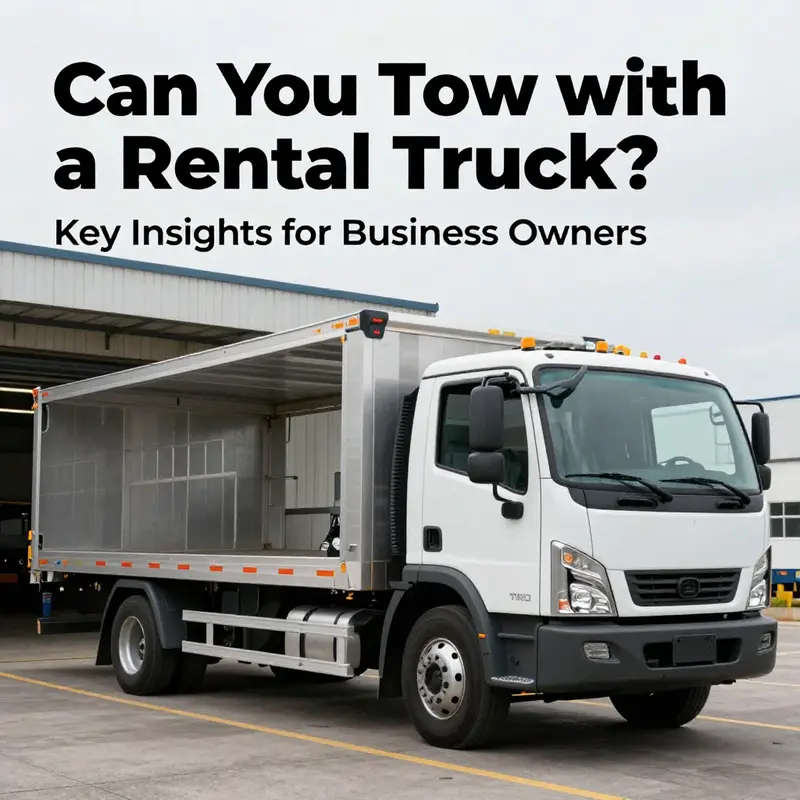
For many business owners, the ability to tow using rental trucks can be a logistical advantage, providing flexibility and efficiency during operations. However, understanding the nuances of rental truck towing is crucial to ensure compliance with rental agreements and safety standards. In this article, we will delve into three essential areas: the importance of knowing your truck’s towing capacity, the need to fully understand rental agreements and towing policies, and the critical safety considerations and equipment requirements when towing. By exploring these topics, business owners can make informed decisions that optimize their rental experiences and protect their assets.
Tow It Right: Mastering Towing Capacity and Safety When Using a Rental Truck
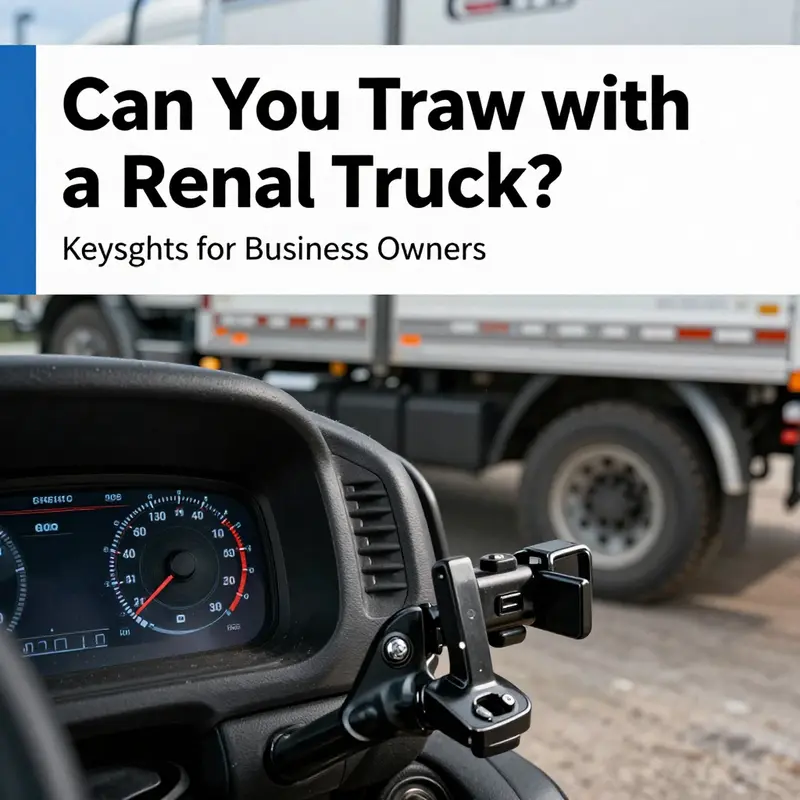
Tow-Ready on a Rental: Reading Agreements, Sizing the Load, and Safe Towing with a Move-About Truck
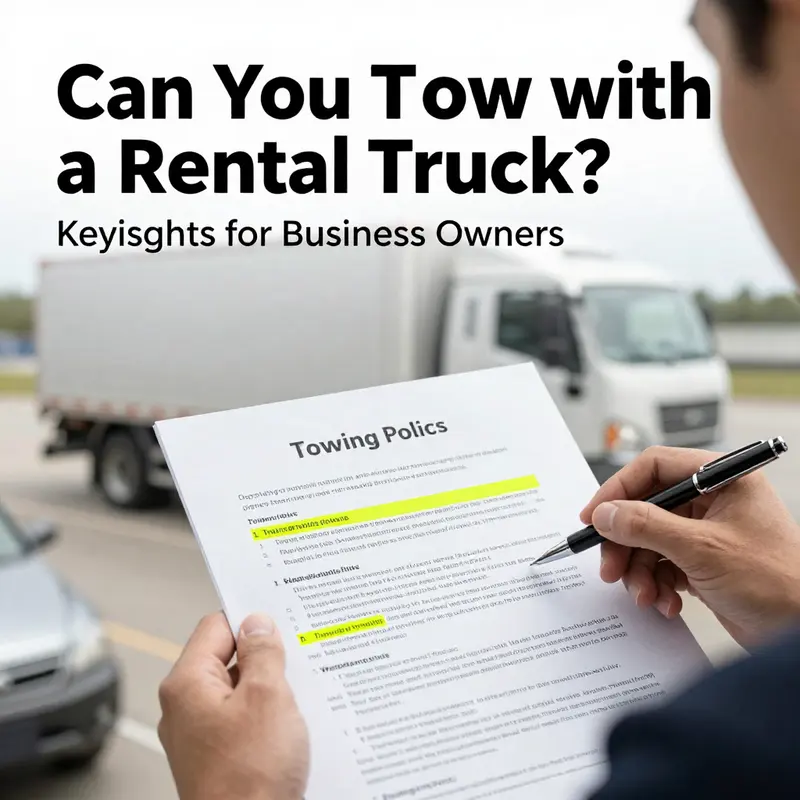
Tow-Ready on a Rental: Reading Agreements, Sizing the Load, and Safe Towing with a Move-About Truck
Towing with a rental truck is not a blanket option, even when the truck itself seems capable. The decision rests on three intertwined factors: the exact truck you rent, the terms written in the rental agreement, and your ability to manage the physics of a trailer behind a box or cargo vehicle. The reality is simple on the surface but often complex in practice. A truck that can haul a load does not automatically come with the right to tow. The agreement may carry restrictions, require an upgrade, or impose weight and equipment limits. If you walk into a rental with the assumption that towing is a free add-on, you risk discovering the opposite once you read the fine print. The best approach is proactive clarity: ask before you tow, and document the truck’s stated capabilities in writing.
Beyond the contract, the vehicle’s own capacity matters just as much. Towing capacity is not a vague number you can ignore; it is a hard limit. The trailer’s weight, plus the weight of the cargo you carry in the rental truck itself, must stay within the truck’s towing limit and its overall weight ratings. Exceeding these limits can strain the drivetrain, brakes, steering, and suspension in ways that are costly to repair and dangerous to operate. More than that, exceeding the limits can void insurance coverage for the towing operation. It is a practical rule: you are not just towing a trailer; you are reassigning a portion of the truck’s weight and dynamics, and every extra pound changes braking distances, acceleration, and stability.
The type of trailer you intend to tow also shapes the decision. Some rental policies specify which trailer types are permissible—utility trailers, car haulers, or light-duty options may be allowed while others are restricted or banned altogether. The kinds of trailers you could attach are not just about compatibility with a hitch. They involve weight distribution, brake requirements, and how payload transfers to the tow vehicle. The absence of the correct equipment can make a tow dangerous, and attempting to improvise can void coverage or lead to liability gaps if something goes wrong. This is why many rental extensions or “heavy-duty” add-ons exist: they guarantee that the truck, the hitch, the wiring, and the trailer operate within established safety margins.
A crucial, sometimes overlooked, element is the towing equipment itself. The standard rental agreement typically does not include a hitch or a trailer wiring harness. If you plan to tow, you may need to rent or purchase these components separately, and you must ensure they meet the vehicle’s specifications. A proper hitch is only the beginning. Depending on the trailer, you may also need a weight-distribution system to manage tongue weight and to keep the truck’s front wheels gripping the road. Some trailers require approved trailer brakes, and wiring must be compatible with the truck’s electrical system to reliably signal brake lights and turn signals. This equipment becomes part of the safety equation: a misfit hitch, a mismatched wiring harness, or an unbraked trailer can create blind spots, unpredictable sway, and braking delays that endanger you and others.
Insurance coverage, too, is a moving part of the equation. Rental agreements often include liability coverage, but many policies carve out exclusions for towing or for accidents involving trailers or towed vehicles. Before you attach a trailer, verify how your policy handles liability and physical damage when towing. If the policy excludes this scenario, you are exposed to financial risk even if you believed you were covered. The safest path is to secure written confirmation from the rental provider and, if necessary, to request an add-on that explicitly covers towing operations.
Local regulations add another layer of responsibility. Rules about lights, brakes, reflectors, and even which roads can legally accommodate a towed load vary by jurisdiction. Some areas require additional permits for commercial towing, while others demand specific lighting on the trailer or compliance with weight-related road restrictions. A quick check with the rental agency or a local authority before departure can prevent a roadside setback that could escalate into fines or unauthorized towing.
With these considerations in mind, the process becomes a sequence of validated checks rather than assumptions. Start by confirming towing permissions for the exact truck you’re renting. Ask whether a towing add-on or heavy-duty package is required, and request written confirmation of any weight limits. Then identify the trailer type you will use and verify that it is allowed and that you understand the corresponding weight and braking requirements. Next, determine the equipment you need: a hitch that fits the truck’s receiver size, a compatible wiring harness, and, if necessary, a weight-distribution system and trailer brakes that meet the trailer’s specifications. Finally, verify the insurance coverage for towing and review local regulations for any road restrictions that could apply to your route. If all these boxes are checked, you can approach the move with greater confidence that you are operating within both legal and safety boundaries.
If a rental agreement cannot accommodate towing, or if the required equipment and ratings do not align, consider alternatives rather than pushing forward with a risky setup. Renting a vehicle designed for towing, or arranging a professional service to move a trailer or to assist with the tow, can be a safer and more cost-effective option in the long run. For travelers or movers who need local support in the Washington, DC area, there are nearby professionals who can guide you through the specifics and, when needed, facilitate safe on-road assistance. For local guidance, you could consult a nearby provider’s service page, such as the Washington DC area towing service, which offers directional support on towing policies and local compliance issues. towing service in Washington DC.
This approach keeps you aligned with safety standards and reduces the risk of last-minute complications, fees, or insurance disputes. It also preserves the integrity of the rental vehicle, which is designed to handle the job with appropriate constraints rather than as a universal tow platform. As with any mechanical task involving weight, momentum, and traffic, the margin for error is small. The more you respect the documented limits, the more predictable and controllable the entire operation becomes. If you do decide to pursue a towing plan, document the exact truck, the trailer type, the weight ratings, and the equipment you will use. Keep that information handy in case the rental company, an insurance agent, or a local authority requests it. In the end, towing with a rental truck is possible when you treat the decision as a compliance and safety project rather than a casual add-on. For broader, up-to-date guidance on the subject, consult comprehensive buying guides and safety resources that discuss towing with pickup-style rentals and the associated equipment considerations. External reference: https://www.alibaba.com/product-detail/pickup-truck-rentals-for-towing-buying-guide_1600784395844.html
Tow with Confidence: Safety, Gear, and Compliance When Hauling with a Rental Truck
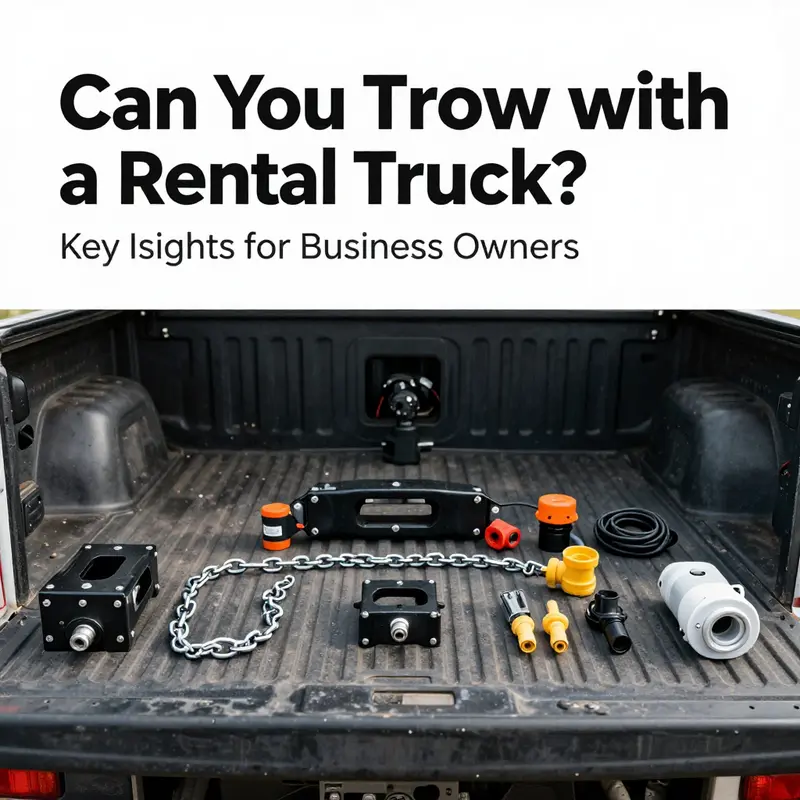
When you rent a truck to move or haul a trailer, you enter a practical space where convenience meets responsibility. You may be tempted to assume that a large rental truck can handle a trailer with minimal fuss, but the reality is more nuanced. Tow capacity, hitch compatibility, and the fine print of your rental agreement all shape what you can safely pull and how far you can go. The goal is not merely to get from point A to point B, but to do so without compromising the truck, the load, or the people around you. With careful planning and a steady checklist, towing with a rental truck becomes a controlled, predictable part of a bigger moving or hauling plan instead of an impulsive rush to finish a job and hope for the best. The path to confidence starts with a clear picture of what the rental truck can carry and what it cannot, and with a disciplined approach to equipment and safety that travels with you on every mile of the road.
First comes capacity. Every rental truck carries a towing rating—often stated as a maximum gross vehicle weight rating (GVWR) and a separate trailer weight limit. Your responsibility is to ensure the trailer’s fully loaded weight never exceeds that limit. Exceeding it can strain the engine, brakes, and suspension, and it raises the risk of brake fade, tire blowouts, or a loss of control in a curve or on a downgrade. This is not a matter of guesswork but a precise calculation that should include the weight of occupants, fuel, tools, and cargo inside the truck, as well as the trailer and its contents. If you’re unsure about the numbers, ask the rental agent or consult the vehicle’s specification sheet before attaching anything behind the hitch. When a weight mismatch is discovered after you hit the road, the consequences can be costly and dangerous, and they can void insurance coverage when a claim involves an overloaded configuration.
Closely tied to capacity is the hitch setup. The rental company may or may not provide a hitch, wiring harness, or the correct ball size to fit your trailer’s coupler. If you discover a mismatch or missing components, you should not improvise. A secure connection relies on a properly sized hitch ball, a compatible hitch receiver, and reliable wiring for brake and signal lights. A loose hitch can cause sudden decoupling, sway, or a dangerous separation of the trailer from the tow vehicle. The process of verifying the hitch is not tedious; it is a protective step that saves you from a breakdown that could have been prevented with a quick check during pickup.
A comprehensive inspection of the vehicle itself is equally essential. Brakes must feel firm and responsive, especially when you are towing a heavier load. Tires deserve a careful look for tread depth, cuts, or signs of dry rot, and inflation should align with the manufacturer’s recommendations for towing. Lights are not optional in the towing world. Check headlights, brake lights, turn signals, and running lights on the trailer and on the truck. If the trailer has separate brake lights or a dedicated controller for electric brakes, you must confirm the controller is installed and calibrated to the tow vehicle. A small mismatch in braking response can translate into a long stopping distance when momentum from the trailer is added to the truck’s mass.
In the realm of trailer safety systems, the running lights and brake lights communicate intentions to other drivers, helping prevent rear-end collisions. If your trailer uses electric brakes, a properly functioning brake controller is essential, and it must be calibrated for the weight being towed. You will also want to verify the trailer’s wiring harness integrity, including grounding connections, to avoid flickering or intermittent lights that can confuse following drivers. Patchy electrical work is as risky as worn brakes, and it is easy to fix when addressed in the pre-trip phase rather than after you’re en route through a busy corridor.
Cargo securing and weight distribution demand careful attention. Use appropriate tie-downs to secure all items inside the trailer and distribute weight evenly to minimize sway. Unevenly distributed loads increase the risk of a trailer fishtail or a rollover, especially on curves or when changing lanes. This is one of those details that feel mundane until you feel the difference on a highway ramp. The goal is to keep the cargo from shifting during transit; that means crossing straps and chains over sturdy points, using edge protection to prevent strap failure, and confirming that heavy items are placed low and centered within the trailer.
Insurance considerations and the rental agreement are more than formalities. Read the fine print for any restrictions on towing, such as maximum speeds, routes, or weather-related limitations. Some policies exclude liability coverage for accidents involving trailers, while others require proof of additional insurance or a specific add-on. If available, a supplemental towing insurance option can provide an extra layer of protection, reducing risk if an incident occurs that involves the trailer or its load. The rental agreement should guide you on acceptable routes and any prohibitions against certain roads or bridge navies, so you don’t encounter an unexpected restriction that could complicate a planned move.
A practical pre-trip mindset makes the difference between steady travel and last-minute improvisation. Create a quick-preflight checklist that covers tire pressure, fluid levels, hitch integrity, and the trailer’s lights and brakes. Run through it before you leave, and do a quick stop mid-journey to verify the trailer remains securely hitched and the lights still function as you expect. If you are traveling in unfamiliar territory, keeping a copy of the trailer’s weight, the truck’s towing rating, and the route plan can simplify conversations with local authorities or roadside assistance if you ever need it. In some regions, you may encounter specific rules about trailer brakes, extra lighting, or weight limits on certain roads; being prepared can prevent an unnecessary delay or ticket.
For those who want a direction to explore regional guidelines, consider learning about local towing options in your area through a dedicated service hub such as towing-service-dc. This reference is a practical way to acquaint yourself with local practices and resources while you prepare for the trip. The larger message remains consistent: towing with a rental truck is a viable option when you treat it as a deliberate, safety-oriented task rather than a rushed, last-minute afterthought. By aligning your load with the truck’s capabilities, verifying hardware, ensuring visibility through lights and signals, securing cargo properly, and understanding the terms of your insurance, you keep yourself out of trouble and on course toward a smooth journey. If you approach the task with patience and a thorough checklist, the rental truck becomes a capable partner in moving or hauling—and it can do so without compromising safety or legality.
External resources can offer additional clarity. For broader safety tips and official guidance on towing with a rental truck, you can consult AAA Car Rental Travel Tips on Towing with a Rental Truck: https://www.aaacarrental.com/travel-tips/towing-with-a-rental-truck/.
Final thoughts
Understanding the intricacies of towing with rental trucks is vital for business owners seeking to leverage this capability. By knowing the truck’s towing capacity, adhering to rental policies, and ensuring all safety measures are in place, you can enhance your operations’ efficiency while minimizing risks. Always consult with the rental company for specific guidelines and ensure that you are fully prepared for a successful towing experience.