
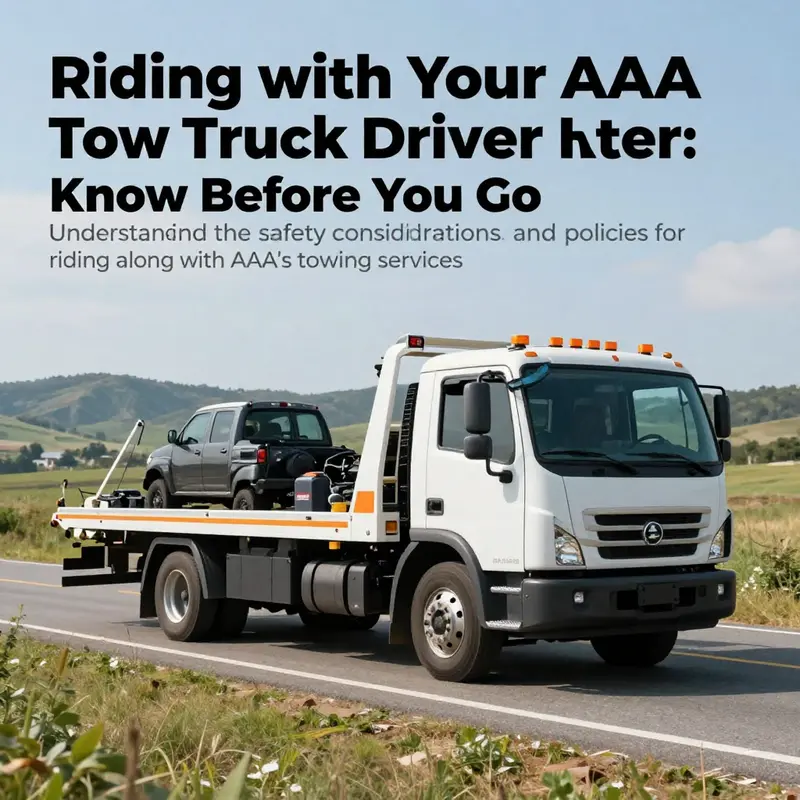
As a business owner, encountering vehicle issues can disrupt your operations significantly. Knowing whether you can ride along with your AAA tow truck driver can be invaluable during such stressful situations. This article dissects the key safety considerations and policies around riding with tow truck drivers dispatched by AAA. By understanding these factors, you can not only maintain oversight of your vehicle but also ensure compliance with safety requirements. The subsequent chapters delve into the nuances of safety measures and the driver’s discretion in providing this option to customers.
Riding Along When Roadside Help Arrives: A Practical Guide to Safety, Policy, and Peace of Mind
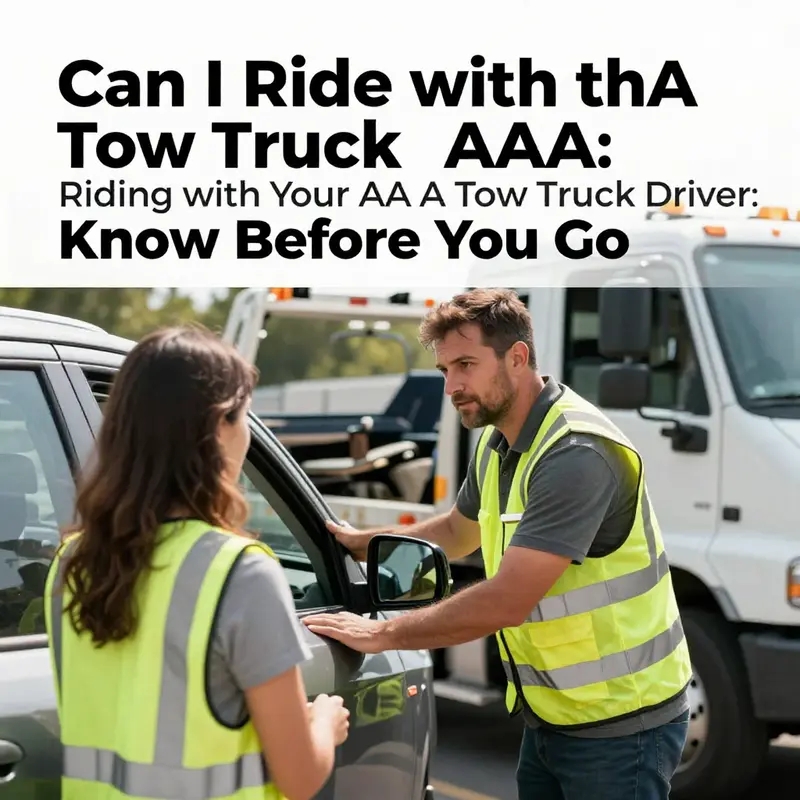
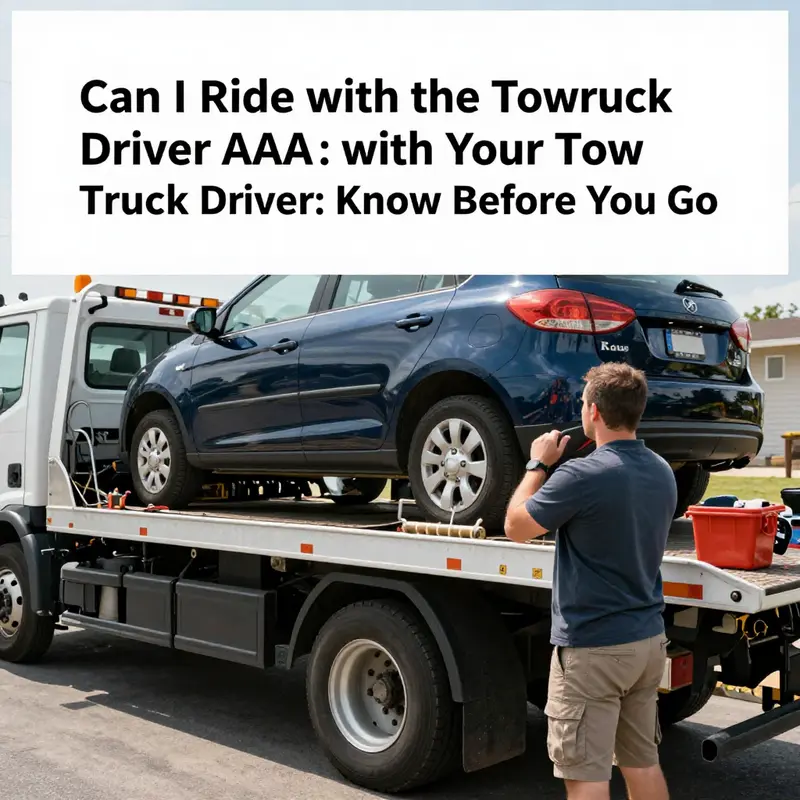
The practical space in a tow truck is limited, and the cab is designed primarily for the driver and a passenger who may be needed for travel to a safe stop after the tow is complete. The interior usually features seats that are much smaller and firmer than those in a standard car, with belts that may not feel as robust or comprehensive as what you’d find in a passenger sedan. That is not a flaw in the design; it is a reflection of the truck’s core purpose: to secure and tow a vehicle, not to transport people for long distances. Because of this, the driver’s assessment of space, load, and the mechanics of the tow will influence whether you can ride along. The risk calculus can change quickly: a vehicle with a flat tire, leaking fuel, or unstable cargo can increase the danger of an extra passenger in the cab or the back seat, where even minor movements can amplify risk. In those moments, safety takes precedence, and the driver may politely decline a ride even if you offered to buckle up. You can hear this in the tone of a professional who explains that the priority is to keep everyone safe while following the rules and the company’s policies. These conversations can feel uncomfortable in the moment, but they are a sign that the driver is following best practices and maintaining a safe work environment for themselves, you, and other travelers on the road. If the tow is needed to move you to a safe location or to a repair shop, ask for a mirrored plan: a clear route and a time frame. A well-handled ride-along is not just about getting to the destination; it is about preserving the clarity of the process so you know what is happening and why. You deserve to understand the path from the shoulder to the next site of safety, whether that site is the nearest gas station, an auto repair facility, or a trusted tow yard. In many cases, drivers will accommodate a passenger in a controlled way, provided you can meet a few straightforward conditions. The first is to communicate politely and directly when the driver arrives. A simple, respectful question—“Would it be alright if I ride along with you while you tow my vehicle?”—sets a cooperative tone. The driver will likely respond with a quick assessment of safety, space, and policy, and then offer guidance about where to sit and how to fasten in. If there is a seat belt, you should use it. If not, you may be asked to stay in a designated seating area that keeps you from interfering with the operation of the tow. The goal is not to vanish into a back seat or to lean over the equipment but to remain in a safe, secure spot where you are protected in the event of sudden stops or movements. The ride itself can be informative. For many people, accompanying the tow driver provides a direct view of how a tow is performed, including how straps, chains, and hooks are used to secure a vehicle, how the truck’s hydraulic systems lift and tilt the car, and how the load is balanced for road travel. Seeing these details up close can be a valuable lesson in vehicle safety, especially for those who may need to understand why a vehicle can’t simply be driven away after a breakdown or accident. Still, there is a line between being curious and becoming a distraction. To respect the driver’s concentration, limit conversation to essential questions during the operation. The driver’s primary focus must be on safe driving, especially during maneuvers such as reversing into a tight space, negotiating narrow lanes, or turning through intersections with a heavy load. Even casual chatter can become a distraction that compromises safety. If you have questions about the procedure, it is fine to ask but at a moment when the truck is stationary or when the driver has signaled a safe moment to discuss. This approach helps maintain a calm rhythm to the tow and shows consideration for the complexity of the job. For members of a roadside assistance program, there can be additional expectations to ensure harmonized operations across countless calls. The service provider’s policies may specify how riders may or may not participate in a tow, and they may also outline where a passenger may sit, how to secure belongings, and what to do if the operator declines a ride for safety reasons. The language used on the policy page is not a grammar exercise; it is the safety manual that guards you and the driver alike. In practice, these guidelines translate into three practical steps that help you navigate the moment smoothly. Step one is to ask for permission with a simple, respectful request. Step two is to listen to the driver’s assessment of safety, space, and policy, and to abide by their decision. Step three is to prepare for the ride with minimal distraction and clear attention to your surroundings so you can react promptly if the route changes or the truck stops unexpectedly. It is also wise to remember that not every policy will mirror every circumstance. Some local or regional outfits may be more permissive, while others lean toward a stricter approach because they carry liability concerns or have had prior incidents that shaped their formal guidance. If you’re unsure about a policy, you can check the roadside assistance provider’s published guidelines. Those guidelines sometimes live on the company’s official page and can be a relief to know before you call. For example, if you’re curious about how riding along is addressed in a specific city or region, a local service page can shed light on the local approach and expectations. In the Washington DC area, for instance, you may find service details that align with the broader safety philosophy described here, and you can refer to a local towing service page to get a sense of how ride-alongs are managed in that context. When you are invited to ride, a few practical points help you stay aligned with safety and courtesy. First, ensure your personal belongings are secured inside the cab or stored in your own vehicle if you left it behind. Nothing should be loose that could shift during transit and create a hazard inside the cab. Second, avoid bringing large or heavy items into the cab unless you have explicit permission. A rolled-up blanket, a coat, or a small bag is typically fine, but bulky objects can compromise space and safety. Third, be mindful of your movements within the cab. Sudden shifts in weight or reaching for a bag that’s on the floor can upset balance, especially if the truck is moving slowly through a busy intersection or around a corner. The more you anticipate the motions of the road, the more you reduce the risk of an inadvertent jolt to the driver’s workstation. Finally, be prepared to confirm where you will be dropped off if you plan to ride to a specific location. If the tow truck is taking your vehicle directly to a repair shop, the driver may need to coordinate with you about the best place for you to exit and reconvene with your vehicle later if you’re not following in a separate vehicle. There can be additional complexity if you are coordinating with a carrier or insurance company. Some insurers require that you be present for certain steps after a breakdown, such as verifying the vehicle’s location or ensuring the chain of custody for the vehicle’s transport. In these cases, riding with the driver can help you fulfill a requirement, but it remains contingent on the driver’s safety assessment and company policy. If you are a member of a national roadside assistance program, the dispatch process itself is a source of guidance. The dispatcher might relay the driver’s initial assessment and then relay any constraints or allowances to you. The purpose of the conversation is to establish a shared understanding of what is possible at that moment, not to test the patience of anyone involved. It is helpful to understand that the driver’s decision is not personal; it is practical. The channel of communication should be transparent and cordial. If you sense that the driver is uncertain or that conditions indicate a safer alternative to riding in the cab, you should accept the decision and explore alternatives. If you still want to ride or if you strongly believe it will help you manage paperwork with an insurer or a mechanic, consider asking about a short wait while the truck secures and prepares the load. Sometimes a brief pause allows the driver to confirm the feasibility of carrying a passenger and to coordinate with their own supervisor or company policy. For those who want to explore the policy before they need it, a quick review of the roadside assistance program’s guidelines can be a wise step. These guidelines lay out the boundaries in a practical, no-nonsense way, and they reflect the shared priority: safety first, efficiency second, and care for people at the moment of a breakdown. If you’re in a situation where you’re unsure about your rights or options, it is reasonable to reach out to the service provider’s customer support or to consult the policy page directly. The lines of communication are there to help you, not to trap you. In many cases, simply stating your preference to ride along, coupled with a respectful understanding of the driver’s assessment, will lead to a straightforward arrangement. If not, you may be guided to a safer alternative that still meets your needs—perhaps a ride to a nearby service center in your own vehicle or a referral to the nearest repair facility with a staff member who can ride along to explain next steps. It’s worth noting that the exact rules and practices can vary from one company to another and from one region to another. The driver’s professional authority, the vehicle’s condition, and the road environment all influence the final decision. If you are dealing with a provider that has clear written policies about passengers, those policies will be your best guide. In all cases, riding along with a tow truck driver is not a right you possess automatically; rather, it is a service that can be offered when it is safe and appropriate. The overarching aim is to get you back on the road with as little risk as possible and to ensure you reach a point where the vehicle repair or replacement process can begin with as little friction as possible. This means you should enter the process with patience and respect for the driver’s expertise, and you should be prepared to adapt to the conditions as they unfold. For the most area-specific guidance, you can consult the local service page linked here for reference: Washington DC towing service. If you are curious about the broader principles or want to understand the policy framework more deeply, you can review the official roadside assistance guidelines on the program’s site. These sources provide the formal context for the ride-along option and the safety measures that are in place to protect you during a tow. External resource for official guidance: https://www.aaa.com/roadside-assistance
null
null
Final thoughts
Understanding the challenges and protocols around riding with your AAA tow truck driver is essential for business owners who may find themselves dealing with roadside emergencies. By prioritizing safety and adhering to company policies, you can ensure that you remain informed and compliant while getting the assistance you need. Remember, the decision ultimately rests with the driver, who evaluates safety and practicality in each scenario. Consider these insights next time you call for roadside assistance to safeguard not just your vehicle, but your business operations too.