
For business owners in the towing industry, knowing the legal requirements for driving a tow truck is essential. Many may wonder whether a regular driver’s license suffices for operating these heavy vehicles. The reality is nuanced, as it hinges on local regulations, vehicle classifications, and safety standards. This article will clarify the legal requirements and regulations affecting tow truck licensing, examine weight limits and vehicle classifications, and discuss the safety and training considerations necessary for effective and lawful operations.
Tow Truck Licensing and Driver Credentials: When a Regular License Isn’t Enough
The ability to operate a tow truck with a standard driver’s license depends on local rules and the vehicle’s GVWR. In many places, once a tow truck exceeds 26,001 pounds GVWR or is used for professional towing, a Commercial Driver’s License (CDL) or specific endorsements are required. Even if the vehicle is lighter, some jurisdictions require additional licensing for on-demand towing or fleet work. Always check with the local licensing authority and consult the CDL manual for your area. Training and endorsements related to vehicle handling, load securement, and specialized equipment improve safety and may be legally required. The safest path is to verify requirements before operating a tow truck in any professional context and to pursue the appropriate CDL training if your intended duties fall into commercial towing.
Tow Truck Licensing Demystified: When a Regular License Is Enough and When It Isn’t
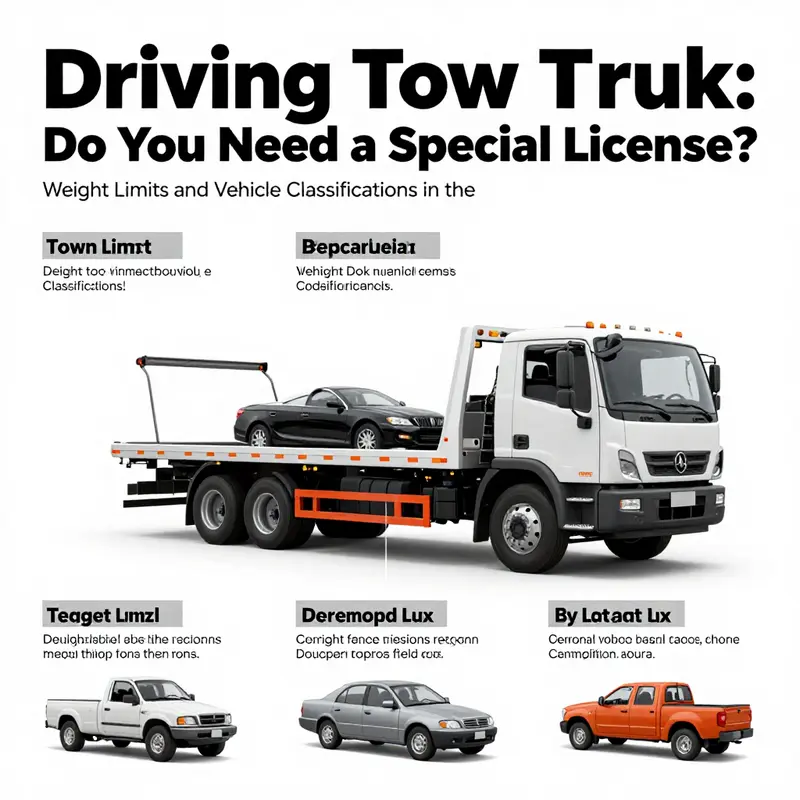
The question of whether a regular driver’s license can legally power a tow truck is less about a single rule and more about a careful reading of weight, configuration, and local licensing authority guidance. In many places, a standard passenger vehicle license remains adequate only if the vehicle you intend to drive sits within defined limits. Those limits usually center on gross vehicle weight rating, or GVWR, with the common threshold being 26,000 pounds. If your tow truck falls at or below that mark and you aren’t using the vehicle to transport more than a handful of passengers, a typical Class C license is often deemed sufficient. Yet these rules are not universal. Jurisdiction by jurisdiction, state by state, and even city by city, the precise line between what a regular license allows and what a commercial license demands can shift. To navigate this terrain responsibly, you need to understand not just the raw weight figures but also how the vehicle is classified for regulatory purposes and how it is used in practice.
At the heart of the matter is the distinction between light-duty, medium-duty, and heavy-duty tow trucks. Light-duty tow trucks generally fit under the 26,000-pound GVWR ceiling, placing them closer to ordinary passenger-car territory. Operators of these lighter units often rely on a standard driver’s license, provided the vehicle’s configuration and the intended use stay within local limits. When a tow truck is heavier, or when it is designed to haul other vehicles as part of a commercial towing service, the regulatory picture changes quickly. Medium- and heavy-duty tow trucks push the GVWR beyond 26,000 pounds, and in many cases a Commercial Driver’s License (CDL) becomes the prudent or required path. The CDL landscape in the United States includes Class B for larger single vehicles and Class A for combinations where the trailer exceeds certain weight thresholds. In practical terms, that means the same tow truck might ride on a regular license one day and require a CDL the next, simply by switching to heavier configurations or using the truck in a professional capacity.
Even if your local rules technically permit a regular license, the reality on the ground often includes further layers of requirement. Many jurisdictions treat the operation of a tow truck as a commercial activity, which triggers enhanced licensing scrutiny. A business’s towing operations might demand not only a CDL but also endorsements, specialized training, and safety certifications. The aim of these measures is clear: towing work involves risk, heavy equipment, and frequent interactions with other motorists. Training and experience are not just legal checkboxes; they’re practical investments in public safety, vehicle control, and incident prevention. For anyone contemplating driving or running a tow-truck operation, this means pursuing formal instruction in vehicle handling, backing procedures, load security, and braking dynamics under heavy weight. In short, even when a regular license might technically suffice, taking advantage of formal training is a wise, often legally protective, decision.
What this means in daily terms is a balanced approach to planning and compliance. Before you assume a classification based on a mental checklist of “weight equals license,” you should verify the exact standards with your local DMV or equivalent licensing authority. Regulations can vary widely, and some locales impose additional limits on vehicle configuration, such as wheelbase, transmission type, or mounting hardware that could affect classification. And if you’re involved in towing as a business, consider the broader regulatory framework that applies to commercial vehicles, including possible state and federal oversight. The Federal Motor Carrier Safety Administration (FMCSA) provides overarching guidance and resources for understanding commercial vehicle classifications and licensing nuances, which can be a helpful anchor when assessing state-level rules.
For readers operating or considering operation in a specific city, practical local experiences matter. If you’re focusing on a locality like Arlington, you’ll find that local permitting and licensing expectations can shape how you frame your qualifications and how you structure your service offerings. You can explore local perspectives on tow services and the realities of operating in that area through Arlington tow truck services, which can illuminate how local practice aligns with state regulations. Arlington tow truck services.
Ultimately, the core question remains: what are the exact weight, usage, and jurisdictional rules that govern your ability to drive a tow truck with a regular license? Start with your GVWR target and your intended use—personal or professional. Then confirm with the DMV and, if necessary, pursue the appropriate CDL class or endorsements. Even when legality is clear, invest in training and safety education to reduce risk and improve operational competence. The landscape is not static; it shifts with changes in vehicle design, traffic laws, and regional enforcement priorities. Keeping a steady line of communication with licensing authorities and staying current with safety standards will help ensure that the path from license to tow-truck operation remains compliant and responsible.
External resources can provide further clarity on licensing frameworks. For a comprehensive overview of commercial vehicle classifications and licensing considerations, consult the FMCSA’s official guidance, which delves into how heavy-duty configurations interact with licensing requirements and Federal regulations. Access to authoritative information is essential when weighing the best course of action for your situation.
Tow Trucks Under a Regular License: Weighing Rules, Risks, and Real-World Training
Licensing for tow work is not a one-size-fits-all answer. The license you hold, and the vehicle you intend to drive, are read against a mosaic of state, provincial, and national rules. In many places a standard passenger license covers light-duty towing, particularly when the tow truck itself stays within the size and weight that a regular license is designed to handle. Yet the legal difference between driving a car and piloting a tow truck often hinges on the vehicle’s weight and configuration, not the act of towing alone.
Most tow trucks are classed as commercial because of their size, weight, and the professional role they perform. In the United States, a tow truck with a gross vehicle weight rating over 26,000 pounds typically triggers a Commercial Driver’s License (CDL). Even lighter trucks used professionally may require a CDL depending on local rules or how the vehicle is used to offer towing services. This means that in practice your ability to drive a tow truck with a regular license can depend on both the GVWR and the scope of your work.
But legality is only part of the story. Tow work is inherently more hazardous than ordinary driving. You’re maneuvering large vehicles around accident scenes, lifting or winching other cars, and threading through narrow lanes or crowded lots. The combination of heavier mass, longer wheelbase, and the physics of towing means you must respect limits and apply more careful techniques than a typical commute would demand. Even when the law allows a standard license, safe operation requires training that covers vehicle dynamics, load distribution, emergency procedures, and the specifics of hydraulic systems and winches.
Training and credentials show up in practice as formal programs that most employers require before you operate a tow truck unsupervised. The best programs cover understanding how weight shifts during braking and turning, how to balance the towed vehicle so it does not sway or damage itself, how to secure loads, and how to respond to hydraulic or winch faults. You learn to read scenes, block hazards, and coordinate with other responders. Training helps reduce the risk to you, to the public, and to the people whose cars you’re moving.
Practical steps for drivers who want to tow legally and safely begin with a careful check of your local rules. Start by identifying your GVWR, the truck’s configuration, and whether your work falls under personal use or professional service. Then verify with your local DMV or licensing authority whether a regular Class C license is enough or if a CDL is required. If you are in a jurisdiction that allows lighter tows under a standard license, consider augmenting your credentials with a certified tow operator program. Even a few weeks of focused training can translate into smoother operations, fewer mistakes, and better control of hazardous situations. For urban careers, many new drivers supplement their license with additional endorsements or certificates that demonstrate competency in winch operation, load management, and on-road recovery techniques. If you are curious about how this plays out in particular cities, you can explore local resources like DC-based towing services, which often outline licensing and practice standards on their sites. For example, see Towing Service DC for practical guidance and community standards. Towing Service DC.
External resource for broader licensing context: https://www.dmv.org/us-ca/
Final thoughts
In conclusion, whether you can drive a tow truck with a regular driver’s license depends significantly on the local legal framework, the specific configuration of the vehicle, and professional operational standards. It’s crucial for business owners in the towing sector to remain informed about licensing requirements, as these not only ensure compliance but also enhance safety and service quality. As the towing industry continues to evolve, staying abreast of changes and best practices will be pivotal in driving success in this competitive field.