
For businesses operating in Arlington, VA, having a reliable towing service like Arlington Tow Truck is essential. This company excels in emergency services that cater to both individuals and businesses. Understanding the emergency services offered through Arlington Tow Truck can provide business owners with confidence in their decision-making during roadside emergencies. Additionally, the integration of cutting-edge technology into their services enhances not only operational efficiency but also safety and reliability. In the following chapters, we will explore the extensive emergency services offered by Arlington Tow Truck and discuss the technological innovations that set them apart, ensuring that your business can trust their proficiency in critical situations.
Lifelines on the Road: Arlington Tow Truck’s Emergency Response Promise
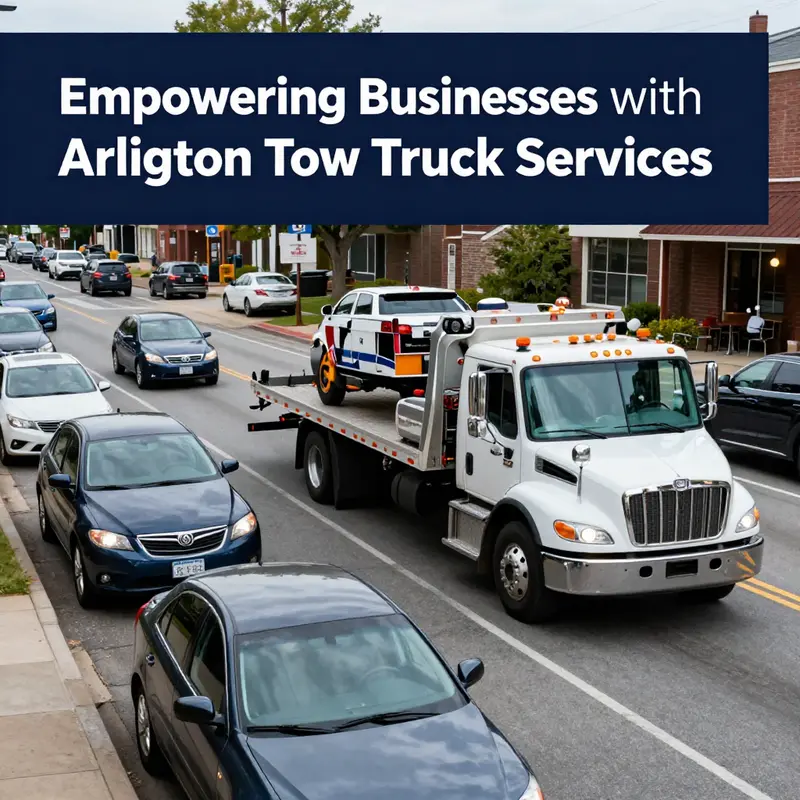
The city hums with traffic, streetlights glint on wet pavement, and a stalled car can pause a night. In moments like these, a dependable emergency response partner matters. Arlington Tow Truck operates in the gap between breakdown and resolution, offering a suite of roadside services designed to keep drivers moving and, when movement isn’t possible, to restore safety quickly. The core of their work is the readiness to intervene with the right tool at the right moment. A flat tire, a dead battery, a car that won’t start, or a key locked inside—these situations rarely align with a clock’s hands. Yet the promise is that help is within reach at any hour. When the city quiets in the late night and the rain slicks the streets, requests for assistance arrive to a team already en route.
The scope of emergency support is broad. Towing remains core when a vehicle can’t be moved safely under its own power, but the repertoire includes fuel delivery, tire changes, battery jump-starts, and lockout assistance. Each service emphasizes speed, safety, and professionalism. Technicians carry a practical inventory tuned to common roadside emergencies. They are trained to assess quickly, communicate clearly, and execute safely, turning a potentially disruptive incident into a manageable experience that ends with the driver feeling supported.
Accessibility sits at the heart of Arlington Tow Truck’s mission. The company offers 24/7 availability, so a responder can be dispatched at any hour. A predictable process—from call to arrival—reduces stress and increases the chance of a successful resolution. Technology plays a pivotal role in this workflow: real-time dispatch visibility, route optimization, and status updates that help drivers anticipate and adjust their expectations. The driver can see which services are available and request precisely what is needed.
Pricing transparency is also part of building trust. Online information and the company’s digital presence present clear options and approximate costs so drivers are not surprised when help arrives. Within the regional towing network, Arlington Tow Truck’s emphasis on clear communication and dependable performance provides a standard by which others measure themselves. For residents and travelers alike, the knowledge that help is fast and straightforward matters when time is critical.
For those seeking service, the path begins with the right touchpoints and reliable relationships. Arlington Tow Truck maintains a broad coverage area across neighborhoods and corridors, ensuring that no location is out of reach. This networked approach reinforces the idea that roadside emergencies are moments that connect drivers to a network of care and accountability. From the moment a call is placed to the final clearance of the vehicle, the experience is guided by a calm, methodical process.
As the city evolves, the role of emergency roadside support remains essential. Arlington Tow Truck positions itself as a steadfast partner whose value is measured in minutes saved, safety preserved, and the quiet assurance that help can be summoned with confidence. The services, supported by accessibility, speed, and professional judgment, form a cohesive narrative of reliability in a landscape defined by urgency. And for anyone who has faced a breakdown on a lonely stretch of road, that philosophy translates into a simple truth: you are not alone when you call for help, and you are not at the mercy of chance when a trained team is already en route.
Internal link: For more context on regional availability and service areas, learn about Arlington towing services.
External resource: https://xtowtruck.com
Tow Trucks in the Digital Era: Technology Driving Arlington’s Roadside Rescue
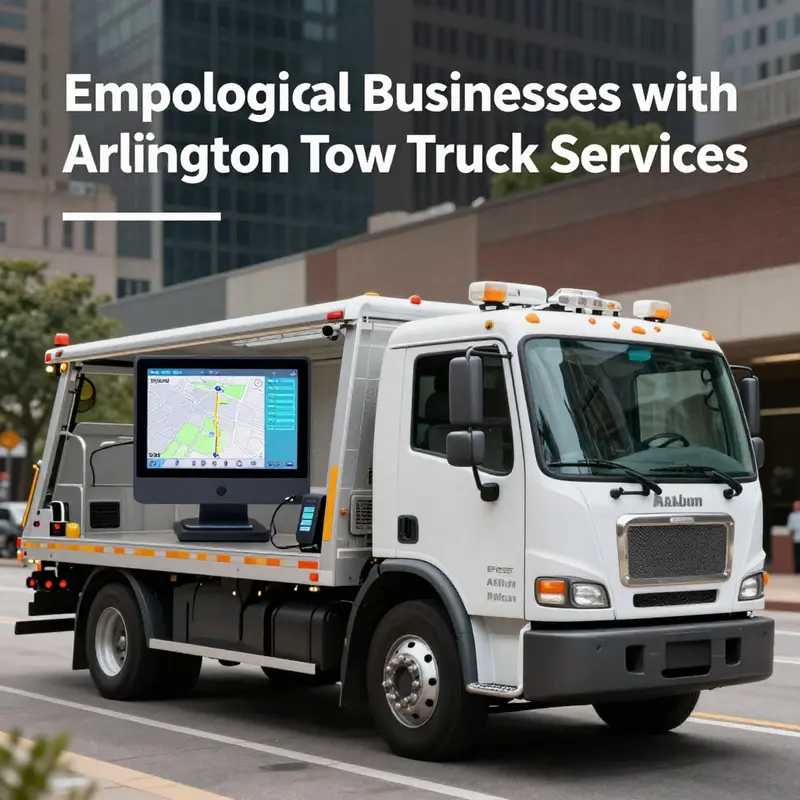
In Arlington, where the roads pulse with commuters, students, and visitors, the function of a tow truck has shifted from a last-resort rescue to a technologically orchestrated service. What used to be primarily a manual, reactive business is becoming a data-informed, safety-first operation, where every mile of towing routes is planned and every vehicle is handled with precision. The chapter surveys how technology permeates the practice—from the hardware that physically lifts and transports damaged cars, to the software that dispatches help in minutes rather than hours, to the broader systems shaping the future of the industry. This isn’t merely about gadgets; it’s about improving reliability, reducing risk, and increasing access for people in distress.
The heart of the transformation rests in equipment that protects vehicles while they are moved. Hydraulic lifts have become standard because they stabilize the lift and minimize contact points that could scratch or bend panels. Flatbed trucks, long recognized for versatility, now work in tandem with wheel-lift systems to handle a spectrum of loads—from compact sedans to larger SUVs and even specialty vehicles. Each configuration serves a purpose: the flatbed for secure restraint and the wheel-lift for fast, controlled anchoring. Operators think in terms of damage prevention as a core service promise, especially when a road is slick or vehicle integrity may be compromised after a breakdown. The result is not merely faster service; it is safer service. The modern tow operator plans each move with an eye toward residual vehicle condition and the safety of everyone involved, from drivers to pedestrians to responders at the scene.
Beyond what is seen on the street, intelligent automation reshapes the way calls become action. Dispatch software integrates with GPS networks, weather feeds, and historical data to predict the fastest, least congested routes. Algorithms balance urgency with resource availability, so a responder who is closest in time can be assigned, and the overall fleet can minimize idle miles. In practice, this means a driver can reach a stalled car sooner, reducing exposure to hazards and reducing the stress on the customer who is waiting by the roadside. Testbeds such as the Hillwood Mobility Innovation Zone in AllianceTexas illustrate how broad mobility technologies—ranging from smart corridors to automated loading procedures—can inform towing logistics. Although these advances are still rippling through the industry, their promise is clear: dispatch that is less guesswork and more evidence-based decision making. The idea of intelligent automation extends to areas you might not expect, including the potential for unmanned aerial systems to support certain freight tasks, offering new perspectives on how parts of the operation could be redistributed or augmented in the future. While the practical deployment of such systems in everyday roadside service remains evolving, the trajectory is unmistakable: fewer delays, fewer escalations, and a more predictable experience for customers.
This shift does not come without challenges. The aging workforce in many parts of the industry—paired with a projected shortage of drivers in the coming years—places pressure on turnaround times and service coverage. Projections suggesting significant driver shortfalls by 2028 underscore why automation and smarter workflows are not optional but essential. Labor costs can chew up a large slice of revenue, with wages and benefits representing a substantial portion of operating expenses. Automated and semi-automated processes offer a route to offset rising costs while maintaining high safety standards. Yet automation also demands capital investment, new skilled labor for maintenance of automated systems, and a careful approach to risk management. In Arlington’s bustling corridors, where incidents are frequent and the weather can turn quickly, the question is less about whether to adopt automation and more about how to blend human judgment with machine efficiency. Tow operators still need the tactile expertise to attach a chain, secure a load, and read a scene, but they now operate within a smarter toolbox. The most successful outfits will treat technology as a co-pilot rather than a distant, impersonal system—someone who suggests the safest route, flags potential hazards, and records precise data about each intervention for future learning.
Looking to the future, the arc bends toward autonomy and broader integration. The prospect of autonomous towing units, if realized safely, could reshape the landscape of roadside assistance by taking on repetitive, high-volume tasks while preserving the human touch where it matters most—scene assessment, customer reassurance, and nuanced decision-making in uncertain conditions. Automated fulfillment centers could streamline the orchestration of recovery and transport, reducing the time between a request and a vehicle being en route. Even the air and the sky may play a role through last-mile delivery and rapid-response logistics innovations, where small aerial platforms collaborate with ground teams to compress response times in critical moments. In the context of Arlington, this future is not a distant abstraction; it is a blueprint that informs current investments in fleet monitoring, training, and safety protocols. The core objective remains simple and enduring: to deliver help when it is needed most, with care for the vehicle, the driver, and the surrounding community. The convergence of advanced equipment, intelligent routing, and forward-looking capacity planning creates a service ecosystem capable of absorbing shocks—from sudden weather events to crowded rush hours—without sacrificing the quality of care a stranded motorist depends on.
For residents and motorists who may one day need a tow in the middle of a storm or after a fender-bender, the evolution is a promise fulfilled through incremental improvements. It is the quiet confidence of knowing that the operator who arrives at the scene is backed by a logistical machine that has already weighed options and checked safety parameters before stepping out of the cab. This is the essence of modernization in Arlington’s tow services: not flashy gadgets alone, but a coherent arrangement of tools, data, and practice that together raise the bar for reliability and accountability. If you want to explore a local option that embodies this evolution, you can learn more about Arlington Towing. Arlington Towing.
To stay informed about the broader currents driving these changes, a deeper exploration of intelligent automation in transportation offers valuable context. See the discussion in Intelligent Automation in Transportation: The Future of Freight and Mobility for a sense of how these ideas are evolving on a national and global scale. https://www.technologyreview.com/2024/03/15/1089779/intelligent-automation-in-transportation-future-of-freight/
Final thoughts
In conclusion, Arlington Tow Truck plays a vital role in supporting businesses through their round-the-clock emergency towing services and commitment to technological advancement. Understanding their comprehensive offerings prepares business owners to tackle roadside emergencies with confidence, minimizing downtime and ensuring safety. By leveraging the latest technologies, Arlington Tow Truck not only enhances their service reliability but also demonstrates a proactive approach to meet the growing demands of today’s fast-paced environment. Ultimately, partnering with a towing service that prioritizes efficiency and safety can significantly benefit your business operations.