
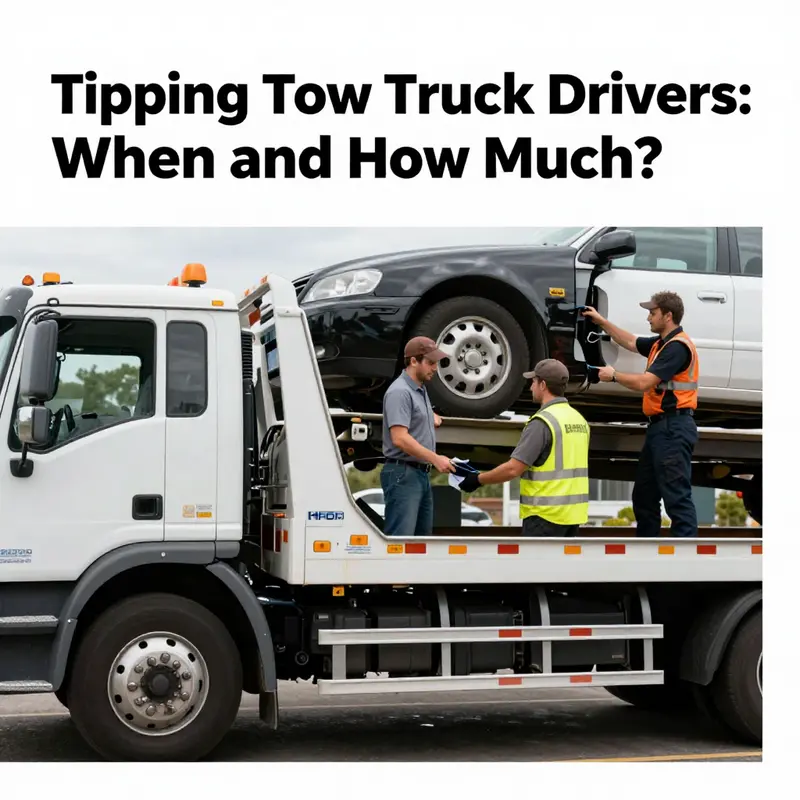
Tipping often varies widely across different service industries, and the towing sector is no exception. For business owners, understanding whether to tip a tow truck driver is essential to maintaining professional relationships and ensuring effective service delivery. In this article, we will delve into the customs surrounding tipping for tow truck drivers, clarify the structure of the towing industry, and highlight exceptional service circumstances that might warrant a tip. By examining these elements, business owners can make informed decisions about tipping practices that reflect both appreciation and professionalism.
Gratitude on the Road: Navigating Whether You Should Tip a Tow Truck Driver
When a tow truck pulls up to your stalled car, the scene can feel like a micro-drama on a late-night highway. The questions that follow are practical as much as they are cultural: should you tip the driver? is tipping expected in this line of work? The simple truth, echoed by standard guidance, is that tipping a tow truck driver is not a universal expectation. Unlike restaurants, salons, or ride-hailing services, tow truck operators are typically paid a fixed fee negotiated before the job, based on distance, vehicle size, and the complexity of the tow. That fixed rate is meant to cover the service, the equipment, and the expertise required to load, secure, and transport your vehicle safely to its destination. In most cases, gratuity is not built into the transaction, and drivers do not rely on tips to make ends meet. Yet human kindness and professional care can still make a difference in how you respond when the situation is stressful, hazardous, or otherwise challenging. In those moments, a discretionary tip can feel like a personal thank-you rather than a social obligation, a small signal that you recognize extra effort under less-than-ideal circumstances.
The practical framework around tipping is simple: tip if the service stands out, not because you believe it’s obligatory. If a driver arrives promptly amid a storm, secures a stubborn vehicle without incident, offers clear explanations about the process, or goes beyond the bare minimum to keep you safe and informed, a token of appreciation can be meaningful. The range that many people find appropriate, when they choose to tip, tends to be modest—typically around five to ten dollars. This amount is enough to express gratitude without creating a sense of entitlement or setting new expectations for every future encounter. It’s important to remember that the tip should be genuinely discretionary and never something that you feel obligated to give. The decision rests with you and is ideally tied to the quality of the service and the driver’s conduct rather than to a fixed rule.
There are a few nuances worth considering as you weigh the option. Regional norms vary, and in areas with a particularly strong tipping culture, a small tip might be appreciated even if tipping isn’t standard practice. If you’re in a locale where gratuities are more common, a tip can convey appreciation for extra patience, careful maneuvering in tight spaces, or a calm, respectful demeanor in a tense moment. Conversely, in places where tipping is less expected, a tip is more likely to be read as a personal gesture of thanks rather than an unwritten requirement. Company policies can also matter. Some towing outfits encourage drivers to abstain from tips or to follow specific payment channels that separate the service fee from gratuities. If you’re unsure, a quick call to the dispatcher or a glance at the company’s guidelines can prevent awkward moments at the scene. In the spirit of clarity, the act of tipping should feel like a private moment of gratitude rather than a public display or an attempt to curry favor for future service.
When you decide to tip, practical considerations help preserve the integrity of the roadside exchange. Hand the tip directly to the driver if possible, and avoid attaching it to the vehicle or leaving it with the dispatcher unless you’ve been told that is the preferred method. Cash remains the simplest, most universally accepted option, but many drivers also accept digital payments. If you pay the tow fee by card or through a company portal, you can still offer a tip in cash if you have it, or simply say thank you with a sincere note of appreciation. It’s worth noting that a tip should not be expected to influence future service plans. A driver you tipped does not owe you priority in the future, and the best way to secure reliable service is to rely on your chosen company’s scheduling practices and reputation, rather than any gratuity-based leverage. For those who want to understand local options more broadly, a quick reference to a nearby provider can be informative; for example, a page like towing service Washington DC can offer context on regional services while you plan contingency arrangements for future incidents.
In the end, tipping a tow truck driver is a personal choice rooted in the specific circumstances of the rescue. The standard practice remains non-obligatory, with the option to give a small tip if the service was exemplary or if the driver navigated an especially difficult scene with professionalism and courtesy. It’s a gesture that acknowledges care and competence without turning roadside help into a bargaining chip for continued service. By focusing on fairness, clarity, and respect—both for the driver’s role and for the broader norms of service etiquette—you can respond to a roadside emergency in a way that feels appropriate and considerate. If you want further guidance on tipping norms across services, a thorough overview is available from reputable consumer guidance sources that discuss when tipping is customary and when it isn’t, helping you approach each situation with confidence and tact.
External resource: Should You Tip a Tow Truck Driver? https://www.consumerreports.org/towing/should-you-tip-a-tow-truck-driver-a23456789/
Tow and Tip: Navigating Norms, Fees, and Appreciation in the Towing World
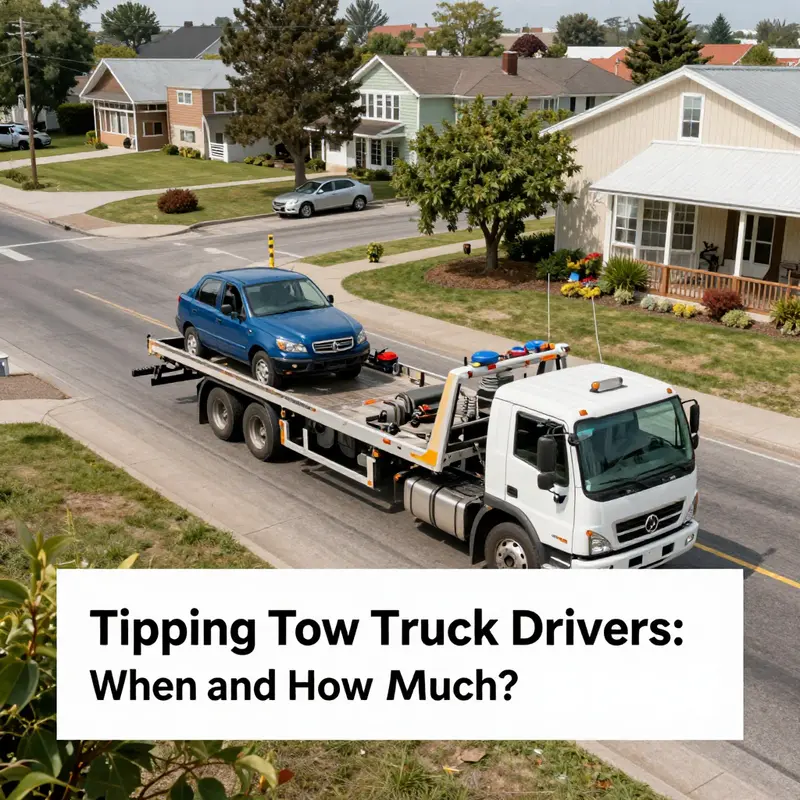
When people ask whether you are supposed to tip a tow truck driver, the straightforward answer is that tipping is not expected. In most cases, tow services are charged a prearranged fee, set before a driver even arrives on scene. Those fees reflect distance traveled, the size and type of the vehicle, and the complexity of the recovery or roadside task. Insurance claims or contracted service agreements frequently govern the final price, not a gratuity attached to the driver’s labor. This structural arrangement helps explain why tipping has not become a universal rule in towing, at least not in the same way it is in hospitality or ride-hailing. Yet the absence of an expectation does not close the door on appreciation. A driver who handles a difficult delivery at midnight, or navigates a slippery shoulder and a tight driveway with calm professionalism, may still earn a quiet nod of thanks in the form of a tip, especially if the moment feels especially challenging. The root of the matter lies in how the business is organized: pricing is often fixed by the company, and the driver’s compensation is arranged through the fleet rather than through a tip jar left on the dashboard. That structure makes gratuities as a general rule unnecessary, even as individual acts of gratitude remain possible and meaningful when circumstances merit them. The practical reality is that most customers expect a clearly defined bill, not an open-ended request for extra money on top of a service that might already be covered by insurance, a roadside policy, or a prepaid plan. Still, a moment of outstanding courtesy—such as a driver who patiently explains every step, coordinates with a garage, and takes care to avoid further harm to the vehicle—can prompt a discretionary gesture from a grateful motorist. In those cases, a tip is less about changing the price of the service and more about acknowledging a human effort that went beyond the basics. And that recognition is often kept private, in keeping with the general etiquette around roadside assistance, where most drivers prefer to be thanked discreetly rather than celebrated at the curb. For many people, this approach aligns with the larger ethos of tipping in service sectors: tips are not demanded; they are offered when the service transcends expectations and the customer wants to acknowledge it. The question, then, becomes not whether tipping is allowed, but when it feels appropriate to recognize real, tangible acts of extra care. A late-night call, a tire-chain repair under poor lighting, or a driver who patiently explains the next steps after a tow can all elevate a routine recovery into a relief for someone already stressed by a stalled vehicle. In such moments, the decision to tip becomes a personal judgment, guided by the degree of service, the risk involved, and the owner’s sense of gratitude. Different regions and firms may emphasize different norms, and while there is no universal rule, the prevailing sentiment is that tipping remains optional and situational, never obligatory. This is consistent with broader tipping norms across various service sectors, where expectations vary widely based on what is being delivered and under what conditions. The industry as a whole recognizes these nuances and tends to treat tipping as an occasional, discretionary gesture rather than a fixed component of compensation. If you want to gauge how a local operator frames pricing and service in your area, you can explore regional pages that describe local operations and community involvement; for instance, the Washington DC area page towing service in Washington DC for a sense of how a local operation presents itself and positions its services. This contextual approach helps keep expectations aligned with reality: tipping is not a standard requirement, but genuine appreciation for exceptional conduct is always welcome when you feel it is deserved. For a broader, formal backdrop, consider the industry guidelines published by the national association, which outline best practices and ethical considerations around gratuities and compensation. External reference: https://www.towingassociation.org/industry-resources/industry-guidelines
Tipping on the Road: Recognizing Exceptional Tow Truck Service Without Obligation
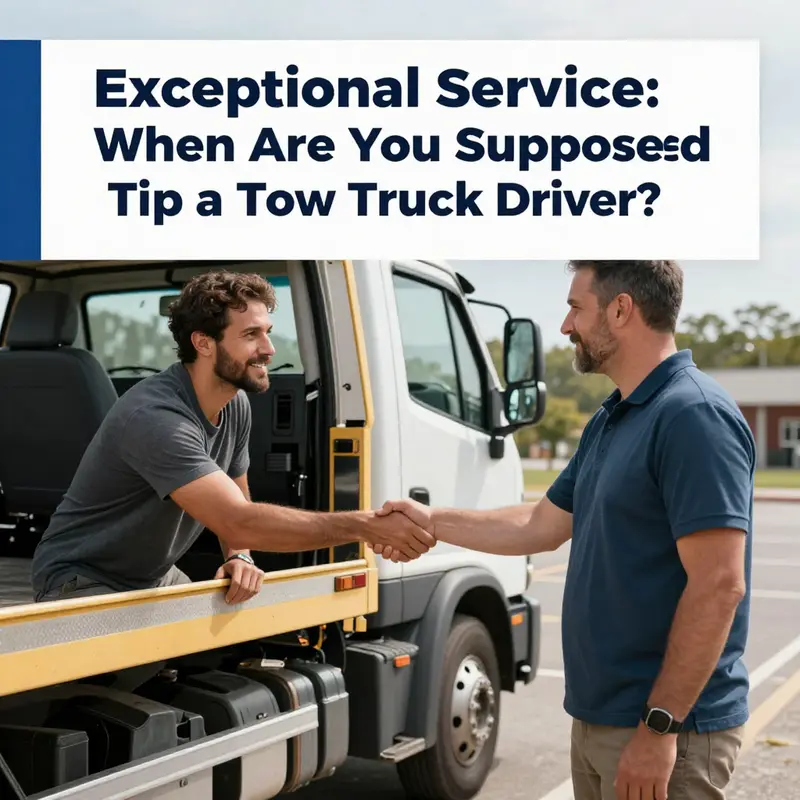
Tipping a tow truck driver is not a universal expectation, nor is it a standard part of the transaction. Most dispatch systems and roadside services rely on a predetermined fee that covers distance, vehicle size, and the complexity of the job. Yet the road is full of unpredictable moments, and in those moments, a tow operator can stand apart not just for speed, but for the care they show under pressure. The fact that tipping is not required does not erase the possibility that a driver can become a memorable ally in a difficult situation. When the service is routine, the road ahead is straightforward, and the driver completes the job with efficiency, a tip may feel unnecessary. But when exceptional care is evident, a discretionary gesture can acknowledge that extra mile without turning a roadside incident into a moral calculus about norms or obligations. In this sense, tipping toward a specific outcome—recognition for good handling, clear communication, and thorough attention to safety—becomes less about a rule and more about a moment of appreciation that fits the surrounding stress of the circumstance.
Consider the moment the tow truck arrives: the clock may be ticking, and the environment might be chaotic—rain, darkness, or heavy traffic can amplify the tension. A driver who arrives promptly, communicates what will happen next, and explains the costs upfront removes much of the anxiety that can accompany a breakdown or immobilized vehicle. This type of communication matters as much as the physical act of towing. When the driver describes the process, clarifies what to expect at every step, and confirms the route or storage arrangements, the customer gains a sense of control in a moment that often feels out of control. The value here is transparency and reassurance, not merely the mechanical action of hooking a car to a winch.
Another hallmark of exceptional service is how the driver treats the vehicle itself. A careful approach—protecting paint, avoiding curb scrapes, and ensuring the car is secured properly for transport—speaks to respect for the customer’s property. In situations where the weather is poor or the terrain challenging, those extra precautions become tangible evidence of professionalism. When a driver goes beyond the basics—offering practical advice for documentation, helping to manage a stressful hand-off to another mode of transport, or staying with the scene long enough to answer questions—these gestures build trust and demonstrate that the driver understands both the practicalities and the emotional strain of the moment. In such times, a tip is not a tax on the service; it is a personal acknowledgment of the quiet labor that makes a difficult experience more manageable.
What about the amount? The research landscape around tow-truck tipping frames a broad spectrum. A small gratuity in the range of five to twenty dollars is commonly noted as appreciated, though not expected. The exact figure can depend on the job’s complexity, the time of day, and how much extra effort the driver expends beyond the essential task. A late-night call with unfavorable weather and a vehicle maneuvered through a tricky scenario may justify a higher gesture, while a straightforward, daytime tow might not. Importantly, the money should reflect genuine appreciation rather than pressure. The customer’s payment should cover the quoted fee and any legitimate additional costs, and tipping should feel like a voluntary extension of courtesy rather than a payment to secure better service in the future.
In practical terms, how should a tip be given? Cash remains the most straightforward option and the one most drivers recognize as a direct form of appreciation. If cash is inconvenient, a driver-friendly method may be appropriate where permitted by the company policy. The critical caveat is to avoid tipping in a way that could create awkward expectations for subsequent calls or corporate rules. If a company’s policy discourages tips, offering a tip directly to the driver can be a respectful alternative, provided it aligns with the driver’s preferences and the local norms. In any case, the tipping decision should come after the job is completed, once the customer has assessed the service quality and the integrity of the transport process.
For readers who want to explore the broader etiquette context, the nuances of tipping across service industries offer valuable perspective. The idea is not to prescribe a universal standard but to acknowledge that tipping remains a personal judgment rooted in perceived value, efficiency, and human connection on an anxious road. If you want to see how etiquette experts frame tipping in other contexts, you can consult resources that discuss when tipping is appropriate, how to approach it gracefully, and how regional expectations can shift the practice. As always, the most meaningful guidance is to observe the driver, respect the policy framework, and follow your own sense of fairness.
For readers looking to place these insights in a local context, you may consider exploring nearby providers and their service approaches in your area. In the Washington, DC region, for example, you can explore a comprehensive overview of tow-truck service options to understand how different operators approach timing, communication, and care in the field. This helps anchor the tipping decision in concrete service experiences rather than abstract norms. Additionally, it’s useful to remember that tipping remains a discretionary gesture—an optional sign of appreciation for extraordinary effort rather than a required component of the transaction.
External resource: https://www.nytimes.com/2024/07/18/style/tipping-etiquette-guide.html
Final thoughts
Tipping practices in the towing industry may not be as anticipated or standardized as in other service sectors. Business owners should recognize that while tipping a tow truck driver is not obligatory, it can be a meaningful gesture when exceptional service is provided. By understanding the nuances of the industry and the specific situations that may call for a tip, business owners can foster goodwill and appreciation in their professional relationships, ultimately benefiting their overall operations.